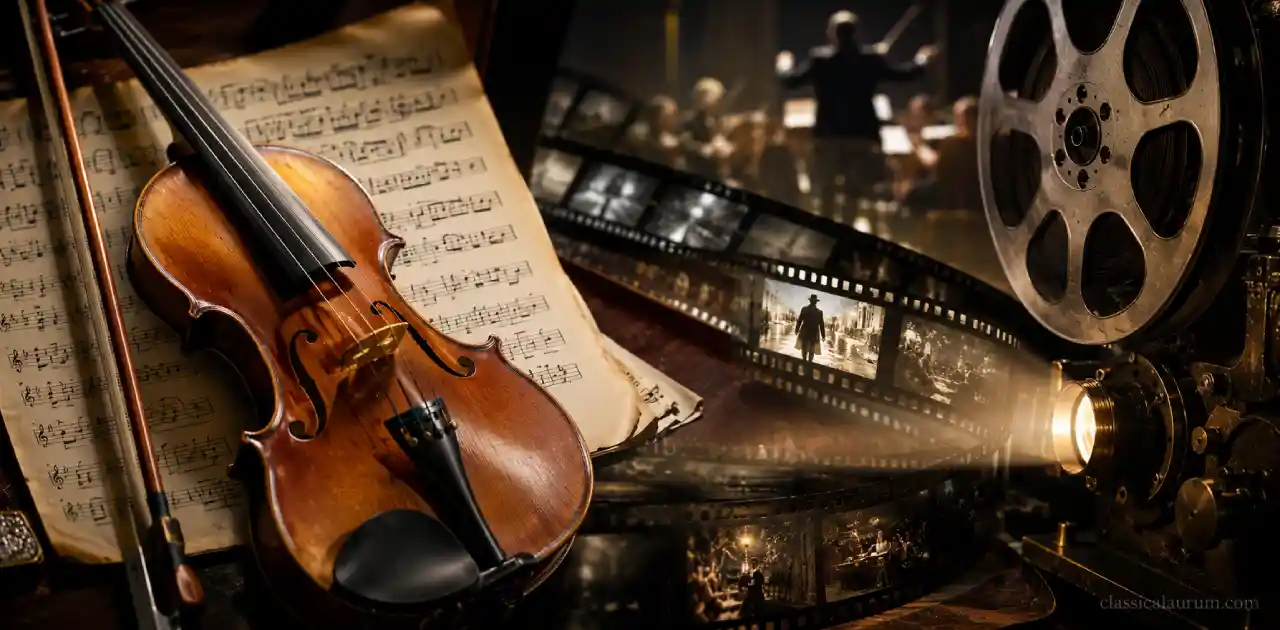
Why Classical Music Works in Cinema
Why Classical Music Works in Cinema
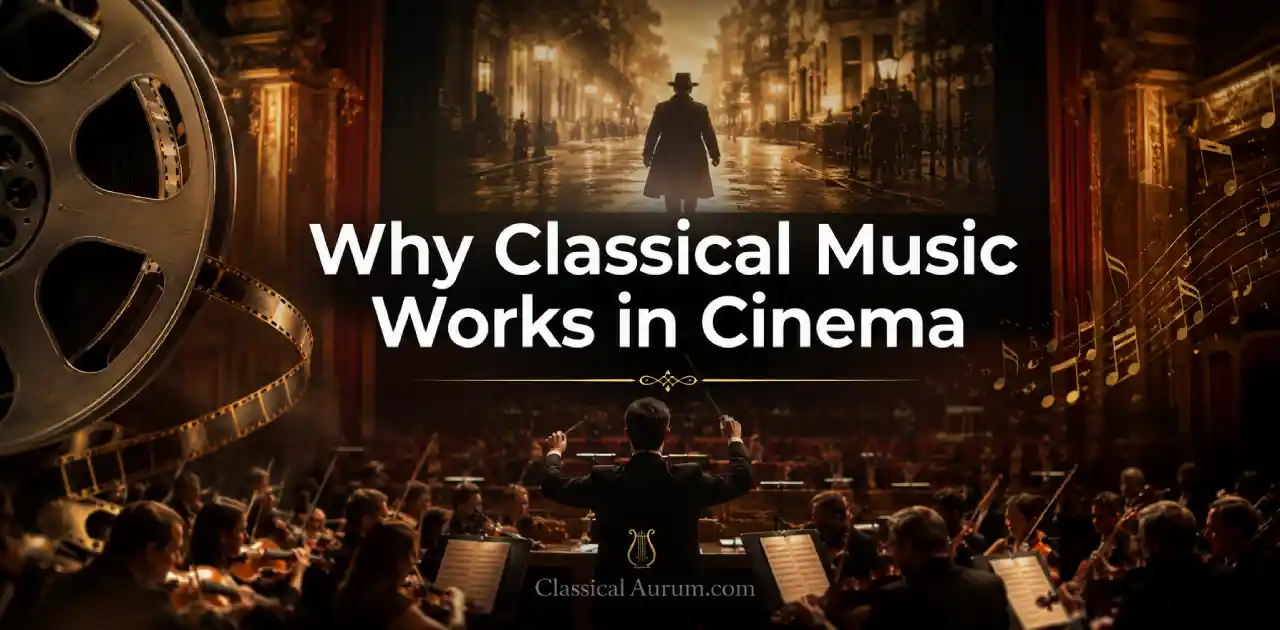
Cinema is often described as a visual art, yet many unforgettable film moments would lose much of their emotional impact without music. While modern movies embrace electronic soundscapes, pop songs, and experimental textures, classical music continues to occupy a unique place in cinematic storytelling. Whether performed by a full orchestra or borrowed directly from the classical repertoire, it provides emotional depth that few musical traditions can equal.
For more than a century, filmmakers have relied on the expressive vocabulary developed by composers such as Beethoven, Mozart, Bach, Tchaikovsky, Mahler, Debussy, and Stravinsky. Their musical language has become inseparable from suspense, romance, triumph, tragedy, mystery, and heroism. Classical music does more than accompany images; it shapes the audience’s emotional experience.
This enduring relationship between concert music and film reflects a shared objective. Both arts tell stories through structure, timing, contrast, and emotional progression. Understanding why classical music works so effectively in cinema reveals not only the brilliance of film composers but also the timeless relevance of the classical tradition.
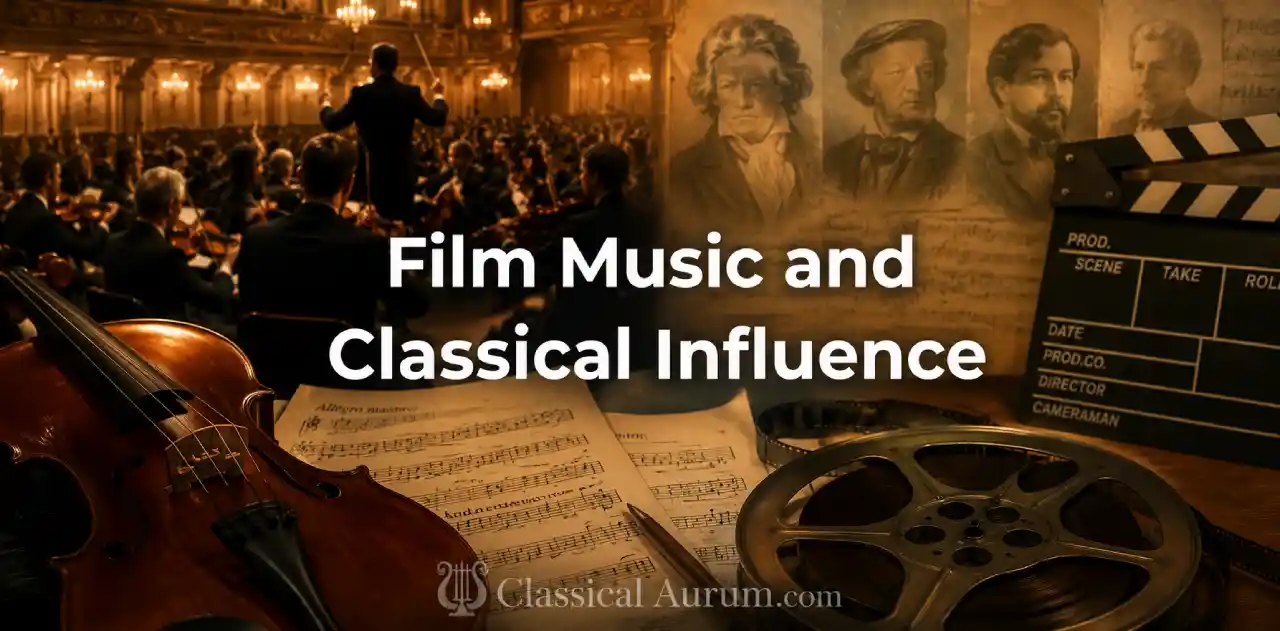
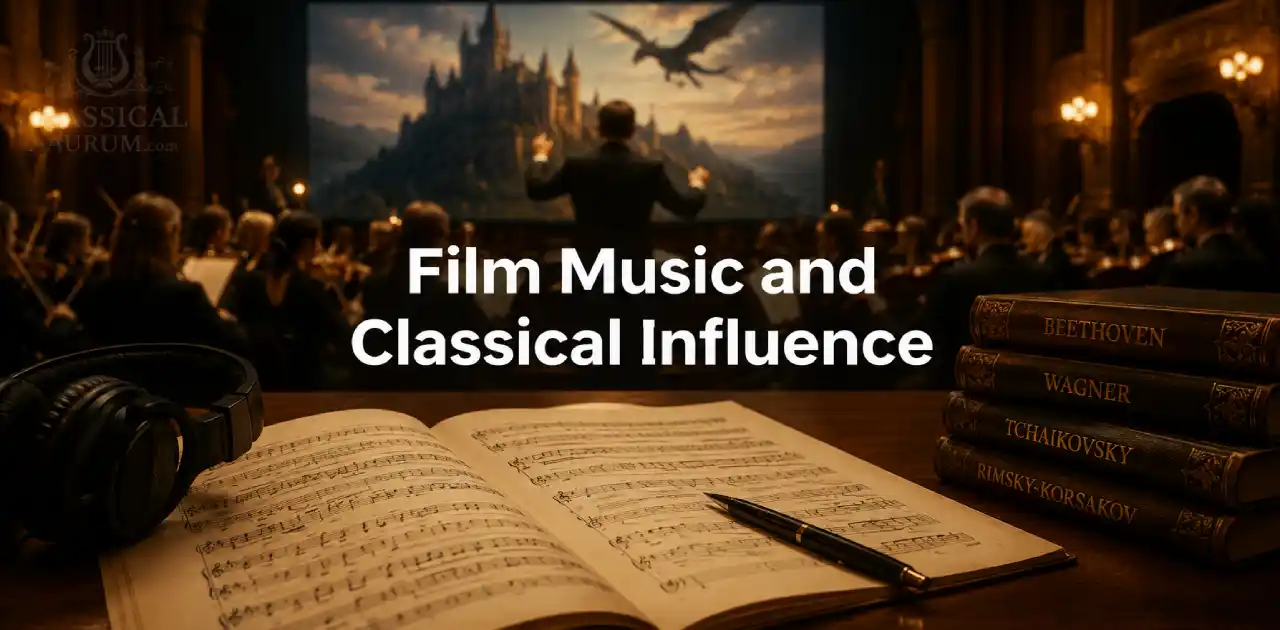
Related: Film Music and Classical Influence
The Shared Language of Storytelling
Music and cinema communicate through narrative. A film unfolds scene by scene, while a symphony develops movement by movement. Both forms rely on pacing, tension, release, climax, and resolution.
Classical composers mastered these principles centuries before the invention of motion pictures. Their works guide listeners through emotional journeys using harmony, rhythm, orchestration, and thematic development. These same techniques naturally complement visual storytelling.
When audiences hear a gradual orchestral crescendo beneath a dramatic scene, they instinctively anticipate an important event. Conversely, delicate string passages can suggest vulnerability or intimacy without a single spoken word.
This ability to shape emotional expectations makes classical music an ideal partner for cinema. It enhances the narrative while remaining invisible to many viewers, subtly influencing perception throughout the film.
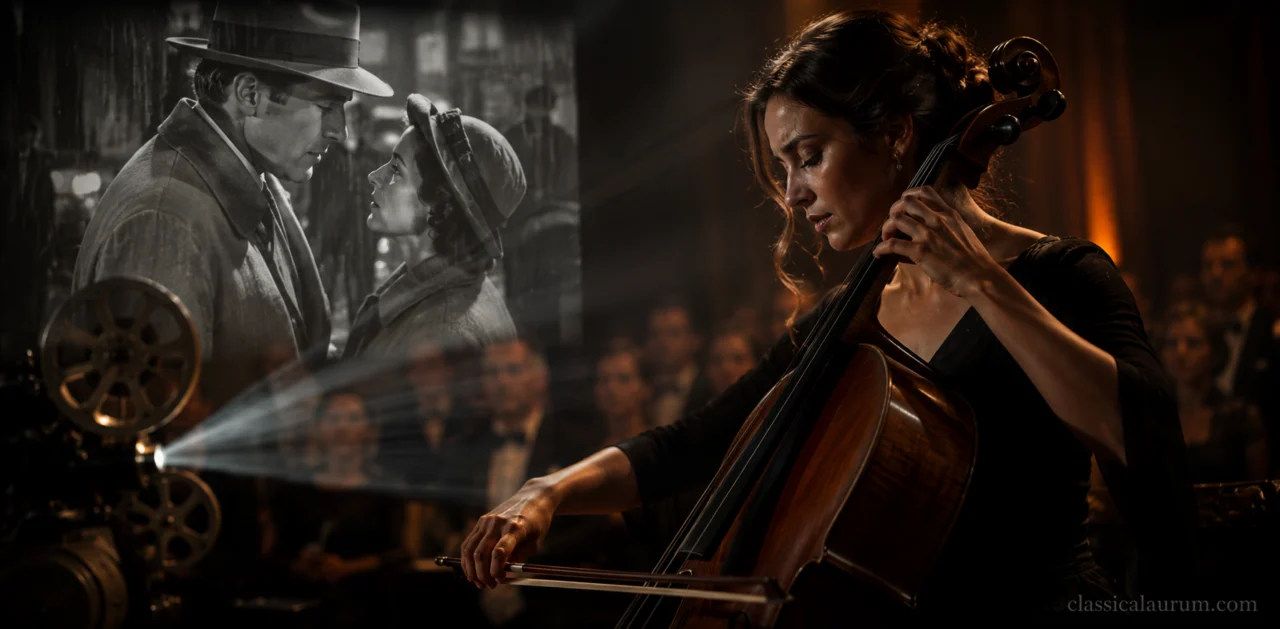
Emotion Beyond Dialogue
One of cinema’s greatest strengths is its ability to communicate emotions without relying entirely on dialogue. Classical music amplifies this capability by expressing feelings that words cannot fully capture.
A simple melody performed by a solo violin may evoke loneliness, while a rich brass fanfare conveys courage and determination. These emotional associations are deeply rooted in centuries of musical tradition.
Film composers frequently employ orchestral colors inherited from classical masters. Instead of telling audiences what characters feel, the music allows viewers to experience those emotions directly.
This psychological effect explains why memorable cinematic scenes often remain unforgettable long after specific lines of dialogue have faded from memory. Music creates emotional memories that endure.
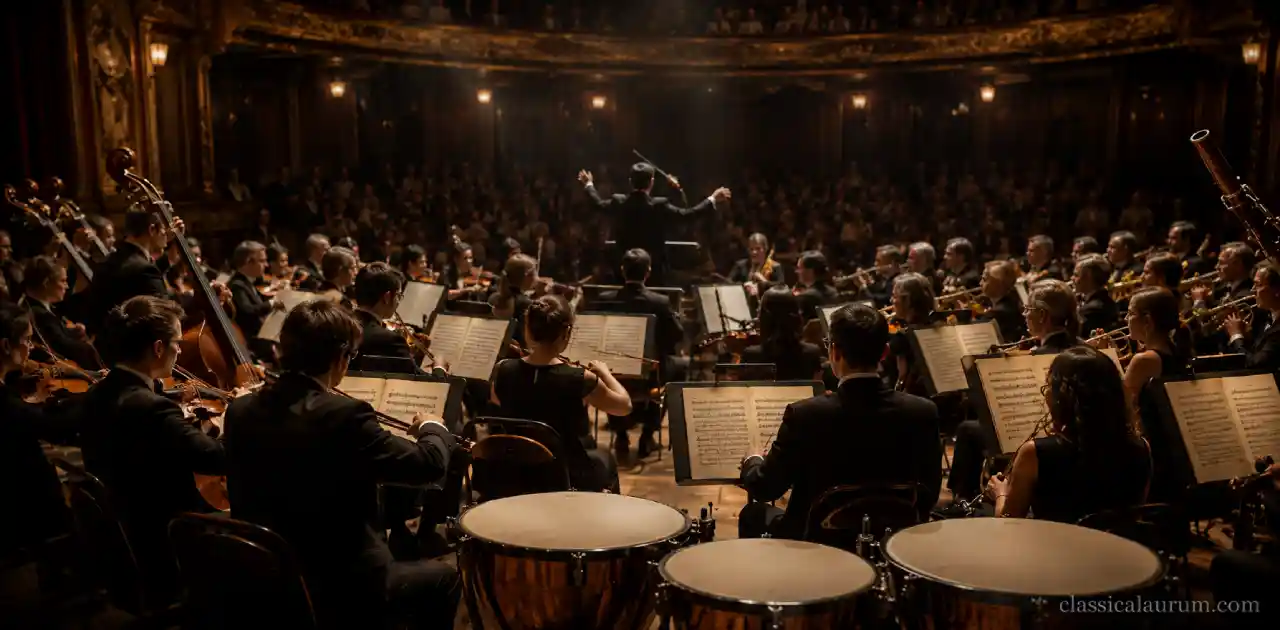
The Orchestra as an Emotional Instrument
The symphony orchestra remains the most expressive musical ensemble ever developed. Its enormous palette of sounds allows composers to paint emotional landscapes with remarkable precision.
Strings provide warmth, melancholy, tenderness, and passion. Woodwinds introduce elegance, innocence, curiosity, or humor. Brass instruments deliver nobility, power, and triumph, while percussion heightens danger, excitement, or suspense.
Film composers continue to rely heavily on these orchestral colors because they communicate universal emotions across cultures.
Even audiences unfamiliar with classical music instinctively understand these musical signals. The orchestra has become an emotional language recognized around the world.
Leitmotifs and Character Identity
Among the most influential contributions of classical music to cinema is the concept of the leitmotif, developed most famously by Richard Wagner.
A leitmotif is a recurring musical theme associated with a specific character, idea, location, or emotion. Every time the theme returns, it reminds audiences of its narrative significance.
Modern film composers have embraced this technique with extraordinary success. Heroic protagonists, mysterious villains, magical worlds, and romantic relationships often receive their own recognizable themes.
These recurring melodies help audiences navigate complex narratives while strengthening emotional connections throughout the story.
Rather than simply decorating scenes, leitmotifs become an essential storytelling device that evolves alongside the characters themselves.
The Influence of Great Classical Composers
Many film composers openly acknowledge their debt to classical masters.
Beethoven demonstrated how musical ideas could grow organically throughout an entire composition. Mahler expanded orchestral color and emotional scale. Debussy explored atmospheric harmony, while Stravinsky revolutionized rhythm and dramatic intensity.
These innovations became part of the vocabulary used by Hollywood composers.
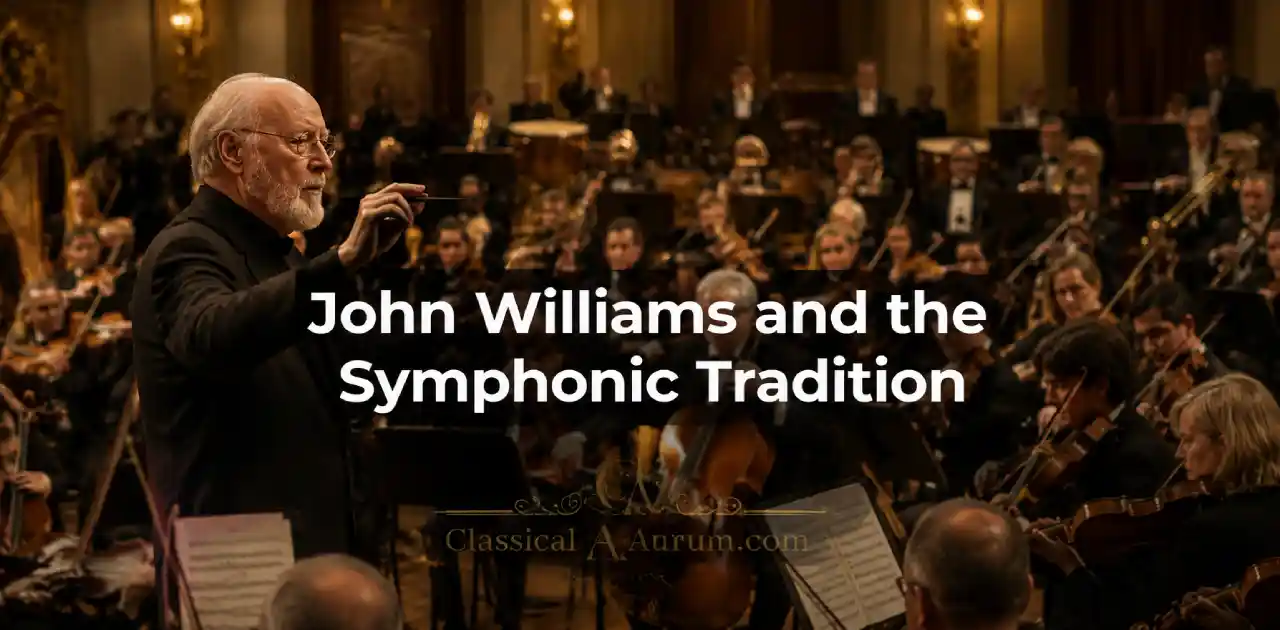
John Williams, Howard Shore, James Horner, Patrick Doyle, Alexandre Desplat, and countless others have built upon this rich heritage. Their music reflects centuries of orchestral evolution rather than abandoning tradition.
As a result, modern film scores often sound both contemporary and timeless.
Silence and Musical Contrast
An overlooked lesson inherited from classical music involves the effective use of silence.
Great composers understood that silence possesses expressive power equal to sound itself. Moments of quiet create anticipation, tension, and emotional vulnerability.
Film composers use the same principle. Music does not accompany every scene continuously. Instead, carefully chosen moments of silence allow important musical entrances to achieve greater impact.
Contrast between quiet passages and orchestral climaxes increases dramatic intensity. Audiences become more emotionally engaged because the score breathes alongside the story.
This balance between sound and silence remains one of classical music’s greatest gifts to cinema.
Psychology and the Human Brain
Scientific research increasingly supports what audiences have experienced intuitively for generations: music profoundly influences emotional perception.
The brain processes musical information rapidly, often before conscious analysis occurs. Changes in harmony, tempo, dynamics, and orchestration immediately affect mood and expectation.
Classical music is particularly effective because it combines structural sophistication with emotional clarity.
Film composers exploit these psychological mechanisms to guide audience reactions. Suspense grows through unresolved harmonies. Joy emerges through bright orchestration and major tonalities. Tragedy often appears through descending melodic lines and darker harmonic colors.
These responses occur almost automatically, demonstrating why orchestral film music remains so persuasive.
Classical Masterpieces Inside Films
Beyond original film scores, many directors incorporate existing classical compositions directly into their movies.
Works by Mozart, Bach, Beethoven, Schubert, Chopin, Ravel, and Strauss have appeared in hundreds of films.
These selections immediately provide historical context, cultural sophistication, or emotional resonance.
When audiences recognize a familiar masterpiece, the music carries its own artistic history into the cinematic experience. The emotional associations accumulated over centuries enrich the scene in ways that newly composed music sometimes cannot.
This dialogue between historical repertoire and modern storytelling illustrates the remarkable flexibility of classical music.
The Timeless Quality of Symphonic Sound
Unlike many musical trends tied to particular decades, orchestral music rarely sounds outdated.
The symphony orchestra has remained fundamentally unchanged for more than a century, allowing classic film scores to retain their emotional power across generations.
Audiences today continue to respond to orchestral scores written decades ago because they rely on timeless musical principles rather than temporary stylistic fashions.
This durability explains why many celebrated film soundtracks are regularly performed in concert halls around the world.
Their artistic value extends beyond the screen into the broader tradition of classical performance.
Modern Cinema Still Needs Classical Music
Advances in digital technology have transformed music production, giving composers access to virtual orchestras, synthesizers, and artificial intelligence.
Despite these innovations, the expressive richness of classical orchestration remains irreplaceable.
Many contemporary blockbusters still feature large symphony orchestras because no digital substitute fully captures the complexity of human performance.
Even hybrid scores combining electronics with orchestral writing depend heavily upon classical compositional techniques developed over centuries.
Rather than becoming obsolete, classical music continues to evolve alongside modern filmmaking.
Why Audiences Continue to Respond
People often claim they know little about classical music, yet millions enthusiastically embrace it every time they watch a great film.
Cinema serves as an unexpected gateway into the classical tradition. Viewers who admire a film score frequently discover Beethoven, Wagner, Holst, Mahler, or Prokofiev through their cinematic influences.
This connection demonstrates that classical music remains accessible when presented within compelling narratives.
Its emotional vocabulary transcends language, nationality, and historical period.
The power of orchestral storytelling continues to resonate because it reflects universal aspects of the human experience.
Conclusion
Classical music has become one of cinema’s most enduring artistic partners because both forms seek the same objective: telling stories that move audiences deeply. Through expressive orchestration, thematic development, dramatic structure, and emotional precision, the classical tradition provides filmmakers with an extraordinary narrative language.
From silent films to contemporary blockbusters, the influence of the great composers remains unmistakable. Modern film music owes much of its emotional sophistication to centuries of orchestral innovation. Even in an age dominated by digital technology, audiences continue to respond instinctively to the timeless sound of the symphony orchestra.
For listeners, cinema often becomes the first encounter with classical music. For musicians, film demonstrates that the masterpieces of the past remain vibrantly alive in the present. This enduring relationship ensures that classical music will continue to inspire filmmakers, composers, and audiences for generations to come.
At ClassicalAurum.com, we celebrate these connections because they reveal an essential truth: classical music is not confined to concert halls. It lives wherever profound stories are told, and nowhere is that more evident than on the silver screen.