Breaking Tonality
Breaking Tonality
For nearly three centuries, tonality served as the structural foundation of Western classical music. Composers relied on clear relationships between keys, harmonic progressions, and cadences that guided listeners through musical narratives with a sense of balance and resolution. From Johann Sebastian Bach to Wolfgang Amadeus Mozart, from Ludwig van Beethoven to Johannes Brahms, tonal organization created a common musical language understood by composers and audiences alike.
By the end of the nineteenth century, however, many composers began to feel that traditional tonality had reached its expressive limits. Increasing chromaticism, expanding orchestras, and new philosophical ideas encouraged musicians to search for fresh artistic possibilities. This search eventually led to one of the greatest revolutions in music history: breaking tonality.
Rather than abandoning tradition overnight, composers gradually stretched harmonic conventions until the familiar sense of key dissolved. The result transformed not only composition but also music theory, performance practice, and the way listeners experience sound. Today, breaking tonality remains one of the defining moments in the evolution of Western music.

The Rise and Limits of Tonal Harmony
Tonality is based on the idea that all notes within a piece relate to a central pitch called the tonic. Harmonic progressions establish tension and release, allowing music to move naturally toward moments of resolution.
Related: Sonata Form Made Simple
Throughout the Classical and Romantic periods, composers continuously expanded this language. Beethoven introduced bold harmonic adventures. Franz Schubert explored distant key relationships. Richard Wagner delayed harmonic resolution through extended chromaticism, particularly in Tristan und Isolde, whose famous opening chord challenged traditional expectations.
These innovations enriched musical expression but also revealed the limitations of tonal harmony. As chromaticism increased, distinguishing a stable key became increasingly difficult. Musical phrases wandered through multiple tonal centers before finally returning home—or sometimes never returning at all.
By the late nineteenth century, many composers questioned whether the traditional tonal system could still support the emotional intensity and complexity they wished to express.

From Chromaticism to Atonality
The gradual erosion of tonality did not occur suddenly. Instead, it emerged through decades of experimentation by composers seeking greater expressive freedom.
Among the most influential figures was Arnold Schoenberg, whose early works remained rooted in late Romantic harmony while pushing chromaticism to unprecedented levels. Eventually, his compositions abandoned any permanent tonal center, giving birth to atonality.
Unlike tonal music, atonal compositions avoid establishing one note as more important than another. Every pitch can function independently, creating a musical landscape without traditional harmonic gravity.
This approach dramatically altered the listening experience. Instead of expecting predictable cadences, audiences encountered constantly shifting sonorities that emphasized color, texture, and emotional intensity over conventional resolution.
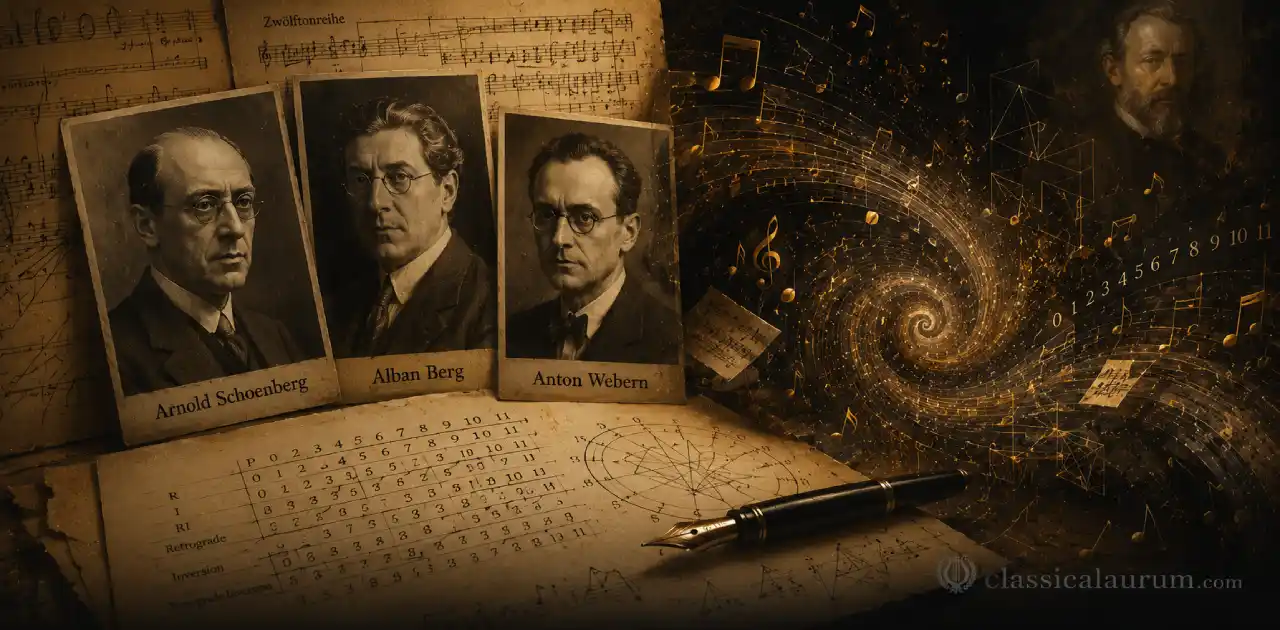
Other composers, including Alban Berg and Anton Webern, expanded these ideas while developing their own distinctive musical voices.
The Second Viennese School and Serialism
Breaking tonality eventually led to one of the twentieth century’s most influential compositional systems: twelve-tone serialism.
Schoenberg developed this technique during the 1920s as a way to organize atonal music systematically. Rather than composing freely with all twelve chromatic pitches, he created ordered sequences called tone rows, ensuring that each pitch appeared before any note repeated.
This method eliminated traditional hierarchies while preserving structural coherence.
Berg combined serial techniques with Romantic expressiveness, producing emotionally rich works that remained accessible despite their complexity. Webern pursued remarkable precision, writing highly condensed compositions in which every note carried enormous structural significance.
The Second Viennese School fundamentally reshaped composition, influencing generations of musicians throughout Europe and the Americas. Even composers who rejected strict serialism benefited from the expanded harmonic possibilities introduced by these pioneers.
Beyond Atonality: New Musical Languages
Breaking tonality did not create a single replacement system. Instead, it opened countless paths for musical innovation.
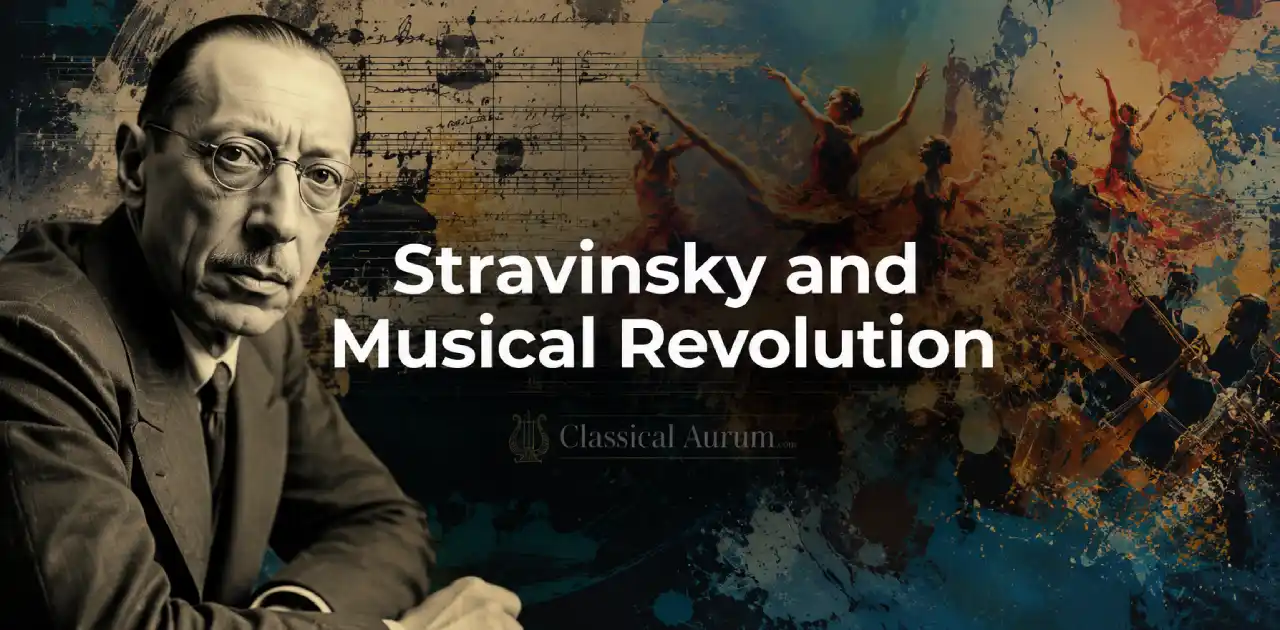
Some composers embraced modal writing, reviving scales that predated traditional major and minor systems. Others explored polytonality, where multiple keys coexist simultaneously. Igor Stravinsky frequently juxtaposed contrasting tonal centers, while Béla Bartók blended folk traditions with modern harmonic techniques.
Later composers experimented with microtonality, dividing the octave into intervals smaller than semitones. Others emphasized rhythm, timbre, or texture rather than harmonic progression.
Minimalist composers such as Steve Reich and Philip Glass reintroduced tonal references but organized them through repetition and gradual transformation rather than traditional harmonic development.
Today, composers freely combine tonal, modal, atonal, electronic, and experimental elements without feeling constrained by historical rules. Modern composition embraces stylistic diversity as one of its greatest strengths.
The Legacy of Breaking Tonality
More than a century after its emergence, breaking tonality continues to influence virtually every area of contemporary music.
Film composers frequently employ atonal techniques to create suspense, psychological tension, and dramatic uncertainty. Contemporary concert music draws from both tonal and post-tonal traditions, allowing composers to choose whichever language best serves their artistic vision.
Music education has also evolved. Students now study tonal harmony alongside twentieth-century analytical methods, serial composition, set theory, and alternative harmonic systems. This broader perspective reflects the extraordinary expansion of musical possibilities initiated by early modernists.
Importantly, breaking tonality never replaced tonal music entirely. Instead, it enriched the musical landscape by adding new expressive languages. Audiences today enjoy an unprecedented diversity of styles, from traditional symphonies to avant-garde soundscapes.
The history of Western music demonstrates that innovation rarely destroys tradition. Instead, it expands artistic possibilities while preserving the achievements of earlier generations.
Conclusion
Breaking tonality represents one of the most significant turning points in the history of classical music. What began as an effort to extend Romantic chromaticism ultimately transformed the foundations of musical thought.
By challenging centuries-old conventions, composers such as Schoenberg, Berg, Webern, Stravinsky, and Bartók created entirely new approaches to harmony, structure, and expression. Their innovations reshaped composition, performance, music theory, and listening practices throughout the twentieth century and beyond.
Today, tonal and post-tonal languages coexist as complementary artistic tools rather than opposing philosophies. Composers can draw from centuries of harmonic tradition while exploring new sonic possibilities without limitation.
For listeners, understanding breaking tonality offers a deeper appreciation of modern classical music. What may initially sound unfamiliar often reveals remarkable structural beauty, emotional depth, and intellectual richness. Far from representing the end of musical tradition, breaking tonality opened the door to an extraordinary era of creativity whose influence continues to shape classical music in the twenty-first century.

About the Author
Juan Daniel Cabrio
Argentine Classical Guitarist · Researcher · Educator
Juan Daniel Cabrio is an Argentine classical guitarist, researcher and educator. Founder of Classical Aurum, he shares educational and cultural content about classical music, composers, instruments, repertoire, music history and performance practice.
View full biography