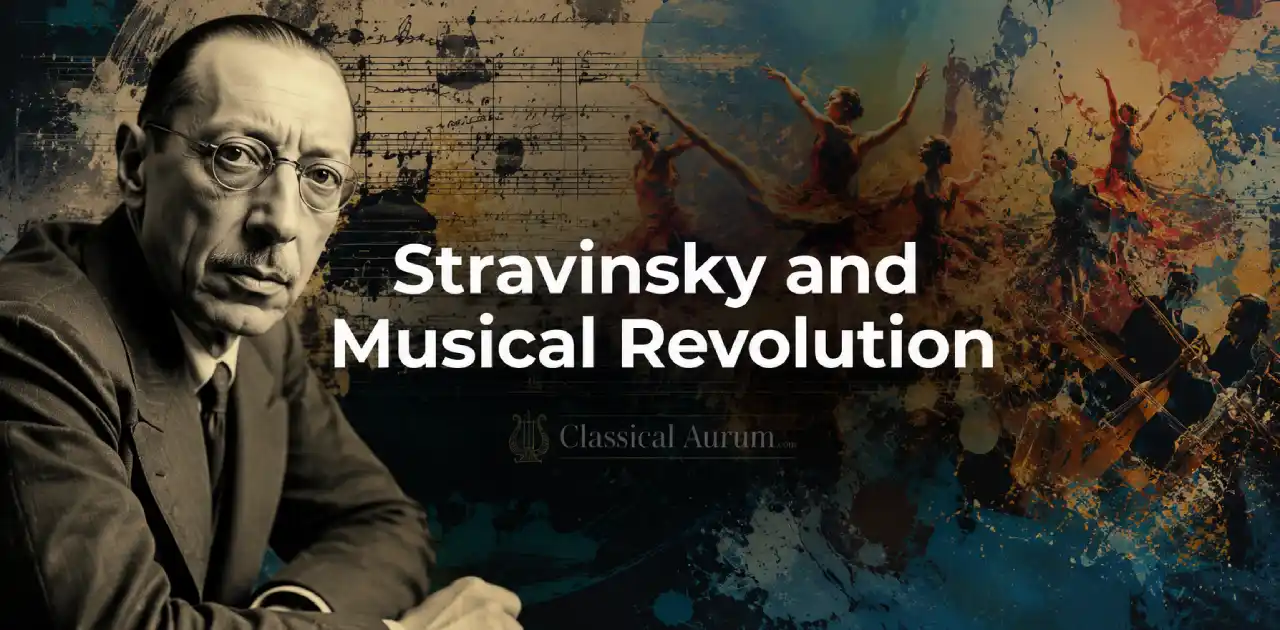
Stravinsky and Musical Revolution
Stravinsky and Musical Revolution
Few composers reshaped the course of Western classical music as profoundly as Igor Stravinsky. Throughout the twentieth century, his works challenged audiences, inspired composers, and transformed the very language of music. His bold experiments with rhythm, harmony, orchestration, and form marked the beginning of a new era that permanently altered the artistic landscape.
Rather than following established traditions, Stravinsky continuously reinvented himself. Each creative period introduced fresh ideas, proving that innovation could coexist with respect for musical history. His extraordinary versatility made him one of the most influential composers of modern times and a central figure in the evolution of twentieth-century music.
For listeners today, Stravinsky represents more than a historical figure. He symbolizes artistic courage, intellectual curiosity, and the willingness to redefine the boundaries of musical expression.
The Musical World Before Stravinsky
At the beginning of the twentieth century, European music was still deeply influenced by the Romantic tradition. Composers such as Wagner, Mahler, and Richard Strauss had expanded orchestral possibilities while emphasizing emotional intensity and expressive harmony.
Related: Beethoven as a Bridge Between Eras
Although new artistic movements were emerging, many composers continued working within familiar tonal structures. Musical development often relied on long melodic lines, predictable rhythmic patterns, and traditional harmonic progressions.
Stravinsky entered this environment with a completely different perspective. Instead of expanding Romantic language, he questioned its foundations. His compositions introduced unexpected accents, fragmented melodies, bold orchestral colors, and rhythmic complexity unlike anything audiences had previously experienced.
His arrival marked not simply the appearance of another composer but the beginning of a genuine musical revolution.
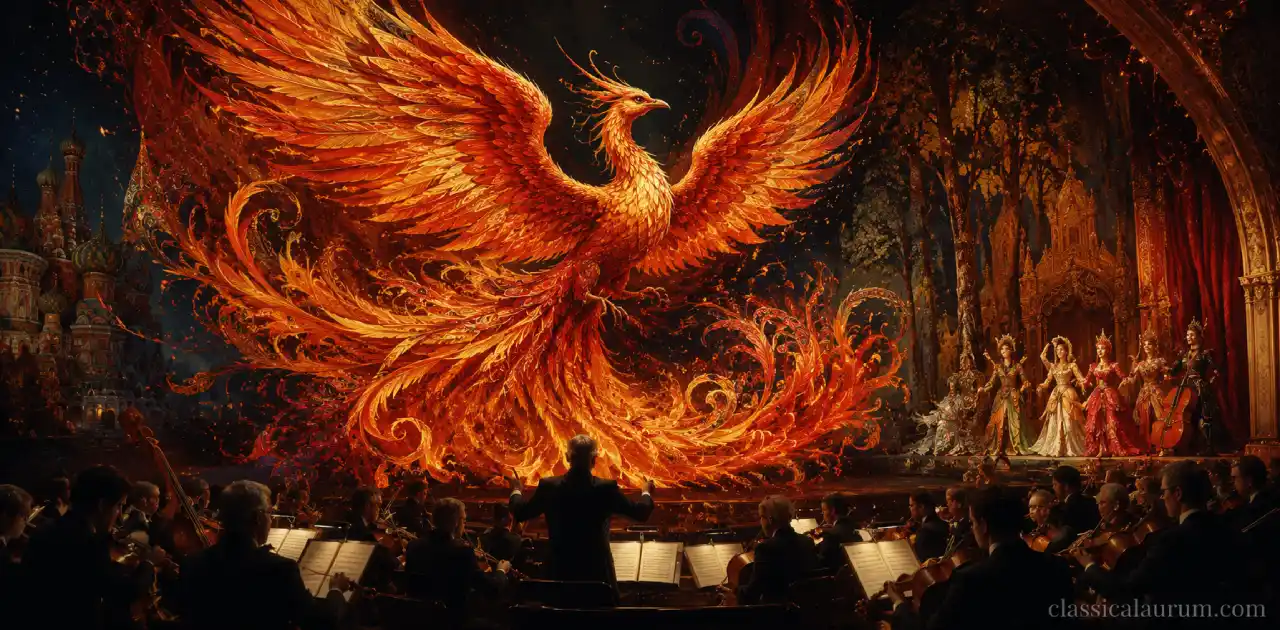
The Firebird: A Brilliant Beginning
Stravinsky’s international reputation began with The Firebird, commissioned by Sergei Diaghilev for the Ballets Russes in Paris in 1910.
The ballet demonstrated remarkable orchestral imagination while still showing the influence of his teacher, Nikolai Rimsky-Korsakov. Rich instrumental colors, vivid storytelling, and brilliant orchestration immediately attracted worldwide attention.
Although The Firebird remained connected to Russian musical traditions, it already hinted at Stravinsky’s unique personality. The rhythmic energy, dramatic contrasts, and imaginative orchestral textures suggested that an extraordinary creative voice was emerging.
Its success opened the door to even more daring artistic experiments.
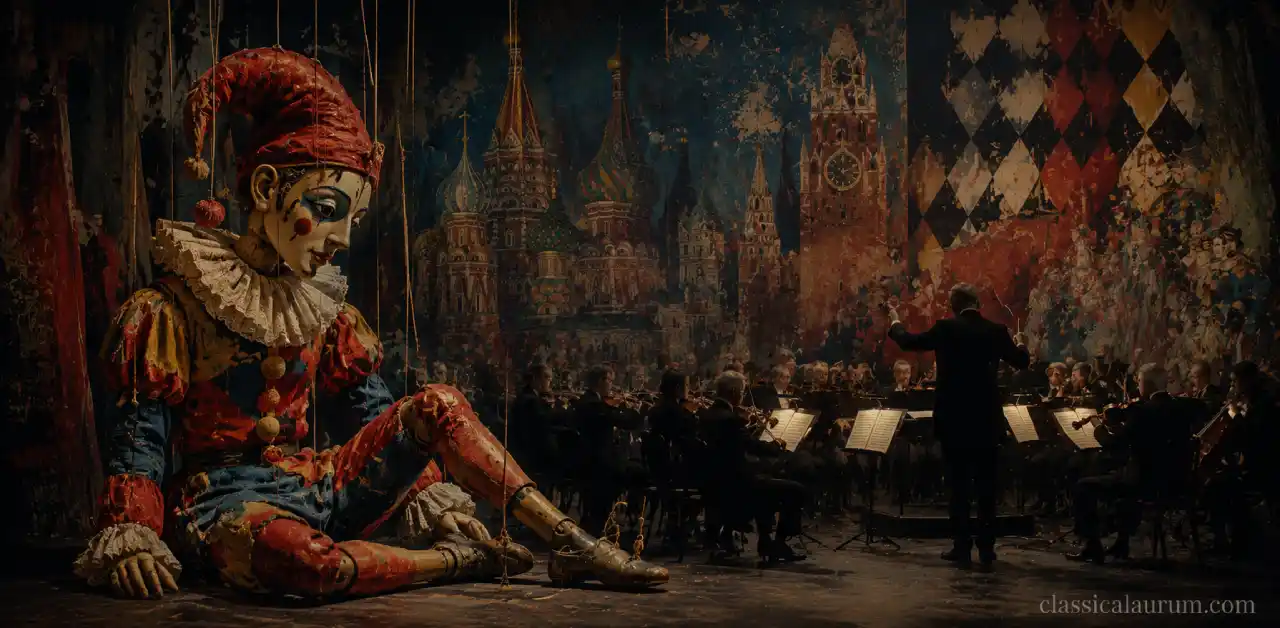
Petrushka and the Expansion of Musical Language
With Petrushka in 1911, Stravinsky moved further away from conventional musical thinking.
The ballet tells the tragic story of a puppet brought to life, yet its true importance lies in its innovative musical construction. Multiple tonal centers appear simultaneously, creating what later became known as bitonality.
Rather than relying on smooth harmonic transitions, Stravinsky juxtaposed contrasting musical ideas with remarkable freedom. The orchestra became a dramatic character rather than simply accompanying dancers.
Rhythmic vitality of Petrushka prepared audiences for the much greater revolution that would soon follow.
The Rite of Spring and the Shock That Changed Music
No discussion of Stravinsky and Musical Revolution is complete without examining The Rite of Spring, premiered in Paris in 1913.
The ballet famously provoked one of the greatest controversies in music history. Audience members reacted with confusion, arguments, and even physical confrontations during the premiere. While popular accounts often exaggerate the details, there is no doubt that the performance became a defining cultural event.
The reasons for the reaction were clear. Stravinsky abandoned conventional musical expectations almost entirely.
His innovations included:
- Explosive rhythmic irregularity.
- Constantly shifting meters.
- Powerful orchestral sonorities.
- Dissonant harmonies.
- Primitive melodic materials inspired by ancient folk traditions.
Instead of elegant Romantic beauty, listeners encountered raw energy and relentless rhythmic force.
Today, The Rite of Spring is considered one of the greatest masterpieces of twentieth-century music and one of the most influential orchestral works ever written.
Rhythm as the Driving Force
Perhaps Stravinsky’s greatest innovation was his revolutionary treatment of rhythm.
Previous generations generally viewed rhythm as an organizational framework supporting melody and harmony. Stravinsky elevated rhythm into the principal structural element of musical expression.
Unexpected accents continually disrupted predictable patterns. Rapid meter changes created an almost physical sense of movement. Repeated rhythmic cells generated enormous energy without relying on traditional melodic development.
This approach profoundly influenced later composers across classical music, jazz, film scoring, and even progressive rock.
Modern audiences often take these rhythmic techniques for granted because Stravinsky permanently changed how composers think about musical time.
A New Vision of Orchestration
Stravinsky also transformed orchestral writing.
Instead of using the orchestra merely to create large volumes of sound, he treated each instrument as an independent voice with distinctive color and personality.
Woodwinds often played in extreme registers. Brass instruments produced bold, aggressive sonorities. Percussion assumed unprecedented structural importance. Strings frequently abandoned lush Romantic textures in favor of sharp, rhythmic articulation.
Every orchestral combination served dramatic and architectural purposes.
His remarkable precision continues to influence orchestration textbooks, conservatory training, and contemporary composers around the world.
Neoclassicism and Constant Reinvention
One of Stravinsky’s most remarkable qualities was his refusal to remain stylistically fixed.
After his revolutionary Russian period, he embraced Neoclassicism, drawing inspiration from eighteenth-century musical forms while preserving his unmistakably modern voice.
Works such as Pulcinella, the Symphony of Psalms, and the Symphony in C demonstrate how historical models could become vehicles for entirely new artistic ideas.
Rather than imitating Mozart or Bach, Stravinsky reinterpreted classical balance, clarity, and proportion through a modern musical language.
His career illustrates that artistic innovation often comes not from rejecting tradition entirely but from transforming it creatively.
Late Works and Serial Techniques
In the final decades of his life, Stravinsky surprised audiences once again by incorporating elements of twelve-tone composition, a technique closely associated with Arnold Schoenberg.
Many observers expected him to reject serialism permanently. Instead, he adapted selected techniques to fit his own artistic identity.
Works such as Agon, Movements, and Requiem Canticles demonstrate remarkable intellectual discipline while retaining Stravinsky’s characteristic rhythmic vitality and structural precision.
This final stylistic transformation confirmed his lifelong commitment to continuous artistic exploration.
Influence Beyond Classical Music
Stravinsky’s impact extends far beyond concert halls.
Film composers have adopted his orchestral colors, rhythmic complexity, and dramatic pacing. Jazz musicians have borrowed his harmonic language and irregular rhythms. Contemporary composers continue studying his structural clarity and formal innovation.
Even popular music occasionally reflects Stravinsky’s influence through asymmetric rhythms, unexpected harmonic shifts, and layered textures.
His revolutionary ideas became part of the broader vocabulary of twentieth- and twenty-first-century music.
Very few composers have influenced such a wide range of musical traditions while maintaining a unique artistic identity.
Why Stravinsky Still Matters Today
More than a century after his greatest masterpieces were written, Stravinsky remains astonishingly modern.
His music continues to challenge performers while rewarding careful listening. Every new generation discovers fresh details within his remarkably sophisticated scores.
Students analyze his rhythmic structures in conservatories worldwide. Conductors admire his extraordinary orchestral precision. Composers continue drawing inspiration from his fearless experimentation.
Most importantly, listeners still experience the same sense of surprise that characterized his earliest audiences.
That enduring freshness explains why Stravinsky occupies such a central place in music history.
Conclusion
The story of Stravinsky and Musical Revolution is ultimately the story of artistic transformation itself.
From the colorful imagination of The Firebird to the explosive innovation of The Rite of Spring, from elegant Neoclassicism to refined serial experimentation, Stravinsky never stopped redefining what music could become.
His willingness to challenge conventions permanently expanded the possibilities of composition, performance, and musical thought. Rhythm acquired new expressive power. Orchestration reached unprecedented sophistication. Musical form became infinitely more flexible.
Today, Igor Stravinsky stands among the greatest creative minds in the history of Western civilization. His works continue to inspire musicians, scholars, and audiences because they demonstrate that genuine innovation is never about abandoning the past—it is about transforming tradition into something entirely new.
For readers of ClassicalAurum.com, Stravinsky’s legacy offers an essential reminder that classical music is not a static museum of masterpieces but a living tradition constantly renewed by visionary artists who dare to imagine the future.
About the Author
Juan Daniel Cabrio
Argentine Classical Guitarist · Researcher · Educator
Juan Daniel Cabrio is an Argentine classical guitarist, researcher and educator. Founder of Classical Aurum, he shares educational and cultural content about classical music, composers, instruments, repertoire, music history and performance practice.
View full biographyExplore more Classical Aurum articles related to this topic.