


Modernism in Classical Music
El modernismo en la música clásica: una revolución sonora.
La música clásica ha evolucionado continuamente a lo largo de la historia. Cada época trajo consigo nuevos estilos, ideas y prioridades artísticas. A principios del siglo XX, los compositores se enfrentaron a un mundo en rápida transformación, marcado por la industrialización, los descubrimientos científicos, la agitación política y los nuevos movimientos artísticos. Estas circunstancias dieron origen al Modernismo en la Música Clásica , uno de los desarrollos más influyentes de la historia musical.
El modernismo desafió las formas tradicionales y las convenciones armónicas que habían dominado la música europea durante siglos. En lugar de preservar el lenguaje establecido del Romanticismo, los compositores buscaron maneras completamente nuevas de expresar emociones e ideas. Sus experimentos transformaron el panorama musical y abrieron caminos que siguen influyendo en los compositores actuales.
Para los lectores de Classicalaurum.com , comprender el modernismo proporciona una visión esencial de cómo la música clásica entró en la era contemporánea y por qué las obras del siglo XX a menudo suenan tan diferentes de las de Mozart, Beethoven o Brahms.
Antecedentes históricos del modernismo musical
A finales del siglo XIX, la música romántica había alcanzado niveles de complejidad extraordinarios. Compositores como Wagner, Mahler y Richard Strauss expandieron la armonía, la orquestación y la expresión emocional a dimensiones sin precedentes.
Relacionado: Del laúd a la guitarra moderna
Muchos artistas comenzaron a sentir que el sistema tonal tradicional había llegado a su límite. Al mismo tiempo, Europa experimentó profundas transformaciones culturales. Nuevos movimientos en la literatura, la pintura, la arquitectura y la filosofía fomentaron la experimentación y cuestionaron las ideas preconcebidas.
Los compositores modernistas respondieron a estos cambios rechazando la idea de que la música debiera seguir reglas establecidas. En cambio, abrazaron la innovación y buscaron lenguajes musicales que reflejaran las incertidumbres y complejidades de la vida moderna.
A diferencia de los periodos estilísticos anteriores, el modernismo no fue un estilo único y unificado. Se convirtió en un movimiento amplio que abarcaba diversos enfoques, cada uno con su propia filosofía artística.
Rompiendo con la tonalidad
Una de las características definitorias del modernismo fue el abandono gradual de la tonalidad tradicional. Durante siglos, la música occidental se había organizado en torno a tonalidades mayores y menores. Los compositores modernistas cuestionaron si este sistema podía seguir sirviendo a la expresión artística.
Algunos compositores expandieron la armonía manteniendo los centros tonales. Otros se inclinaron hacia la atonalidad , una música que evita por completo las relaciones tonales tradicionales.
Arnold Schoenberg became one of the most influential figures in this transformation. His early works pushed chromatic harmony to extreme levels before eventually abandoning tonality entirely. Later, he developed the famous twelve-tone method, which organized pitches according to mathematical principles rather than conventional harmonic relationships.
This radical approach deeply influenced later generations of composers and marked a decisive break with the past.
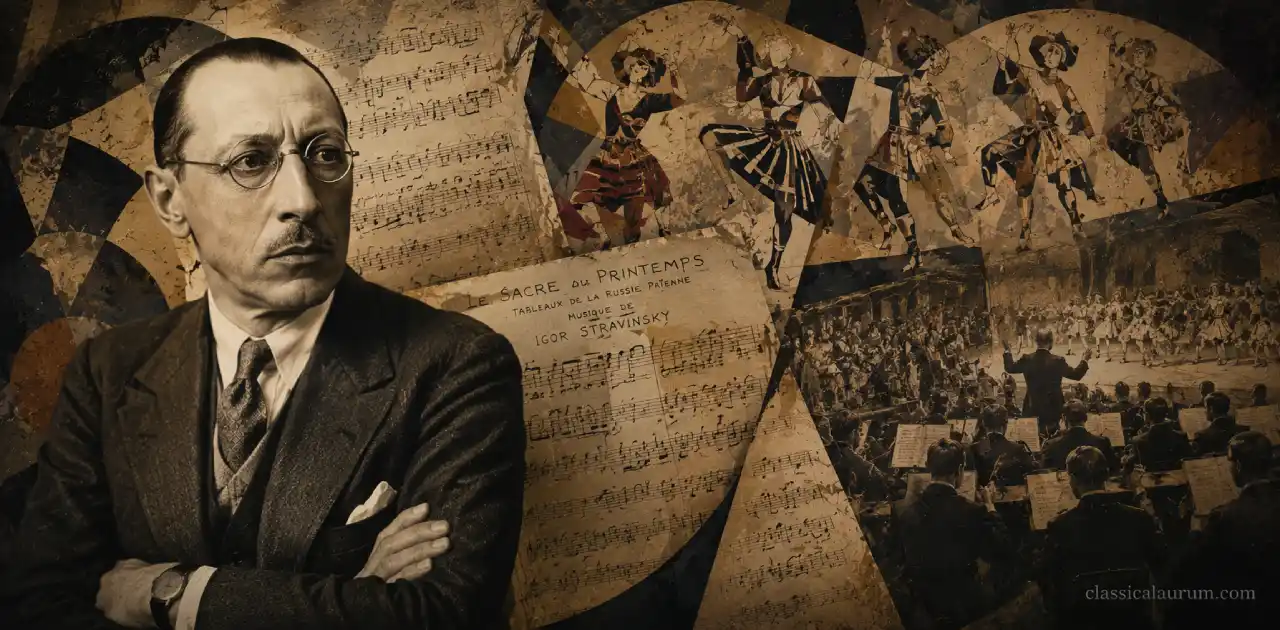
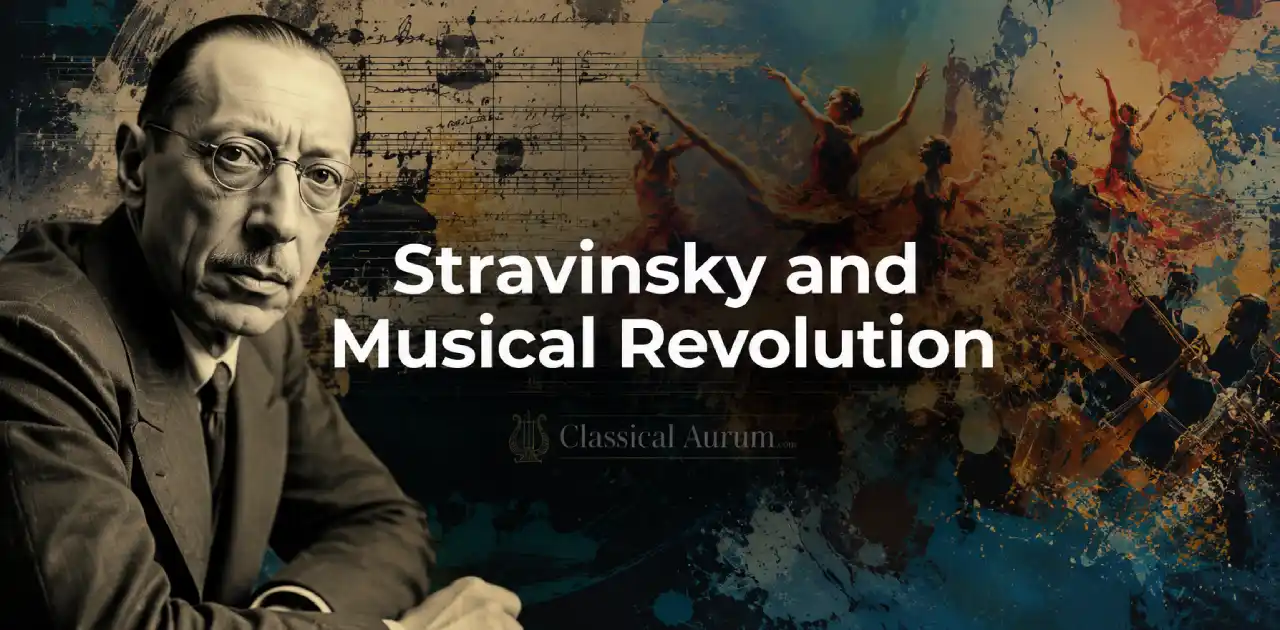
Igor Stravinsky and Rhythmic Innovation
Among the most revolutionary composers of the twentieth century was Igor Stravinsky. His ballet The Rite of Spring, premiered in 1913, shocked audiences with its powerful rhythms, unconventional harmonies, and primitive energy.
The work represented a turning point in musical history. Instead of emphasizing melody and romantic expression, Stravinsky focused on rhythmic complexity and orchestral color. The premiere famously caused controversy, yet the piece eventually became one of the most celebrated masterpieces of the twentieth century.
Stravinsky’s music demonstrated that modernism could embrace entirely new forms of expression without abandoning emotional impact. His career later evolved through neoclassicism and other styles, showing the remarkable flexibility of modernist thought.
The Second Viennese School
The Second Viennese School consisted primarily of Arnold Schoenberg and his students Alban Berg and Anton Webern. Together, they created some of the most intellectually influential music of the twentieth century.
Alban Berg combined modern harmonic techniques with emotional intensity. Works such as Wozzeck and Violin Concerto reveal how modernism could remain deeply expressive despite abandoning traditional tonality.
Anton Webern pursued extreme conciseness and precision. His compositions are often brief but highly concentrated, with every note carefully organized.
Although their music initially faced resistance from audiences, the ideas of the Second Viennese School later became central to academic composition throughout Europe and America.
National Identity and Folk Influences
Not all modernists rejected the past completely. Some composers combined innovation with national traditions and folk music.
Béla Bartók stands among the greatest examples of this approach. After collecting thousands of folk melodies from Eastern Europe, he incorporated their rhythms and scales into sophisticated modern compositions.
His music preserved cultural heritage while introducing fresh harmonic and rhythmic ideas. Works such as Music for Strings, Percussion and Celesta and his six string quartets demonstrate the successful fusion of tradition and experimentation.
Other composers, including Manuel de Falla, Jean Sibelius, and Ralph Vaughan Williams, also drew inspiration from their national cultures while participating in broader modernist developments.
Impressionism and Alternative Paths
Claude Debussy and Maurice Ravel are often associated with Impressionism rather than strict modernism. Nevertheless, their innovations strongly influenced twentieth-century music.
Debussy abandoned many conventional harmonic progressions and explored new scales, including whole-tone and pentatonic collections. His music emphasized atmosphere, color, and subtle emotional nuances.
Ravel combined extraordinary craftsmanship with innovative orchestration. His works displayed remarkable precision and sophistication while expanding the possibilities of musical expression.
Both composers demonstrated that modernism could pursue beauty and refinement rather than radical disruption. Their influence extended far beyond France and shaped generations of composers worldwide.
Technology and New Musical Possibilities
The twentieth century introduced technological developments that transformed musical creation and performance.
Recording technology allowed composers and audiences to experience music in entirely new ways. Radio broadcasts expanded access to classical music and introduced listeners to works from different countries.
Later developments led to electronic music, tape manipulation, and computer-assisted composition. Composers such as Edgard Varèse explored sound itself as a creative resource, moving beyond traditional instrumental limitations.
These innovations expanded the definition of music and encouraged further experimentation throughout the century.
Audience Reactions and Critical Debate
Modernist music often divided audiences. Many listeners accustomed to Romantic traditions found the new sounds difficult to understand. Critics debated whether modernism represented progress or unnecessary complexity.
Despite early resistance, numerous modernist works gradually entered the standard repertoire. Pieces once considered shocking are now performed regularly by major orchestras around the world.
This pattern illustrates an important truth in music history. Artistic innovations frequently require time before they are fully appreciated.
Modernism also stimulated intellectual discussion about the purpose of music and the relationship between composers, performers, and audiences.
The Lasting Legacy of Modernism
Modernism permanently transformed classical music. Even composers who rejected certain modernist ideas could not ignore its influence.
Contemporary composers continue to draw from techniques developed during the twentieth century. Minimalism, postmodernism, spectral music, and many other movements emerged partly in response to modernist experiments.
The legacy of composers such as Stravinsky, Schoenberg, Bartók, Debussy, and Webern remains visible in concert halls, conservatories, and academic institutions worldwide.
El modernismo amplió el vocabulario de la música clásica y demostró que las tradiciones artísticas pueden evolucionar sin perder su vitalidad esencial.
Por qué el modernismo importa hoy
El modernismo en la música clásica representa más que una colección de sonidos inusuales. Refleja la respuesta de la humanidad a una era de profundos cambios. Mediante la innovación, la experimentación y la audacia creativa, los compositores modernistas transformaron el mundo musical.
Sus obras nos recuerdan que la música clásica no es una tradición estática de museo. Por el contrario, es una forma de arte viva, capaz de adaptarse a nuevas realidades y expresar el espíritu de cada época.
Para músicos, académicos y oyentes por igual, explorar el modernismo ofrece una comprensión más profunda del extraordinario recorrido que la música clásica ha realizado a lo largo de los siglos. En Classicalaurum.com , el análisis de estas transformaciones ayuda a revelar cómo el pasado continúa inspirando el futuro de la creatividad musical.