
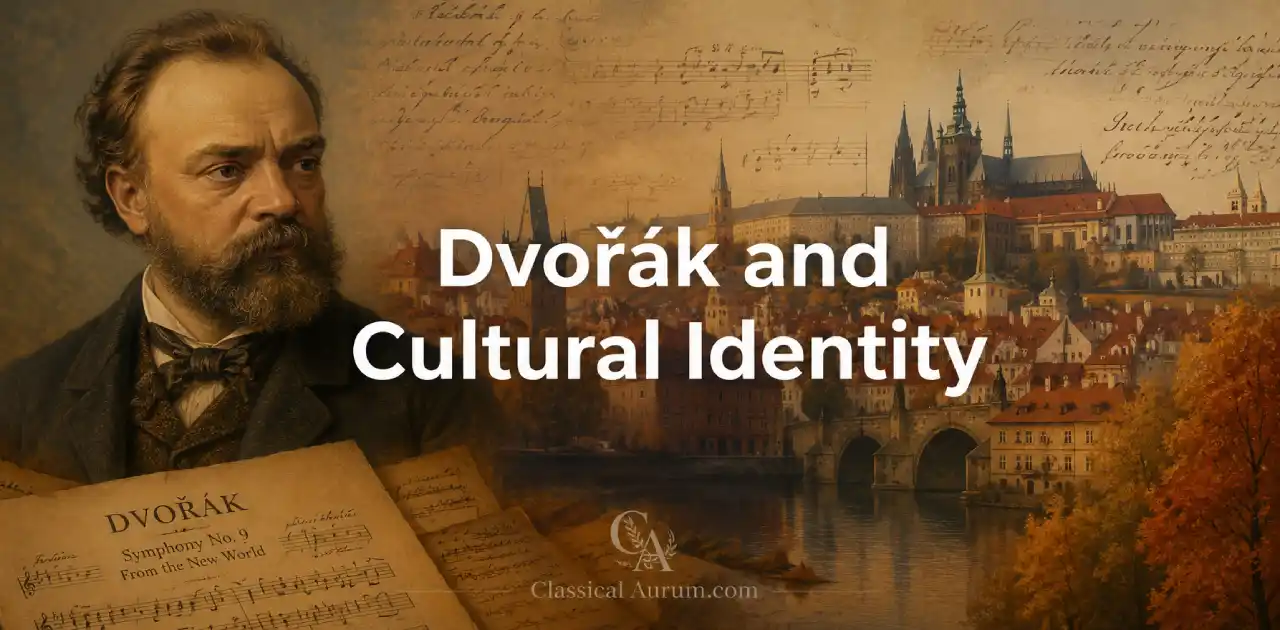
Dvořák and Cultural Identity
Dvořák and Cultural Identity
Among the great composers of the nineteenth century, Antonín Dvořák occupies a unique position. While many Romantic composers pursued personal expression, Dvořák successfully combined artistic originality with a deep connection to his homeland. His music became a bridge between national traditions and universal appeal.
At ClassicalAurum.com, understanding the relationship between music and history is essential. Dvořák’s career demonstrates how a composer can celebrate local culture while speaking to audiences across the world. His works continue to illustrate the importance of identity, tradition, and artistic authenticity.
The Historical Context of Czech Nationalism
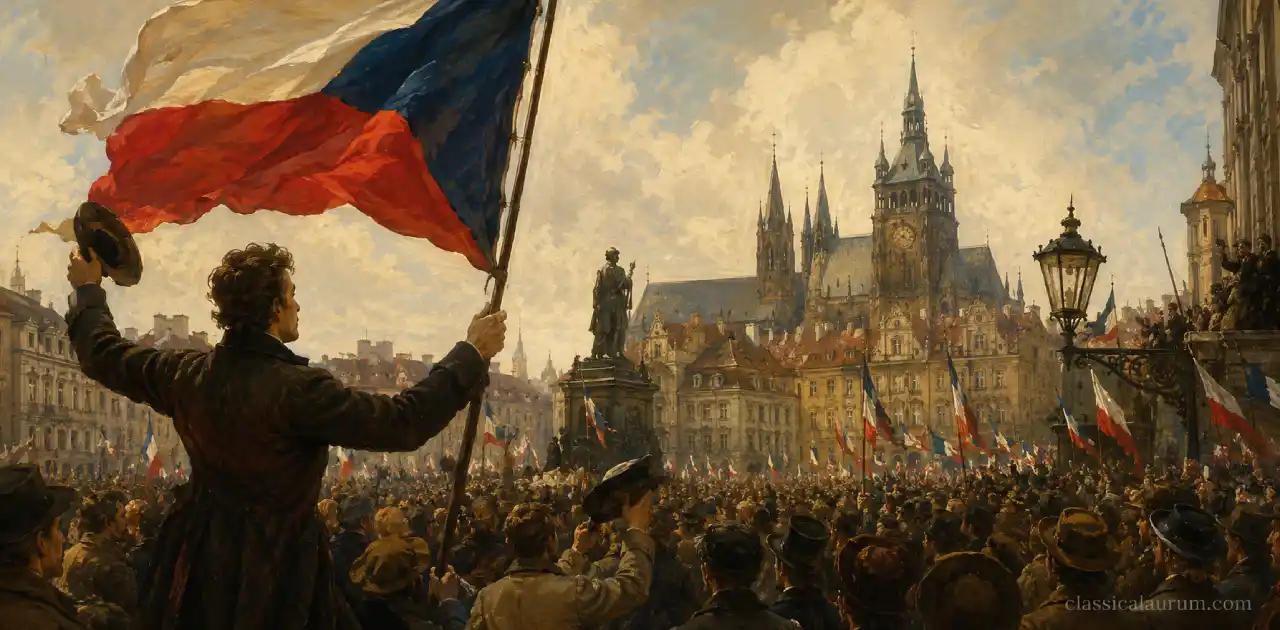
During Dvořák’s lifetime, the Czech lands were part of the Austro-Hungarian Empire. Political and cultural tensions encouraged many intellectuals and artists to preserve their language and traditions. Music became an important vehicle for expressing national consciousness.
The nineteenth century witnessed the rise of musical nationalism throughout Europe. Composers such as Bedřich Smetana, Edvard Grieg, and later Jean Sibelius sought inspiration in local folklore and regional history. Dvořák emerged within this environment, but his approach differed from overt political statements.
Rather than writing patriotic manifestos, he allowed Czech culture to appear naturally in his music. His melodies, rhythms, and harmonic colors reflected the sounds of Bohemia without relying exclusively on direct quotations from folk songs.
This subtle balance helped his music achieve both national significance and international recognition.
Early Life and the Influence of Folk Traditions
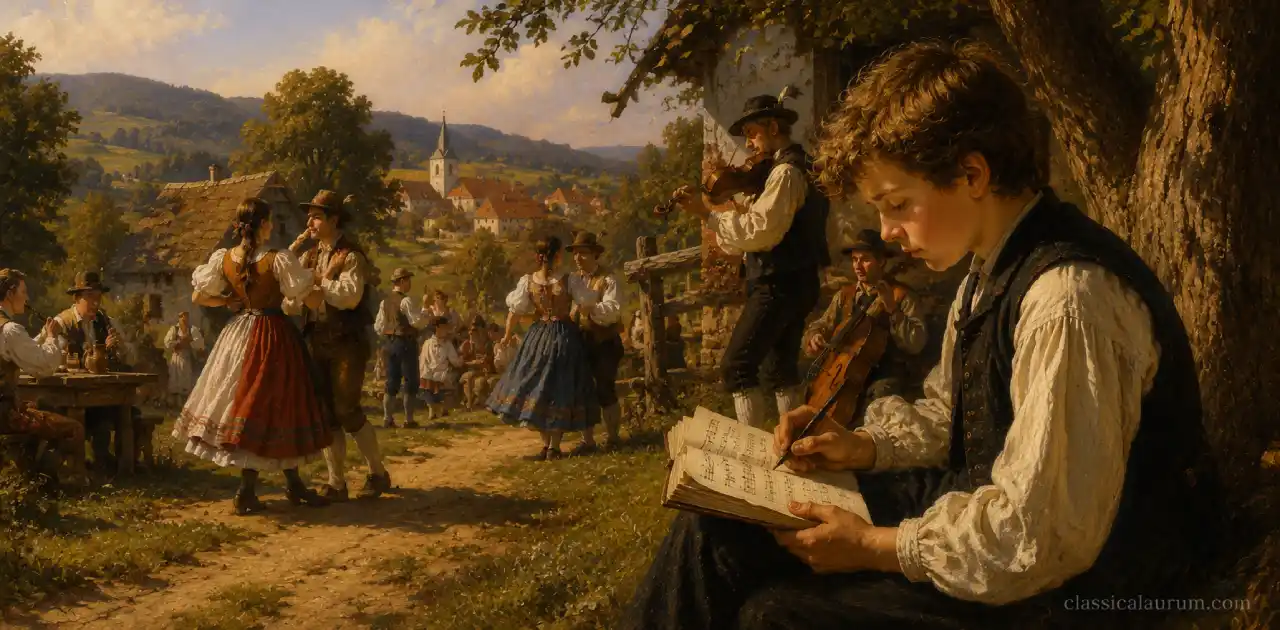
Antonín Dvořák was born in 1841 in Nelahozeves, a village near Prague. His upbringing exposed him to the rich traditions of Czech rural life. Folk dances, village celebrations, and local songs formed part of his musical environment from an early age.
Although he received formal training, Dvořák never abandoned the sounds that surrounded him during childhood. The rhythms of the furiant, dumka, and other traditional dances later appeared throughout his compositions.
Unlike some nationalist composers who copied folk melodies directly, Dvořák preferred to create original themes inspired by their spirit. This method allowed him to preserve authenticity while maintaining artistic freedom.
His music therefore sounded unmistakably Czech, even when listeners could not identify specific folk sources.
Creating a Distinct Czech Musical Voice
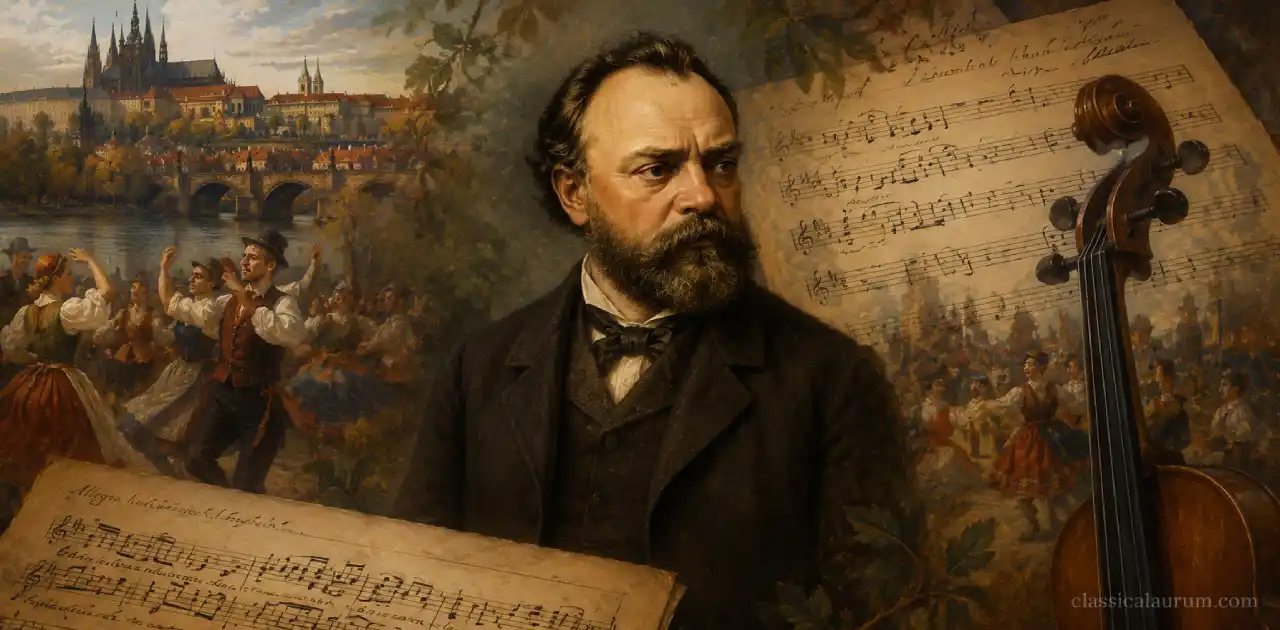
Dvořák contributed significantly to the development of a recognizable Czech musical identity. His orchestral works, chamber music, and vocal compositions displayed characteristics associated with his homeland.
Rhythmic vitality became one of his trademarks. Many pieces contain dance patterns that evoke traditional celebrations. These elements gave his music warmth and spontaneity.
Melodic writing also reflected Czech sensibilities. Dvořák favored lyrical themes with natural contours that resembled folk singing. His gift for memorable melodies contributed to the popularity of his works.
At the same time, he mastered the structural principles inherited from Beethoven, Schubert, and Brahms. This combination of local color and classical discipline allowed his music to transcend geographical boundaries.
His success demonstrated that national identity and international artistry could coexist harmoniously.
The Slavonic Dances and International Recognition
One of the turning points in Dvořák’s career came with the publication of the Slavonic Dances. Encouraged by Johannes Brahms and publisher Fritz Simrock, Dvořák composed a series of works inspired by Slavic dance traditions.
These pieces quickly became popular across Europe. Audiences responded enthusiastically to their energy, elegance, and emotional richness.
Although the dances were not literal transcriptions of folk music, they captured the atmosphere of Slavic culture. Their success introduced many listeners to Czech musical traditions for the first time.
The popularity of the Slavonic Dances transformed Dvořák into an international figure. He proved that music rooted in local identity could appeal to people from entirely different cultures.
This achievement strengthened the position of Czech music within the broader European tradition.
Dvořák in America and the Search for National Expression
In 1892, Dvořák accepted the position of director of the National Conservatory of Music in New York. His arrival coincided with discussions about the future of American music.
Dvořák believed that every nation should develop its own artistic voice. He encouraged American composers to draw inspiration from local traditions rather than imitate European models.
He expressed admiration for African American spirituals and Native American musical traditions. According to Dvořák, these sources contained the foundations of a distinct American style.
His ideas generated debate, but they influenced the development of music in the United States. Dvořák’s philosophy demonstrated that cultural identity was not limited to Europe. Every society possessed traditions capable of inspiring artistic creation.
His perspective revealed a remarkable openness and respect for diverse cultures.
The New World Symphony and Cultural Dialogue
Perhaps no work illustrates Dvořák’s international outlook better than the Symphony No. 9, From the New World. Composed during his stay in America, the symphony combines European craftsmanship with inspiration drawn from the American environment.
Contrary to popular belief, the famous melodies are original creations. Nevertheless, they evoke the spirit of spirituals and folk traditions.
The symphony represents a dialogue between cultures rather than a rejection of European heritage. Dvořák remained faithful to his Czech identity while embracing new influences.
This ability to absorb different traditions without losing his own character explains much of his enduring appeal.
The New World Symphony eventually became one of the most beloved orchestral works in history. Its success confirmed that cultural exchange enriches artistic expression.
Chamber Music and Personal Identity
Dvořák’s chamber music reveals another dimension of his cultural identity. Works such as the “American” String Quartet, the Piano Quintet No. 2, and the Dumky Trio combine intimacy with national character.
These compositions demonstrate extraordinary melodic invention. Their emotional range extends from joyful dances to moments of profound reflection.
The famous Dumky Trio, in particular, reflects Slavic traditions through alternating moods of melancholy and celebration. The structure itself mirrors the expressive qualities associated with Eastern European folk culture.
Through chamber music, Dvořák communicated personal experiences while preserving connections with his heritage.
These works remain central to the chamber music repertoire because they unite technical sophistication with genuine emotional sincerity.
Religion, Nature, and Spiritual Identity
Cultural identity for Dvořák extended beyond nationality. His Catholic faith and love of nature also shaped his artistic vision.
Many sacred compositions reveal a profound spiritual dimension. Works such as the Stabat Mater, the Requiem, and the Te Deum express religious devotion with remarkable emotional depth.
Nature occupied a similarly important place in his imagination. Dvořák often sought inspiration in the countryside and found peace in rural life.
This attachment to the natural world reflected traditional Czech values and contributed to the lyrical atmosphere present in many of his compositions.
For Dvořák, identity involved history, faith, family, and landscape. Music became the medium through which these elements acquired universal meaning.
Dvořák’s Influence on Later Generations
The example established by Dvořák inspired countless composers around the world. His approach demonstrated that national traditions could enrich rather than limit creativity.
Composers from Central Europe, Scandinavia, Russia, and the Americas adopted similar principles. Many sought to integrate local characteristics into sophisticated artistic forms.
Dvořák’s influence extended beyond composition. His educational work encouraged younger musicians to value their own heritage.
Today, scholars continue to study how his music contributed to discussions about identity and globalization. In an increasingly interconnected world, his ideas remain surprisingly relevant.
His career reminds us that preserving cultural traditions does not require isolation. Instead, dialogue between cultures can produce extraordinary artistic achievements.
The Enduring Meaning of Dvořák’s Legacy
Antonín Dvořák stands as one of the greatest examples of how music can express cultural identity without becoming exclusive or nationalistic in a narrow sense.
His works celebrate Czech traditions while embracing universal human emotions. This balance explains why audiences from every continent continue to admire his music.
More than a century after his death, Dvořák remains a symbol of artistic authenticity. He demonstrated that composers do not need to abandon their roots to achieve international success.
For listeners and musicians alike, his legacy offers an important lesson. Cultural identity and openness to the world are not opposing forces. In the music of Antonín Dvořák, they become complementary sources of beauty and inspiration.
Through his melodies, rhythms, and humanistic vision, Dvořák transformed local traditions into timeless art. His music continues to remind us that the most universal expressions often emerge from the deepest connections to our own heritage.