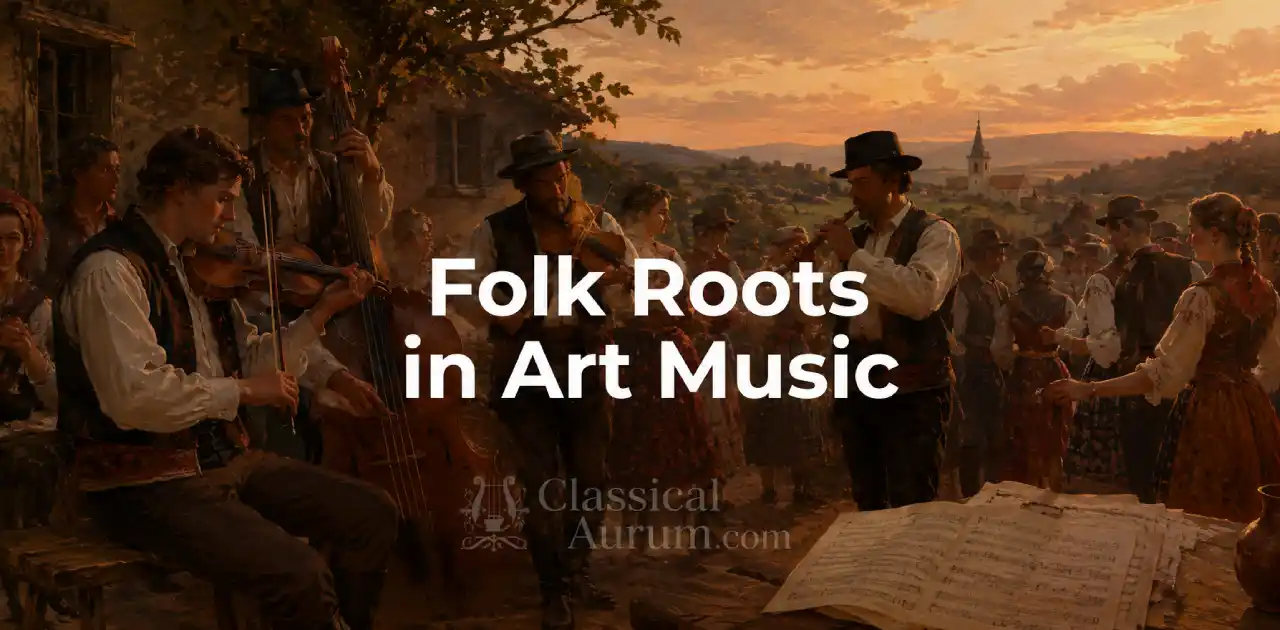
Folk Roots in Art Music
Folk Roots in Art Music
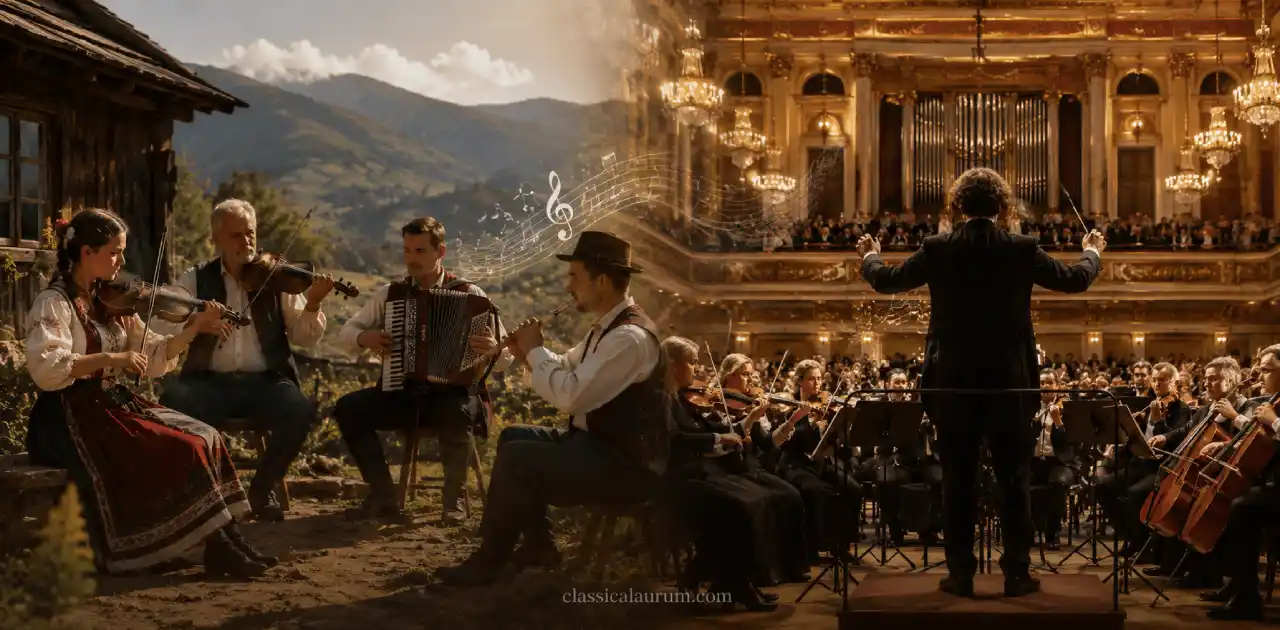
Throughout history, art music and folk traditions have existed in constant dialogue. While classical music is often associated with courts, churches, and concert halls, many of its most memorable melodies originated among ordinary people. Rural songs, dances, and local musical customs provided composers with inspiration that enriched the classical repertoire.
The relationship between folk music and art music became especially significant during the nineteenth and early twentieth centuries. As nationalism grew across Europe, composers increasingly turned toward traditional music to express cultural identity. The result was a body of works that combined sophisticated compositional techniques with melodies and rhythms rooted in everyday life.
For listeners today, understanding these connections reveals a deeper appreciation of many celebrated masterpieces.
Related: Nationalism in Classical Music
The Difference Between Folk Music and Art Music
Folk music traditionally develops within communities and is transmitted orally from generation to generation. It reflects local customs, celebrations, work activities, and historical experiences. Because it evolves naturally over time, variations often exist between regions and performers.
Related: The Evolution of the Symphony
Art music, on the other hand, is generally written by identified composers and preserved through notation. It emphasizes structure, harmony, and formal development. Classical traditions depend heavily on written scores and professional performance practices.
Despite these differences, the boundary between the two worlds has never been absolute. Many composers listened carefully to traditional songs and transformed them into symphonies, chamber works, and operas. Rather than copying folk music directly, they often reimagined it within sophisticated artistic frameworks.
Related: Haydn, Mozart, and the Birth of the Symphony
This interaction demonstrates that classical music has always remained connected to broader cultural experiences.
National Identity and the Rise of Folk Influence
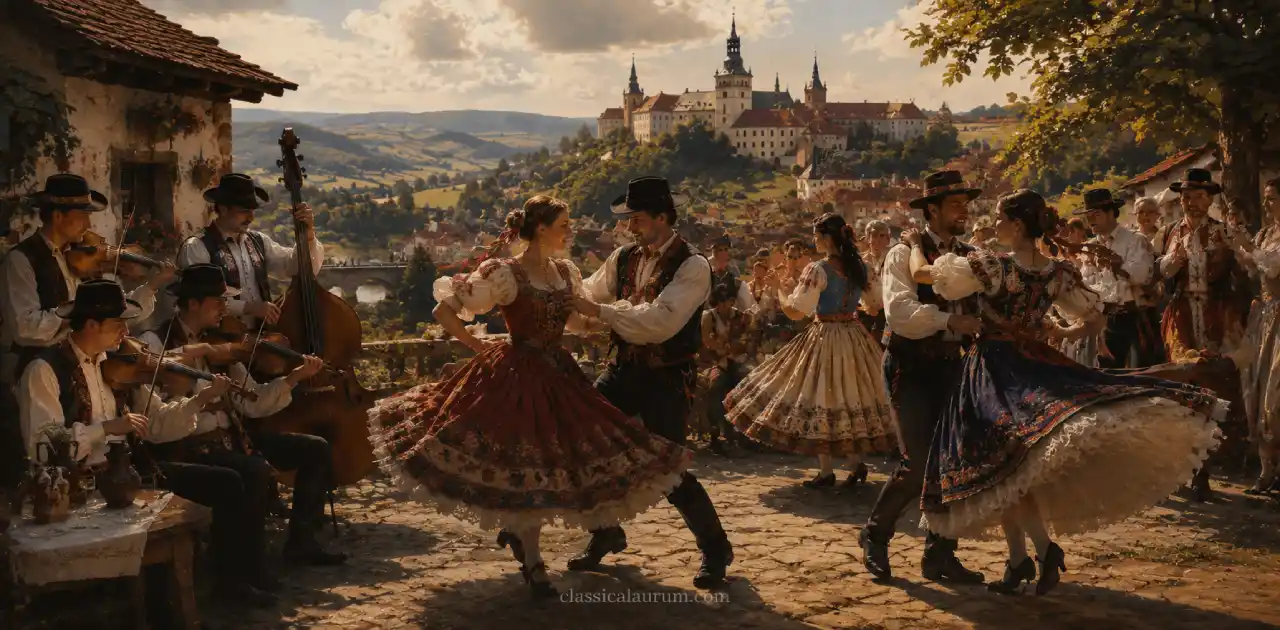
During the nineteenth century, many European countries experienced movements that emphasized national identity. Composers sought alternatives to the dominant German, Italian, and French traditions by exploring their own cultural heritage.
In Russia, composers such as Mikhail Glinka and members of The Mighty Handful incorporated folk melodies and exotic harmonies into their works. Their efforts helped establish a distinct Russian musical voice.
In Bohemia, Antonín Dvořák drew inspiration from Czech dances and songs. Works such as the Slavonic Dances reveal rhythmic vitality and melodic patterns associated with local traditions.
Norwegian composer Edvard Grieg similarly embraced Scandinavian folk elements. His piano pieces and orchestral compositions frequently evoke the atmosphere of Norwegian landscapes and village music.
These developments demonstrated that classical music could represent national character while remaining part of the broader European artistic tradition.
Folk Dances and Their Influence on Classical Forms
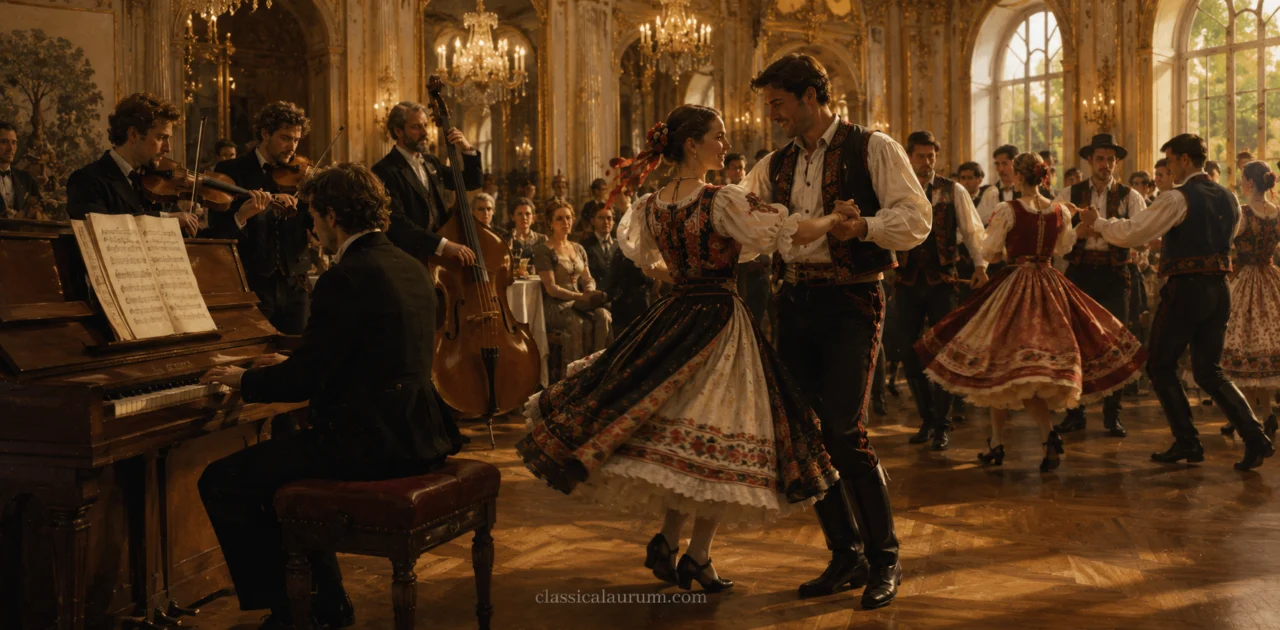
Traditional dances have had a profound impact on classical composition. Many famous forms originated from popular dance practices before becoming integrated into art music.
The minuet, once a court dance, eventually became a standard movement in symphonies and chamber music. Later composers replaced it with the more energetic scherzo, yet the dance heritage remained visible.
Central European folk dances inspired numerous composers. The mazurka and polonaise, associated with Poland, became central elements in the piano music of Frédéric Chopin. Although highly refined, these pieces preserve the spirit and rhythm of traditional dance culture.
Hungarian influences appeared prominently in the works of Johannes Brahms, whose Hungarian Dances introduced audiences to colorful rhythms and expressive melodies inspired by regional traditions.
Dance music provided composers with natural energy and helped bridge the gap between popular and cultivated styles.
Béla Bartók and the Scientific Study of Folk Music
Among all composers associated with folk traditions, Béla Bartók occupies a unique position. Rather than relying solely on published collections, he traveled extensively throughout Hungary and neighboring regions to document authentic village music.
Using early recording equipment, Bartók collected thousands of melodies from peasants and rural musicians. His work contributed significantly to the development of ethnomusicology, the scientific study of traditional music cultures.
Bartók’s own compositions transformed these discoveries into highly original artistic statements. Works such as Mikrokosmos, the Romanian Folk Dances, and the Concerto for Orchestra reveal how traditional material could coexist with modern harmonic language.
His achievements demonstrated that folk music was not merely a source of nostalgia. Instead, it represented a living artistic resource capable of inspiring innovation.
Folk Traditions Beyond Europe
Although European examples receive considerable attention, the relationship between folk traditions and art music extends worldwide.
In the Americas, composers incorporated indigenous, African, and local traditions into concert music. Brazilian composer Heitor Villa-Lobos blended folk influences with European forms, creating a uniquely Brazilian style.
In the United States, Aaron Copland used folk-inspired melodies and open harmonies to evoke the American landscape. Pieces such as Appalachian Spring became symbols of national identity.
Latin American composers frequently integrated dances, rhythms, and regional instruments into their works. These elements helped establish distinctive musical voices that reflected local cultures.
Asian composers likewise combined traditional musical systems with Western orchestral techniques. The resulting works illustrate how classical music can adapt to diverse cultural environments without losing artistic depth.
Opera and Folk Inspiration
Opera has long benefited from folk traditions. Composers often used popular songs and dances to create realistic settings and establish a strong sense of place.
Russian operas by Modest Mussorgsky and Nikolai Rimsky-Korsakov frequently contain melodies inspired by folk sources. These musical references strengthen the dramatic atmosphere and connect audiences with familiar cultural material.
In Eastern Europe, national operatic traditions emerged partly through the incorporation of regional musical language. Folk themes helped composers portray historical events and celebrate cultural heritage.
Even when melodies were newly composed, many composers deliberately imitated folk characteristics. This approach allowed audiences to perceive authenticity and emotional immediacy.
Opera thus became an important medium through which folk traditions entered the world of high art.
The Lasting Legacy of Folk Elements in Classical Music
The influence of folk traditions continues to shape contemporary classical composition. Modern composers often revisit traditional material in search of new sounds and cultural connections.
Some artists preserve historical melodies exactly as they were collected. Others reinterpret them through contemporary harmony, electronic media, or experimental techniques. Both approaches demonstrate the continuing vitality of traditional culture.
For performers, knowledge of folk origins can enhance interpretation. Understanding dance rhythms, local accents, and historical contexts provides valuable insight into phrasing and expression.
Audiences also benefit from recognizing these connections. Many beloved classical works gain additional meaning when listeners understand the traditions that inspired them.
Why Folk Roots Matter Today
The relationship between folk music and art music reminds us that great artistic achievements rarely emerge in isolation. Behind many celebrated masterpieces stand generations of anonymous musicians whose songs and dances preserved collective memory.
Classical music is often viewed as an elite tradition, yet its roots frequently lie among ordinary communities. This connection gives the repertoire a remarkable human dimension.
In today’s globalized world, preserving traditional music has become increasingly important. Folk traditions provide cultural continuity and enrich artistic creativity. They also encourage dialogue between past and present, allowing contemporary musicians to build upon centuries of accumulated experience.
For readers of ClassicalAurum.com, exploring these connections reveals that classical music is not separate from human history. Instead, it represents one of the most profound ways in which communities transform everyday musical experiences into enduring works of art.
From village dances to symphonic masterpieces, the journey of folk music into the concert hall remains one of the most fascinating stories in music history. Its legacy continues to inspire composers, performers, and audiences around the world, proving that tradition and innovation are not opposites, but partners in the evolution of musical expression.
About the Author
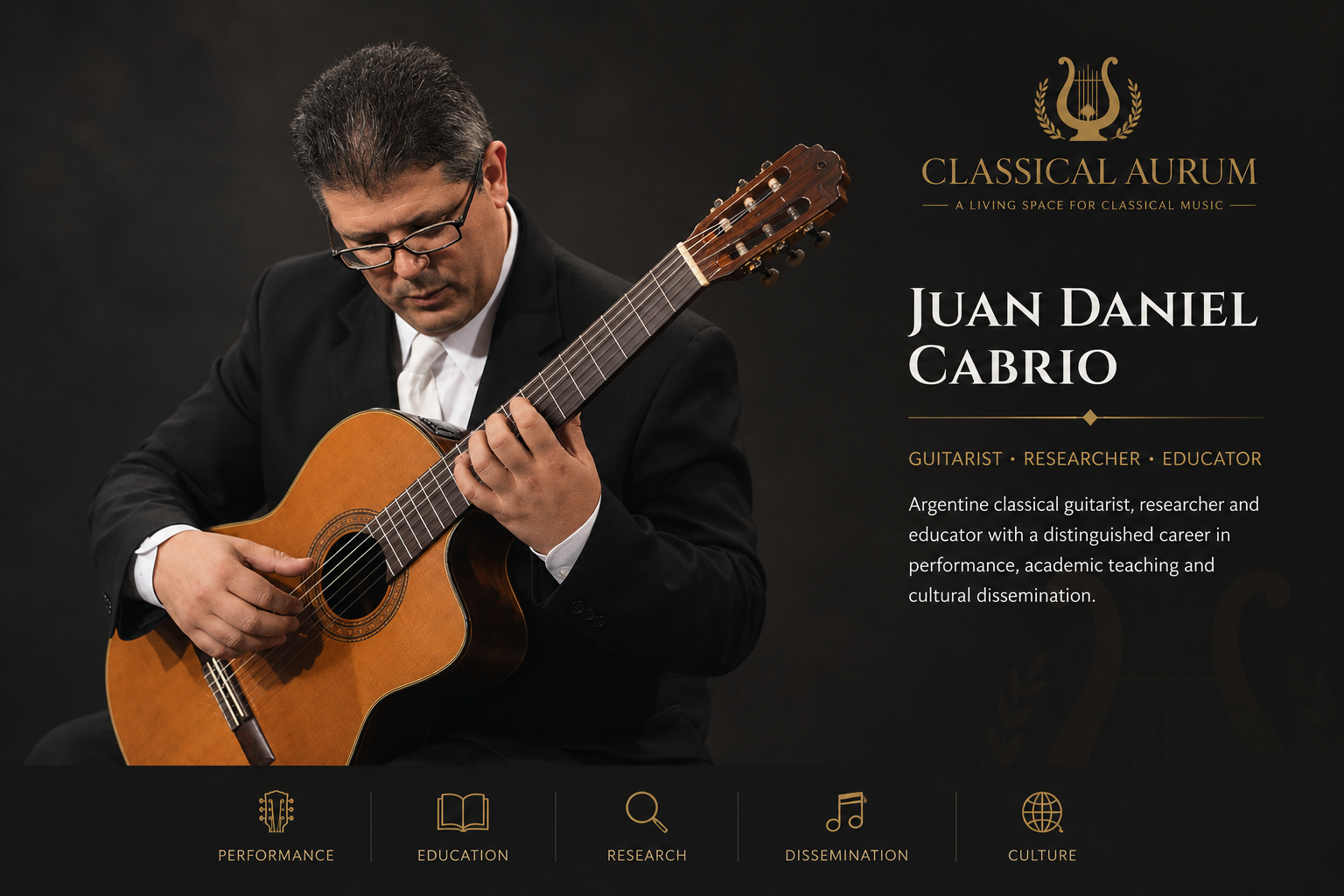
Juan Daniel Cabrio
Argentine Classical Guitarist · Researcher · Educator
Juan Daniel Cabrio is an Argentine classical guitarist, researcher and educator. Founder of Classical Aurum, he shares educational and cultural content about classical music, composers, instruments, repertoire, music history and performance practice.
View full biography