John Williams and the Symphonic Tradition
John Williams and the Symphonic Tradition
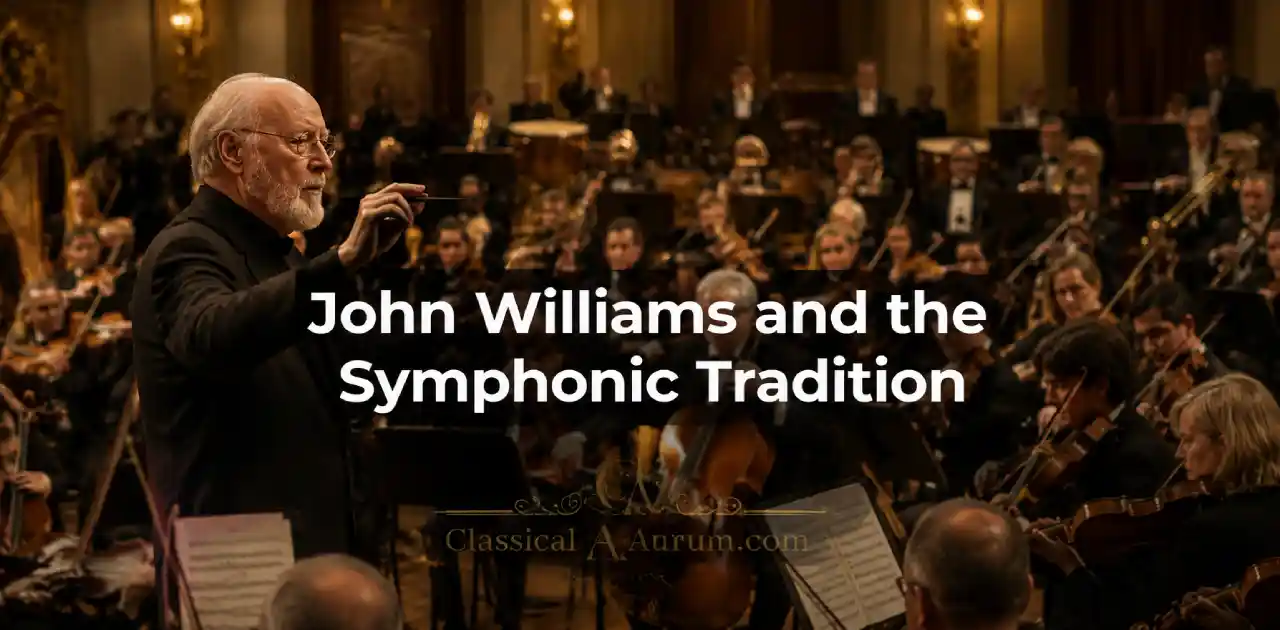
For more than half a century, John Williams has stood among the most influential composers of orchestral music. Although millions recognize his work through cinema, his achievements reach far beyond the screen. Williams has become one of the greatest modern guardians of the symphonic tradition, demonstrating that large-scale orchestral writing continues to inspire audiences in the twenty-first century.
His music bridges the worlds of classical composition, romantic orchestration, and cinematic storytelling. It draws from centuries of musical heritage while speaking with a distinctive contemporary voice. In an era dominated by electronic production and digital sound design, Williams has reaffirmed the expressive power of the acoustic orchestra.
His scores for films such as Star Wars, Indiana Jones, Jurassic Park, Harry Potter, and Schindler’s List have introduced millions of listeners to orchestral music. Many concertgoers first encountered the sound of a full symphony orchestra through these works before exploring Beethoven, Mahler, Holst, Korngold, or Stravinsky.
Rather than replacing the classical tradition, Williams extends it. His music demonstrates that the language of the great composers remains vibrant when combined with compelling modern narratives.
The Roots of the Symphonic Tradition
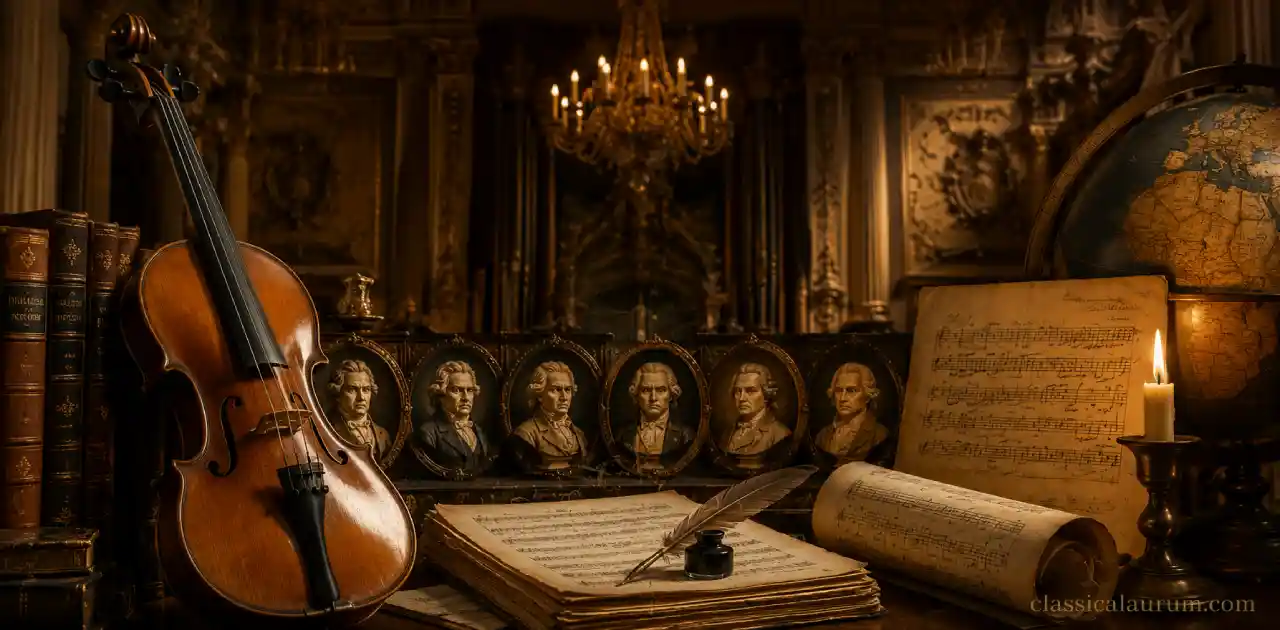
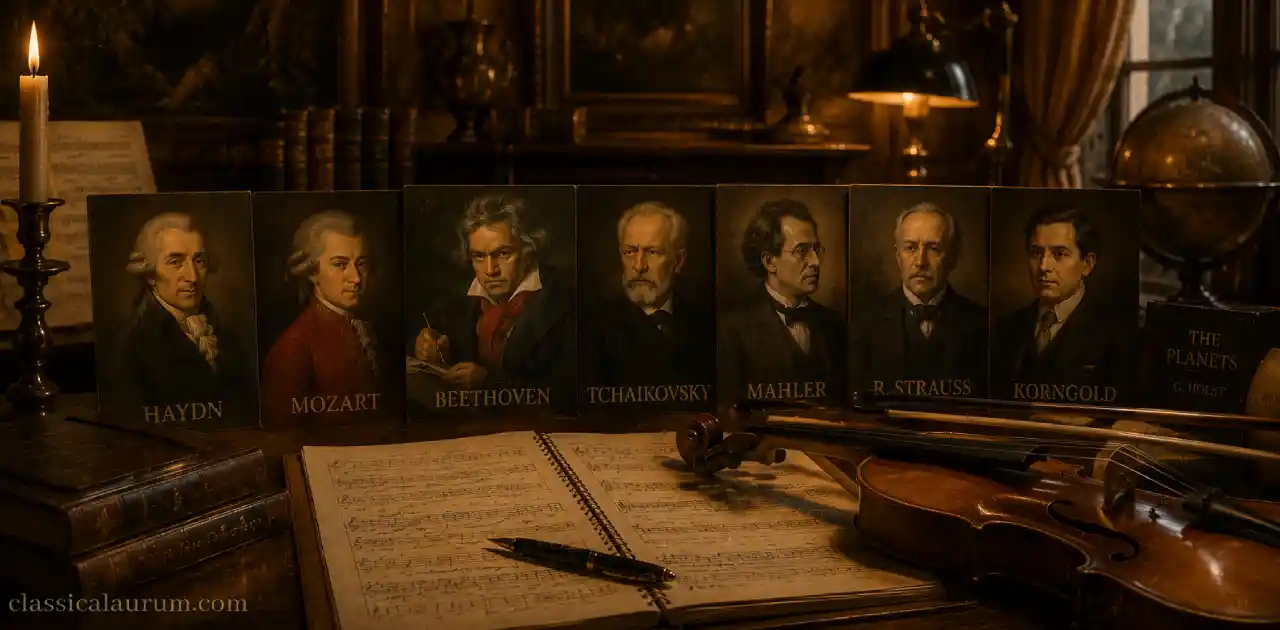
The symphonic tradition developed over several centuries through composers who continually expanded the expressive possibilities of the orchestra. Haydn established the classical symphony, Mozart refined its elegance, and Beethoven transformed it into a dramatic artistic statement.
The nineteenth century witnessed extraordinary growth. Composers such as Brahms, Tchaikovsky, Dvořák, Mahler, and Richard Strauss enlarged orchestral forces while deepening emotional expression. Their music combined structural discipline with remarkable color and expressive freedom.
Williams absorbed this musical heritage through formal study, performance, and lifelong listening. Instead of copying earlier composers, he internalized their techniques and adapted them for modern audiences.
His scores often reveal the influence of late Romantic orchestration, sophisticated harmonic language, memorable thematic development, and carefully balanced orchestral textures.
Leitmotifs and Musical Storytelling
One of Williams’ greatest contributions lies in his masterful use of the leitmotif, a recurring musical idea associated with characters, locations, emotions, or concepts.
This technique became famous through Richard Wagner’s operas but has since become central to many orchestral film scores. Williams refined the approach with remarkable clarity and emotional precision.
The Star Wars saga alone contains dozens of interconnected themes. Luke Skywalker, Darth Vader, Princess Leia, the Force, Yoda, and numerous other characters each possess distinctive musical identities.
As the story develops, these themes evolve alongside the characters. Harmonies shift, orchestration changes, and familiar melodies acquire new emotional meanings. This mirrors the thematic transformations found in nineteenth-century symphonic poems and operatic masterpieces.
The result is music that functions not merely as accompaniment but as an active narrative voice.
Orchestration as an Art Form
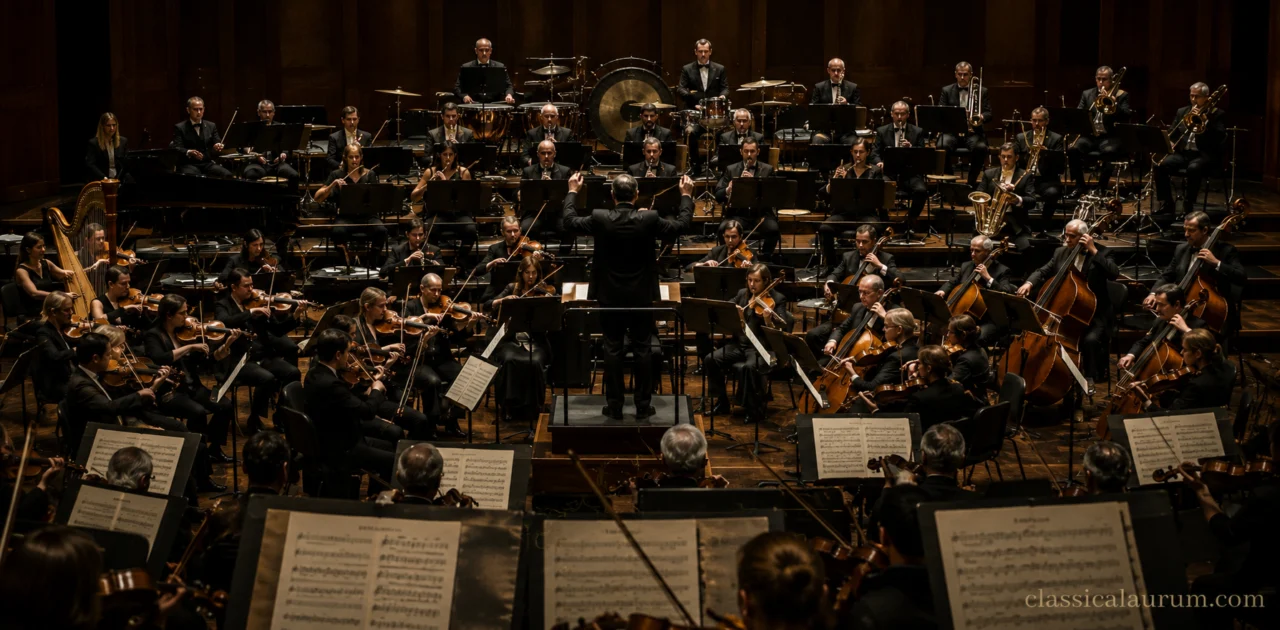
Williams possesses extraordinary mastery of orchestration. Every section of the orchestra contributes unique colors to his musical language.
The brass section provides heroic grandeur and ceremonial power. Strings create warmth, lyricism, and emotional depth. Woodwinds introduce elegance, mystery, and intimacy. Percussion adds dramatic momentum while enriching rhythmic energy.
Rather than relying on overwhelming volume, Williams carefully balances instrumental colors. Individual timbres emerge naturally before blending into larger orchestral textures.
His orchestral writing frequently demonstrates remarkable transparency. Even within powerful climaxes, listeners can distinguish melodic lines, harmonic movement, and instrumental dialogue.
This level of craftsmanship reflects traditions established by composers such as Ravel, Strauss, Prokofiev, and Korngold.
Classical Influences Throughout His Music
Many listeners recognize similarities between Williams’ music and earlier classical composers. These connections arise not through imitation but through shared musical vocabulary.
Holst’s The Planets influenced aspects of the heroic writing in Star Wars. Korngold’s adventurous orchestral style helped shape Williams’ approach to cinematic heroism.
Stravinsky’s rhythmic vitality appears in action sequences filled with irregular accents and energetic orchestral textures. Mahler’s expansive orchestral thinking can also be heard in Williams’ broad emotional landscapes.
Meanwhile, composers such as Debussy and Ravel inspired his sophisticated harmonic colors and refined orchestral transparency.
Williams combines these influences into a musical language that remains unmistakably his own.
The Symphony Orchestra in Modern Popular Culture
Perhaps no composer has done more to preserve public appreciation for the symphony orchestra than John Williams.
During decades when electronic music increasingly dominated commercial entertainment, Williams demonstrated that audiences still respond deeply to live orchestral performance.
His film scores encouraged orchestras worldwide to present concerts dedicated to cinematic music. These performances frequently attract listeners who later become interested in traditional classical repertoire.
Major orchestras now perform Williams alongside Beethoven, Tchaikovsky, Mahler, and Sibelius. His music comfortably occupies concert halls traditionally devoted to classical masterpieces.
This development has expanded audiences while strengthening the cultural relevance of orchestral music.
Concert Works Beyond Film
Although best known for cinema, Williams has composed numerous works intended specifically for the concert stage.
These include concertos for violin, flute, tuba, bassoon, cello, harp, horn, clarinet, and trumpet. He has also written fanfares, chamber works, orchestral suites, and ceremonial music.
His concert compositions reveal the same command of orchestral writing found in his film scores but without visual narrative.
Instead, these works explore abstract musical ideas through carefully developed structures and sophisticated thematic relationships.
Many leading soloists have premiered these compositions, demonstrating the respect Williams enjoys within the classical music community.
Emotional Universality Through Melody
One defining characteristic of Williams’ music is his remarkable gift for melody.
Many contemporary composers favor atmospheric textures or minimalist repetition. Williams instead embraces long, memorable melodic lines that listeners remember for decades.
Themes such as those from E.T., Harry Potter, Schindler’s List, Superman, and Star Wars have become part of global musical culture.
These melodies communicate optimism, courage, wonder, nostalgia, tragedy, and hope with extraordinary immediacy.
The ability to create memorable themes places Williams within a lineage extending from Mozart and Tchaikovsky to Rachmaninoff and Prokofiev.
His melodic imagination remains one of the defining features of modern orchestral composition.
Conducting and Musical Leadership
Williams has also enjoyed a distinguished career as a conductor.
For many years he served as principal conductor of the Boston Pops Orchestra, where he introduced orchestral music to diverse audiences.
His concerts combined classical repertoire with film music, demonstrating that artistic quality transcends genre distinctions.
Through conducting, Williams gained practical insight into orchestral performance, rehearsal techniques, instrumental balance, and audience communication.
These experiences further strengthened his skills as a composer, allowing him to write music that feels natural and rewarding for professional musicians.
His collaborations with world-class orchestras have reinforced the enduring vitality of live symphonic performance.
A Lasting Legacy for Future Generations
John Williams has accomplished something remarkably rare. He has created music that satisfies professional musicians, scholars, conductors, casual listeners, and young audiences alike.
His work has introduced countless people to orchestral music while preserving techniques developed across centuries of Western musical history.
Future composers will continue studying his orchestration, thematic development, dramatic pacing, and structural craftsmanship. Film music programs increasingly analyze his scores alongside classical masterworks.
Perhaps his greatest achievement lies in proving that the symphonic tradition remains alive. Rather than belonging solely to the past, orchestral music continues to evolve through composers capable of respecting tradition while embracing new artistic challenges.
For readers of ClassicalAurum, John Williams represents more than an iconic film composer. He embodies the enduring dialogue between classical heritage and modern creativity. His music reminds us that great orchestral writing transcends categories, connecting generations through beauty, imagination, and emotional truth.
As concert halls continue performing his works alongside the great symphonic repertoire, Williams’ place within music history becomes increasingly secure. His legacy demonstrates that the orchestra remains one of humanity’s most powerful artistic instruments, capable of expressing timeless ideas with limitless emotional depth.
Related reading: