


The Evolution of the Symphony
From Court Entertainment to Artistic Form
The symphony stands today as one of the most profound achievements in Western classical music. Its journey, however, began modestly. In the early 17th century, the term “symphony” did not refer to a grand orchestral structure but rather to instrumental introductions, often used in operas or ceremonial music.
These early forms were rooted in the Baroque tradition, where composers sought to balance voices and instruments in a structured yet expressive manner. The Italian overture, known as the sinfonia, typically followed a three-part format: fast, slow, fast. This structure would later influence the development of the classical symphony.
Composers such as Alessandro Scarlatti played a crucial role in shaping these early orchestral forms. Although not symphonies in the modern sense, these compositions laid the groundwork for what would soon become a dominant musical genre.
As orchestras grew and instrumental writing became more sophisticated, the symphony began to evolve beyond its functional origins into a standalone artistic expression.
Related: Folk Roots in Art Music
Related: Haydn, Mozart, and the Birth of the Symphony
The Classical Era: Structure and Clarity
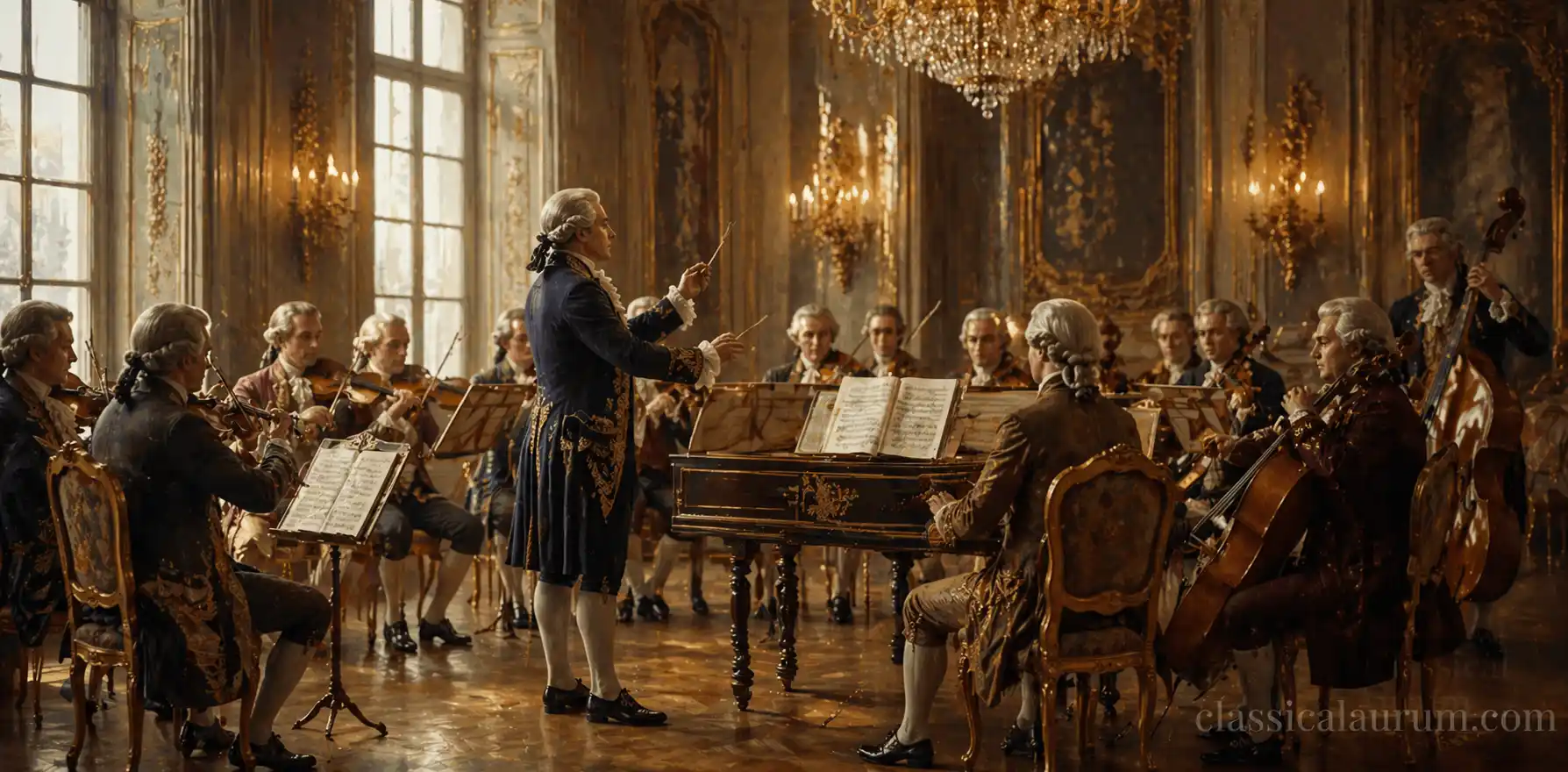
The transformation of the symphony into a defined musical form occurred during the Classical period. This era emphasized balance, clarity, and formal structure. The symphony became a multi-movement work, typically consisting of four movements: fast, slow, minuet or scherzo, and a lively finale.
The figure most associated with this transformation is Joseph Haydn, often called the “Father of the Symphony.” With over 100 symphonies to his name, Haydn established the standard structure and expanded the expressive possibilities of orchestral music.
Related: Nationalism in Classical Music
Another towering figure was Wolfgang Amadeus Mozart, whose symphonies combined technical mastery with emotional depth. His later works, particularly the final symphonies, demonstrated a remarkable balance between elegance and complexity.
During this period, orchestras became more standardized. String sections formed the core, supported by woodwinds, brass, and timpani. The symphony was no longer background music; it became a central artistic statement performed in concert settings.
This era defined the symphony as a coherent, structured form capable of both intellectual and emotional engagement.
Beethoven and the Expansion of Expression
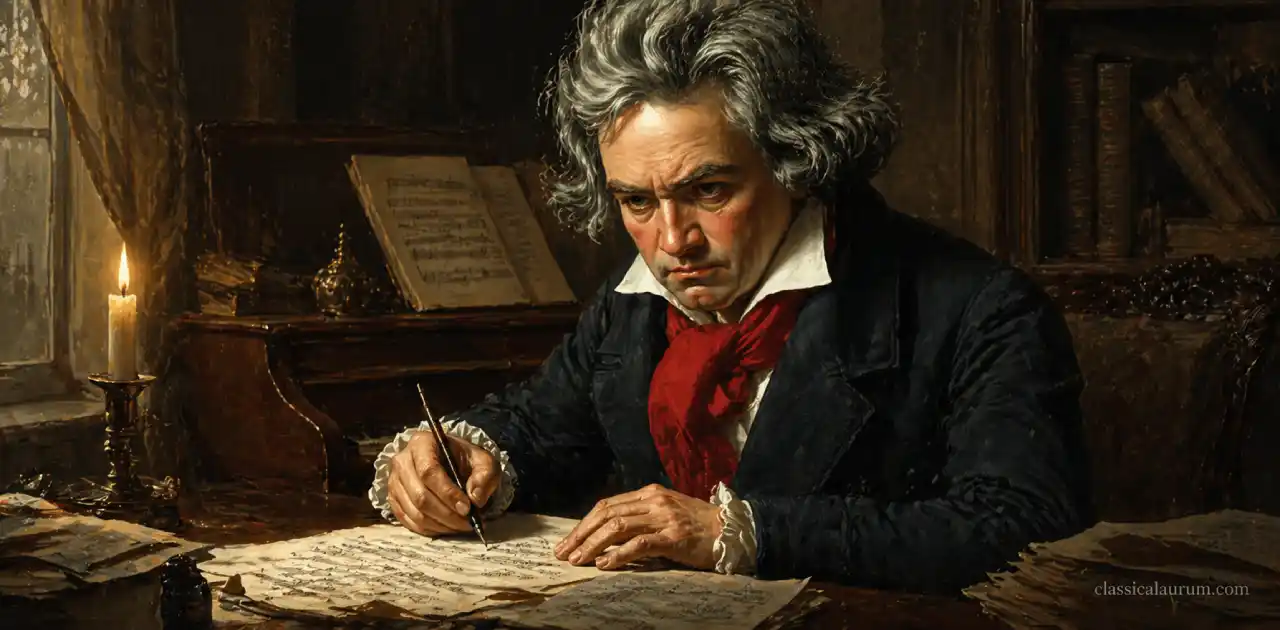
The evolution of the symphony reached a turning point with Ludwig van Beethoven. His work transformed the symphony from a refined classical form into a powerful vehicle for personal and philosophical expression.
Beethoven expanded the scale, length, and emotional intensity of the symphony. His Third Symphony, known as the Eroica, broke traditional boundaries with its unprecedented scope and dramatic narrative. It redefined what a symphony could represent.
Even more revolutionary was his Ninth Symphony, which introduced choral voices into the symphonic structure. This integration of human voice and orchestra was unprecedented and symbolized a universal artistic vision.
Beethoven’s influence cannot be overstated. He bridged the Classical and Romantic eras, opening the door for composers to explore deeper emotional and conceptual themes.
The symphony was no longer just music—it became a statement about humanity, struggle, and transcendence.
Romantic Era: Emotion and Expansion
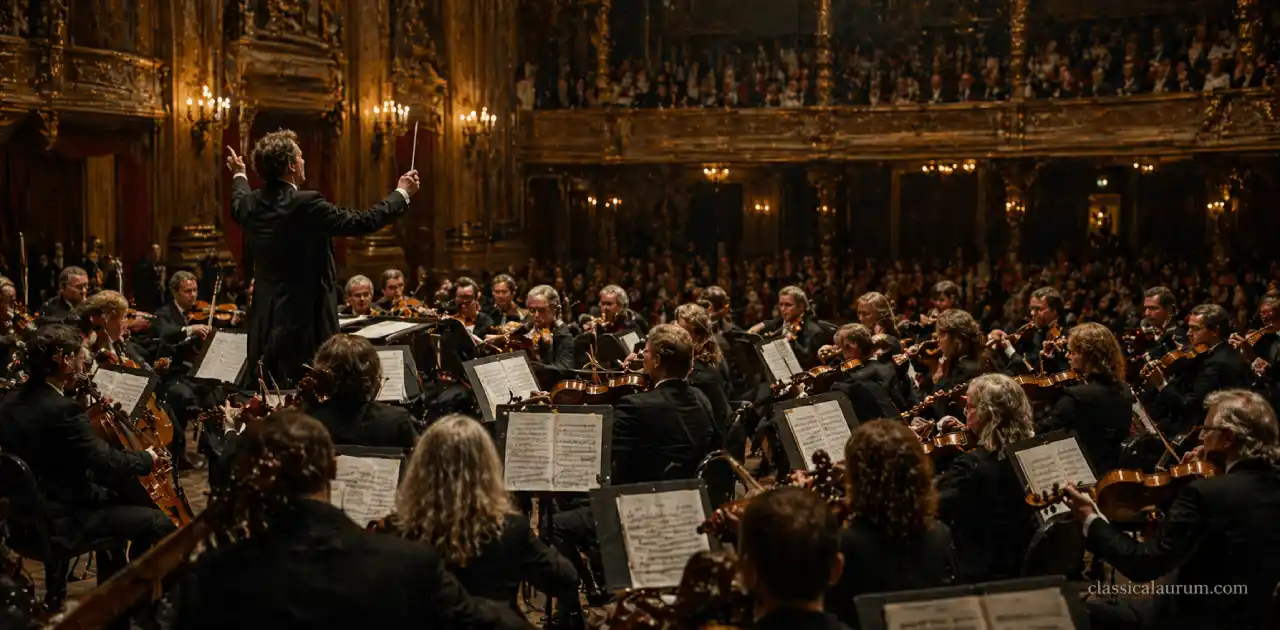
The Romantic period saw the symphony grow in size, scope, and emotional depth. Composers sought to express individuality, passion, and the complexities of human experience.
Orchestras expanded significantly, incorporating new instruments and richer textures. Composers such as Gustav Mahler and Pyotr Ilyich Tchaikovsky pushed the boundaries of what a symphony could achieve.
Mahler’s symphonies, for example, often required massive orchestras and explored themes of life, death, and existential meaning. His works blurred the line between symphony and philosophical narrative.
Tchaikovsky, on the other hand, infused his symphonies with lyrical beauty and emotional intensity. His ability to connect with audiences made the symphony more accessible while maintaining artistic depth.
During this era, the symphony became deeply personal. It reflected not only musical innovation but also the inner world of the composer.
The Modern Era: Innovation and Diversity
The 20th century introduced radical changes to the symphony. Traditional tonal structures were challenged, and composers experimented with new forms, harmonies, and rhythms.
Figures such as Igor Stravinsky and Dmitri Shostakovich redefined the symphony for a modern audience. Stravinsky brought rhythmic innovation and bold orchestration, while Shostakovich infused his symphonies with political and emotional complexity.
The symphony became a reflection of a changing world. Wars, technological advances, and shifting cultural landscapes influenced musical expression.
Some composers embraced minimalism, while others explored dissonance and abstraction. The symphony was no longer confined to a single style or tradition.
This diversity ensured its survival in a rapidly evolving artistic environment.
The Symphony in the Contemporary World
Today, the symphony continues to evolve. Modern composers blend classical traditions with contemporary influences, including electronic music and global musical styles.
Orchestras remain vital cultural institutions, performing both historical masterpieces and new works. The symphony serves as a bridge between past and present, preserving tradition while encouraging innovation.
Contemporary audiences experience the symphony not only in concert halls but also through digital platforms. This accessibility has expanded its reach and relevance.
The enduring appeal of the symphony lies in its ability to adapt. It remains a powerful medium for artistic expression, capable of conveying complex emotions and ideas across generations.
Why the Symphony Still Matters
The symphony is more than a musical form—it is a cultural legacy. Its evolution reflects the broader history of human thought, emotion, and creativity.
From its origins in Baroque court music to its modern interpretations, the symphony has continually reinvented itself. Each era has contributed new dimensions, enriching its complexity and depth.
For listeners, the symphony offers a unique experience. It combines structure and freedom, intellect and emotion, tradition and innovation.
In a world of constant change, the symphony endures as a testament to the power of music. It invites us to listen, reflect, and connect with something greater than ourselves.
Conclusion: A Living Tradition
The evolution of the symphony is an ongoing journey. It is not confined to history but continues to unfold in the present.
As new composers explore its possibilities, the symphony remains a living, dynamic art form. Its ability to evolve ensures its relevance for future generations.
For ClassicalAurum.com, this tradition represents more than music—it embodies the timeless pursuit of beauty, meaning, and artistic excellence.
The symphony began as a simple instrumental form. Today, it stands as one of the most powerful expressions of human creativity.
And its story is far from over.

About the Author
Juan Daniel Cabrio
Argentine Classical Guitarist · Researcher · Educator
Juan Daniel Cabrio is an Argentine classical guitarist, researcher and educator. Founder of Classical Aurum, he shares educational and cultural content about classical music, composers, instruments, repertoire, music history and performance practice.
View full biography