

Classical Music and Philosophy
The Enduring Relationship Between Classical Music and Philosophy
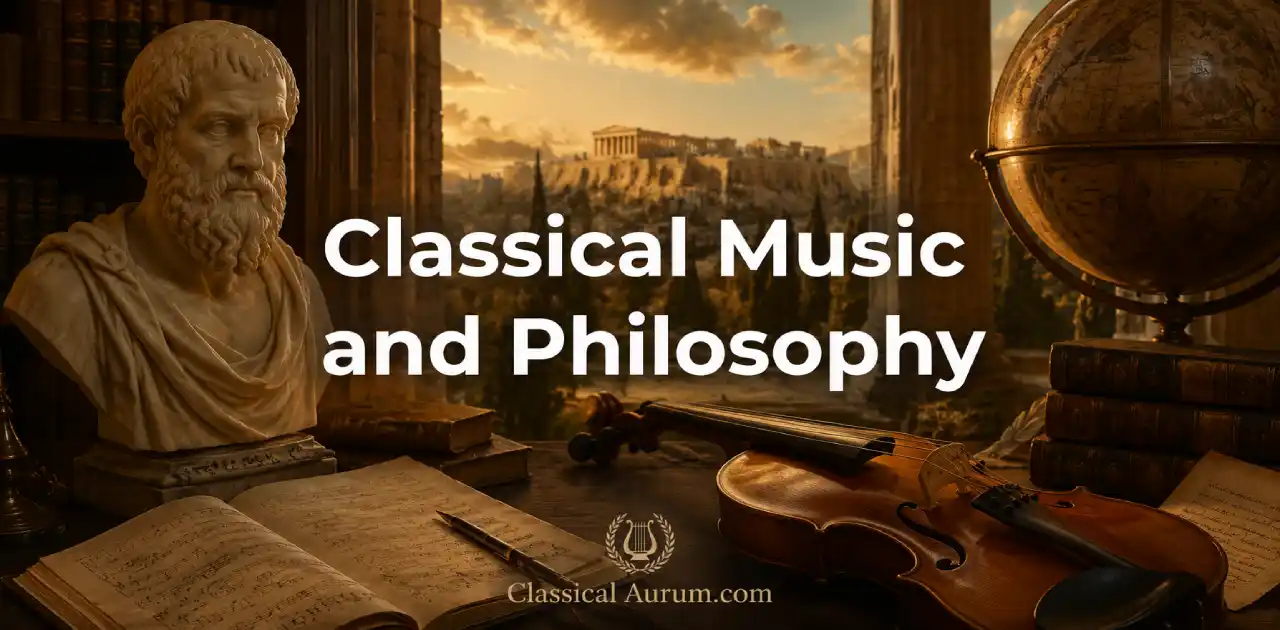
Classical music and philosophy have been connected for thousands of years. Throughout history, thinkers and composers have explored similar questions about beauty, truth, emotion, and the human experience. Both disciplines seek meaning beyond everyday life and invite people to reflect on the world around them.
At ClassicalAurum.com, understanding music means looking beyond notes and technical details. The intellectual traditions surrounding music reveal why certain works continue to resonate with audiences centuries after their creation. Philosophy provides a framework that helps explain why music possesses such extraordinary emotional and spiritual power.
From Ancient Greece to the modern era, philosophers and composers have influenced one another in profound ways. Their dialogue has shaped the development of Western musical culture and continues to inspire listeners today.

Ancient Greece and the Birth of Musical Philosophy
The relationship between music and philosophy began in Ancient Greece. Philosophers believed that music reflected the structure and harmony of the universe. For them, sound was not merely entertainment but an essential part of education and moral development.
Pythagoras discovered mathematical relationships between musical intervals. His observations established the idea that music could reveal universal laws. These discoveries influenced both science and artistic thought for centuries.
Plato regarded music as a powerful force capable of shaping character and society. In his writings, he argued that certain musical modes encouraged virtue, while others could weaken moral discipline. Aristotle offered a different perspective. He emphasized music’s ability to produce emotional balance and catharsis.
These early theories laid the foundations for Western musical aesthetics. Even today, musicians continue to explore the relationship between mathematical order and artistic expression.
Medieval Thought and Sacred Harmony
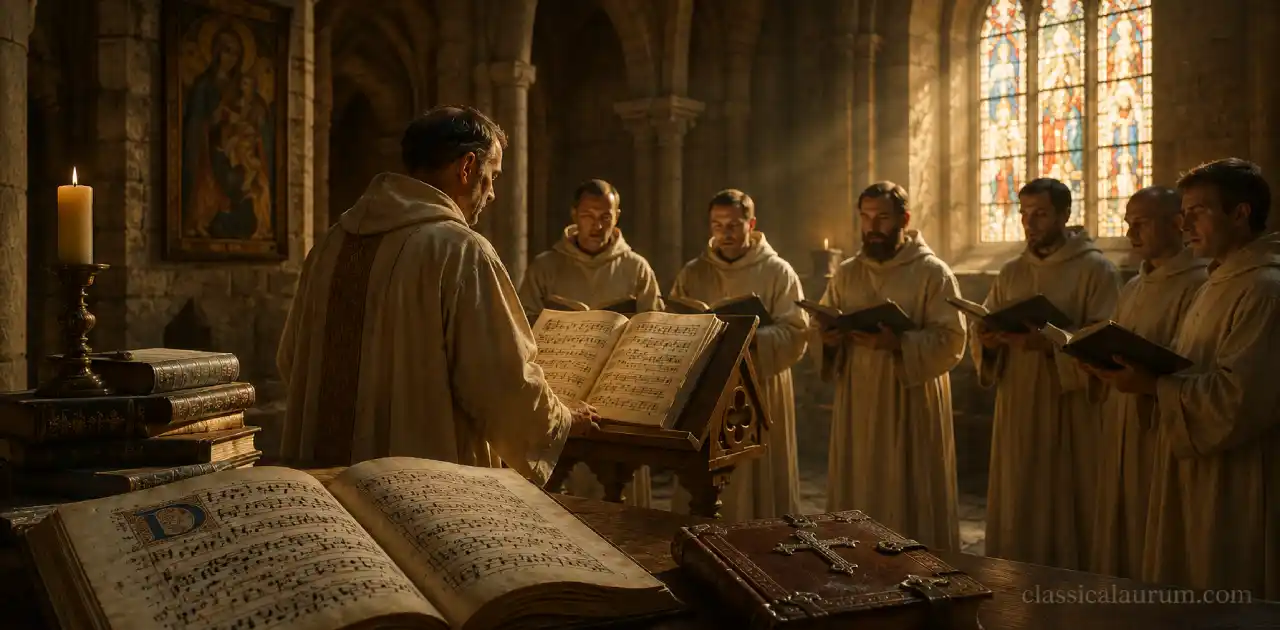
During the Middle Ages, philosophy and music became closely linked to religion. Christian scholars inherited ideas from Greek thinkers and integrated them into theological teachings. Music was considered a reflection of divine order.
The philosopher Boethius played a particularly important role. He divided music into three categories: cosmic harmony, human harmony, and audible music. This concept influenced musical education throughout Europe for centuries.
Gregorian chant emerged as a practical expression of these philosophical principles. Simplicity, balance, and spiritual contemplation became central characteristics of sacred music. Composers and theologians believed that musical beauty could elevate the soul toward God.
This vision shaped the development of Western musical traditions and established the idea that music possesses a transcendent dimension beyond mere sound.
The Enlightenment and Rational Musical Structures
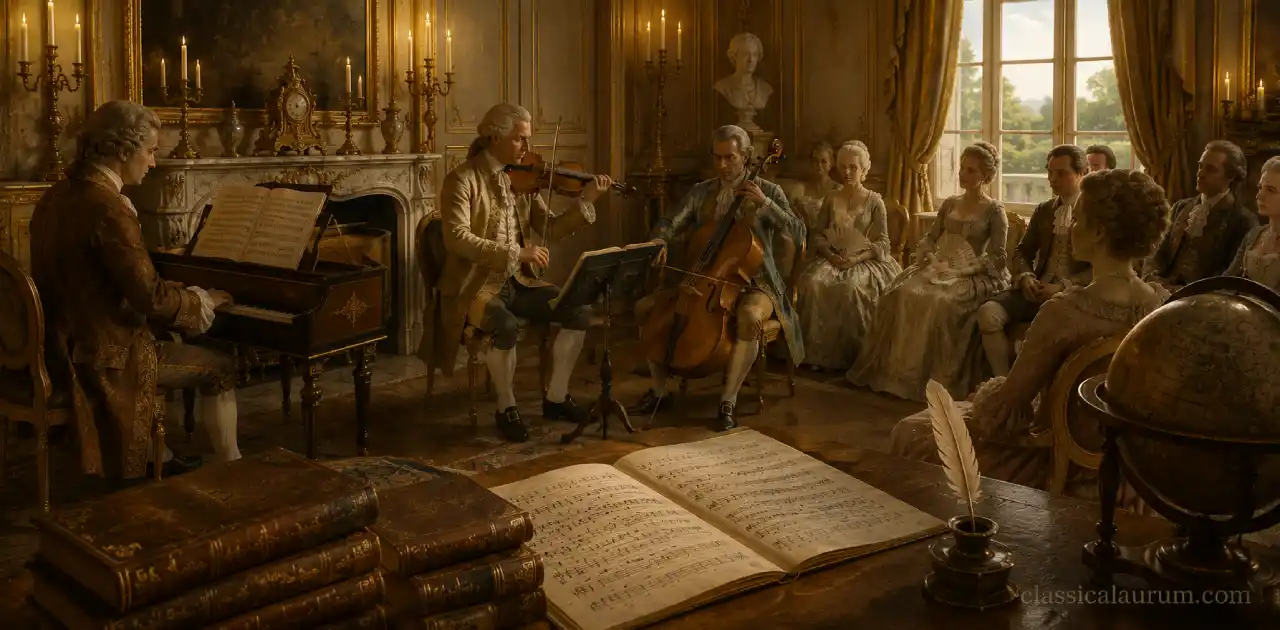
The Enlightenment introduced a new emphasis on reason and intellectual clarity. Philosophers promoted logic, balance, and universal principles. These ideas naturally influenced composers of the Classical period.
Wolfgang Amadeus Mozart and Joseph Haydn created works characterized by symmetry and formal elegance. Their compositions reflected Enlightenment values of order and proportion. Musical structures became increasingly refined and accessible.
Immanuel Kant contributed significantly to philosophical discussions about aesthetics. He argued that beauty could be appreciated without practical purpose. According to Kant, artistic experiences generated a unique form of pleasure independent from material concerns.
The Classical era demonstrated how philosophy and music could evolve together. Rational ideals found expression in sonatas, symphonies, and chamber works that continue to represent artistic balance at its finest.
Romanticism and the Search for Individual Expression
The nineteenth century brought dramatic changes to both philosophy and music. Romantic thinkers rejected excessive rationalism and emphasized emotion, imagination, and individuality.
Ludwig van Beethoven became one of the most important musical figures associated with these ideals. His works often expressed struggles, triumph, and personal freedom. Philosophical concepts concerning human dignity and self-determination found powerful musical expression in his symphonies and sonatas.
Romantic composers believed music could communicate experiences beyond language. Writers and philosophers increasingly described music as the highest form of art because of its ability to reach profound emotional depths.
The connection between Romantic philosophy and music transformed concert culture. Audiences began listening with greater concentration and regarded composers as creative visionaries rather than craftsmen.
Schopenhauer and Music as the Purest Art
Among nineteenth-century philosophers, Arthur Schopenhauer offered one of the most influential theories about music. He believed that music occupied a unique position among all artistic forms.
Unlike painting or literature, music did not imitate external reality. According to Schopenhauer, it expressed the fundamental essence of existence itself. For this reason, he considered music the highest and most universal art.
His ideas profoundly influenced Richard Wagner. Wagner embraced philosophical concepts in his operas and sought to create complete artistic experiences that united drama, poetry, and music.
Schopenhauer’s writings continue to attract musicians and scholars. Many listeners still recognize the extraordinary capacity of music to communicate feelings that words cannot adequately describe.
Modern Philosophical Perspectives on Music
Twentieth-century philosophy introduced new approaches to understanding musical meaning. Thinkers examined how listeners experience sound and how cultural contexts influence artistic interpretation.
Theodor Adorno explored the relationship between music and society. He argued that musical works reflected historical conditions and social structures. His writings remain highly influential in musicology and cultural studies.
Phenomenology focused on individual perception and consciousness. Philosophers investigated how listeners construct meaning while experiencing musical performances. This perspective highlighted the active role of audiences rather than viewing them as passive observers.
Contemporary philosophy continues to address questions concerning authenticity, interpretation, and artistic value. These discussions enrich modern appreciation of classical repertoire and encourage deeper engagement with musical traditions.
Why Philosophy Still Matters for Classical Music Lovers
Understanding philosophy does not require specialized academic knowledge. Even casual listeners can benefit from exploring the ideas that shaped composers and their works.
Philosophical perspectives encourage listeners to approach music with greater curiosity. They reveal connections between historical events, cultural values, and artistic developments. This broader understanding enhances the emotional impact of musical experiences.
Classical music invites reflection on timeless questions concerning beauty, suffering, hope, and the human condition. Philosophy provides tools that help audiences interpret these experiences in meaningful ways.
At ClassicalAurum.com, the goal is not only to study composers and masterpieces but also to understand the intellectual traditions that gave birth to them. Music becomes even more rewarding when listeners recognize the ideas hidden beneath the surface.
The Continuing Dialogue Between Sound and Thought
The relationship between classical music and philosophy remains alive today. Contemporary composers, performers, and scholars continue exploring questions that fascinated thinkers thousands of years ago.
Music speaks directly to emotions, while philosophy seeks understanding through reflection. Together, they create a powerful combination capable of enriching human life. Their partnership demonstrates that artistic beauty and intellectual inquiry are not separate pursuits but complementary dimensions of culture.
From Pythagoras and Plato to Beethoven and modern musicologists, generations have contributed to this ongoing conversation. Classical music endures because it addresses universal concerns that transcend historical boundaries.
In a rapidly changing world, the union between sound and thought continues to offer inspiration, wisdom, and a deeper appreciation of what it means to be human. For many listeners, classical music is not only an art form but also a philosophical journey that never truly ends.

About the Author
Juan Daniel Cabrio is a classical guitarist, graduate of the National Conservatory of Music in Argentina, performer, arranger, and researcher dedicated to the study and dissemination of classical music and its history.
Throughout his career, he has presented numerous concerts featuring his own transcriptions and interpretations, with a special focus on the classical guitar repertoire and the musical traditions of different periods.
Through Classical Aurum, he shares educational and cultural content about composers, instruments, music history, theory, repertoire, and performance practice, with the aim of bringing classical music closer to a wider audience.
Classical Aurum is an independent editorial project devoted to preserving and promoting the heritage of classical music through articles, research, and educational resources for musicians, students, and music lovers around the world.