


The String Family Explained
The String Family Explained
The string family represents one of the most important and expressive groups of instruments in Western classical music. From the brilliant sound of the violin to the profound resonance of the double bass, these instruments form the foundation of the modern symphony orchestra.
At ClassicalAurum.com, we celebrate the traditions and artistry behind classical music. Understanding the string family allows listeners and aspiring musicians to appreciate how composers create emotional depth and musical balance.
What Is the String Family?
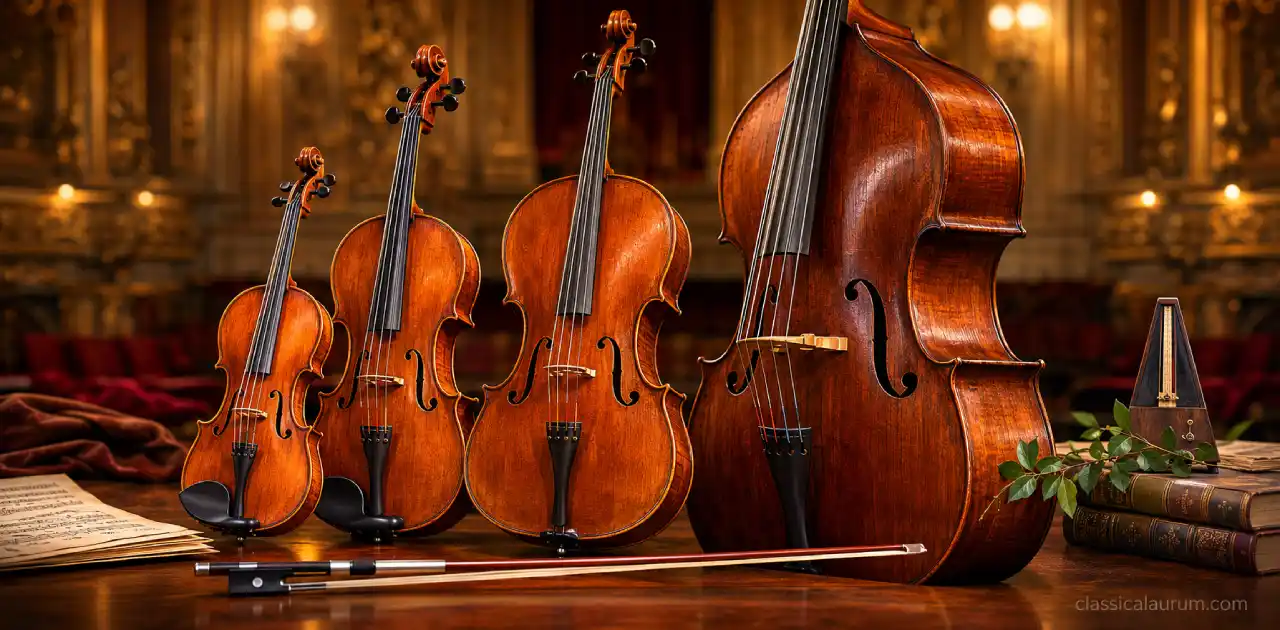
The string family consists of instruments that produce sound through the vibration of strings. Most orchestral string instruments are played with a bow, although they can also be plucked with the fingers using a technique known as pizzicato.
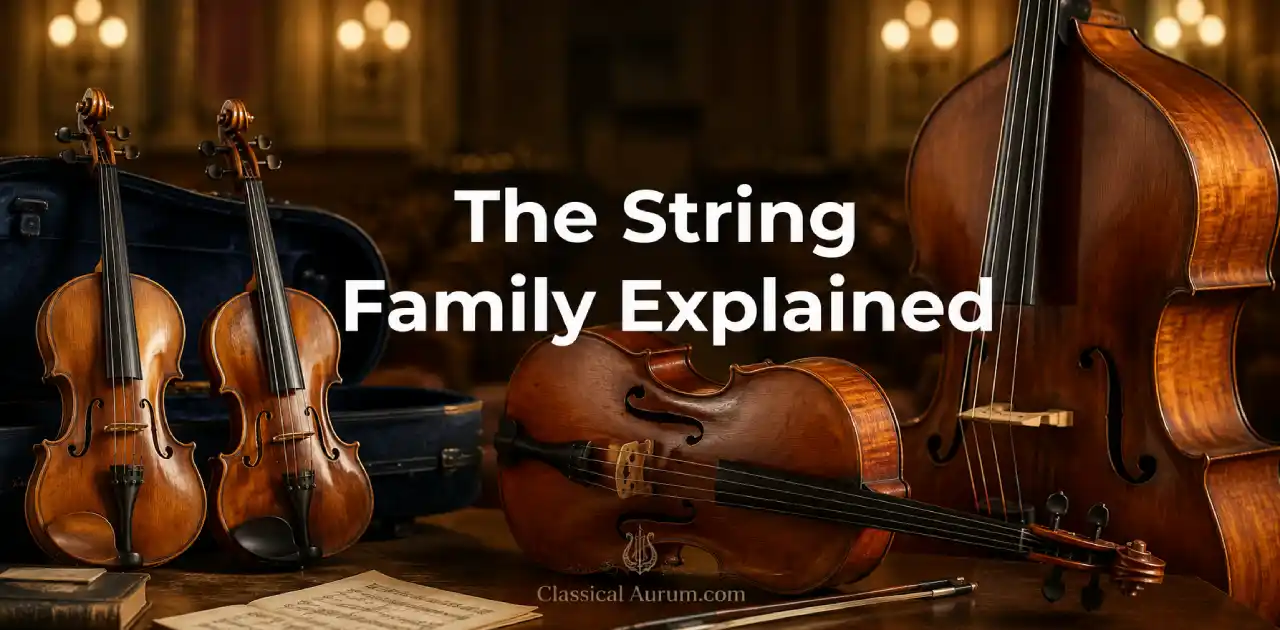
The four principal members are:
Related: Sections of the Symphony Orchestra
- Violin
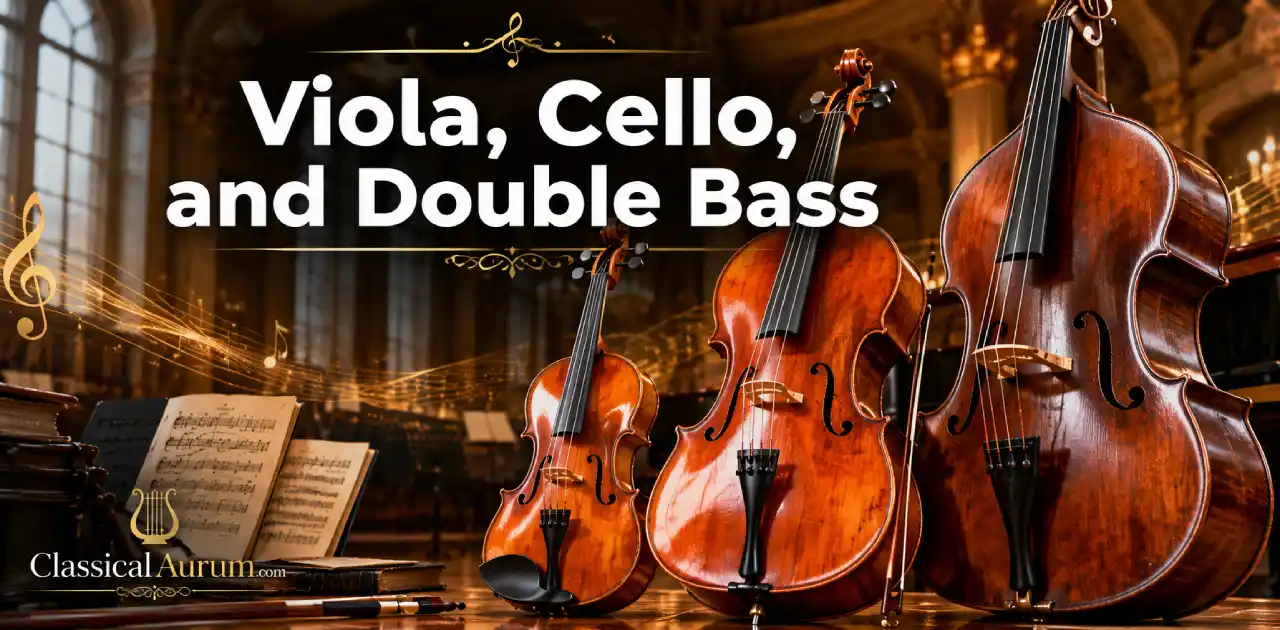
- Viola
- Cello
- Double Bass
Together, these instruments create a complete range of pitches, from very high melodies to deep and powerful bass lines.
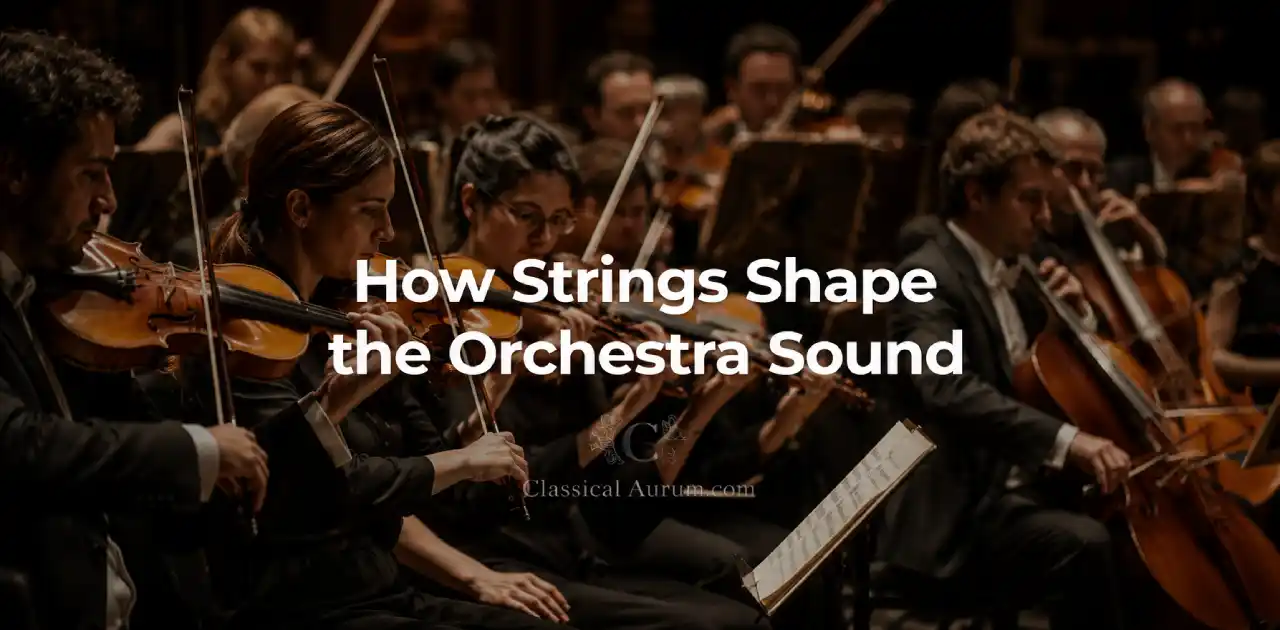
String instruments occupy the largest section of a symphony orchestra. Their flexibility allows composers to write lyrical melodies, dramatic harmonies, and rhythmic accompaniment using the same family of instruments.
Related: How Orchestras Are Structured
The Violin: The Bright Voice of the Orchestra
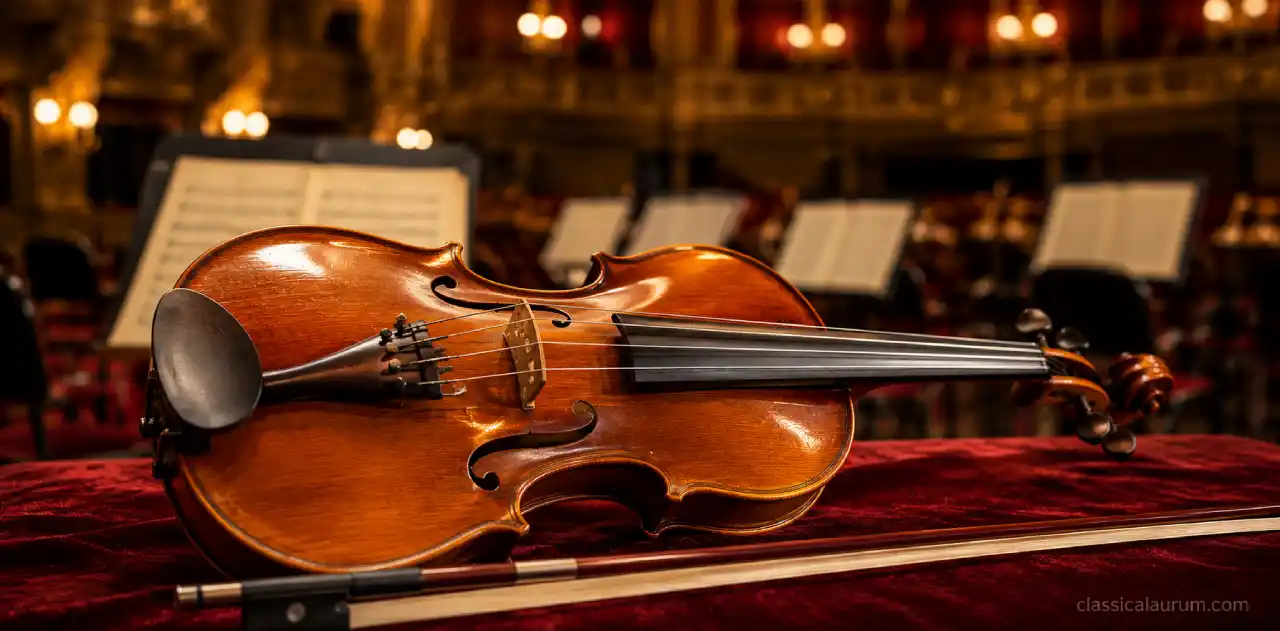
The violin is the smallest and highest-pitched instrument in the string family. Its brilliant and agile sound makes it ideal for melodic passages and virtuosic performances.
Typically, an orchestra contains two violin sections:
- First Violins
- Second Violins
First violins often carry the principal melodies, while second violins provide harmonic support and additional textures.
Throughout history, many composers have written masterpieces for the violin. Concertos by Bach, Mozart, Beethoven, Mendelssohn, and Tchaikovsky remain central to the repertoire.
Because of its expressive capabilities, the violin is also one of the most popular solo instruments in classical music.
The Viola: The Warm Middle Register
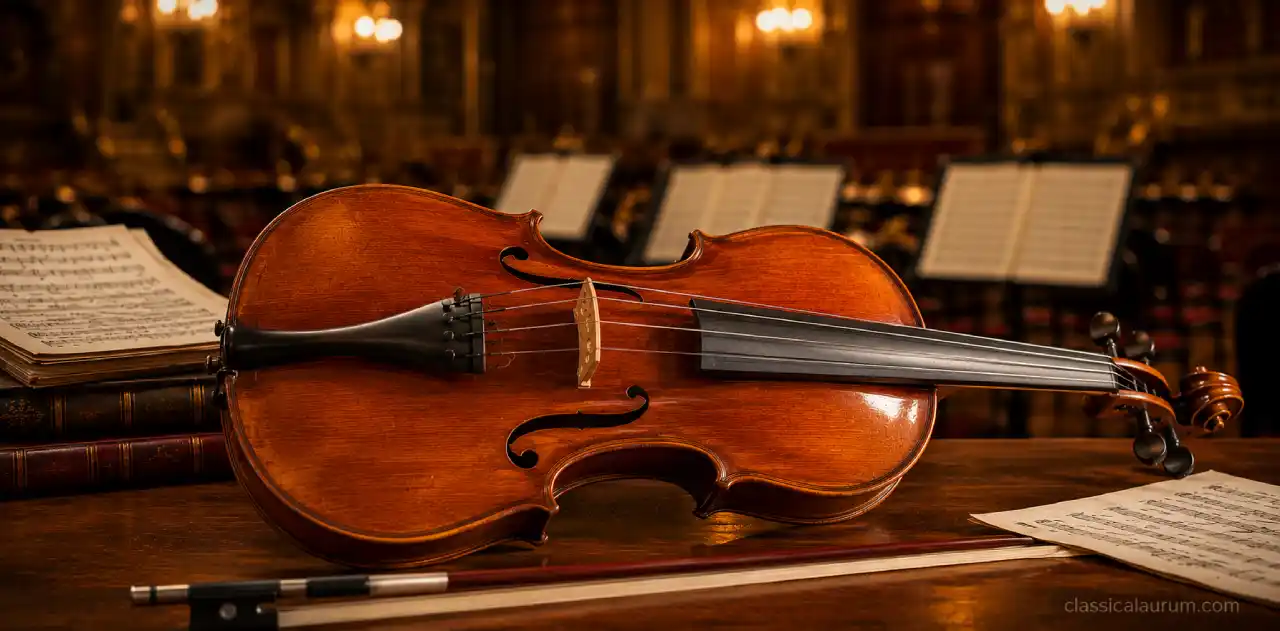
The viola resembles the violin but is slightly larger and tuned lower. Its tone is darker, richer, and more mellow.
For many years, the viola remained in the background of orchestral writing. However, composers eventually recognized its unique character and began giving it greater prominence.
The viola often performs:
- Inner harmonies
- Countermelodies
- Supporting textures
- Emotional passages with a warm timbre
Composers such as Hector Berlioz, Béla Bartók, and William Walton contributed significantly to expanding the viola repertoire.
Today, many musicians and listeners appreciate the instrument’s distinctive voice and expressive depth.
The Cello: A Human-Like Sound
Among all orchestral instruments, the cello is often described as having a sound closest to the human voice.
Played while seated, with the instrument resting on an endpin, the cello offers a wide expressive range. It can produce powerful low notes and beautiful singing melodies in its upper register.
The cello serves multiple roles:
- Bass accompaniment
- Harmonic support
- Solo melodies
- Chamber music leadership
Some of the greatest works for cello include compositions by Johann Sebastian Bach, Antonín Dvořák, Edward Elgar, and Camille Saint-Saëns.
Its emotional versatility makes the cello one of the most beloved instruments in classical music.
The Double Bass: The Foundation of the Ensemble
The double bass is the largest member of the string family and provides the deepest sounds in the orchestra.
Its primary function is to support harmony and rhythm. Although often associated with accompaniment, the double bass is capable of remarkable expressiveness and technical brilliance.
Bass players may perform with either:
- French bow technique
- German bow technique
Composers such as Giovanni Bottesini and Serge Koussevitzky demonstrated the instrument’s solo potential through impressive concert works.
In orchestral settings, the double bass creates stability and adds richness to the entire ensemble.
How Sound Is Produced in String Instruments
String instruments create sound through vibrating strings. Several factors influence their tone:
String length: Longer strings generally produce lower pitches.
String thickness: Thicker strings vibrate more slowly and create deeper sounds.
Resonance: The wooden body amplifies vibrations and shapes the instrument’s character.
Bow pressure and speed: Musicians can alter dynamics and articulation through different bowing techniques.
Modern strings are often made from steel, synthetic materials, or combinations of both. Historically, gut strings were commonly used and are still favored by some performers specializing in historically informed performance.
The String Section in the Symphony Orchestra
The string section forms the heart of the modern orchestra. A typical ensemble may include:
- 16 First Violins
- 14 Second Violins
- 12 Violas
- 10 Cellos
- 8 Double Basses
These numbers vary depending on the repertoire and conductor’s preferences.
Strings are valued because they can:
- Sustain notes continuously.
- Produce a wide variety of dynamics.
- Blend naturally with other instruments.
- Create rich harmonic textures.
Many composers rely on strings to establish mood and emotional atmosphere. Whether in a Mozart symphony, a Brahms concerto, or a film score by John Williams, the string section remains essential.
The String Family in Chamber Music
Beyond the orchestra, string instruments play a major role in chamber music.
Popular chamber ensembles include:
String Quartet
- Two violins
- Viola
- Cello
String Trio
- Violin
- Viola
- Cello
Piano Quintet
- Piano plus string quartet
Composers such as Haydn, Beethoven, Schubert, Brahms, and Shostakovich produced extraordinary chamber works that continue to inspire audiences worldwide.
Chamber music highlights the conversational nature of the string family. Each instrument contributes equally, creating a balance between individuality and unity.
Why the String Family Remains Central to Classical Music
For centuries, the string family has served as the emotional core of Western music.
Its remarkable flexibility allows performers to express joy, sorrow, excitement, and contemplation with extraordinary nuance. From intimate chamber works to monumental symphonies, string instruments possess an unmatched ability to communicate directly with listeners.
Their enduring popularity stems from several qualities:
- Exceptional expressive range.
- Rich historical tradition.
- Versatility across musical styles.
- Strong presence in orchestral and solo repertoire.
Even in the twenty-first century, the violin, viola, cello, and double bass continue to inspire performers, composers, and audiences around the world.
Conclusion
Understanding the string family offers valuable insight into the architecture of classical music. Each instrument contributes its own personality, yet together they create one of the most beautiful and versatile sound worlds ever developed.
From the soaring brilliance of the violin to the profound resonance of the double bass, the string family remains the foundation of the orchestra and a timeless symbol of musical artistry.
At ClassicalAurum.com, exploring these instruments means discovering the traditions, craftsmanship, and expressive power that have shaped classical music for generations.

About the Author
Juan Daniel Cabrio is a classical guitarist, graduate of the National Conservatory of Music in Argentina, performer, arranger, and researcher dedicated to the study and dissemination of classical music and its history.
Throughout his career, he has presented numerous concerts featuring his own transcriptions and interpretations, with a special focus on the classical guitar repertoire and the musical traditions of different periods.
Through Classical Aurum, he shares educational and cultural content about composers, instruments, music history, theory, repertoire, and performance practice, with the aim of bringing classical music closer to a wider audience.
Classical Aurum is an independent editorial project devoted to preserving and promoting the heritage of classical music through articles, research, and educational resources for musicians, students, and music lovers around the world.
About the Author
Juan Daniel Cabrio is a classical guitarist, graduate of the National Conservatory of Music in Argentina, performer, arranger, and researcher dedicated to the study and dissemination of classical music and its history.
Throughout his career, he has presented numerous concerts featuring his own transcriptions and interpretations, with a special focus on the classical guitar repertoire and the musical traditions of different periods.
Through Classical Aurum, he shares educational and cultural content about composers, instruments, music history, theory, repertoire, and performance practice.
Classical Aurum is an independent editorial project devoted to preserving and promoting the heritage of classical music through articles, research, and educational resources.