
The Piano in Classical Music
The Piano in Classical Music
The piano remains one of the most influential instruments in the history of classical music. Its versatility, expressive range and technical possibilities transformed composition, performance and musical education across centuries. From intimate salon performances to grand concert halls, the instrument became a symbol of artistic refinement and emotional depth.
At Classical Aurum, the piano represents more than a keyboard instrument. It stands at the crossroads between composition, virtuosity and cultural evolution. Few instruments shaped the sound of Western music as profoundly as the piano, and its legacy continues to inspire performers and audiences around the world.
Throughout history, composers used the piano to push the limits of harmony, emotion and technique. The instrument evolved together with musical language itself. As orchestras expanded and concert traditions developed, the piano became central to both public performance and private musical life.
Today, the piano still occupies a unique place within classical traditions. Conservatories, international competitions and recording projects continue to celebrate its enormous repertoire. Whether through the delicate transparency of Mozart or the thunderous sonorities of Rachmaninoff, the piano remains one of the most powerful voices in music.
Related: Fernando Sor and the Guitar Repertoire
The Origins and Evolution of the Piano
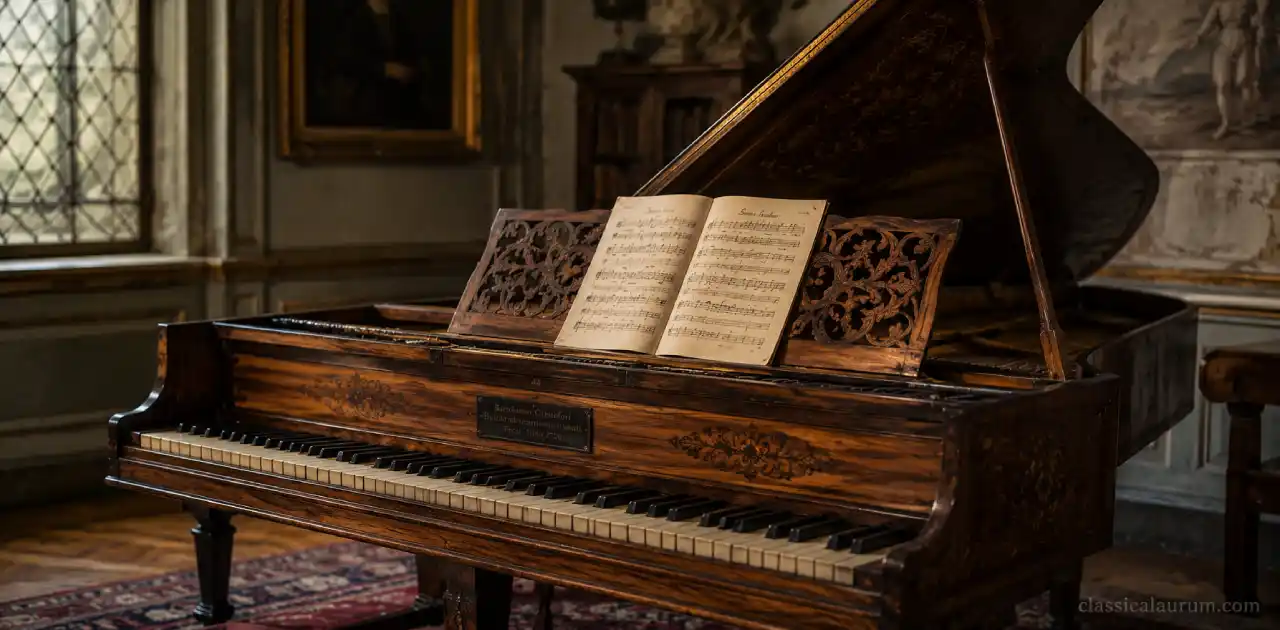
The piano emerged during the early eighteenth century as a revolutionary alternative to keyboard instruments like the harpsichord and clavichord. Italian instrument maker Bartolomeo Cristofori is widely credited with inventing the first piano around 1700. His design introduced a mechanism that allowed performers to control dynamics through touch.
Unlike the harpsichord, where strings were plucked mechanically, the piano used hammers striking the strings. This innovation made it possible to play both soft and loud sounds. The instrument’s original name, gravicembalo col piano e forte, eventually became shortened to “pianoforte” and finally “piano.”
Related: The History of the Classical Guitar
During the Classical era, builders refined the instrument considerably. Viennese and English piano makers experimented with stronger frames, wider keyboards and improved hammer mechanisms. These developments allowed composers to write more complex and expressive music.
By the nineteenth century, industrial progress transformed piano construction. Iron frames increased durability and tension, while expanded ranges gave composers new sonic possibilities. Romantic composers embraced these innovations enthusiastically. The piano evolved from a refined chamber instrument into a dramatic concert powerhouse capable of filling large halls.
The instrument’s development also mirrored broader social changes. Middle-class families increasingly purchased pianos for domestic entertainment and education. Owning a piano became associated with culture, sophistication and intellectual life throughout Europe and beyond.
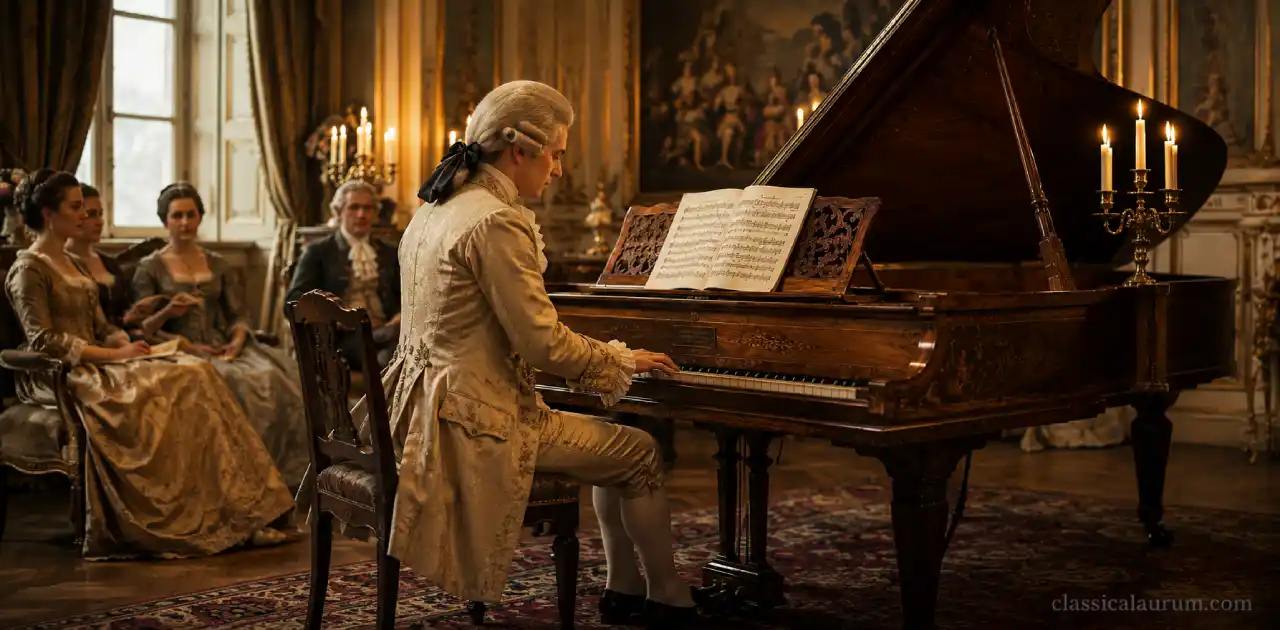
The Piano During the Classical Era
The Classical period established the piano as a dominant instrument in Western music. Composers such as Wolfgang Amadeus Mozart and Joseph Haydn recognized its expressive capabilities and wrote extensively for it.
Related: Romanticism in Classical Music
Mozart’s piano works remain fundamental to the repertoire. His sonatas and concertos combined elegance, balance and emotional subtlety. The piano became an ideal vehicle for clarity and lyricism. Mozart’s concertos especially demonstrated how the instrument could engage in sophisticated dialogue with an orchestra.
Haydn also contributed significantly to piano literature. His keyboard sonatas explored humor, rhythmic energy and structural innovation. Although some of his earlier works were written for the harpsichord, later compositions clearly embraced the dynamic flexibility of the piano.
The most transformative figure of the era was undoubtedly Ludwig van Beethoven. Beethoven expanded the emotional and technical boundaries of piano music. His sonatas demanded greater power, deeper expression and more dramatic contrasts.
Works like the “Moonlight Sonata,” “Pathétique Sonata” and “Hammerklavier Sonata” changed the perception of the instrument forever. Beethoven treated the piano almost symphonically. His music anticipated the intensity and emotional complexity of the Romantic era.
Related: The Classical Period Explained
The Classical period also saw the emergence of the public piano recital. Virtuoso performers began attracting large audiences, creating the foundation for modern concert culture. The piano gradually moved from aristocratic salons into public artistic life.
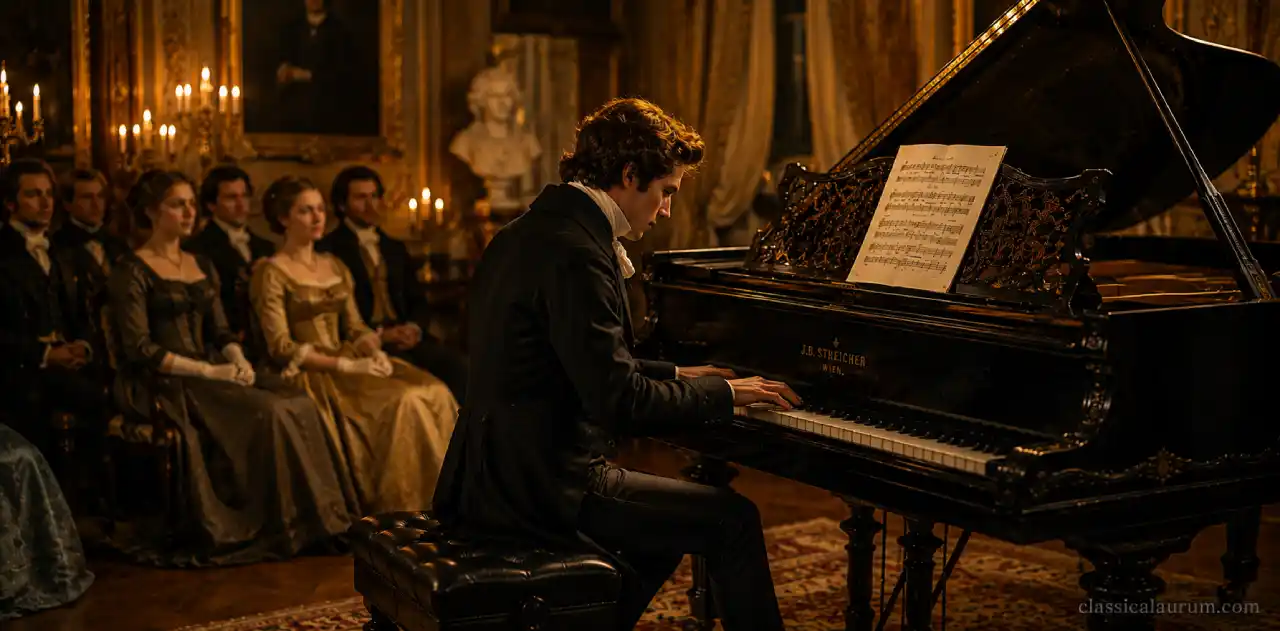
Romantic Virtuosity and Emotional Expression
The Romantic era elevated the piano to unprecedented artistic heights. Composers viewed the instrument as a direct extension of human emotion. Technical brilliance became closely linked with poetic imagination and personal expression.
Frédéric Chopin transformed piano writing through lyrical sophistication and harmonic innovation. Nearly all of his compositions centered on the instrument. His nocturnes, études, mazurkas and ballades remain among the most beloved works in classical music.
Chopin’s music emphasized nuance and expressive rubato. His compositions demanded refined touch and emotional sensitivity. He redefined piano technique by integrating virtuosity with intimacy and poetic atmosphere.
Franz Liszt represented another side of Romantic pianism. Liszt became one of history’s first true musical superstars. His performances inspired hysteria across Europe, a phenomenon sometimes called “Lisztomania.”
Liszt expanded piano technique dramatically. His compositions featured rapid octaves, enormous leaps and orchestral textures previously considered impossible. Yet beneath the virtuosity lay remarkable imagination and structural sophistication.
Other Romantic composers enriched piano literature in different ways. Robert Schumann explored literary imagination and psychological complexity. Johannes Brahms combined intellectual rigor with emotional warmth. Sergei Rachmaninoff created lush textures and expansive melodic lines that continue captivating audiences today.
The Romantic piano became a symbol of artistic individuality. Through the instrument, composers expressed longing, nostalgia, passion and transcendence with extraordinary emotional depth.
The Piano and the Modern Concert Tradition
As concert culture expanded during the nineteenth and twentieth centuries, the piano became central to public musical life. Major concert halls around the world increasingly featured piano recitals and concerto performances as cultural events of enormous prestige.
The modern concert grand piano emerged as a technological masterpiece. Companies like Steinway & Sons revolutionized piano manufacturing through precision engineering and innovative design. Their instruments became standard choices for leading performers and institutions.
The twentieth century introduced extraordinary pianists who reshaped interpretation and performance standards. Vladimir Horowitz became renowned for technical brilliance and dramatic intensity. Arthur Rubinstein brought elegance and warmth to Romantic repertoire. Glenn Gould challenged traditional interpretations through intellectual rigor and unconventional artistry.
International piano competitions further elevated the instrument’s status. Events such as the International Chopin Piano Competition launched major careers and shaped global standards of performance excellence.
Recording technology also transformed the piano’s cultural reach. Legendary performances became accessible to audiences worldwide. Pianists could now preserve interpretations permanently, influencing future generations of musicians and listeners.
Today, piano recitals remain essential components of classical programming. Despite changing musical trends, audiences continue responding to the instrument’s expressive power and emotional immediacy.
The Piano as a Tool for Composition and Education
Beyond performance, the piano has played a crucial role in composition and musical training. Many composers used the instrument as their primary creative tool. Its ability to produce harmony, melody and rhythm simultaneously makes it ideal for exploring musical ideas.
Students across the world begin their musical education through piano study. The instrument helps develop ear training, coordination and theoretical understanding. Because the keyboard visually represents musical structure, it offers a practical introduction to harmony and counterpoint.
Conservatories and universities continue placing piano study at the center of classical training. Even instrumentalists specializing in violin, voice or conducting often learn piano as a secondary discipline. The instrument remains essential for rehearsals, composition classes and ensemble preparation.
The piano also serves as a bridge between classical traditions and contemporary creativity. Modern composers continue experimenting with prepared piano techniques, extended sounds and electronic integration. Artists such as John Cage expanded the instrument’s sonic possibilities in radical ways.
Film music and crossover genres further demonstrate the piano’s adaptability. Contemporary audiences encounter the instrument not only in concert halls but also in cinema, streaming platforms and digital media. Despite technological change, the piano continues maintaining a timeless artistic presence.
For Classical Aurum, the piano symbolizes continuity between historical tradition and modern interpretation. Its repertoire connects centuries of musical thought while remaining emotionally relevant to contemporary listeners.
Why the Piano Remains Central to Classical Music
The enduring power of the piano lies in its extraordinary versatility. It can function as a solo instrument, chamber partner or orchestral collaborator. Few instruments possess such a vast and varied repertoire spanning multiple centuries and stylistic movements.
The piano also reflects the evolution of musical aesthetics. Through its literature, listeners can trace the transition from Classical elegance to Romantic intensity and modern experimentation. The instrument became a mirror of changing artistic values and cultural ideals.
Emotionally, the piano offers remarkable intimacy. A single performer can create textures ranging from whisper-like delicacy to orchestral grandeur. This flexibility allows composers and performers to communicate profound emotional experiences with exceptional immediacy.
Technically, the piano remains one of the most demanding instruments in classical music. Its repertoire requires precision, endurance, coordination and interpretative maturity. Pianists dedicate years refining touch, phrasing and tonal control.
The instrument’s accessibility also contributes to its popularity. Unlike some orchestral instruments, the piano allows a single musician to perform complete musical structures independently. This self-sufficiency helped establish it as a centerpiece of both professional and amateur musical life.
Even in the digital era, the piano continues attracting new generations of musicians and audiences. Streaming platforms, online masterclasses and international competitions keep expanding its global reach. At the same time, historical performance movements encourage renewed interest in period instruments and authentic interpretation practices.
The piano remains more than an instrument. It represents a living tradition of artistic exploration, emotional communication and cultural memory. Within classical music, its voice continues resonating across centuries with timeless beauty and expressive depth.
Explore more Classical Aurum articles related to this topic.