


The Classical Period Explained
Historical Context: Europe Between 1750 and 1820
The Classical Period in music roughly spans from 1750 to 1820, a time of profound intellectual, political, and artistic transformation. This era emerged after the complexity of the Baroque style and preceded the emotional intensity of Romanticism.
The death of Johann Sebastian Bach in 1750 symbolically marks the beginning of a new aesthetic direction. European society was deeply influenced by the Enlightenment, a philosophical movement that emphasized reason, clarity, balance, and natural order. These ideals would shape the sound of Classical music.
Politically, Europe experienced dramatic change. The American Revolution (1776) and the French Revolution (1789) reshaped ideas about freedom, equality, and civic life. Music increasingly reflected humanistic values rather than solely serving religious or aristocratic institutions.
Vienna became the epicenter of musical innovation. The city fostered a generation of composers who refined structure and formal clarity. This period is often called the Viennese Classical School, primarily associated with Haydn, Mozart, and Beethoven.
Related: The History of the Classical Guitar
Related: Why the Violin Leads the Orchestra
For ClassicalAurum.com readers, understanding this context is essential: the Classical style was not merely a musical change. It was a cultural shift toward intellectual elegance and structural perfection.
Related: Romanticism in Classical Music
Related: The Violin and Its Central Role
Core Musical Characteristics of the Classical Style
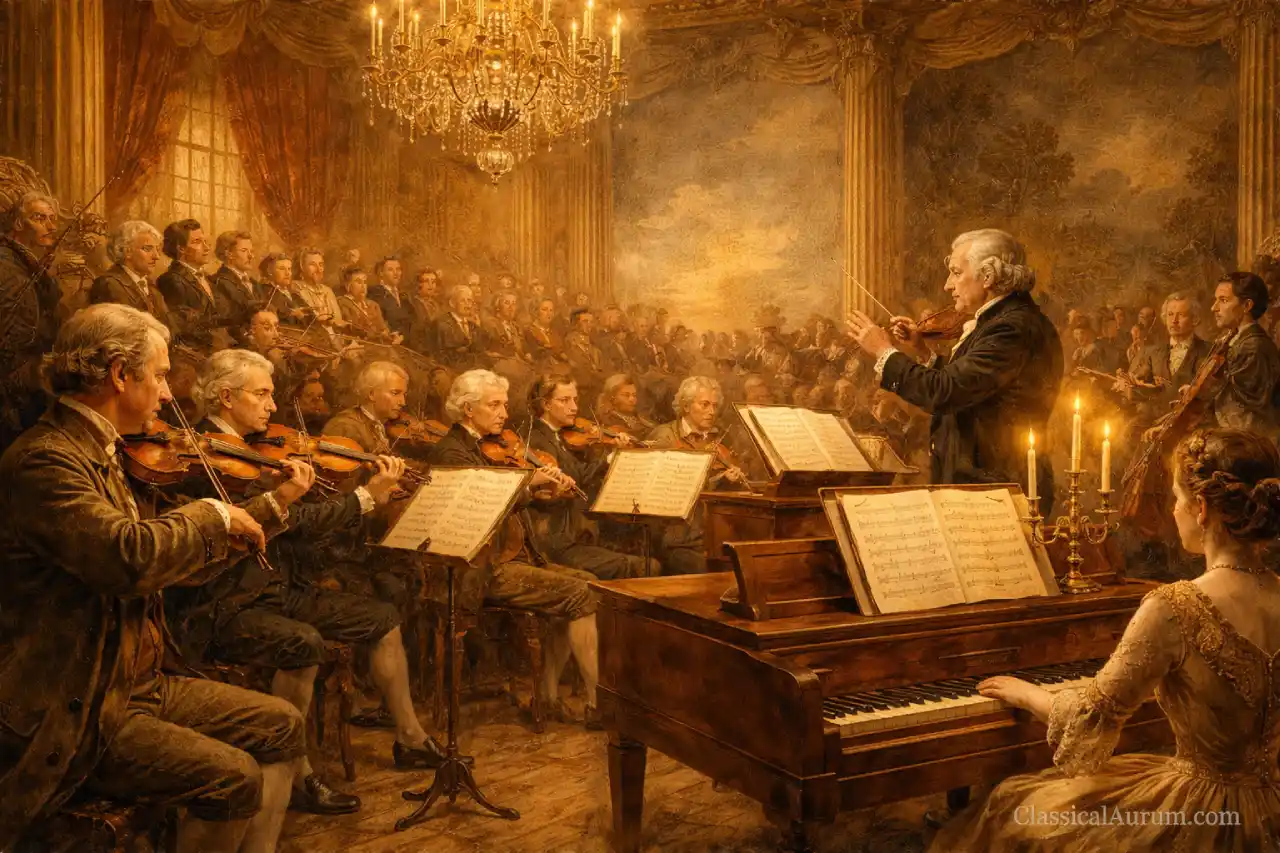
The Classical Period is defined by a commitment to clarity, balance, symmetry, and formal logic. Unlike the dense polyphony of the Baroque era, Classical composers favored homophonic texture, where a clear melody stands above harmonic accompaniment.
Melodies became more singable and structured. They often featured balanced phrases, typically in four-measure units, creating a sense of question and answer. This symmetry mirrored Enlightenment ideals of rational design.
Harmony evolved toward functional tonality. Composers used chord progressions that emphasized tension and resolution. The musical language became more transparent, allowing listeners to follow thematic development with ease.
Dynamics expanded in expressive range. Instead of the terraced dynamics of the Baroque, Classical composers used gradual crescendos and diminuendos. The orchestra also expanded, incorporating clarinets and refining instrumental roles.
Related: The Piano in Classical Music
Rhythmic patterns became more flexible and less motoric than in Baroque music. Texture, phrasing, and contrast were carefully controlled to produce elegance rather than excess.
For the Classical Aurum editorial identity, this period represents a golden equilibrium between intellect and emotion — a balance that defines the very idea of musical refinement.
The Development of Sonata Form
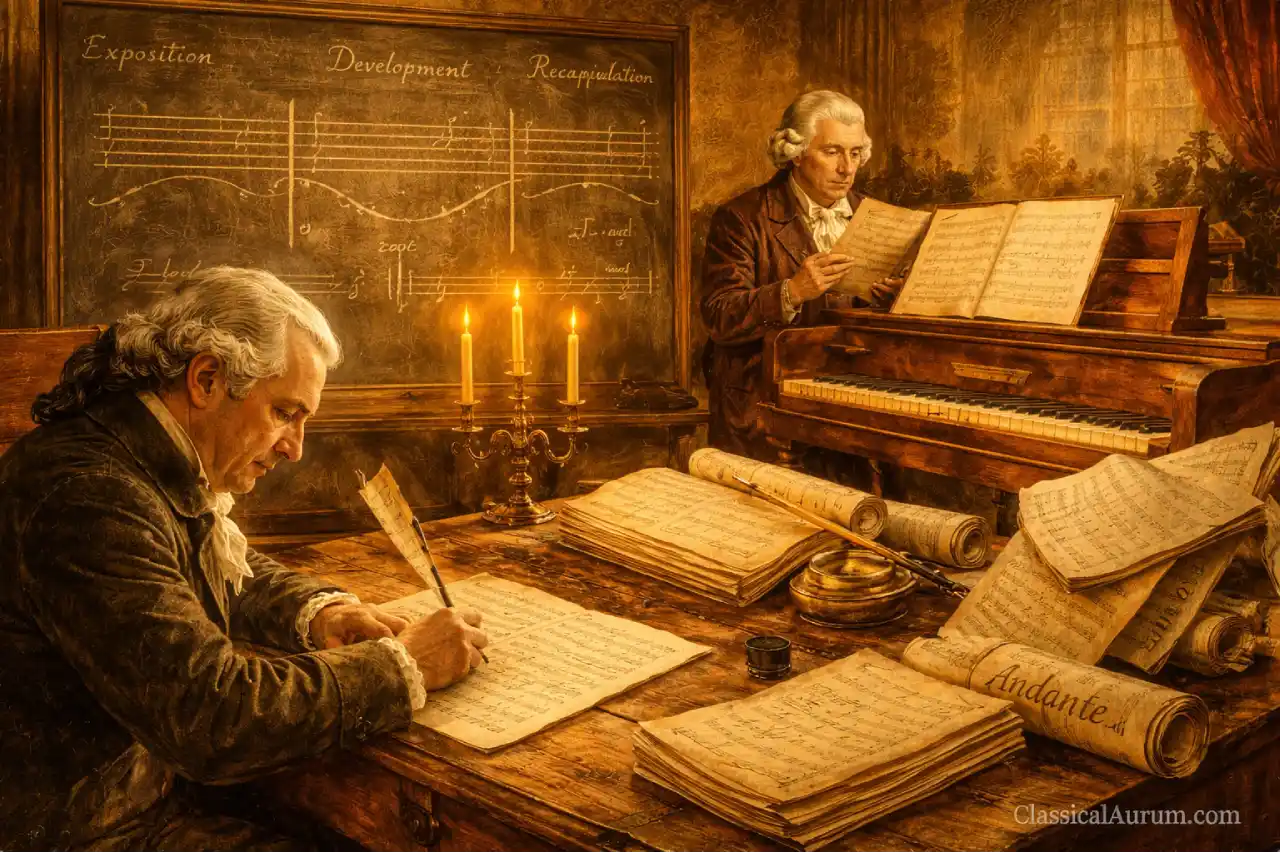
One of the most significant achievements of the Classical Period is the perfection of sonata form. This structural model became the foundation of symphonies, chamber works, and piano sonatas.
Related: Fernando Sor and the Guitar Repertoire
Sonata form generally consists of three main sections:
-
Exposition: Presentation of two contrasting themes, usually in different keys.
-
Development: Exploration and transformation of thematic material.
-
Recapitulation: Return of themes in the original key, resolving harmonic tension.
This structure reflects Enlightenment logic. Themes are introduced, examined, challenged, and ultimately reconciled. It is a musical embodiment of philosophical debate.
The development section allowed composers to experiment with modulation and thematic fragmentation. This created dramatic tension while maintaining formal coherence.
Sonata form was not rigid but adaptable. It became the architectural blueprint for instrumental music. Through it, composers achieved both intellectual rigor and expressive freedom.
Understanding sonata form is essential for musicians and listeners alike. It reveals how Classical composers structured narrative tension long before Romantic storytelling dominated music.
The Symphony and the Rise of the Orchestra
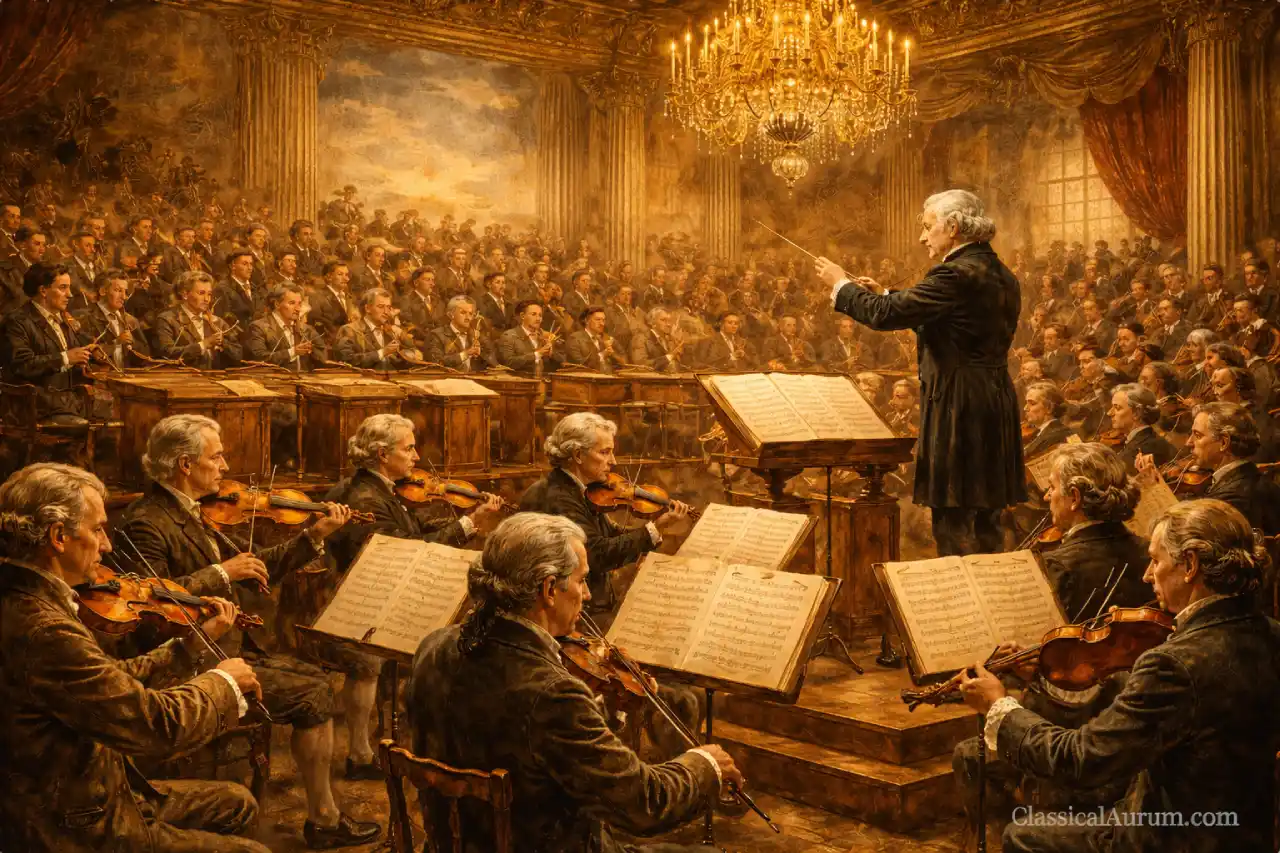
The Classical Period witnessed the transformation of the symphony into a monumental artistic statement. What began as a short overture evolved into a multi-movement orchestral masterpiece.
A typical Classical symphony includes four movements:
-
Fast (often in sonata form)
-
Slow lyrical movement
-
Minuet and Trio (later replaced by scherzo)
-
Fast finale
The orchestra became standardized. Strings formed the foundation, while woodwinds, brass, and timpani added color and contrast. The clarinet, newly integrated, expanded tonal possibilities.
Symphonies were no longer mere court entertainment. Public concerts became more common, and audiences expanded beyond aristocratic patrons. Music moved into the civic sphere.
This shift aligned with Enlightenment values. The symphony became a symbol of collective human expression, structured yet emotionally communicative.
For ClassicalAurum.com, the symphony represents the orchestral crystallization of Classical ideals: balance, architectural clarity, and communal resonance.
Chamber Music and the String Quartet
While the symphony flourished publicly, chamber music embodied intimacy and refinement. The string quartet became the quintessential chamber genre of the Classical Period.
A standard string quartet consists of:
-
Two violins
-
Viola
-
Cello
This ensemble allowed for conversational interplay. Rather than hierarchical dominance, instruments engaged in balanced dialogue.
The quartet mirrored Enlightenment salons, where ideas were exchanged thoughtfully. Themes passed fluidly between instruments, creating a musical conversation of equals.
Chamber music demanded precision and sensitivity. Without the grandeur of a full orchestra, clarity of structure and thematic development became paramount.
For classical guitarists and chamber enthusiasts — a core audience of ClassicalAurum.com — this genre represents the intimate heart of Classical artistry.
Joseph Haydn: Architect of the Classical Style
Joseph Haydn is often called the “Father of the Symphony” and the “Father of the String Quartet.” His contributions established formal standards that defined the Classical era.
Haydn composed over 100 symphonies and numerous chamber works. His music demonstrates wit, structural mastery, and inventive thematic development.
Working for the Esterházy family, he enjoyed relative creative independence. This stability allowed him to experiment with form and orchestration.
Haydn refined sonata form and expanded the expressive possibilities of instrumental music. His symphonies evolved from modest court pieces into sophisticated architectural achievements.
His influence on Mozart and Beethoven was profound. Haydn’s legacy lies in codifying Classical structure without sacrificing expressive charm.
Wolfgang Amadeus Mozart: Balance and Emotional Depth
Wolfgang Amadeus Mozart embodied Classical elegance at its highest level. His music combines structural perfection with emotional richness.
Mozart excelled in opera, symphony, concerto, and chamber music. His melodies are memorable yet harmonically sophisticated.
In operas such as The Marriage of Figaro and Don Giovanni, Mozart fused dramatic psychology with musical architecture. Characters gained unprecedented emotional realism.
His piano concertos represent a dialogue between soloist and orchestra. They balance virtuosity with lyrical refinement.
Mozart’s genius lies in making complexity appear effortless. His works remain central to the Classical canon and continue to define the ideal of musical grace.
Ludwig van Beethoven: Bridge to Romanticism
Ludwig van Beethoven began within the Classical tradition but expanded its emotional and structural boundaries.
His early works reflect Haydn and Mozart’s influence. However, Beethoven intensified thematic development and dynamic contrast.
The symphonies grew in scale and dramatic power. The famous motif of the Fifth Symphony illustrates how a simple idea can undergo monumental transformation.
Beethoven’s middle period pushed Classical forms toward Romantic expression. His music conveyed struggle, triumph, and personal voice.
He preserved Classical architecture while injecting unprecedented emotional depth. Beethoven thus serves as the bridge between eras.
The Piano and Instrumental Innovation
The rise of the fortepiano was central to the Classical Period. Unlike the harpsichord, it allowed dynamic variation through touch.
Composers exploited this expressive potential. Piano sonatas became major vehicles of artistic exploration.
Instrument makers improved string tension, key mechanisms, and resonance. These innovations expanded tonal range and dynamic nuance.
The piano became both a concert instrument and a domestic staple. Middle-class households embraced music-making.
This democratization of music aligned with Enlightenment ideals of accessibility and education.
Philosophy and Aesthetic Ideals
The Classical Period was deeply connected to Enlightenment thought. Philosophers emphasized order, reason, and natural beauty.
Music reflected these ideals through symmetrical phrasing and clear harmonic logic.
Art sought universality rather than excess. Emotional expression remained controlled and proportionate.
This aesthetic balance is why Classical music often feels timeless. It does not overwhelm; it persuades through structural coherence.
For ClassicalAurum.com, this philosophical foundation reinforces why the Classical Period represents a golden standard of artistic equilibrium.
Lasting Influence of the Classical Period
The influence of the Classical Period extends far beyond 1820. Romantic composers inherited its forms while expanding emotional scope.
Sonata form remains central in conservatory education. Symphony orchestras still program Haydn, Mozart, and Beethoven regularly.
Film scores, contemporary concert works, and chamber compositions continue to rely on Classical structural principles.
The Classical Period established the grammar of Western instrumental music. Its clarity provides a framework upon which later eras built their innovations.
Understanding this period is essential for musicians, composers, and informed listeners. It represents the moment when musical architecture achieved enduring perfection.
Conclusion
The Classical Period explained is more than a historical overview. It is a study of balance between reason and emotion, structure and expression.
From the refinement of sonata form to the rise of the symphony and the brilliance of Haydn, Mozart, and Beethoven, this era defined musical clarity.
For ClassicalAurum.com readers, the Classical Period stands as a foundational chapter in the ongoing story of Western art music — a timeless model of elegance, logic, and expressive restraint.
It remains the golden center of musical history: structured, luminous, and eternally relevant.

About the Author
Juan Daniel Cabrio
Argentine Classical Guitarist · Researcher · Educator
Juan Daniel Cabrio is an Argentine classical guitarist, researcher and educator. Founder of Classical Aurum, he shares educational and cultural content about classical music, composers, instruments, repertoire, music history and performance practice.
View full biography