The Violin and Its Central Role
The instrument that transformed classical music
Among all instruments associated with Western classical music, few possess the cultural influence, emotional depth, and historical importance of the violin. For centuries, it has occupied the center of orchestras, chamber ensembles, solo concert stages, and conservatory traditions. The violin became more than a musical tool. It evolved into a symbol of artistic refinement, virtuosity, and emotional expression.
Its sound is instantly recognizable. A single violin can produce intimacy and fragility, while an entire violin section can generate overwhelming dramatic force. This remarkable flexibility explains why composers from the Baroque era to contemporary classical music consistently placed the instrument at the heart of their works.
At ClassicalAurum.com, the violin represents not only tradition but also continuity between historical performance and modern interpretation. Even in an era shaped by digital technology and artificial intelligence, the violin continues to define the emotional core of classical performance.
The instrument’s journey began in northern Italy during the sixteenth century. Craftsmen in cities such as Cremona developed designs that would eventually establish the modern violin family. Luthiers including Antonio Stradivari and Giuseppe Guarneri elevated violin making into a sophisticated art form whose influence remains unmatched.
Related: Why the Violin Leads the Orchestra
Related: Fernando Sor and the Guitar Repertoire
The violin quickly gained prominence because of its expressive possibilities. Unlike keyboard instruments with fixed tones, violinists can shape pitch, vibrato, articulation, and phrasing in highly personal ways. This human quality allowed composers to imitate the voice, prayer, grief, joy, and even theatrical conflict through the instrument.
Related: The Piano in Classical Music
Why composers built orchestras around the violin
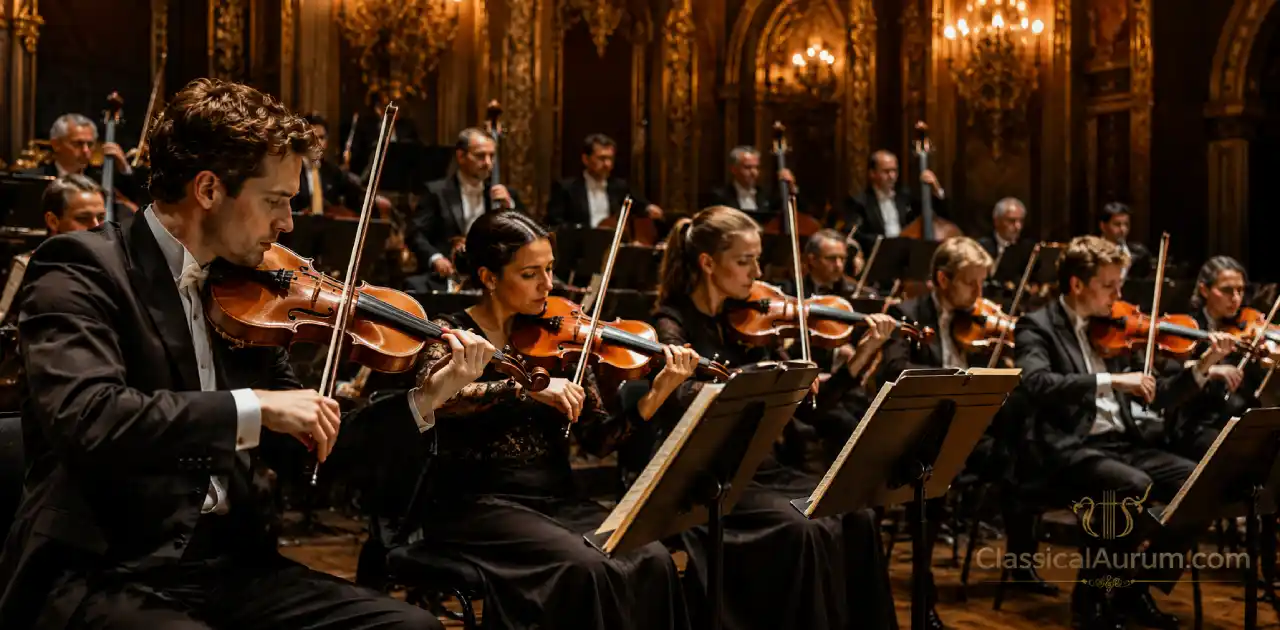
The modern symphony orchestra depends heavily on the violin section. In most orchestral works, first and second violins carry the melodic architecture, rhythmic momentum, and emotional direction of the composition. Without violins, the orchestral sound loses much of its brilliance and movement.
Related: The History of the Classical Guitar
During the Baroque period, composers such as Antonio Vivaldi and Johann Sebastian Bach demonstrated the violin’s extraordinary range. Vivaldi’s famous concertos, especially The Four Seasons, transformed the violin into a narrative instrument capable of depicting storms, birds, winter winds, and pastoral landscapes.
Later, composers of the Classical and Romantic eras expanded the violin’s role dramatically. Wolfgang Amadeus Mozart wrote elegant violin concertos that emphasized balance and lyricism, while Ludwig van Beethoven pushed the instrument toward greater emotional intensity and technical challenge.
By the nineteenth century, the violin became inseparable from the idea of the virtuoso performer. Figures such as Niccolò Paganini shocked audiences with unprecedented technical feats. His performances inspired myths, legends, and even fears that supernatural forces were involved in his artistry.
The violin section also became essential in shaping orchestral color. Composers including Pyotr Ilyich Tchaikovsky and Gustav Mahler relied on strings to create sweeping emotional landscapes. From delicate pianissimo passages to explosive climaxes, violins formed the emotional bridge between the composer’s imagination and the audience’s experience.
Related: Romanticism in Classical Music
According to the educational resources of The Royal Academy of Music, the violin remains one of the most studied orchestral instruments worldwide because of its enormous repertoire and interpretative possibilities.
The violin as a solo voice of emotion
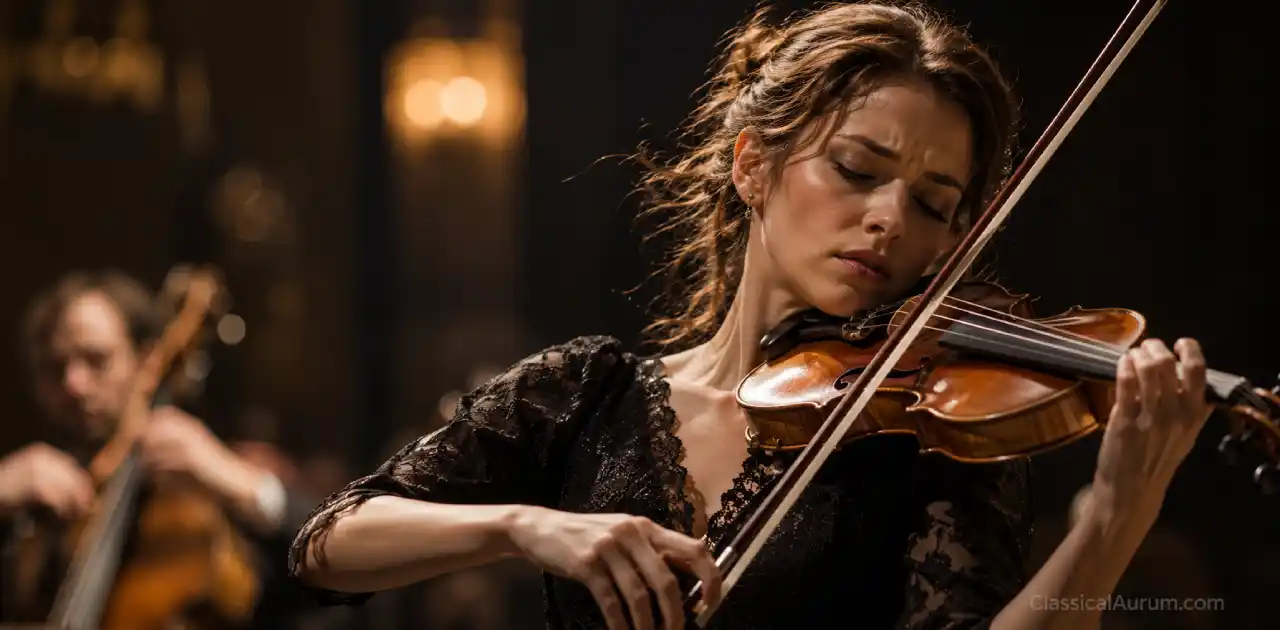
One reason the violin occupies such a central role is its close resemblance to the human voice. Skilled violinists can produce phrasing that feels almost vocal in character. This ability allows listeners to connect emotionally with the instrument in ways that are immediate and deeply personal.
The violin concerto became one of classical music’s most important forms because it placed individual expression against the immense power of the orchestra. In works by Felix Mendelssohn, Johannes Brahms, and Jean Sibelius, the violin often appears as both hero and storyteller.
Romantic composers especially embraced the instrument’s emotional extremes. A violin melody could represent nostalgia, longing, tragedy, or transcendence. This emotional versatility helped establish the violin as the preferred instrument for dramatic solo repertoire.
Related: The Classical Period Explained
Twentieth-century composers continued this tradition while exploring new harmonic and rhythmic ideas. Dmitri Shostakovich used the violin to express tension and psychological conflict, while Béla Bartók incorporated folk traditions and modernist experimentation into violin writing.
Modern performers have also reshaped public perception of the instrument. Artists such as Itzhak Perlman, Hilary Hahn, and Anne-Sophie Mutter brought classical violin performance to global audiences through recordings, festivals, and educational outreach.
The violin’s emotional impact extends beyond concert halls. Film composers regularly depend on violin themes to evoke memory, suspense, romance, or melancholy. According to The Juilliard School, violin studies remain foundational in many elite music programs because the instrument develops both technical discipline and interpretative maturity.
Craftsmanship and the enduring mystery of violin making
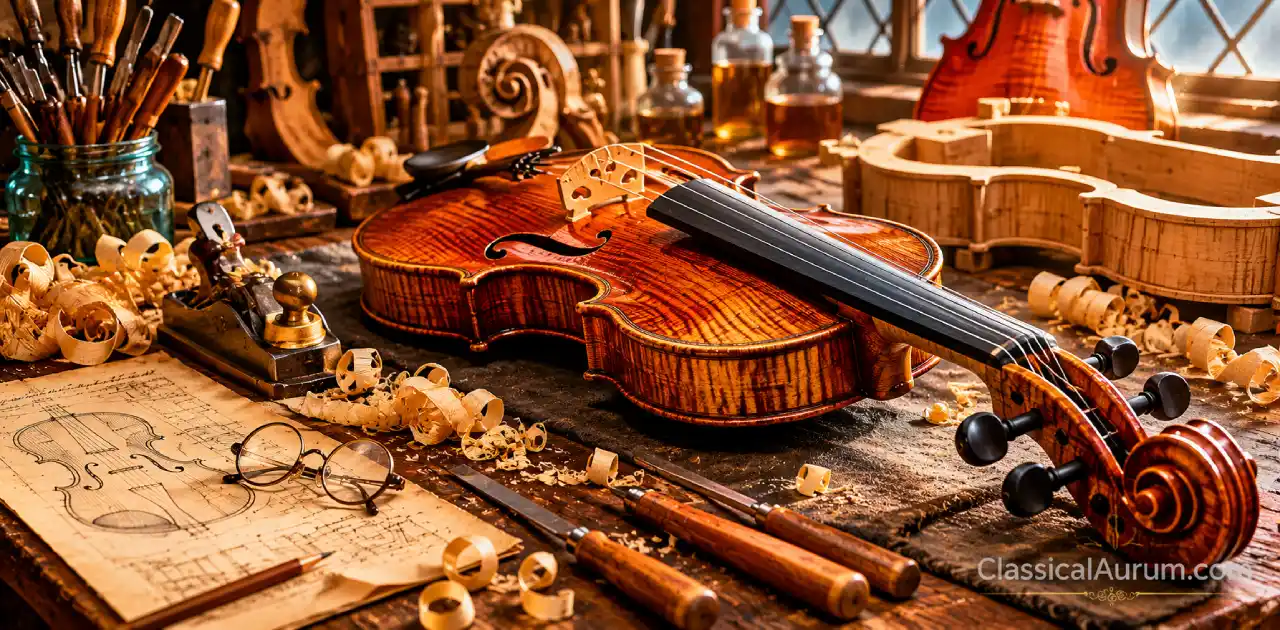
Part of the violin’s fascination comes from its physical construction. Unlike many modern instruments, the violin remains deeply connected to centuries-old craftsmanship traditions. Handmade violins continue to be valued not only as instruments but also as historical and artistic objects.
The city of Cremona became legendary for violin production during the seventeenth and eighteenth centuries. Instruments created by Stradivari and Guarneri are still considered among the finest ever made. Their sound quality, projection, and tonal complexity remain subjects of scientific research and musical debate.
Modern luthiers continue studying historical techniques in hopes of reproducing the extraordinary qualities of these instruments. Wood selection, varnish composition, arching, and internal structure all influence the violin’s acoustic behavior. Even today, experts disagree about what exactly gives historic violins their unique sound.
Collectors and soloists often pay millions of dollars for exceptional historical instruments. Yet many contemporary violin makers are also producing extraordinary instruments capable of competing at the highest professional levels.
This connection between tradition and innovation reflects the broader identity of classical music itself. The violin symbolizes continuity across centuries while remaining adaptable to changing artistic realities.
Historically informed performance practice also renewed interest in older violin techniques. Baroque bows, gut strings, and period tuning systems have reappeared in specialized ensembles seeking to recreate historical sound worlds. Organizations such as The Metropolitan Museum of Art Musical Instruments Collection preserve important violin-related artifacts that help scholars understand these traditions.
The violin’s future in a changing musical world
Despite enormous cultural shifts, the violin continues to maintain its importance in contemporary music education and performance. Conservatories, youth orchestras, international competitions, and streaming platforms have introduced new generations to violin repertoire.
Digital media has transformed how violinists build careers. Performers now reach audiences through online masterclasses, virtual concerts, and social platforms. Young musicians can study legendary performances instantly, creating unprecedented access to historical interpretation.
Artificial intelligence and digital composition tools are also beginning to influence classical music production. However, the violin retains a quality that technology struggles to replicate fully: the subtle imperfections and expressive nuance of live human performance.
Cross-genre collaborations have further expanded the violin’s reach. Contemporary artists combine classical violin with jazz, electronic music, cinematic scoring, and experimental sound design. These projects help maintain the instrument’s relevance among younger audiences without abandoning classical traditions.
Educational programs remain essential for preserving violin culture. Many orchestras and institutions actively promote music education to ensure that future generations continue learning string instruments. In several countries, community programs use violin instruction to support social development and cultural inclusion.
The violin also remains central to chamber music traditions. String quartets continue to represent one of classical music’s highest artistic forms. Within these ensembles, the violin often leads musical dialogue while interacting closely with viola and cello voices.
At the same time, modern audiences increasingly seek authenticity and emotional connection in performance. The violin naturally fulfills these expectations because of its expressive immediacy and historical depth.
Why the violin remains the heart of classical tradition
The violin’s enduring importance comes from a combination of history, craftsmanship, emotional power, and artistic adaptability. Few instruments have shaped musical culture so profoundly across so many centuries.
From Baroque concert halls to modern recording studios, the violin continues to define the sound of classical music. It bridges individual expression and collective orchestral identity. It preserves ancient traditions while inspiring contemporary experimentation.
The instrument’s repertoire is among the richest in musical history. Generations of composers entrusted their most personal ideas to the violin because of its unmatched expressive potential. Audiences continue responding to that emotional intensity today.
For listeners discovering classical music for the first time, the violin often serves as the emotional entry point into the repertoire. Its voice can communicate drama, elegance, grief, hope, and transcendence without words.
In many ways, the history of classical music cannot be separated from the history of the violin itself. The instrument shaped orchestras, performance practice, composition, and even public perception of musical virtuosity.
As Classical Aurum explores the evolving future of classical culture, the violin remains not merely an instrument of the past, but a living artistic force capable of adapting to every new era while preserving the emotional essence of classical tradition.