







The History of the Classical Guitar
Ancient Origins: The First String Instruments
The history of the classical guitar begins long before the instrument itself existed. Its roots stretch back thousands of years to ancient civilizations that developed early stringed instruments. These early forms laid the structural and conceptual foundation for what would eventually become the modern guitar.
Archaeological evidence shows that instruments such as the lute in Mesopotamia, the oud in the Middle East, and the kithara in Ancient Greece played a central role in musical expression. These instruments shared essential characteristics: a hollow body, strings stretched across a resonating chamber, and the ability to produce melodic and harmonic sounds.
The oud, in particular, is often considered one of the closest ancestors of the guitar. Introduced into Europe through cultural exchanges during the Middle Ages, it influenced the development of European plucked instruments.
Over time, these early instruments evolved in shape, tuning, and playing technique. The concept of frets, which allow precise pitch control, became a crucial innovation. This transformation marked a shift toward more complex musical possibilities and paved the way for the Renaissance guitar.
Related: Why the Violin Leads the Orchestra
Related: Romanticism in Classical Music
The Renaissance Guitar and the Vihuela
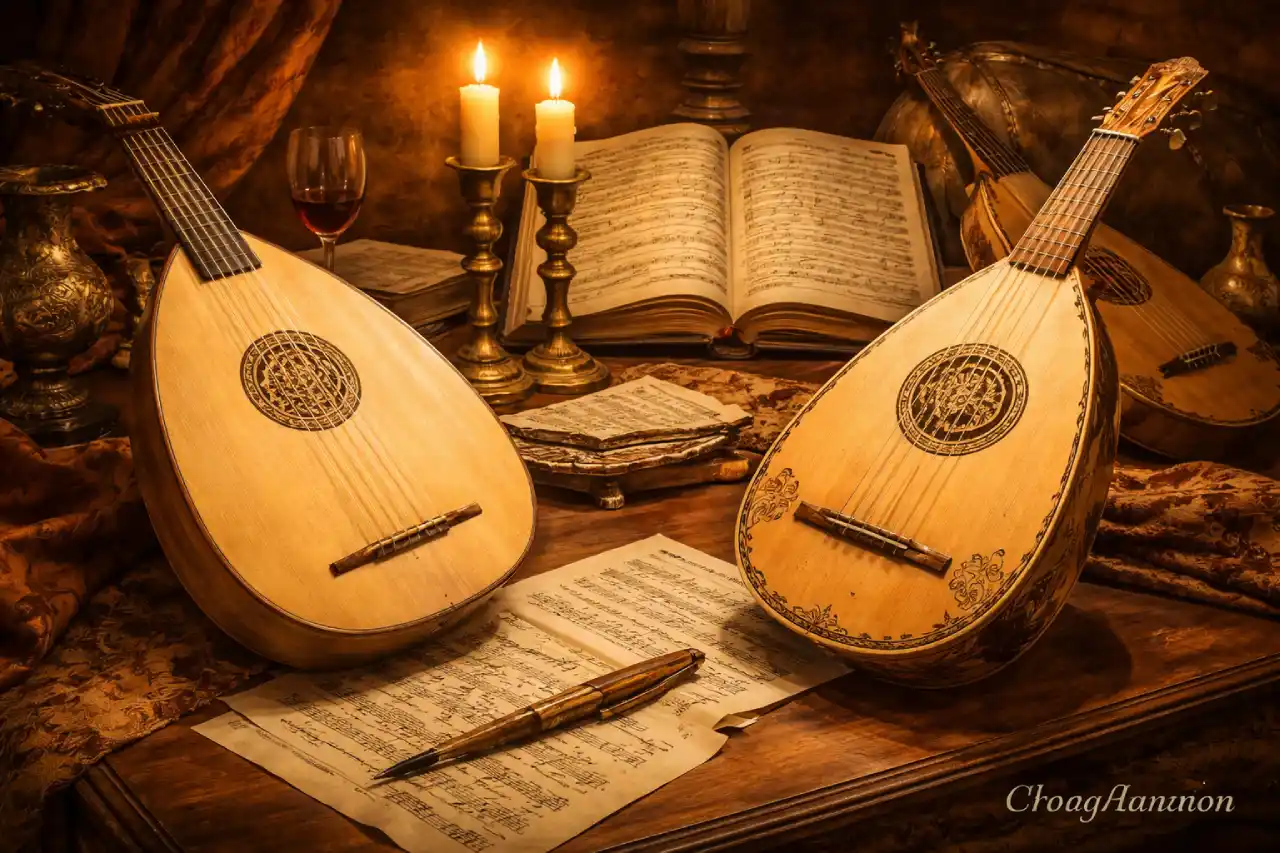
During the 15th and 16th centuries, Europe witnessed the emergence of instruments that more closely resemble the classical guitar. Two key instruments defined this era: the Renaissance guitar and the vihuela.
Related: The Violin and Its Central Role
Related: The Classical Period Explained
The Renaissance guitar was typically a small instrument with four courses (pairs of strings). It was widely used for accompaniment and dance music, making it popular among both professional musicians and amateurs.
Meanwhile, in Spain, the vihuela became a dominant instrument among the aristocracy. Unlike the Renaissance guitar, the vihuela had six courses and was tuned similarly to the modern guitar. Its repertoire included complex polyphonic music, comparable to that of the lute.
Composers such as Luis de Milán and Luys de Narváez wrote sophisticated works for the vihuela, elevating it to a high artistic level. These compositions demonstrated the instrument’s expressive capabilities and helped establish Spain as a central hub in the evolution of guitar music.
The coexistence of these instruments reflects a crucial transitional period. Renaissance guitar contributed accessibility and popularity, while the vihuela introduced technical depth and artistic refinement.
Related: The Piano in Classical Music
The Baroque Guitar: Expansion and Ornamentation
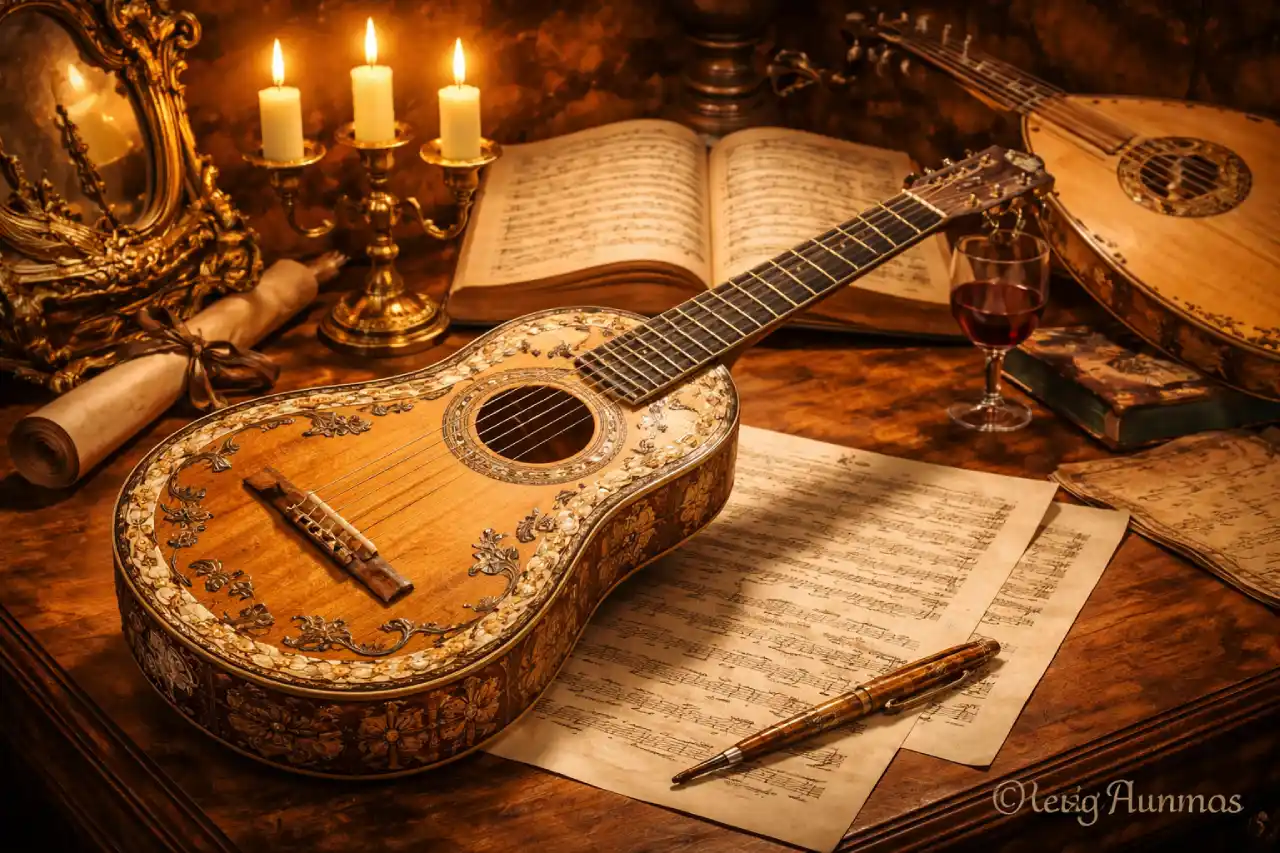
In the 17th century, the guitar underwent significant transformation with the rise of the Baroque guitar. This instrument typically featured five courses and a more elaborate design, often decorated with intricate inlays and rosettes.
The Baroque guitar became fashionable across Europe, especially in France, Italy, and Spain. It was associated with both courtly elegance and popular entertainment. Its repertoire expanded to include dance suites, variations, and strummed accompaniments.
One of the defining characteristics of the Baroque guitar was its use of rasgueado (strumming) and punteado (plucking) techniques. This combination allowed performers to create rich textures and rhythmic vitality.
Related: Fernando Sor and the Guitar Repertoire
Composers such as Gaspar Sanz, Robert de Visée, and Francesco Corbetta played a crucial role in developing the instrument’s repertoire. Their works showcased the guitar’s versatility and expressive range.
The Baroque period also marked a shift toward standardized tuning systems, bringing the guitar closer to its modern form. However, it still lacked the structural consistency and projection required for large performance spaces.
The Birth of the Modern Classical Guitar
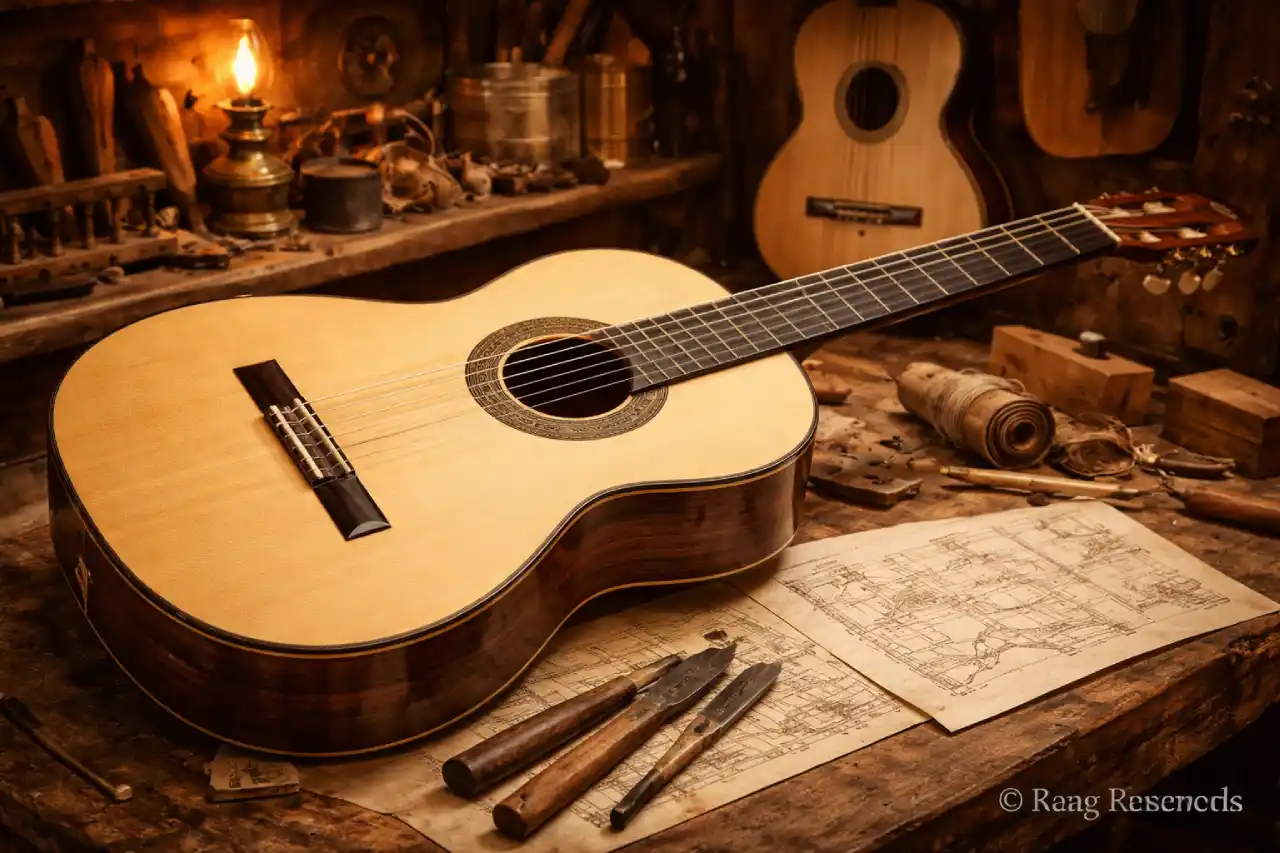
The late 18th and early 19th centuries marked a turning point in the history of the classical guitar. During this period, the instrument transitioned from a folk and courtly instrument into a refined concert instrument.
The guitar evolved into a six single-string configuration, replacing the earlier double courses. This change improved clarity, dynamic control, and expressive nuance.
Instrument makers, or luthiers, began experimenting with body shape, bracing patterns, and materials. Among them, Antonio de Torres Jurado stands out as the most influential figure. His designs in the mid-19th century established the modern classical guitar structure, including a larger body and fan bracing system.
Torres’ innovations significantly enhanced the instrument’s volume and tonal richness. His guitars became the model for virtually all classical guitars that followed.
At the same time, composers and performers such as Fernando Sor, Mauro Giuliani, and Dionisio Aguado expanded the guitar’s repertoire. Their works combined technical sophistication with musical elegance, positioning the guitar within the broader classical tradition.
Francisco Tárrega and the Romantic Guitar
In the late 19th century, Francisco Tárrega emerged as a pivotal figure in the development of classical guitar technique and repertoire. Often referred to as the “father of modern classical guitar,” Tárrega transformed the instrument into a vehicle for deep artistic expression.
Tárrega refined right-hand techniques, emphasizing tone production and dynamic control. He also introduced new approaches to fingering and interpretation, which remain fundamental in modern guitar pedagogy.
His compositions, such as Recuerdos de la Alhambra and Lágrima, are celebrated for their lyrical beauty and emotional depth. These works expanded the expressive possibilities of the guitar and demonstrated its capacity to convey complex musical ideas.
In addition to composing original works, Tárrega arranged pieces by composers such as Frédéric Chopin and Ludwig van Beethoven, bringing classical repertoire to the guitar.
Through his teaching and performances, Tárrega laid the groundwork for the guitar’s acceptance as a serious concert instrument.
Andrés Segovia and Global Recognition
The 20th century witnessed the global rise of the classical guitar, largely due to the efforts of Andrés Segovia. His influence cannot be overstated.
Segovia elevated the guitar to the concert stage, performing in major venues around the world. He expanded the repertoire by commissioning works from prominent composers such as Manuel de Falla, Heitor Villa-Lobos, and Joaquín Rodrigo.
His transcriptions of works by composers like Johann Sebastian Bach introduced audiences to the guitar’s ability to interpret complex polyphonic music.
Segovia also played a crucial role in shaping modern guitar technique and tone aesthetics. He emphasized precision, clarity, and expressive phrasing, setting new standards for performance.
Through recordings, teaching, and international tours, Segovia helped establish the classical guitar as a respected instrument within the classical music world.
The Contemporary Era: Innovation and Diversity
In the late 20th and 21st centuries, the classical guitar has continued to evolve. Modern performers and composers have expanded its boundaries, exploring new techniques, styles, and technologies.
Guitarists such as Julian Bream, John Williams, and Paco de Lucía have contributed to the instrument’s versatility. While rooted in classical tradition, they have incorporated elements from flamenco, jazz, and world music.
Contemporary composers have introduced extended techniques, including tapping, percussive effects, and alternative tunings. These innovations have broadened the guitar’s expressive palette.
Advancements in guitar construction have also improved sound projection and playability. Modern luthiers experiment with new materials such as carbon fiber while preserving traditional craftsmanship.
The rise of digital platforms has further expanded the guitar’s reach, allowing musicians to share performances globally and connect with new audiences.
The Classical Guitar Today: A Living Tradition
Today, the classical guitar stands as a bridge between tradition and innovation. It maintains a rich historical legacy while continuing to adapt to contemporary musical contexts.
The instrument is taught in conservatories worldwide and featured in international competitions and festivals. Its repertoire spans centuries, from Renaissance works to cutting-edge compositions.
The classical guitar’s appeal lies in its intimacy, versatility, and expressive depth. Whether performed in a concert hall or a small room, it offers a unique connection between the performer and the listener.
As part of the broader classical music landscape, the guitar continues to inspire new generations of musicians. Its journey—from ancient string instruments to modern concert stages—reflects a dynamic and evolving art form.