
Emotion and Expression in Romantic Music
🎼 Emotion and Expression in Romantic Music
The Romantic era marked a profound transformation in the history of music. More than a stylistic shift, it represented a philosophical revolution in how composers approached sound, meaning, and artistic purpose. At its core, emotion and expression in Romantic music became the driving forces behind composition, performance, and audience experience.
Unlike the structured balance of the Classical period, Romantic music sought to break boundaries, giving voice to personal feeling, imagination, and inner conflict. This was not merely music to be heard—it was music to be felt deeply.
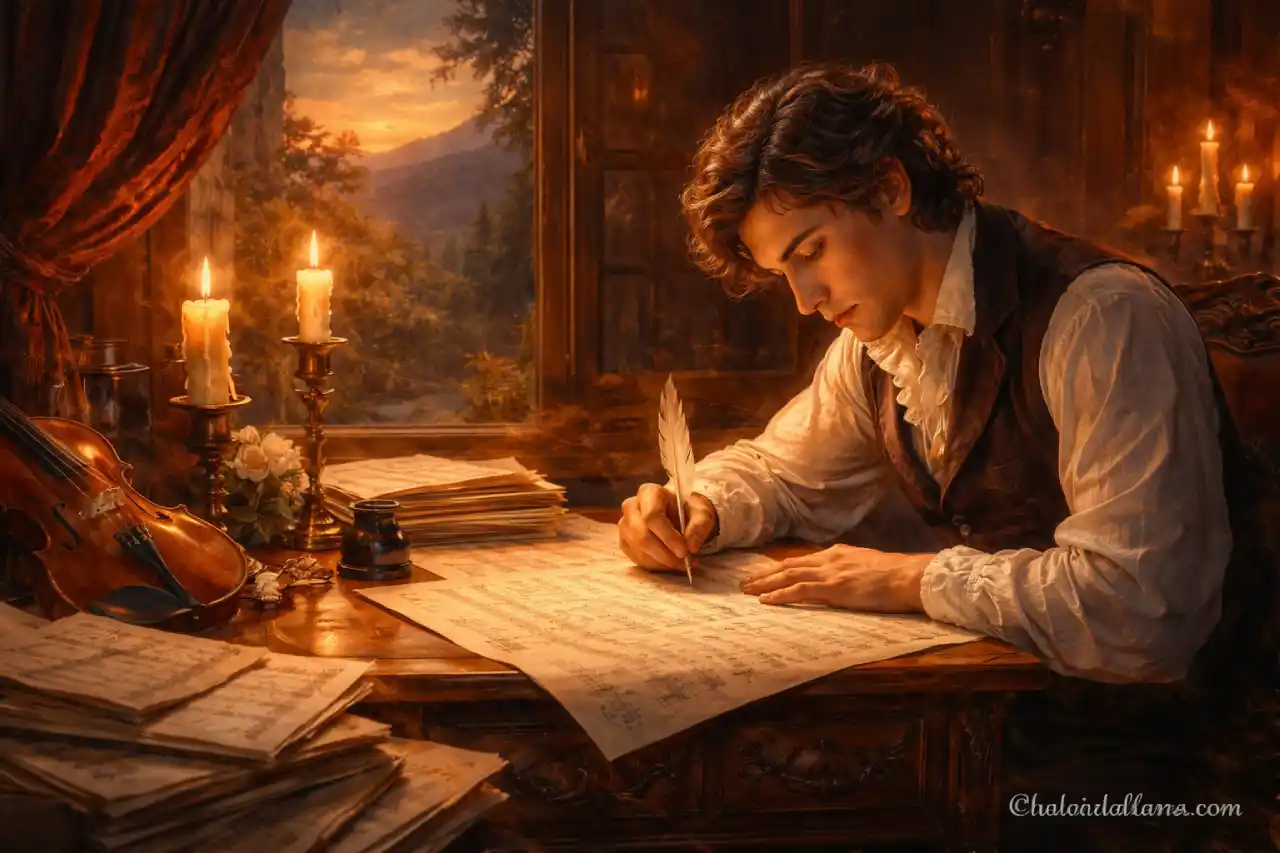
The Rise of Emotional Individualism
One of the defining features of Romantic music is the emergence of individual emotional expression. Composers were no longer bound to courtly expectations or rigid forms. Instead, they began to explore their own inner worlds.
This shift coincided with broader cultural movements that emphasized individual identity, personal freedom, and emotional authenticity. Music became a reflection of the composer’s soul.
Figures like Beethoven, especially in his later works, paved the way for this transition. His music expanded the emotional range of composition, moving from heroic triumph to introspective despair.
Later composers embraced this fully, creating works that conveyed:
-
Love and longing
-
Melancholy and nostalgia
-
Conflict and transcendence
The idea that music could express the **ineffable—what words cannot capture—**became central to Romantic aesthetics.
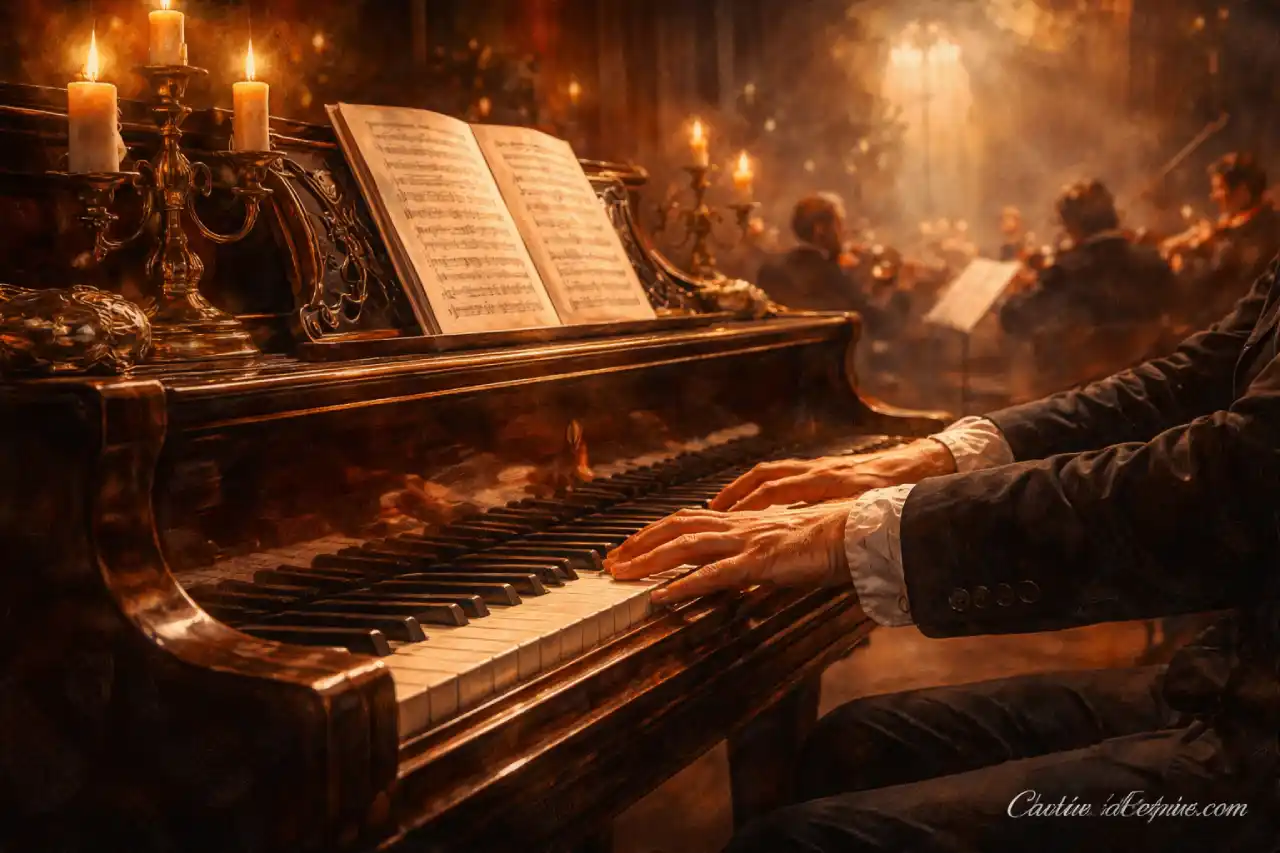
Expanded Harmonic Language and Expressive Tools
To communicate deeper emotions, Romantic composers expanded the harmonic vocabulary far beyond Classical conventions.
Chromaticism became a key feature, allowing music to move fluidly between tonal centers. This created a sense of tension, ambiguity, and emotional complexity.
Other expressive tools included:
-
Rubato: flexible tempo that mirrors human emotion
-
Dynamic extremes: sudden contrasts between softness and intensity
-
Orchestral color: innovative use of instruments for emotional shading
Composers like Chopin used the piano as a vehicle of intimate expression, crafting delicate yet emotionally powerful pieces. Meanwhile, Wagner expanded harmony to the edge of tonal collapse, intensifying dramatic impact.
These innovations allowed music to breathe, stretch, and respond like a living organism—mirroring the unpredictability of human feeling.
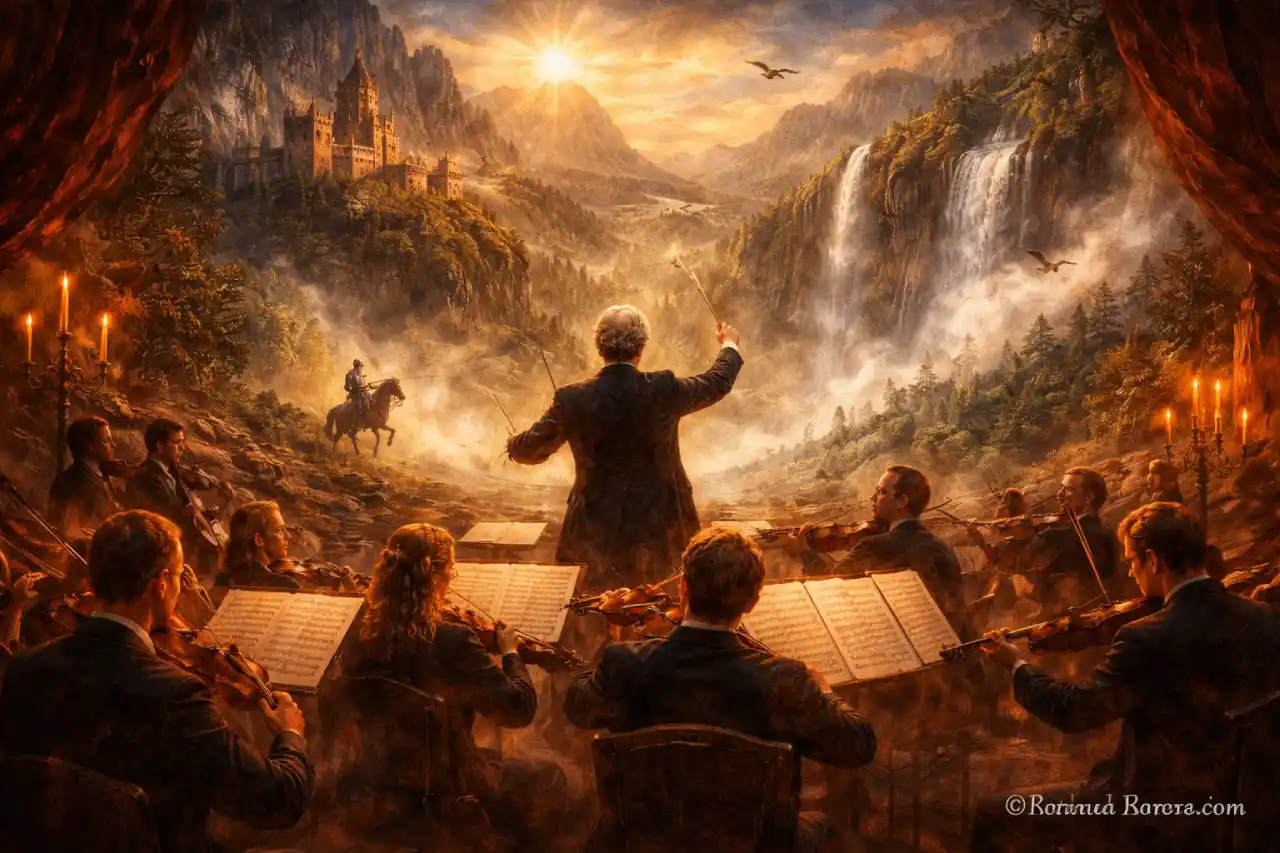
Program Music and Narrative Emotion
Another hallmark of Romantic expression is the rise of program music—instrumental music that tells a story or evokes a scene.
This approach allowed composers to connect music with:
-
Literature
-
Nature
-
Mythology
-
Personal experiences
Instead of abstract structures, compositions became emotional narratives.
For example, symphonic poems and tone poems sought to depict journeys, landscapes, or psychological states. Music became a medium of storytelling, where listeners could imagine vivid scenes guided by sound.
This was not just entertainment—it was an immersive emotional experience.
The listener was invited to interpret, feel, and even project their own emotions onto the music.
Virtuosity as Emotional Expression
In the Romantic era, technical brilliance was no longer just about skill—it became a form of emotional communication.
Virtuosos like Liszt and Paganini transformed performance into spectacle. Their extraordinary abilities allowed them to express extreme emotions with precision and intensity.
Fast passages, dramatic contrasts, and bold gestures were not mere displays of technique. They were expressions of:
-
Passion
-
Intensity
-
Emotional extremes
The performer became a central figure, almost as important as the composer. Interpretation gained significance, and no two performances were exactly alike.
This emphasis on individuality extended the Romantic ideal beyond composition into performance itself.
The Role of Nature and the Sublime
Nature played a crucial role in Romantic music, often serving as a source of inspiration and emotional reflection.
Composers sought to capture the sublime—the overwhelming beauty and power of the natural world.
Storms, forests, rivers, and mountains were translated into sound, not through literal imitation, but through emotional resonance.
Music became a way to explore humanity’s relationship with nature:
-
Awe and wonder
-
Fear and insignificance
-
Harmony and connection
This connection to nature reinforced the Romantic belief that emotion is a fundamental part of the human experience.
The Composer as a Visionary Artist
During the Romantic era, the role of the composer evolved dramatically. No longer seen as a craftsman serving patrons, the composer became a visionary artist.
This new identity emphasized:
-
Creative freedom
-
Emotional authenticity
-
Artistic independence
Composers began to see themselves as channels of deeper truths, expressing ideas that transcended everyday life.
This shift elevated music to a philosophical and spiritual level, where it could explore existential questions and universal emotions.
The myth of the “genius composer” emerged, shaping how audiences perceived music and its creators.
Emotional Contrast and Structural Freedom
Romantic music is characterized by its embrace of contrast and unpredictability.
Instead of adhering to strict forms, composers experimented with structure to better serve emotional expression.
This resulted in:
-
Sudden mood changes
-
Flexible forms
-
Extended compositions
A single piece might move from quiet introspection to explosive intensity, reflecting the complexity of human emotion.
This freedom allowed composers to prioritize expression over form, making each work unique.
Legacy of Romantic Expression in Modern Music
The influence of Romantic ideals extends far beyond the 19th century. Modern music—whether classical, film, or popular—continues to draw from its emphasis on emotion and expression.
Film scores, for example, rely heavily on Romantic techniques:
-
Rich orchestration
-
Emotional leitmotifs
-
Dramatic harmonic shifts
Even contemporary genres reflect the Romantic belief that music is a direct expression of feeling.
The legacy of this era lies in its redefinition of music as an emotional language, capable of communicating across time and culture.
🎯 Conclusion
Emotion and expression in Romantic music reshaped the very essence of musical art. By prioritizing feeling, individuality, and imagination, Romantic composers transformed music into a powerful medium of human expression.
This era broke free from tradition, embracing complexity, ambiguity, and emotional depth. It invited listeners not just to hear music, but to experience it on a profound level.
Today, the echoes of Romantic expression continue to resonate, reminding us that music is, above all, a reflection of the human soul.