Why the Violin Leads the Orchestra
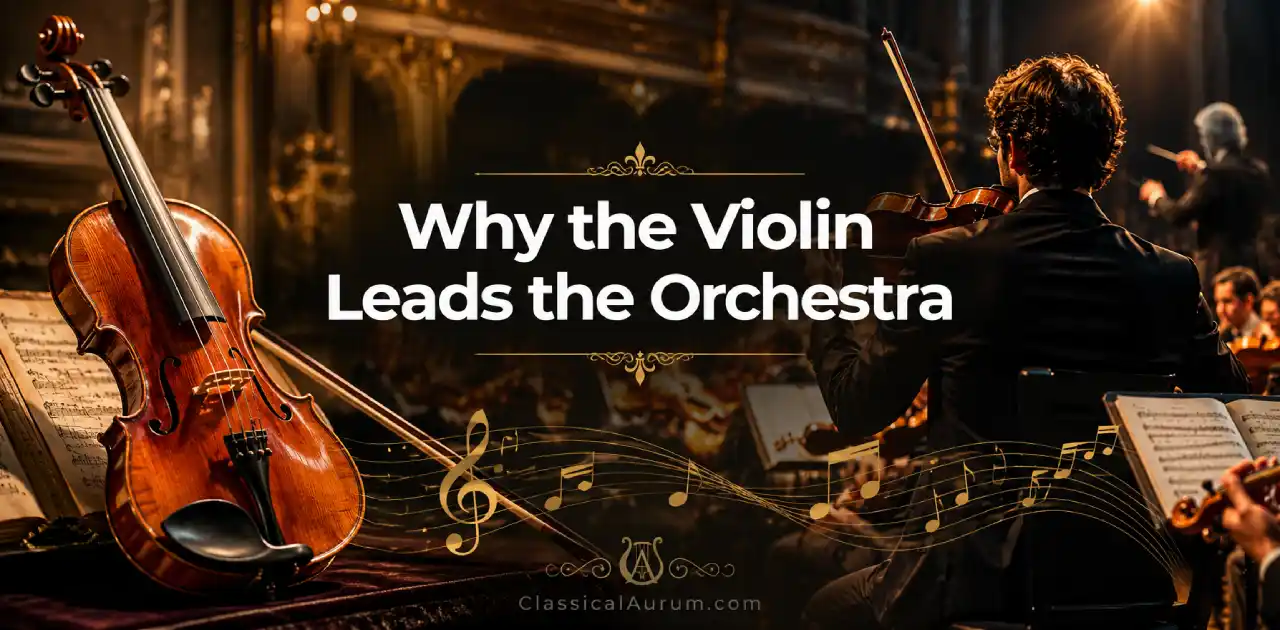
The violin occupies a unique position in the world of classical music. In nearly every major symphony orchestra, the violin section sits at the front of the stage, closest to the conductor and audience. The concertmaster, usually the first violinist, serves as the bridge between conductor and musicians. This visual prominence reflects a much deeper historical and musical reality.
For centuries, the violin has become the symbolic and practical leader of orchestral sound. Its expressive range, flexibility, projection, and emotional intensity allowed it to dominate orchestral writing from the Baroque era to the modern symphonic tradition. Today, even audiences with limited knowledge of classical music immediately recognize the violin as the central voice of the orchestra.
At ClassicalAurum.com, the study of orchestral tradition reveals how certain instruments shaped the identity of Western music itself. The story of the violin is not simply about popularity. It is about how one instrument became the emotional and structural center of the orchestra.
Related: The Violin and Its Central Role
The Historical Rise of the Violin
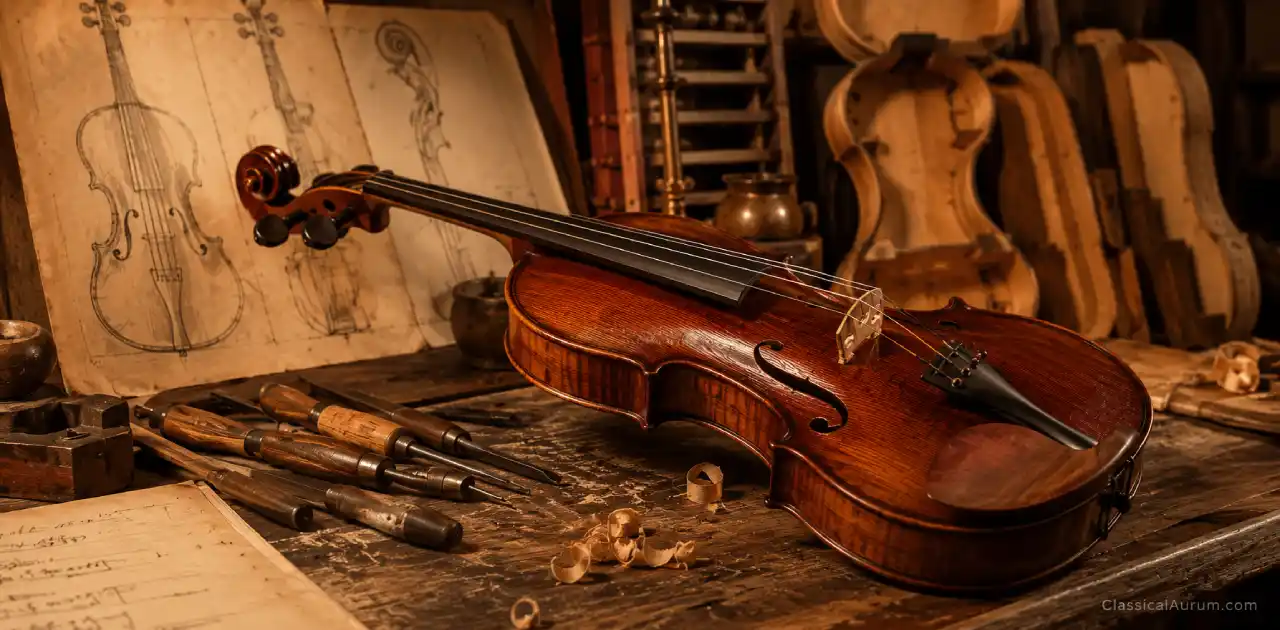
The violin emerged in northern Italy during the 16th century. Early instrument makers such as Andrea Amati helped establish the form that would later dominate European music. Unlike many medieval instruments, the violin combined brilliance, portability, and expressive power in a compact design.
Related: Fernando Sor and the Guitar Repertoire
During the Baroque period, composers rapidly discovered its possibilities. The violin could sing lyrical melodies, execute fast technical passages, and project clearly inside large ensembles. Composers such as Antonio Vivaldi and Johann Sebastian Bach expanded violin writing into new artistic territory.
Related: The Piano in Classical Music
The rise of public concerts in Europe also strengthened the violin’s position. String ensembles became practical because violins were relatively adaptable and balanced well together. Courts, churches, and opera houses increasingly built orchestras around string sections.
Related: The History of the Classical Guitar
By the Classical era, composers like Wolfgang Amadeus Mozart and Joseph Haydn treated the violins as the primary carriers of melody and emotional direction. This orchestral structure eventually became the standard model still used today.
Why the Violin Sound Dominates the Orchestra
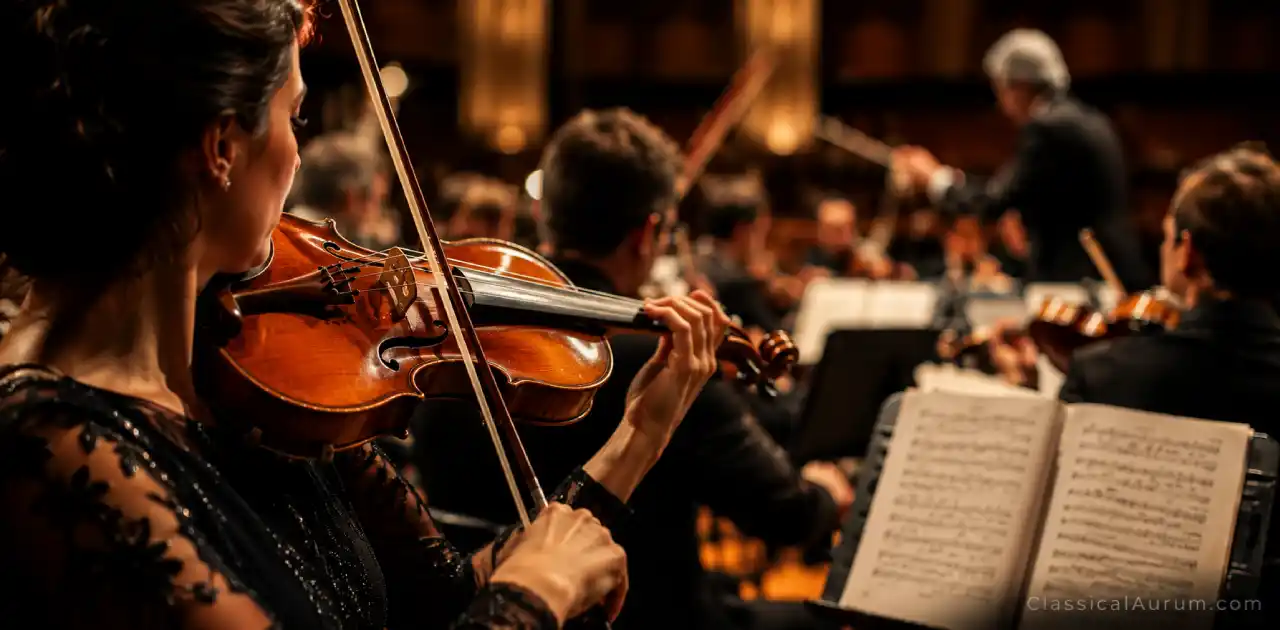
One of the main reasons the violin leads the orchestra is its exceptional sound profile. The violin can produce tones that are bright, penetrating, warm, dramatic, or deeply intimate. Few instruments possess such a wide emotional spectrum.
Unlike heavier orchestral instruments, the violin reacts immediately to subtle movements of the bow and left hand. This responsiveness allows players to shape phrases with extraordinary nuance. Small changes in pressure, vibrato, or articulation can completely transform the emotional character of a musical line.
The violin also occupies a critical frequency range. Its sound naturally cuts through orchestral textures without overwhelming the ensemble. This makes it ideal for carrying principal melodies while still blending with other instruments.
Related: Romanticism in Classical Music
Composers throughout history relied on this quality. In symphonies by Ludwig van Beethoven or Pyotr Ilyich Tchaikovsky, the violin section often introduces thematic material that shapes the entire movement.
Another important factor is agility. Violins can execute rapid passages with precision and clarity. This allowed composers to write increasingly complex orchestral works during the Romantic era. Instrument became both an emotional voice and a technical engine driving orchestral momentum.
The Concertmaster and Musical Leadership
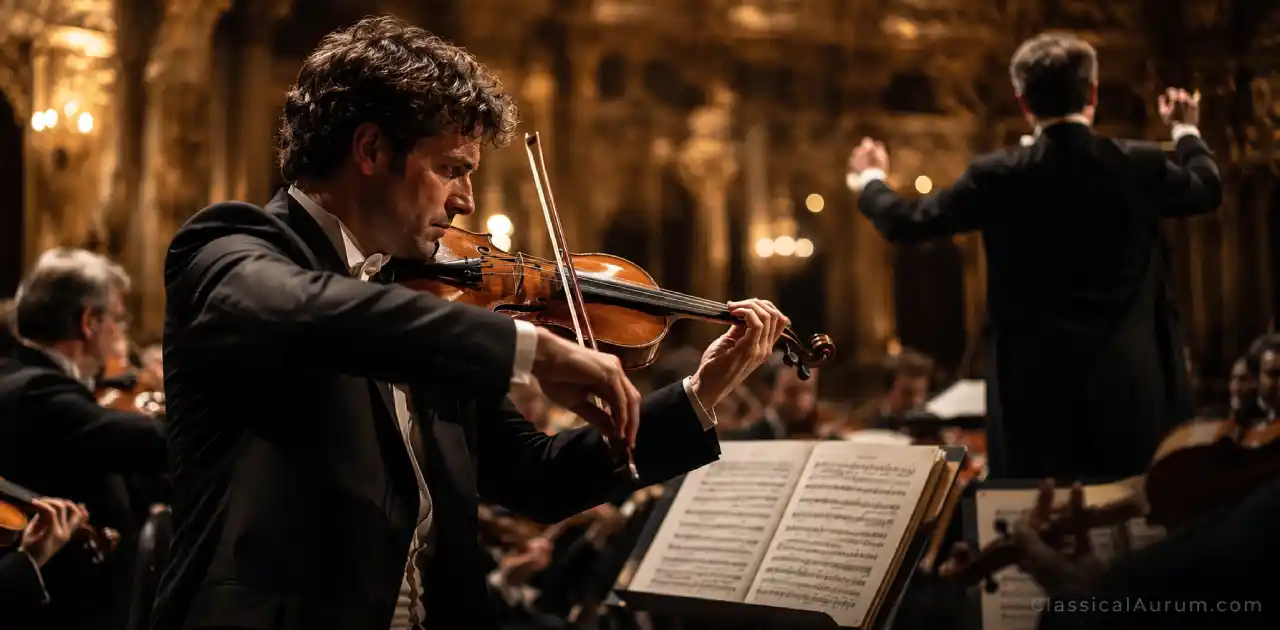
The leadership role of the violin extends beyond sound alone. In modern orchestras, the first violinist known as the concertmaster holds one of the most important positions in the ensemble.
The concertmaster enters before the conductor and traditionally receives applause from the audience. This ritual symbolizes the historical authority of the violin within orchestral culture.
Related: The Classical Period Explained
The concertmaster performs several essential functions:
- Leading the string section
- Coordinating bowings and articulation
- Assisting communication between conductor and orchestra
- Performing solo passages inside orchestral works
- Establishing tuning before performances
Historically, before conductors became common, orchestras were often directed directly from the violin section. In many Baroque ensembles, the lead violinist guided tempo and interpretation while performing.
This tradition survived even as orchestras expanded during the 19th century. Today, the concertmaster remains a crucial artistic leader. The position demands technical mastery, deep musical understanding, and strong communication skills.
In major orchestras, audiences frequently recognize famous concertmasters almost as soloists themselves. Their interpretation can influence the overall sound identity of an orchestra for decades.
How Composers Built the Orchestra Around Strings
The modern orchestra evolved around the string family. Violins, violas, cellos, and double basses form the foundation of orchestral balance and harmony. Among them, the violin naturally assumed the leading role.
There are several practical reasons for this development. String instruments sustain sound continuously through bowing, unlike many percussion instruments or early keyboard instruments. This continuous tone allowed composers to create long melodic lines and rich harmonic textures.
Violins also divide easily into multiple parts. Large orchestras can split first and second violins into separate harmonic or contrapuntal lines. This flexibility gives composers enormous creative freedom.
In works by Gustav Mahler or Richard Wagner, the violin sections often create shimmering layers of emotional tension above the orchestra. Their sound becomes almost architectural.
The physical arrangement of orchestras reflects this importance. First violins typically sit to the conductor’s left, closest to the audience. This placement helps project melodic material clearly throughout the concert hall.
Even in film music and contemporary orchestral writing, strings remain central. Modern composers continue using violins to convey tension, beauty, nostalgia, tragedy, and triumph with unmatched immediacy.
The Emotional Symbolism of the Violin
Beyond technical and historical reasons, the violin carries profound emotional symbolism in Western culture. It became associated with elegance, refinement, virtuosity, and emotional depth.
Many legendary performers helped reinforce this image. Figures such as Niccolò Paganini transformed the violin into a symbol of supernatural virtuosity during the 19th century. Audiences viewed violinists almost as mythic artists capable of impossible feats.
Later performers including Jascha Heifetz and David Oistrakh elevated violin performance to extraordinary artistic levels. Their recordings shaped how audiences understood orchestral leadership and expressive interpretation.
The violin’s emotional role also appears strongly in cinema and popular culture. Soundtracks frequently use solo violin lines during dramatic or reflective moments because listeners instinctively connect the instrument with human emotion.
Unlike brass instruments that often symbolize power or triumph, the violin can express vulnerability and intimacy with remarkable precision. This emotional adaptability strengthened its central role in orchestral storytelling.
At The Berlin Philharmonic and The Vienna Philharmonic, the violin sections continue representing the emotional heart of orchestral tradition. Their sound defines the character of entire ensembles.
The Violin in Modern Orchestras
Modern orchestras still preserve the violin’s leading role despite enormous changes in music technology and performance culture. Electronic instruments, digital production, and experimental composition expanded musical possibilities, yet the violin remains central to symphonic performance worldwide.
Part of this endurance comes from tradition. Audiences expect the violin to lead orchestral music because centuries of repertoire established that hierarchy. However, the instrument survives not merely because of convention, but because it continues fulfilling essential musical functions.
Contemporary composers still rely on violins for emotional continuity and structural clarity. Even avant-garde orchestral works often place strings at the center of the musical architecture.
Educational systems also reinforce this tradition. Young musicians frequently begin orchestral training through violin studies. Youth orchestras around the world maintain string-centered structures modeled after European symphonic traditions.
In many ways, the violin became the voice of orchestral civilization itself. From Baroque courts to modern concert halls, its sound accompanied the evolution of Western classical music.
Why the Violin Still Matters Today
The violin leads the orchestra because it combines history, projection, agility, emotion, and leadership in a single instrument. Few musical inventions achieved such lasting influence across so many centuries.
Its position at the front of the orchestra reflects more than stage arrangement. It represents the central role the violin played in shaping orchestral language, musical expression, and concert tradition.
The concertmaster continues guiding ensembles with authority rooted in centuries of practice. Composers continue writing violin-centered orchestral textures because no other instrument offers the same combination of brilliance and emotional sensitivity.
For listeners, the violin often becomes the emotional gateway into classical music itself. A single violin melody can communicate tension, sorrow, joy, mystery, or transcendence with astonishing immediacy.
At Carnegie Hall and the world’s greatest concert venues, orchestras still rely on the violin section to define their sonic identity. The instrument remains both a musical leader and a cultural symbol.
As orchestral music evolves in the 21st century, the violin continues standing at the center of the symphonic experience. Its leadership was not accidental. It emerged from centuries of artistic refinement, technical evolution, and emotional power that permanently shaped classical music history.
About the Author
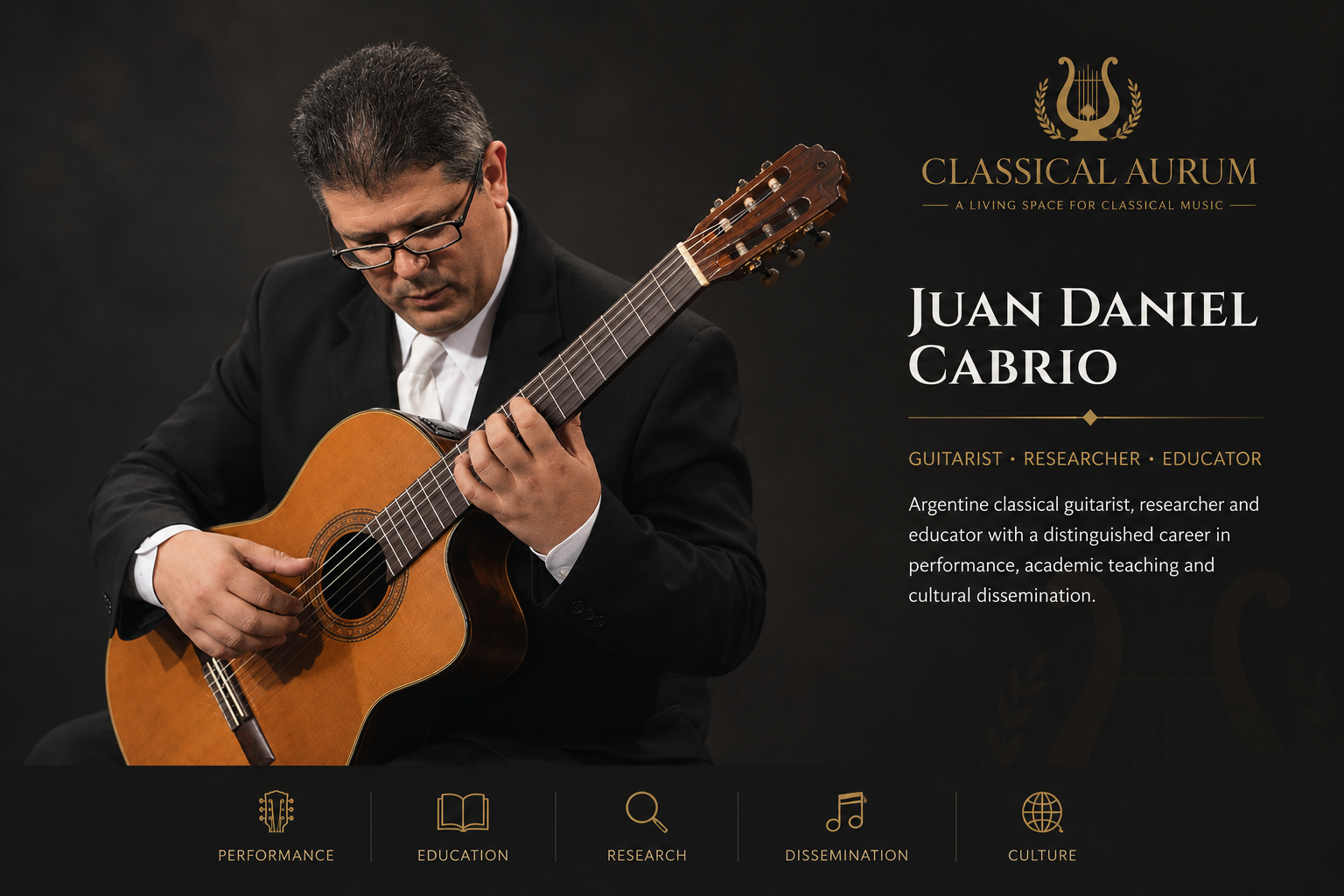
Juan Daniel Cabrio
Argentine Classical Guitarist · Researcher · Educator
Juan Daniel Cabrio is an Argentine classical guitarist, researcher and educator. Founder of Classical Aurum, he shares educational and cultural content about classical music, composers, instruments, repertoire, music history and performance practice.
View full biography