
Mass, Requiem, and Oratorio
Mass, Requiem, and Oratorio: The Sacred Pillars of Classical Music
Sacred music has always occupied a central place in the history of classical composition. Long before concert halls became symbols of artistic prestige, churches and cathedrals were the primary stages for many composers. Within this tradition, three monumental forms emerged as some of the most emotionally powerful and culturally influential creations in Western music: the Mass, the Requiem, and the Oratorio.
These works were not merely religious expressions. They became artistic laboratories where composers explored harmony, orchestration, drama, spirituality, and human emotion on an enormous scale. From the solemn darkness of Mozart’s Requiem to the triumphant choruses of Handel’s Messiah, sacred vocal music transformed the evolution of classical art.
For audiences today, these compositions remain among the most moving experiences in the classical repertoire. Their combination of choir, orchestra, solo voices, and profound themes continues to resonate across centuries.
The Origins of Sacred Vocal Music in Europe
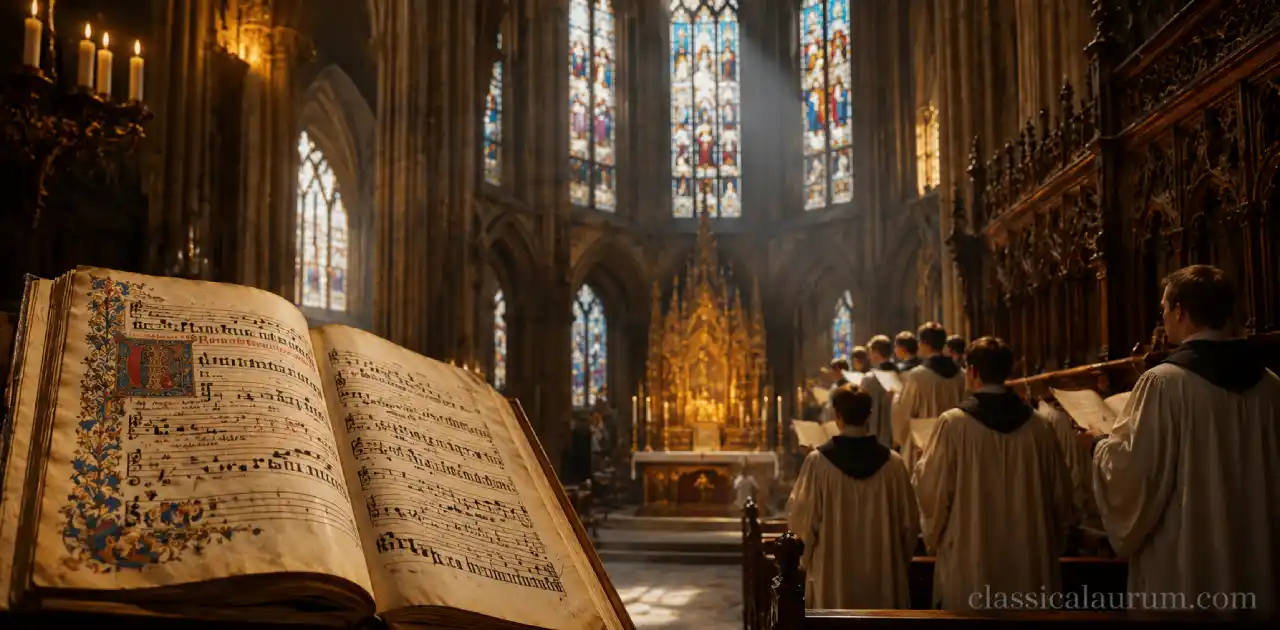
The roots of the Mass, Requiem, and Oratorio can be traced back to medieval Christianity. During the Middle Ages, music served primarily as a spiritual tool within liturgical ceremonies. Gregorian chant dominated early sacred music, establishing melodic foundations that later composers expanded into sophisticated polyphonic structures.
As European music evolved during the Renaissance, composers such as Giovanni Pierluigi da Palestrina and Tomás Luis de Victoria elevated sacred composition into refined artistic forms. Their works introduced intricate vocal counterpoint while maintaining spiritual clarity.
The church was one of the few institutions capable of supporting large musical ensembles. Because of this, sacred music became a major force behind musical innovation. Choirs expanded, notation improved, and composers experimented with harmony and acoustics inside vast cathedral spaces.
By the Baroque era, sacred compositions grew increasingly dramatic. Orchestras joined choirs, solo singers emerged as central figures, and composers began treating biblical narratives with theatrical intensity. This transformation laid the foundation for the great sacred masterpieces associated with composers such as Johann Sebastian Bach, George Frideric Handel, Wolfgang Amadeus Mozart, and Giuseppe Verdi.
The sacred genre was no longer confined to ritual. It became an artistic expression capable of conveying fear, hope, mourning, transcendence, and human vulnerability.
What Is a Mass in Classical Music?
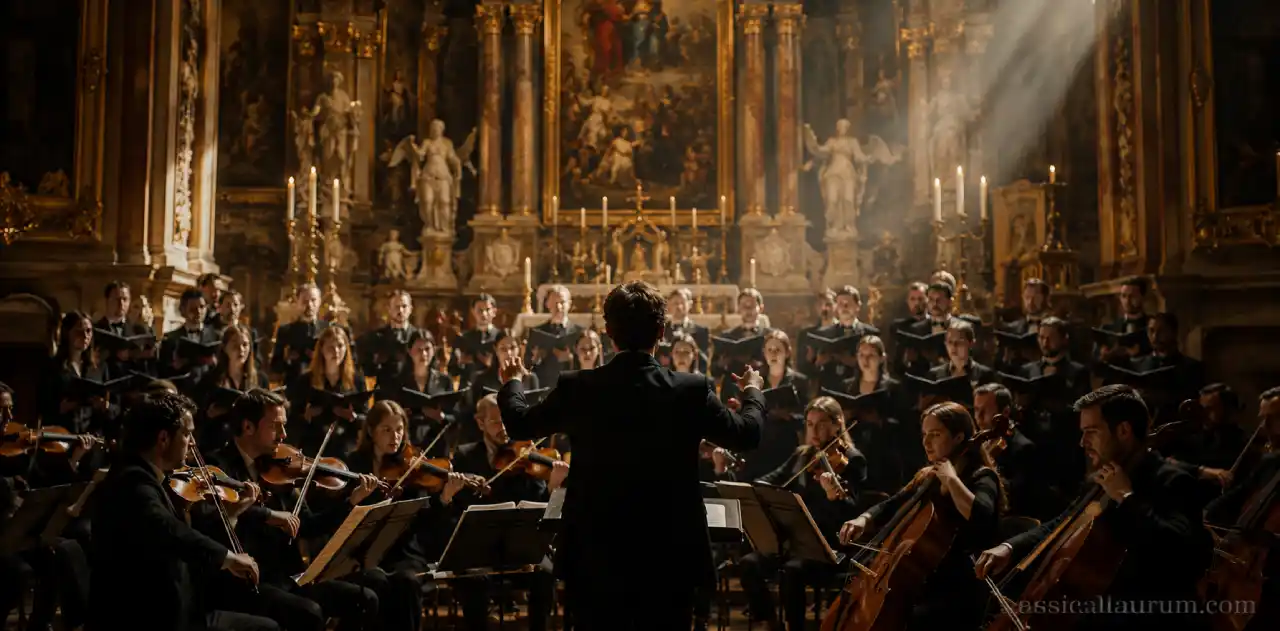
The Mass is one of the oldest and most important forms of sacred classical music. Traditionally, it is based on the fixed sections of the Catholic liturgy. These sections include the Kyrie, Gloria, Credo, Sanctus, and Agnus Dei.
Composers throughout history approached the Mass in different ways. Some created concise liturgical settings designed for church services. Others composed monumental concert works intended for large choirs and orchestras.
During the Renaissance, the Mass focused primarily on vocal polyphony. Palestrina’s compositions became famous for their balance, purity, and spiritual atmosphere. In the Classical and Romantic eras, however, the genre expanded dramatically.
Mozart’s Great Mass in C Minor introduced operatic emotion into sacred writing. Beethoven’s Missa Solemnis pushed the boundaries of scale and complexity. These works demanded extraordinary performers and transformed the Mass into a profound philosophical statement.
The emotional range within a Mass can be astonishing. The Kyrie often expresses humility and mercy. Gloria radiates celebration and triumph. The Agnus Dei may introduce deep introspection and serenity.
For many composers, writing a Mass became a way to confront spiritual questions through music. The result was not merely religious ceremony, but a fusion of theology, architecture, poetry, and orchestral imagination.
Today, major Mass settings remain staples of concert halls and cathedral festivals worldwide. Their grandeur continues to attract audiences seeking both musical excellence and emotional depth.
The Requiem: Music for Death, Mourning, and Eternity
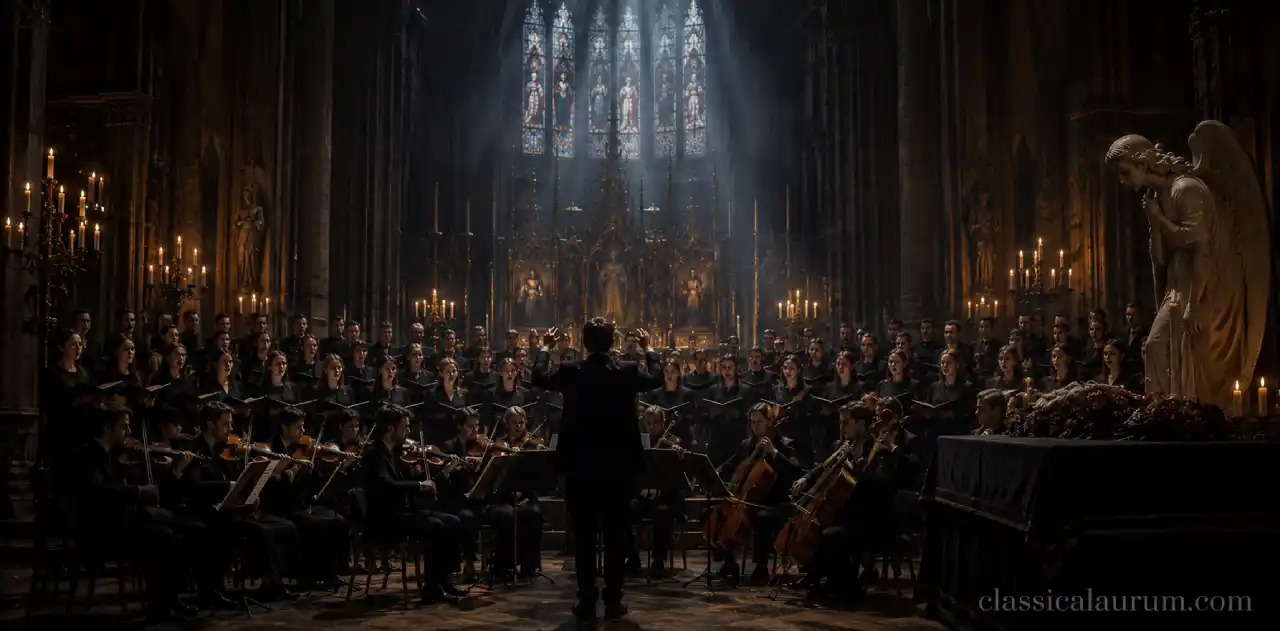
Among all sacred musical forms, the Requiem possesses perhaps the strongest emotional impact. A Requiem is a Mass for the dead, traditionally performed during funeral ceremonies or memorial services.
The structure includes many sections found in a standard Mass, but it also contains dramatic texts associated with judgment, mortality, and eternal rest. One of the most famous passages is the Dies Irae, a terrifying vision of the Day of Judgment.
Composers have long used the Requiem to explore humanity’s deepest fears and hopes. This emotional intensity explains why so many Requiems became legendary masterpieces.
Mozart’s unfinished Requiem in D Minor remains one of the most iconic works in classical history. Surrounded by myths and mystery, the composition combines operatic power with spiritual darkness. Its dramatic choral writing and haunting orchestration continue to fascinate listeners centuries later.
Verdi’s Requiem transformed the genre into a monumental theatrical experience. Some critics even described it as an opera in sacred form. The explosive Dies Irae movements unleash overwhelming orchestral force, while quieter moments reveal profound grief and tenderness.
Gabriel Fauré approached the Requiem differently. His version emphasizes peace, consolation, and transcendence rather than terror. The famous In Paradisum movement creates an atmosphere of luminous serenity rarely matched in sacred music.
In the twentieth century, composers continued reinventing the Requiem tradition. Benjamin Britten’s War Requiem combined liturgical texts with anti-war poetry, creating one of the most powerful musical statements against violence ever written.
The enduring appeal of the Requiem lies in its universal themes. Even listeners without religious beliefs can connect deeply with its exploration of mortality, memory, fear, and hope.
The Oratorio: Sacred Drama Without Staging
The Oratorio occupies a unique position between sacred music and opera. Like opera, it often tells dramatic stories using soloists, chorus, and orchestra. Unlike opera, however, it is traditionally performed without costumes, scenery, or theatrical staging.
The genre emerged in seventeenth-century Italy and rapidly gained popularity throughout Europe. Oratorios often focused on biblical narratives, presenting stories filled with conflict, redemption, heroism, and tragedy.
One of the defining masterpieces of the genre is Handel’s Messiah. Despite being based on Christian texts, the work transcended religious boundaries and became a universal cultural phenomenon. Its famous Hallelujah Chorus remains one of the most recognizable passages in classical music.
Johann Sebastian Bach elevated the Oratorio to extraordinary artistic heights. His Christmas Oratorio and St. Matthew Passion combine theological depth with astonishing musical architecture. Bach’s use of chorales, recitatives, and orchestral symbolism created spiritual experiences of immense emotional complexity.
Unlike opera, the Oratorio often places greater emphasis on collective reflection rather than individual character drama. The chorus plays a central role, acting as narrator, commentator, or spiritual community.
During the Romantic era, composers expanded the scale of Oratorios significantly. Felix Mendelssohn’s Elijah became one of the nineteenth century’s most beloved sacred works. Rich orchestration and dramatic storytelling gave the genre renewed vitality.
Today, Oratorios remain essential to the choral repertoire. They continue to be performed in churches, concert halls, and major classical festivals around the world.
Why Sacred Music Became Central to Classical Tradition
Sacred music played a crucial role in shaping Western musical language. Many innovations associated with classical music first appeared within religious compositions.
Counterpoint, large-scale choral writing, harmonic development, and orchestral expansion all evolved through sacred traditions. Cathedrals themselves influenced musical structure, encouraging long resonant lines and spatial effects.
For centuries, composers depended on religious institutions for financial support. Courts and churches commissioned large works for ceremonies, celebrations, and memorial events. This environment allowed composers to experiment with ambitious musical ideas.
Sacred genres also provided emotional and philosophical depth rarely matched elsewhere. Themes such as death, redemption, suffering, judgment, and transcendence gave composers opportunities to explore profound human experiences.
The Mass, Requiem, and Oratorio became artistic spaces where spirituality and creativity merged. Even composers who struggled with religion often found sacred music irresistible because of its emotional scale and symbolic richness.
In many ways, sacred classical music anticipated the cinematic power later associated with film scores. Massive choruses, dramatic orchestration, and emotional climaxes created immersive experiences capable of overwhelming audiences.
This influence continues today. Modern composers for film and television frequently draw inspiration from sacred choral traditions. Epic orchestral soundtracks often echo techniques pioneered in Requiems and Oratorios centuries earlier.
The Most Influential Composers of Sacred Masterpieces
Several composers became permanently associated with sacred vocal music due to the extraordinary impact of their works.
Johann Sebastian Bach stands as one of the greatest sacred composers in history. His Passions, cantatas, and Oratorios combined intellectual complexity with deep spiritual intensity. Bach’s music remains a cornerstone of ClassicalAurum.com’s vision of timeless musical excellence.
George Frideric Handel transformed the Oratorio into an international phenomenon. His melodic gift and dramatic instincts made works like Messiah accessible to broad audiences while preserving artistic sophistication.
Wolfgang Amadeus Mozart brought emotional vulnerability and operatic beauty into sacred composition. His unfinished Requiem became one of the most legendary works ever written.
Ludwig van Beethoven approached sacred music with philosophical ambition. His Missa Solemnis challenged performers and listeners alike with its monumental scale and spiritual intensity.
Giuseppe Verdi infused the Requiem with theatrical passion, while Gabriel Fauré introduced gentleness and serenity into sacred mourning.
In the twentieth century, composers such as Benjamin Britten, Igor Stravinsky, and Krzysztof Penderecki reinterpreted sacred forms for modern audiences, proving that these traditions remained artistically relevant.
Each composer expanded the possibilities of sacred music while preserving connections to centuries of musical heritage.
Mass, Requiem, and Oratorio in Modern Performance
Despite changes in culture and religion, sacred classical music continues to thrive in the modern world. Major orchestras and choirs regularly perform these works in prestigious venues across Europe, the Americas, and Asia.
Cathedrals still provide unforgettable acoustic environments for sacred music. Hearing a Requiem inside a vast Gothic church can create an emotional experience unlike any modern recording.
At the same time, digital technology has introduced sacred masterpieces to global audiences. High-definition recordings, streaming platforms, and online archives allow listeners everywhere to discover historic performances.
Modern conductors often reinterpret these works using historically informed performance practices. Smaller ensembles, period instruments, and original tempos have transformed how audiences hear Baroque and Classical sacred music.
Younger generations are also rediscovering sacred repertoire through film soundtracks, viral choral videos, and cinematic concert productions. The emotional force of this music remains remarkably powerful even in secular societies.
For ClassicalAurum.com, sacred music represents more than historical tradition. It embodies the enduring ability of classical art to confront universal human questions with beauty, discipline, and emotional truth.
The Enduring Power of Sacred Classical Music
The Mass, Requiem, and Oratorio remain among the greatest achievements in Western music history. Their emotional range, architectural complexity, and spiritual depth continue to inspire performers and audiences alike.
These works survived centuries because they speak to universal experiences. They address mortality, faith, suffering, hope, memory, and transcendence through music of extraordinary expressive power.
Even outside religious contexts, sacred masterpieces offer listeners moments of reflection and emotional intensity rarely found elsewhere. A great Requiem can feel overwhelming. Bach Passion can feel transformative. A Handel chorus can unite thousands of listeners in shared emotion.
For modern audiences surrounded by noise and distraction, sacred classical music offers something increasingly rare: profound artistic stillness combined with overwhelming beauty.
The legacy of these forms continues to shape contemporary music, film scores, choral traditions, and concert culture. Their influence extends far beyond churches or liturgical history.
In the end, the Mass, Requiem, and Oratorio are not simply historical genres. They are living monuments to humanity’s search for meaning through sound.
About the Author
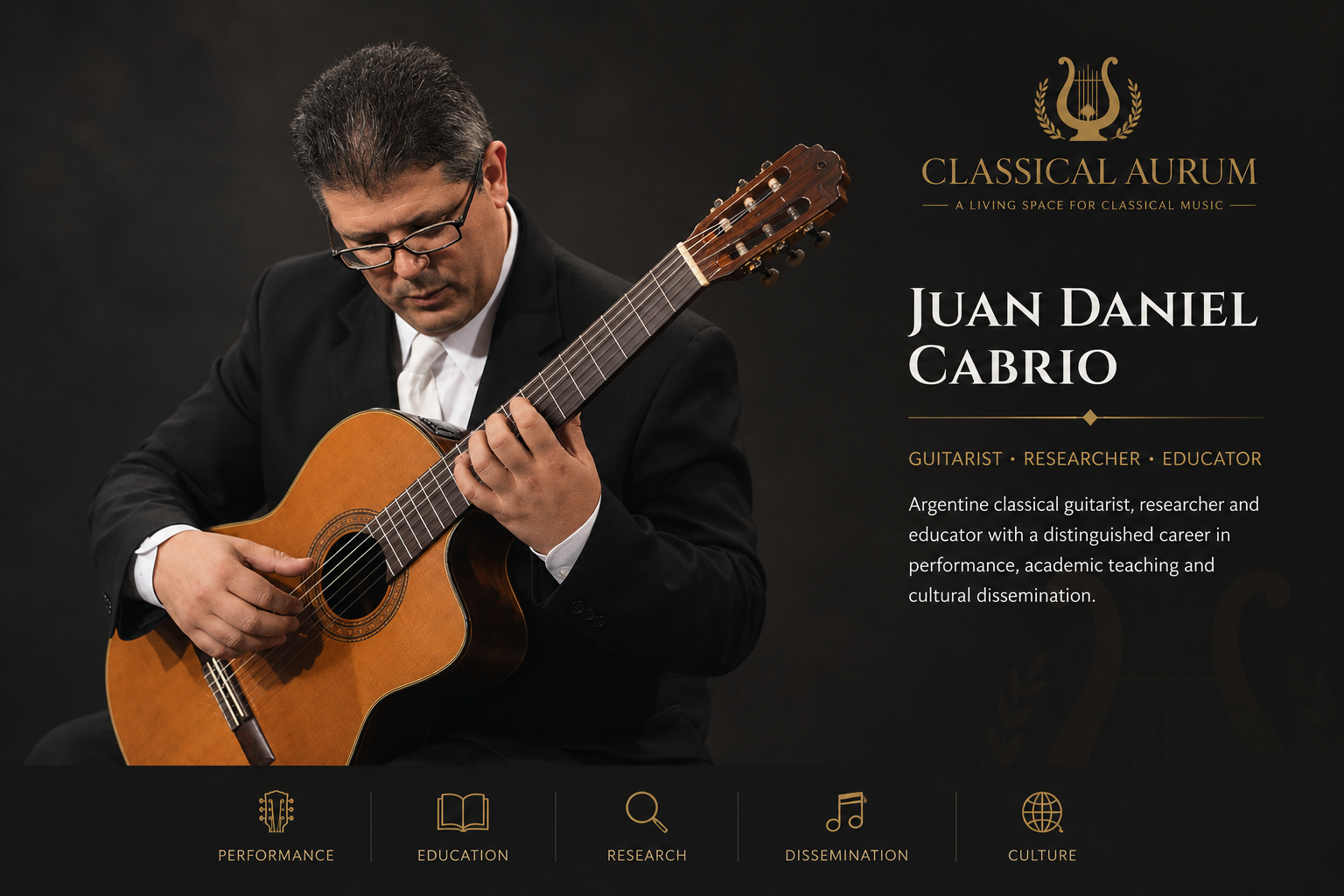
Juan Daniel Cabrio
Argentine Classical Guitarist · Researcher · Educator
Juan Daniel Cabrio is an Argentine classical guitarist, researcher and educator. Founder of Classical Aurum, he shares educational and cultural content about classical music, composers, instruments, repertoire, music history and performance practice.
View full biography