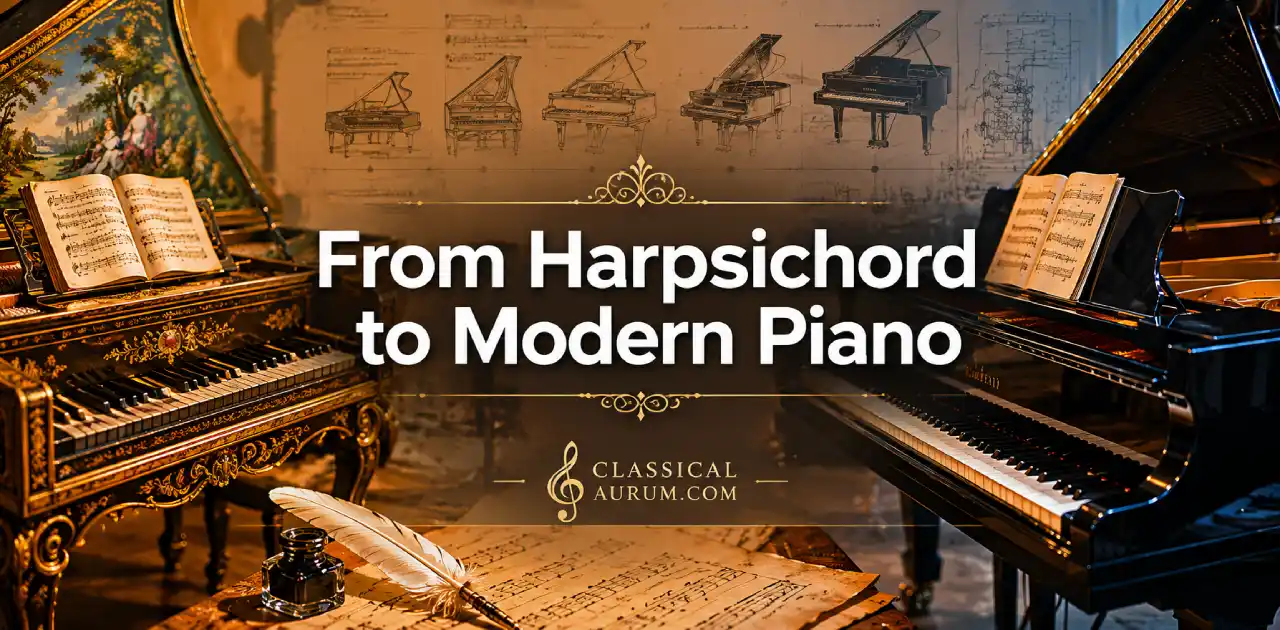
From Harpsichord to Modern Piano
From Harpsichord to Modern Piano
The history of keyboard instruments is one of the most fascinating transformations in the world of classical music. Over several centuries, musicians, inventors, and composers helped shape an instrument capable of expressing extraordinary emotional depth and technical brilliance. The journey from the delicate sound of the harpsichord to the powerful resonance of the modern piano changed not only the sound of music, but also the way composers imagined musical expression.
At ClassicalAurum.com, the evolution of classical instruments is viewed as part of a much larger cultural movement. The piano did not emerge suddenly. It developed through experimentation, artistic necessity, and the changing expectations of audiences across Europe. Each generation contributed innovations that transformed the keyboard into one of the most important instruments in musical history.
Today, the piano dominates concert halls, conservatories, recording studios, and homes around the world. Yet its origins remain deeply connected to the elegance of the Baroque era and the refined craftsmanship of early European instrument makers.
The Harpsichord and the Birth of Keyboard Tradition
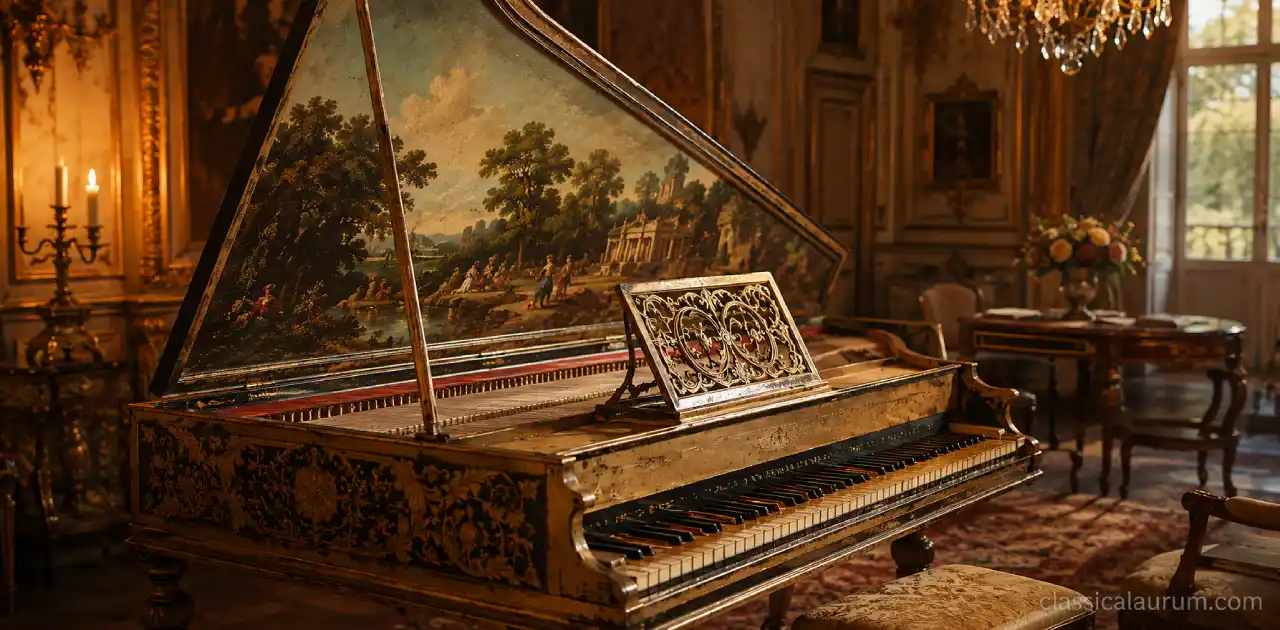
Before the piano became the center of classical music, the harpsichord ruled European courts and salons. This instrument emerged during the late Middle Ages and became especially popular during the Renaissance and Baroque periods. Unlike the modern piano, the harpsichord produced sound by plucking strings with small quills whenever a key was pressed.
This mechanism created a bright and clear tone that suited the musical aesthetics of the time. Composers such as Johann Sebastian Bach, Domenico Scarlatti, and François Couperin wrote extensive keyboard works specifically designed for the harpsichord’s unique sound.
One of the most important characteristics of the harpsichord was its inability to control dynamics through touch. Pressing the keys harder did not produce a louder sound. This limitation influenced Baroque composition styles, which relied heavily on ornamentation, counterpoint, and rhythmic clarity instead of dramatic dynamic contrast.
The instrument nevertheless possessed remarkable elegance. In aristocratic Europe, harpsichords were often decorated with paintings, gold leaf, and elaborate craftsmanship. They became symbols of refinement and intellectual culture.
As musical tastes evolved, however, composers began searching for greater emotional flexibility. The need for an instrument capable of subtle expression eventually led to one of the greatest innovations in music history.
Bartolomeo Cristofori and the Invention of the Piano
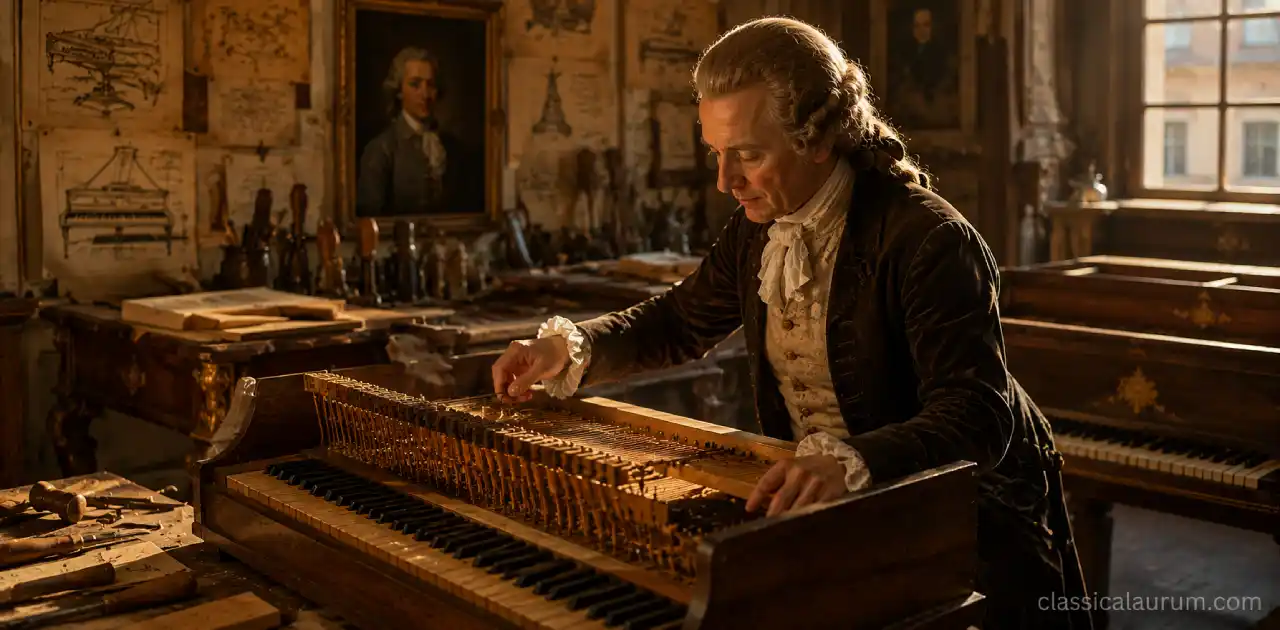
The transition from harpsichord to piano began in the early eighteenth century through the work of Bartolomeo Cristofori. Cristofori, an Italian craftsman employed by the Medici court in Florence, developed a revolutionary keyboard mechanism that transformed musical performance forever.
Instead of plucking strings, Cristofori designed a system in which small hammers struck the strings. This innovation allowed performers to control volume depending on how softly or strongly they pressed the keys. The instrument became known as the gravicembalo col piano e forte, meaning “harpsichord with soft and loud.”
This invention introduced a new world of expressive possibilities. Musicians could now shape phrases with dynamic nuance, creating dramatic contrasts impossible on the harpsichord. Although early pianos still resembled harpsichords visually, their musical capabilities represented a profound leap forward.
Cristofori’s earliest pianos were not immediately accepted across Europe. Many musicians preferred the familiar brilliance of the harpsichord. Yet over time, composers recognized the artistic potential of the new instrument.
The rise of the piano coincided with major cultural changes during the Enlightenment. Music increasingly moved from royal courts into public concert spaces and middle-class homes. Audiences desired more emotional and personal forms of expression, and the piano perfectly matched these evolving artistic ideals.
The Classical Era and the Rise of the Fortepiano
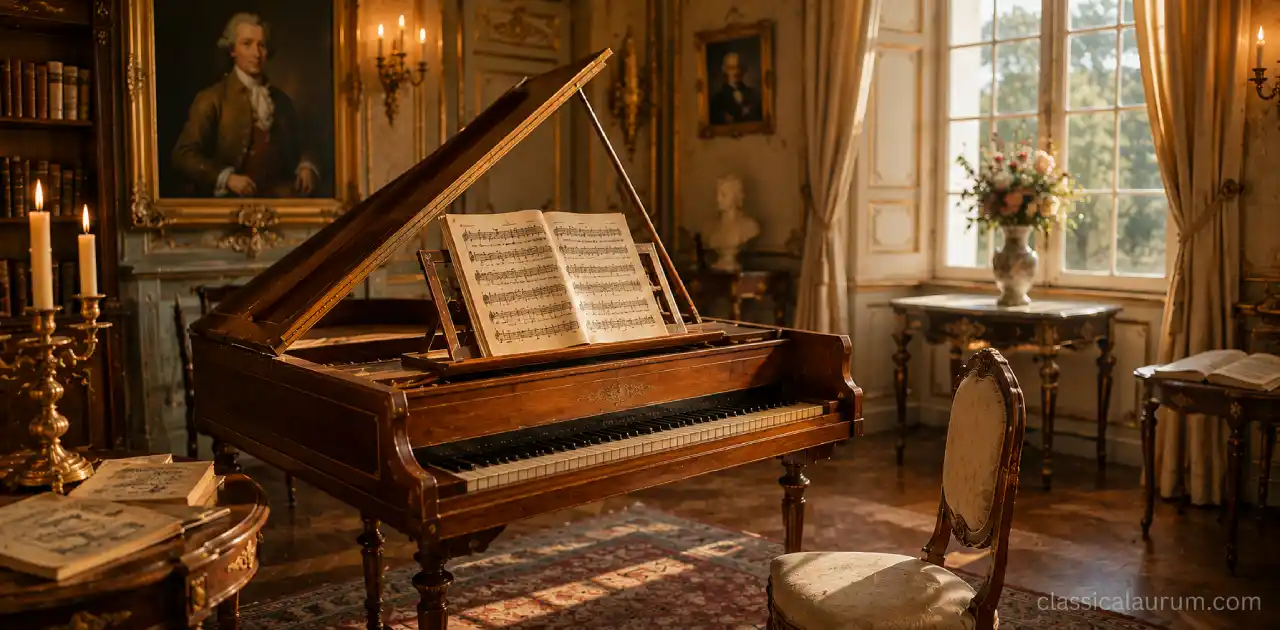
During the Classical period, the piano evolved into what historians now call the fortepiano. This early form of the piano was lighter and more delicate than modern instruments, but it offered significantly greater expressive flexibility than the harpsichord.
Composers such as Wolfgang Amadeus Mozart and Joseph Haydn embraced the fortepiano enthusiastically. Mozart’s keyboard concertos and sonatas reveal how composers began exploring dynamic contrast, lyrical phrasing, and emotional nuance in entirely new ways.
The fortepiano typically featured a wooden frame, thinner strings, and a softer tone than modern concert grands. Its lighter action allowed for agility and clarity, qualities that suited the elegance of Classical style. Performers could shape melodic lines with sensitivity while maintaining transparency in texture.
One important development during this era involved the expansion of keyboard range. Early pianos contained fewer keys than modern instruments, but manufacturers gradually increased the compass to satisfy composers seeking broader musical possibilities.
Instrument builders across Europe also began developing regional styles. Viennese pianos emphasized precision and lightness, while English instruments tended to produce a fuller and more powerful sound. These competing traditions influenced composers differently depending on their geographic and cultural environments.
As the eighteenth century progressed, the piano steadily replaced the harpsichord throughout Europe. By the end of the Classical era, the transformation was largely complete.
The Romantic Revolution and the Power of Expression
The nineteenth century brought dramatic changes to both music and piano construction. During the Romantic era, composers sought unprecedented emotional intensity, technical brilliance, and orchestral richness. To support these ambitions, the piano underwent major structural innovations.
Manufacturers strengthened the instrument with iron frames capable of supporting higher string tension. Strings became thicker, keyboards expanded further, and the overall sound grew significantly more powerful. These developments allowed pianists to perform in increasingly large concert halls.
Composers such as Ludwig van Beethoven pushed the piano beyond Classical limitations. Beethoven’s later sonatas demanded greater dynamic range, dramatic contrasts, and emotional depth than earlier instruments could easily provide.
Soon afterward, Romantic composers including Frédéric Chopin, Franz Liszt, and Robert Schumann transformed piano music into a vehicle for profound personal expression.
Liszt expanded piano virtuosity to extraordinary levels, while Chopin explored poetic intimacy and harmonic sophistication. The instrument itself became capable of singing melodies, thunderous climaxes, and orchestral textures.
This period also witnessed the emergence of legendary piano manufacturers. Companies such as Steinway & Sons, Bechstein, and Bösendorfer refined the modern concert grand into an instrument of remarkable power and complexity.
The Romantic era established the piano as the dominant solo instrument in Western classical music. It became central not only to concert performance, but also to domestic music-making and musical education worldwide.
The Modern Piano and Contemporary Performance
The modern piano represents centuries of experimentation, craftsmanship, and artistic evolution. Today’s concert grand combines immense dynamic power with extraordinary precision and tonal richness. Despite technological changes in music production, the acoustic piano remains one of the most respected instruments in the world.
Modern pianists perform an enormous repertoire spanning multiple historical periods. Baroque works by Bach, Classical sonatas by Mozart, Romantic masterpieces by Chopin, and contemporary compositions all coexist within modern concert programs. This versatility demonstrates the piano’s unique capacity to bridge centuries of musical tradition.
At the same time, historically informed performance has revived interest in older keyboard instruments. Many musicians now perform Baroque repertoire on reconstructed harpsichords or fortepianos to better understand the original sound world envisioned by composers.
The relationship between old and new instruments continues to inspire debate among performers and scholars. Some argue that modern pianos offer greater expressive potential, while others believe historical instruments reveal subtleties lost in modern interpretations.
Digital technology has also transformed the keyboard landscape. High-quality digital pianos and virtual instruments provide accessibility for students and composers worldwide. Nevertheless, the acoustic piano remains unmatched in its tactile response and natural resonance.
The enduring popularity of the piano reflects its extraordinary adaptability. Few instruments can communicate intimacy, grandeur, virtuosity, and lyrical beauty with equal effectiveness.
Why the Evolution of the Piano Still Matters Today
The journey from harpsichord to modern piano is more than a technical story about instrument design. It represents the evolution of musical thought itself. As composers searched for new emotional possibilities, instrument makers responded with innovations that expanded artistic expression.
Understanding this transformation helps modern listeners appreciate how deeply instruments influence composition and performance. Bach’s counterpoint, Mozart’s elegance, Beethoven’s drama, and Chopin’s lyricism all emerged partly because of the keyboard instruments available during their lifetimes.
The piano also reflects broader historical changes in European culture. Its rise paralleled shifts in philosophy, architecture, education, and public performance. What began as an aristocratic instrument eventually became accessible to millions of people around the world.
For modern audiences, exploring keyboard history offers valuable insight into the development of classical music itself. Every instrument carries the memory of earlier traditions while opening possibilities for future creativity.
At ClassicalAurum.com, this historical continuity remains central to understanding the beauty of classical music. The piano is not simply a machine for producing sound. It is the result of centuries of artistic ambition, cultural transformation, and human imagination.
From the shimmering elegance of the harpsichord to the thunderous resonance of the concert grand, the story of the piano continues to shape the musical world today.