


How Strings Shape the Orchestra Sound
The Heart of the Orchestra
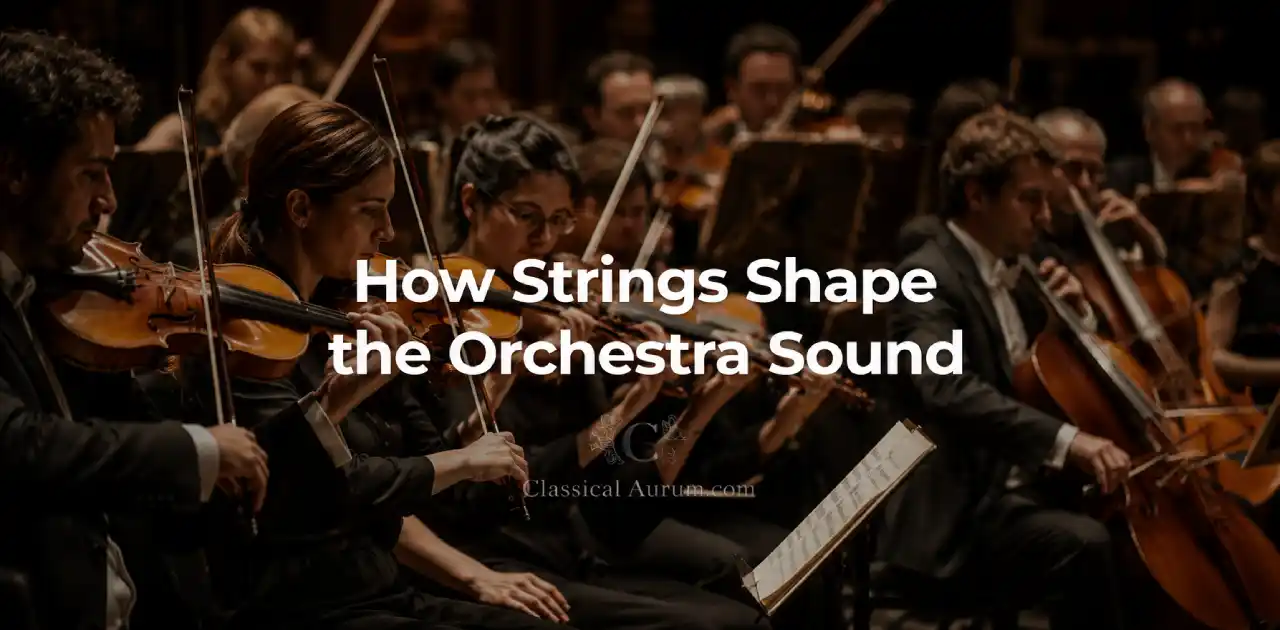
When audiences think of a symphony orchestra, they often imagine a large group of string players seated at the front of the stage. This image reflects a historical reality. The string section forms the foundation of the orchestral sound and has been central to Western classical music for centuries.
From the delicate transparency of a Mozart symphony to the monumental sonorities of Mahler, strings provide the essential framework upon which the entire orchestra is built. Their flexibility, expressive range, and ability to blend make them unique among instrument families.
At ClassicalAurum.com, understanding the architecture of orchestral sound means recognizing why strings remain the emotional and acoustic core of symphonic music.
The Four Main String Instruments
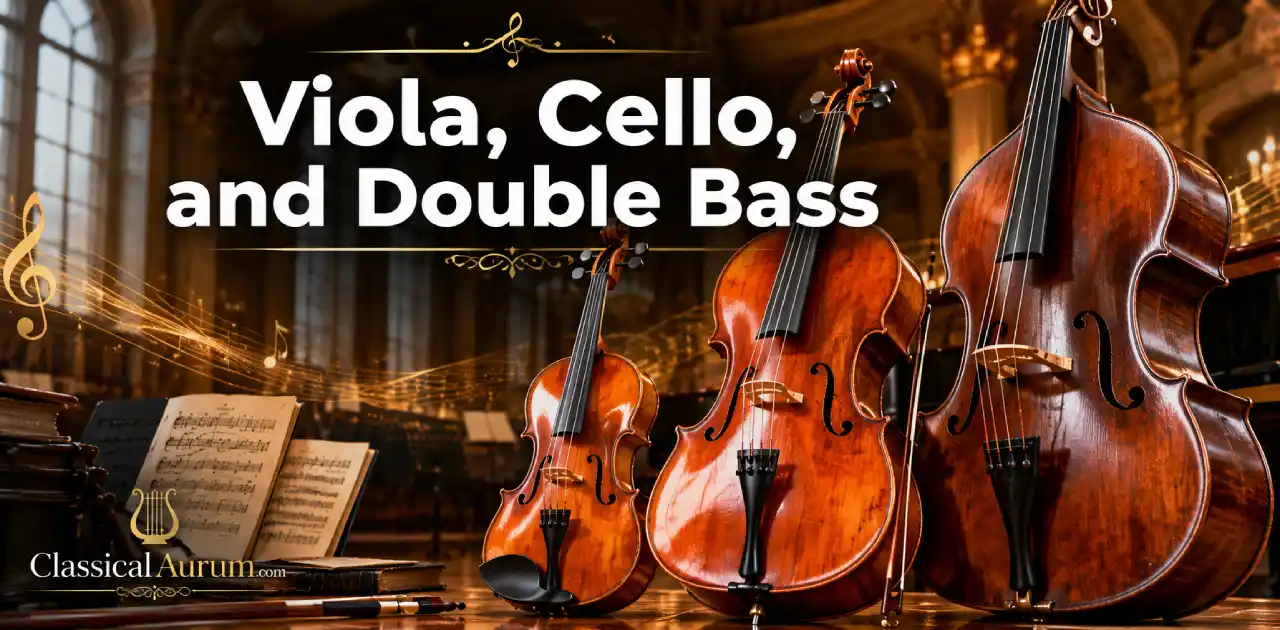
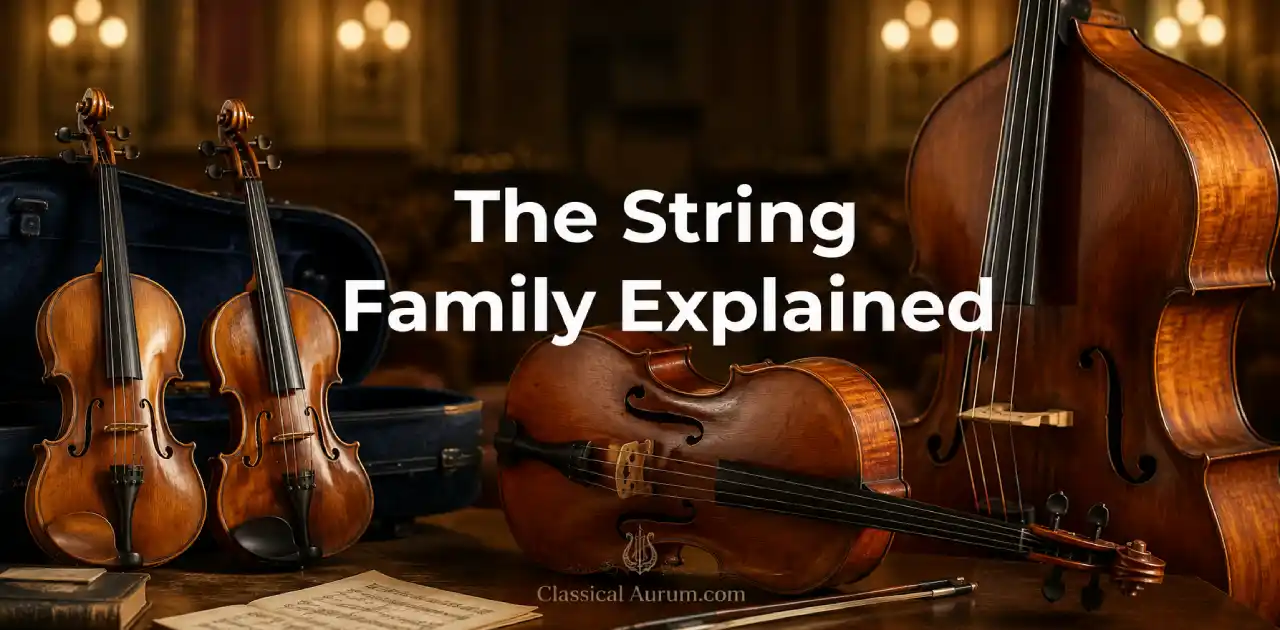
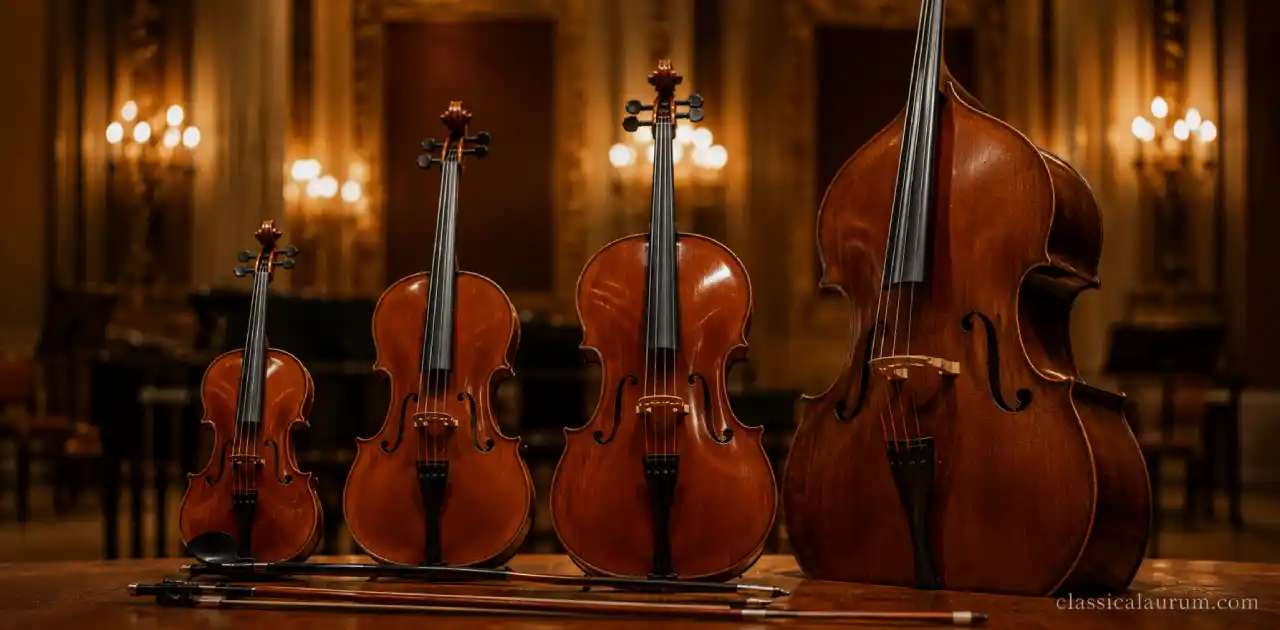
The orchestral string family consists of four principal instruments: violins, violas, cellos, and double basses. Each occupies a specific register and contributes a distinct color.
First violins often carry the main melodies. Their bright and singing tone allows composers to project themes with clarity and brilliance. Second violins frequently provide harmony, rhythmic support, or counter-melodies that enrich the musical texture.
Violas occupy the middle register. Their warm and slightly darker tone fills the gap between violins and cellos. Although often overlooked by listeners, violas contribute significantly to orchestral balance.
Cellos bring warmth, lyricism, and emotional depth. Their range closely resembles the human voice, making them ideal for expressive melodies. Double basses provide the lowest foundation, supporting harmony and adding weight to the entire ensemble.
Together, these instruments create a continuous spectrum of sound that gives the orchestra its remarkable richness.
Why Strings Dominate the Orchestral Texture
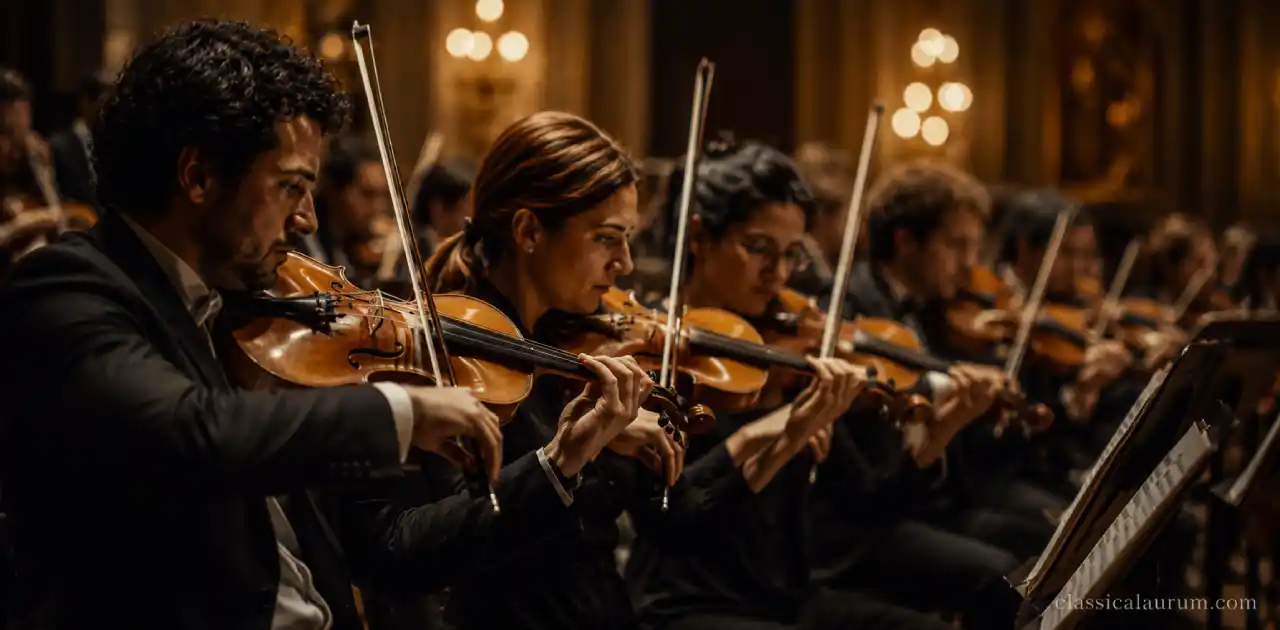
Unlike wind or brass instruments, string players can sustain notes indefinitely through continuous bow movement. This ability allows composers to shape phrases with exceptional fluidity.
Strings can perform extremely soft passages while also producing powerful climaxes. Their dynamic flexibility makes them capable of accompanying other instruments without overpowering them.
Another advantage is numbers. A typical orchestra may include more than sixty string players. Multiple musicians performing together create a unified sonority that blends naturally and produces a broad palette of colors.
Because of this versatility, composers frequently rely on strings to establish mood and atmosphere. Gentle tremolos can create suspense. Long sustained chords can evoke serenity. Rapid passages can generate excitement and momentum.
The dominance of strings is therefore not accidental. Their acoustic characteristics make them uniquely suited to serve as the orchestra’s foundation.
The Evolution of the String Section
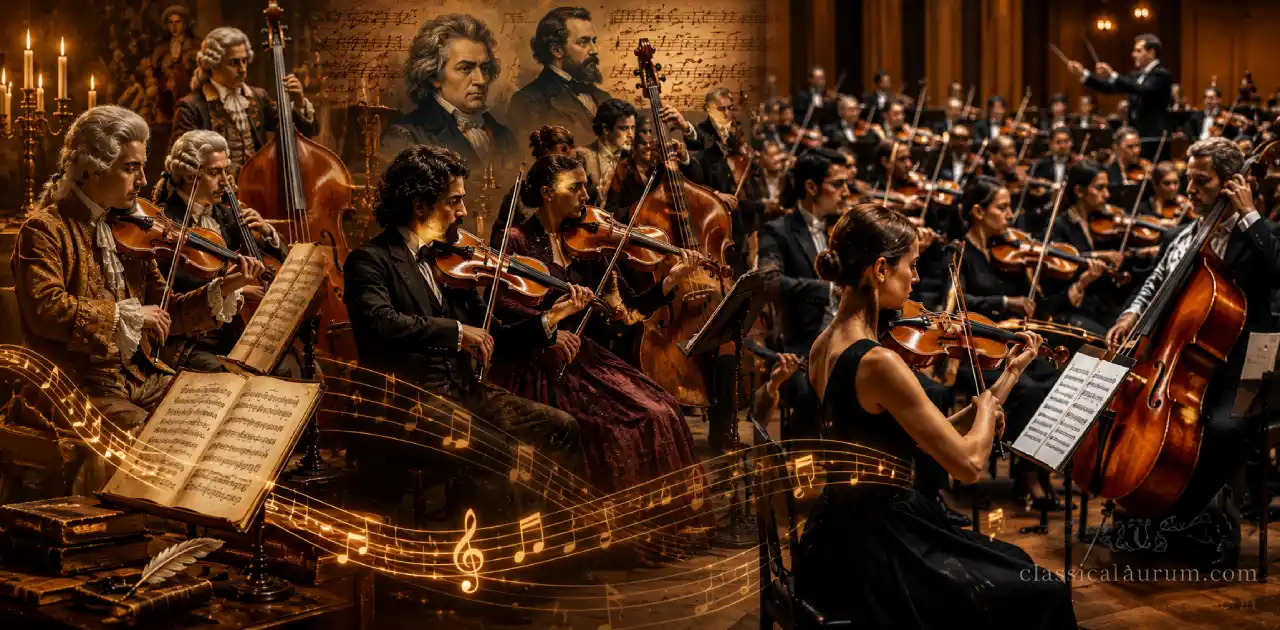
The string section has undergone significant changes throughout music history. During the Baroque era, orchestras were relatively small, and strings formed the majority of performers.
As orchestras expanded during the Classical and Romantic periods, composers demanded greater expressive possibilities. Beethoven increased orchestral power, while composers such as Berlioz and Wagner explored richer textures and more dramatic sonorities.
In the late nineteenth century, Mahler and Richard Strauss employed massive string sections capable of balancing increasingly powerful brass and woodwind forces. Their works demonstrated how strings could maintain clarity even within enormous orchestral settings.
Modern orchestras continue to adapt according to repertoire. A Mozart performance may require fewer players, while a Bruckner or Mahler symphony often demands a much larger ensemble.
Despite these changes, the central role of strings has remained remarkably consistent across centuries.
Techniques That Create Color and Expression
One reason strings are so important lies in their enormous variety of playing techniques. These techniques allow composers to create countless colors and emotional effects.
Legato playing produces smooth and connected melodies. Staccato passages create energy and precision. Pizzicato, where musicians pluck the strings with their fingers, introduces a completely different timbre.
Composers also employ tremolo, harmonics, and muted playing to expand the sonic palette. Tremolo generates tension and movement. Harmonics create ethereal sounds with unusual brilliance. Mutes soften the tone and produce intimate atmospheres.
Bow placement further affects the character of the sound. Playing near the bridge results in a brighter tone, while playing closer to the fingerboard creates a softer quality.
These techniques enable strings to imitate emotions ranging from joy and triumph to melancholy and mystery.
How Strings Interact with Other Instrument Families
Although strings dominate the orchestra, their role extends beyond leading melodies. They also support and interact with woodwinds, brass, and percussion.
Woodwinds often introduce contrasting colors against the smooth texture of the strings. A flute melody accompanied by soft violins creates transparency and elegance. Clarinets and oboes blend particularly well with violas and cellos.
Brass instruments add brilliance and power. During climactic moments, strings provide the harmonic foundation that allows trumpets and horns to shine without sounding isolated.
Percussion contributes rhythm and dramatic emphasis. The combination of timpani and low strings has become one of the most recognizable sounds in orchestral music.
The relationship among these families creates balance. Rather than competing, they cooperate to form a unified musical structure.
Famous Examples of String Writing
Many masterpieces demonstrate how strings shape orchestral identity. Tchaikovsky’s symphonies feature lush string melodies that define his unmistakable style.
Beethoven used strings to create both dramatic intensity and architectural strength. His Fifth Symphony opens with an energetic dialogue that depends heavily on the precision of the string section.
In the works of Johannes Brahms, strings contribute warmth and depth. His orchestration emphasizes balance rather than spectacle, allowing every instrument family to participate naturally.
Gustav Mahler expanded the expressive possibilities of strings to extraordinary levels. His symphonies contain moments of breathtaking delicacy alongside overwhelming climaxes.
Claude Debussy approached strings differently. Instead of relying on traditional harmonic weight, he used subtle colors and textures to create impressionistic atmospheres.
These composers demonstrate the extraordinary versatility of the string family across different musical styles.
Why Strings Remain Essential Today
Even in the twenty-first century, the string section continues to define orchestral sound. Film composers regularly rely on strings to convey emotion and narrative depth.
Modern audiences associate string sonorities with beauty, drama, and human expression. Their ability to communicate directly with listeners explains why they remain indispensable.
Contemporary composers continue experimenting with extended techniques and innovative textures. Yet the basic principles established centuries ago still guide orchestral writing.
Educational institutions around the world prioritize string training because these instruments remain fundamental to ensemble performance. Professional orchestras likewise depend on highly skilled string players to maintain artistic standards.
The enduring importance of strings reflects their unmatched expressive potential.
Conclusion
The sound of the symphony orchestra is inseparable from the sound of its string section. Violins, violas, cellos, and double basses provide the structural and emotional framework that supports every orchestral masterpiece.
Their capacity for blend, dynamic flexibility, and expressive nuance has made them the dominant force in orchestral music from the Baroque era to the present day.
Understanding how strings shape the orchestra reveals why these instruments remain the true heart of the symphonic tradition. Their voices continue to inspire performers, composers, and audiences around the world, preserving one of the most remarkable achievements in the history of music.

About the Author
Juan Daniel Cabrio is a classical guitarist, graduate of the National Conservatory of Music in Argentina, performer, arranger, and researcher dedicated to the study and dissemination of classical music and its history.
Throughout his career, he has presented numerous concerts featuring his own transcriptions and interpretations, with a special focus on the classical guitar repertoire and the musical traditions of different periods.
Through Classical Aurum, he shares educational and cultural content about composers, instruments, music history, theory, repertoire, and performance practice, with the aim of bringing classical music closer to a wider audience.
Classical Aurum is an independent editorial project devoted to preserving and promoting the heritage of classical music through articles, research, and educational resources for musicians, students, and music lovers around the world.