




Viola, Cello, and Double Bass
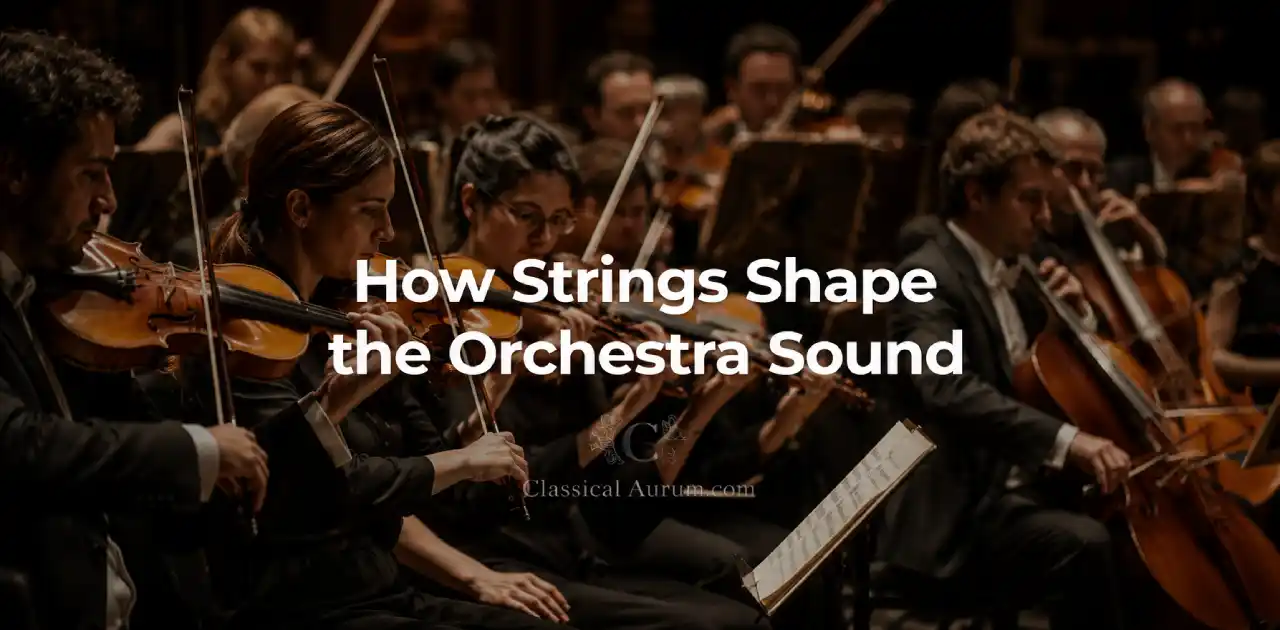
The string family forms the heart of the classical orchestra, providing warmth, depth, and expressive power. While the violin often receives much of the spotlight, the viola, cello, and double bass are equally essential to the beauty and balance of orchestral music.
At ClassicalAurum.com, we celebrate the richness of these remarkable instruments and the musicians who bring them to life. From chamber music to symphonic masterpieces, the lower members of the string family contribute colors and emotions that define the classical tradition.
The Place of the Viola, Cello, and Double Bass in the String Family
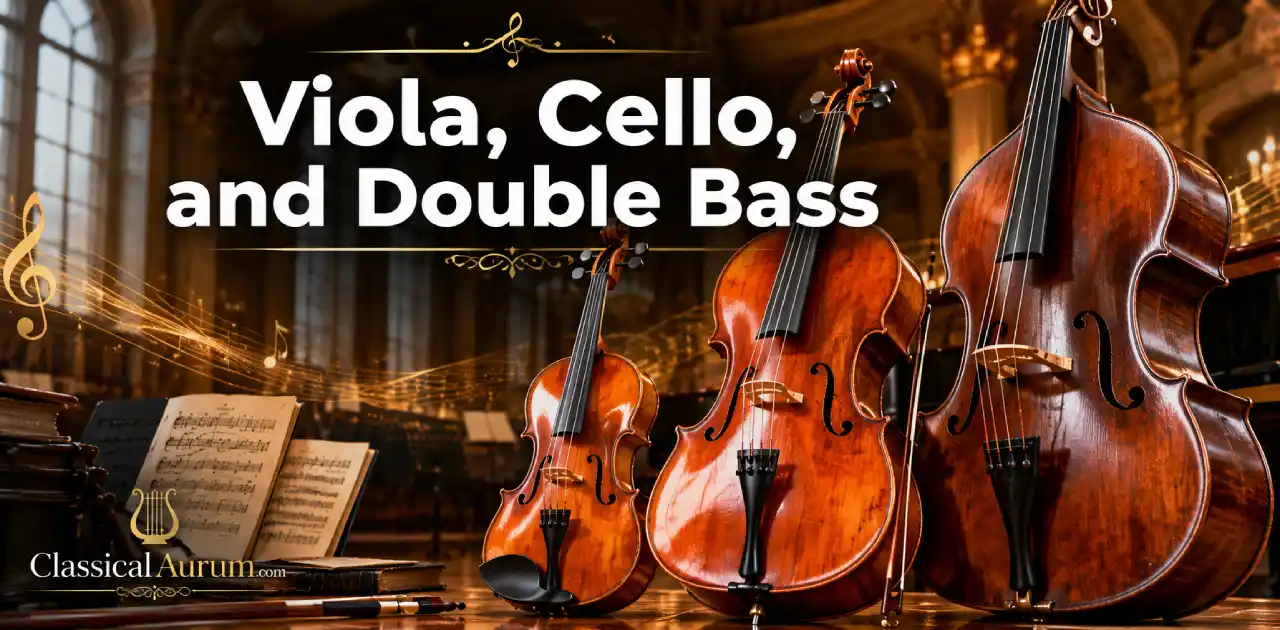
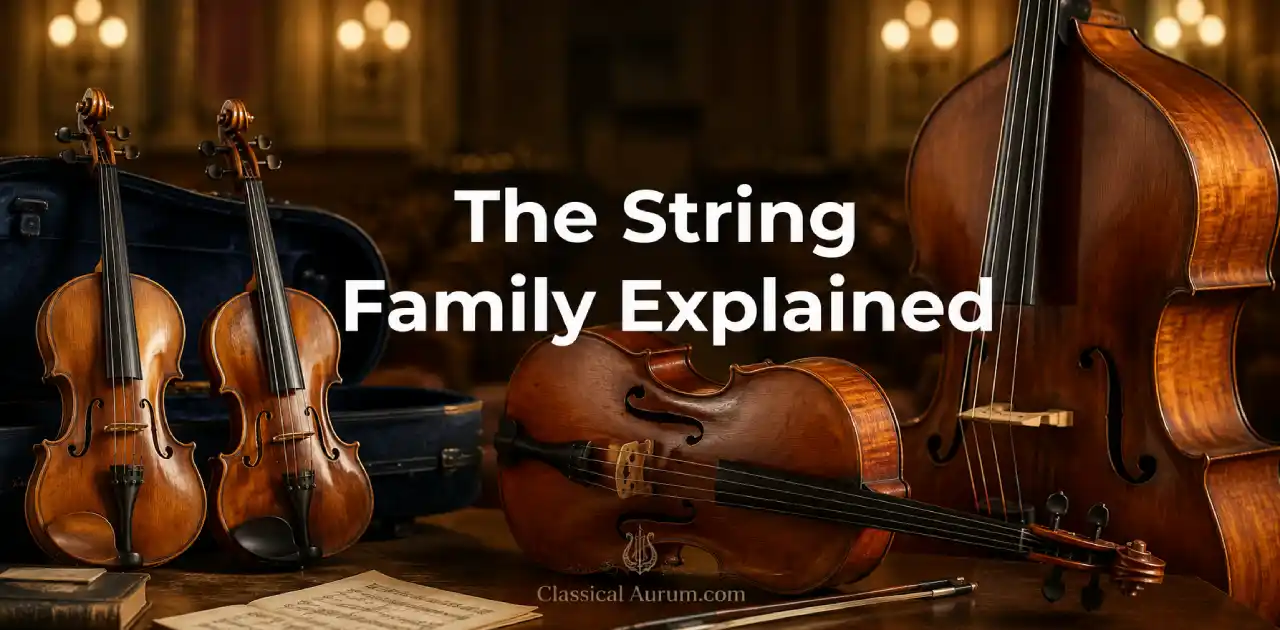
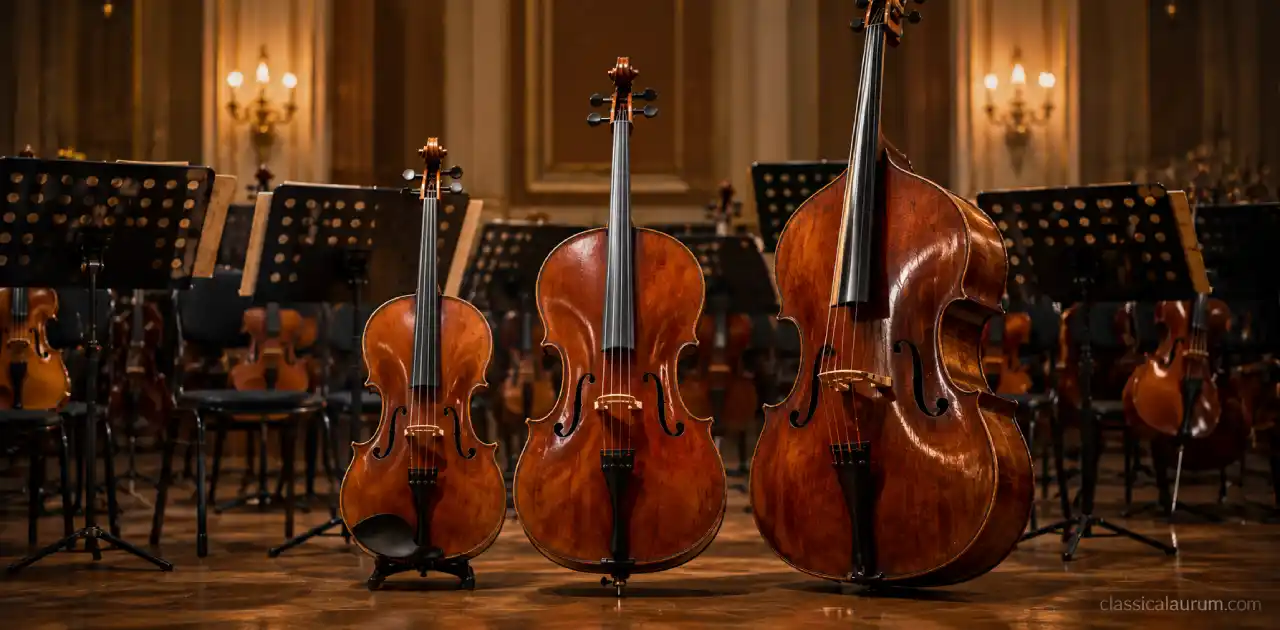
The violin family consists of four principal instruments: violin, viola, cello, and double bass. Together they create a complete spectrum of sound, from brilliant high melodies to powerful bass foundations.
The viola occupies the middle register. It acts as a bridge between the violins and the lower strings, enriching harmonies with its warm and mellow tone. Although historically less prominent than the violin, the viola has gained increasing recognition as a solo instrument.
The cello is admired for its expressive voice, often compared to the human singing range. Its versatility allows it to perform lyrical melodies, accompaniment figures, and dramatic passages with equal effectiveness.
The double bass, the largest instrument in the family, provides depth and rhythmic stability. Its sonorous low frequencies form the backbone of orchestral and chamber music.
Together, these instruments create balance and richness within the ensemble.
Historical Development of the Lower String Instruments
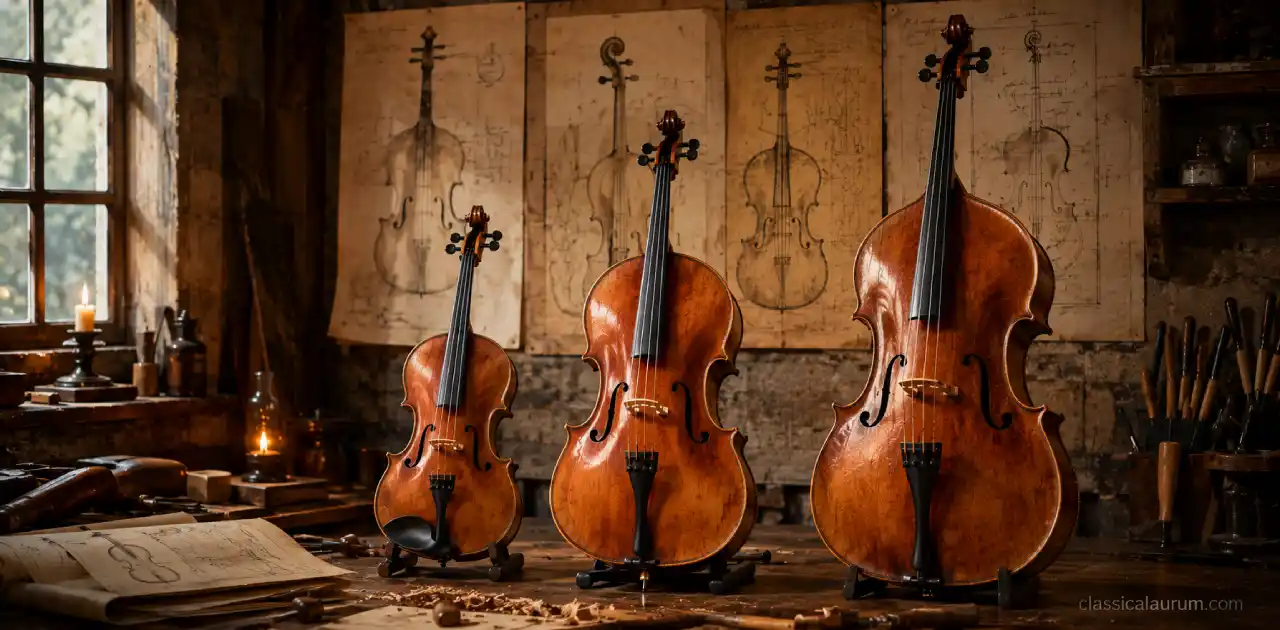
The modern viola, cello, and double bass evolved during the Renaissance and Baroque periods. Instrument makers in Italy played a crucial role in refining their design and proportions.
The viola developed alongside the violin during the sixteenth century. While its shape remained similar to the violin, its larger body produced a darker and more resonant sound.
The cello gradually replaced earlier bass instruments such as the viola da gamba. By the eighteenth century, it had become one of the most important instruments in European music.
The double bass followed a somewhat different path. Its construction reflects influences from both the violin and viol families. Over time, it acquired a standard role in orchestras, chamber ensembles, and eventually jazz and modern music.
Master luthiers such as Antonio Stradivari, Andrea Amati, and Giuseppe Guarneri contributed significantly to the development of these instruments, creating examples that remain highly prized today.
Characteristics of the Viola
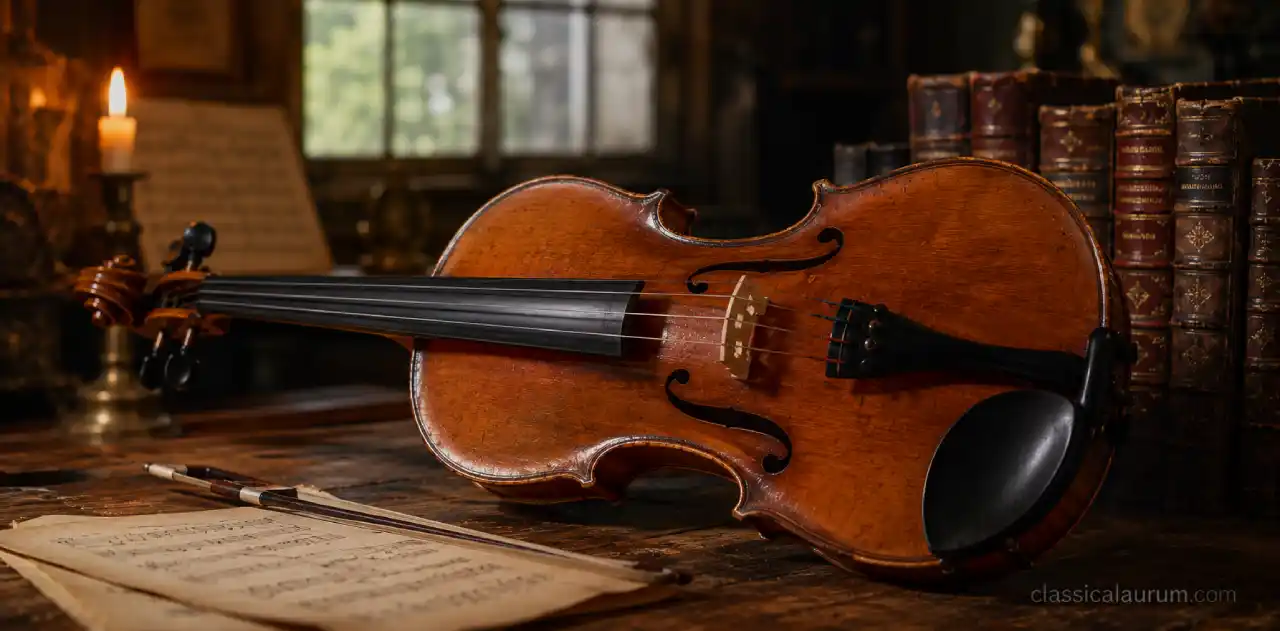
The viola is slightly larger than the violin and is tuned a fifth lower. Its strings are tuned to C, G, D, and A.
One of the most distinctive features of the viola is its tone color. Musicians often describe its sound as warm, velvety, and introspective. This unique character allows composers to create rich harmonic textures and emotional depth.
For many centuries, the viola mainly served supporting roles. However, composers such as Hector Berlioz, Paul Hindemith, and William Walton expanded the instrument’s solo repertoire.
Modern violists enjoy a growing body of concertos, sonatas, and chamber works that showcase the instrument’s expressive possibilities.
The Cello: The Singing Voice of the Orchestra
Among all orchestral instruments, the cello possesses one of the widest emotional ranges. It can sound noble, dramatic, tender, or heroic.
The cello is tuned in fifths to C, G, D, and A, one octave below the viola. Its position between the knees allows performers exceptional control over tone production and phrasing.
Composers such as Johann Sebastian Bach, Antonín Dvořák, Edward Elgar, and Camille Saint-Saëns wrote masterpieces that elevated the cello to international prominence.
The famous Six Cello Suites by Bach remain among the most important works in the instrument’s literature. These compositions continue to inspire performers and audiences throughout the world.
Cellists also play vital roles in chamber music. String quartets, piano trios, and sonatas rely heavily on the cello’s ability to support harmony while simultaneously carrying lyrical melodies.
The Double Bass and Its Powerful Foundation
The double bass is the largest and lowest-pitched member of the string section. It generally has four strings tuned E, A, D, and G, although some instruments include a fifth string for extended range.
Because of its deep resonance, the double bass provides stability and weight to orchestral textures. It often doubles the cello line an octave lower, strengthening harmonic progressions.
Despite its supporting role, the instrument possesses considerable solo capabilities. Virtuosos such as Giovanni Bottesini demonstrated the remarkable agility and expressive power of the double bass.
Modern composers increasingly write challenging works that explore advanced techniques and extended tonal possibilities. As a result, the double bass enjoys greater artistic recognition than ever before.
The Role of These Instruments in Chamber Music
Chamber music highlights the intimate dialogue among musicians. Within these smaller ensembles, the viola, cello, and double bass become indispensable voices.
The string quartet, consisting of two violins, viola, and cello, represents one of the highest forms of chamber music. Composers including Haydn, Mozart, Beethoven, and Shostakovich produced extraordinary works for this combination.
The double bass appears frequently in string quintets, sextets, and larger chamber groups. Its presence adds richness and expanded dynamic possibilities.
In chamber settings, each instrument gains greater independence. Players must listen carefully and collaborate closely to achieve balance and artistic unity.
This intimate interaction makes chamber music one of the most rewarding experiences for both performers and audiences.
Famous Repertoire for Viola, Cello, and Double Bass
Numerous masterpieces feature these instruments either individually or collectively.
Important works for viola include:
- Berlioz’s Harold in Italy
- Walton’s Viola Concerto
- Hindemith’s Viola Sonatas
Major cello compositions include:
- Bach’s Cello Suites
- Dvořák’s Cello Concerto
- Elgar’s Cello Concerto
Notable double bass works include:
- Bottesini’s Double Bass Concertos
- Koussevitzky’s Double Bass Concerto
- Dragonetti’s Solo Pieces
Many orchestral compositions also contain memorable passages for these instruments. Symphonies by Mahler, Brahms, and Tchaikovsky demonstrate their expressive importance.
Techniques and Performance Challenges
Although all three instruments belong to the same family, each presents unique technical demands.
Violists must adapt to larger finger spacing compared with the violin. Producing a rich tone while maintaining agility requires considerable skill.
Cellists face challenges related to shifting positions and controlling vibrato across a wide range. Their repertoire often demands exceptional expressive sensitivity.
Double bass players work with larger distances between notes and greater physical requirements. Bow control and intonation become especially important because of the instrument’s size.
Advanced performers frequently employ techniques such as:
- Harmonics
- Pizzicato
- Spiccato bowing
- Double stops
- Sul ponticello effects
These techniques greatly expand the sonic possibilities of the string family.
Modern Importance of the Viola, Cello, and Double Bass
Today, these instruments continue to thrive in concert halls, conservatories, and recording studios around the world.
The cello has become one of the most popular instruments among young musicians. International competitions and celebrated soloists have increased public appreciation for its repertoire.
The viola has emerged from the shadows, with many contemporary composers writing important works specifically for its distinctive voice.
The double bass enjoys remarkable versatility. In addition to classical music, it plays major roles in jazz, film scores, and crossover projects.
Educational institutions worldwide continue to train new generations of performers, ensuring that the traditions of these instruments remain vibrant.
A Timeless Legacy in Classical Music
The viola, cello, and double bass represent far more than supporting voices within the orchestra. They embody the emotional depth, structural strength, and expressive richness that define classical music itself.
Their sounds have inspired composers for centuries and continue to captivate audiences today. Whether performing in a grand symphony orchestra, an intimate chamber ensemble, or as solo instruments, they contribute immeasurably to the beauty of the musical world.
At ClassicalAurum.com, we recognize these instruments as pillars of the classical tradition. Their legacy continues to evolve, reminding us that the true power of music lies not only in brilliance and virtuosity but also in warmth, balance, and profound emotional expression.

About the Author
Juan Daniel Cabrio is a classical guitarist, graduate of the National Conservatory of Music in Argentina, performer, arranger, and researcher dedicated to the study and dissemination of classical music and its history.
Throughout his career, he has presented numerous concerts featuring his own transcriptions and interpretations, with a special focus on the classical guitar repertoire and the musical traditions of different periods.
Through Classical Aurum, he shares educational and cultural content about composers, instruments, music history, theory, repertoire, and performance practice, with the aim of bringing classical music closer to a wider audience.
Classical Aurum is an independent editorial project devoted to preserving and promoting the heritage of classical music through articles, research, and educational resources for musicians, students, and music lovers around the world.