


Mahler and the Expansion of the Orchestra
The Orchestra Before Mahler: A System Reaching Its Limits
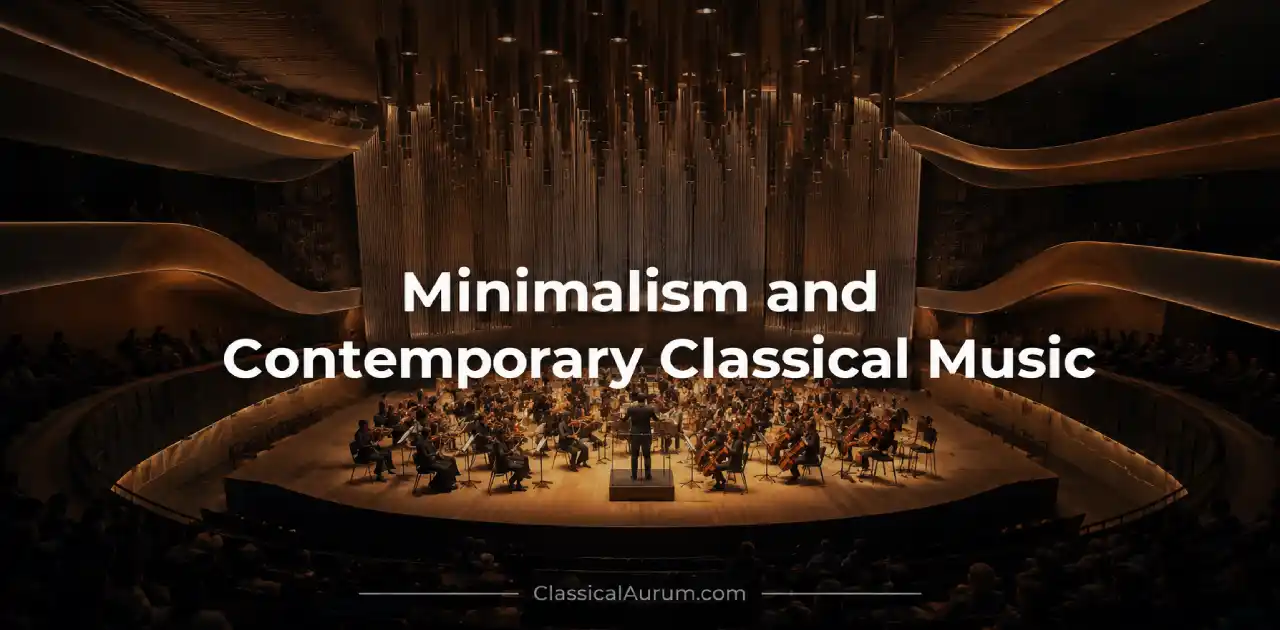
By the late 19th century, the orchestra had already undergone a remarkable evolution. From the relatively compact ensembles of Wolfgang Amadeus Mozart and early Ludwig van Beethoven, orchestras had steadily expanded in both size and color. Composers like Hector Berlioz and Richard Wagner pushed boundaries, introducing new instruments and reshaping orchestral balance.
Yet by the time Gustav Mahler emerged, the orchestra was approaching a threshold. The Romantic tradition had reached a point where emotional ambition demanded greater sonic resources. Mahler did not simply inherit this trajectory—he transformed it into something radically new.
For Mahler, the orchestra was no longer just a vehicle for musical ideas. It became a living organism, capable of expressing the full spectrum of human experience: from intimacy to cosmic vastness. This shift marked the beginning of a new orchestral philosophy—one that would influence the entire 20th century.
Mahler’s Vision: The Orchestra as a Universe
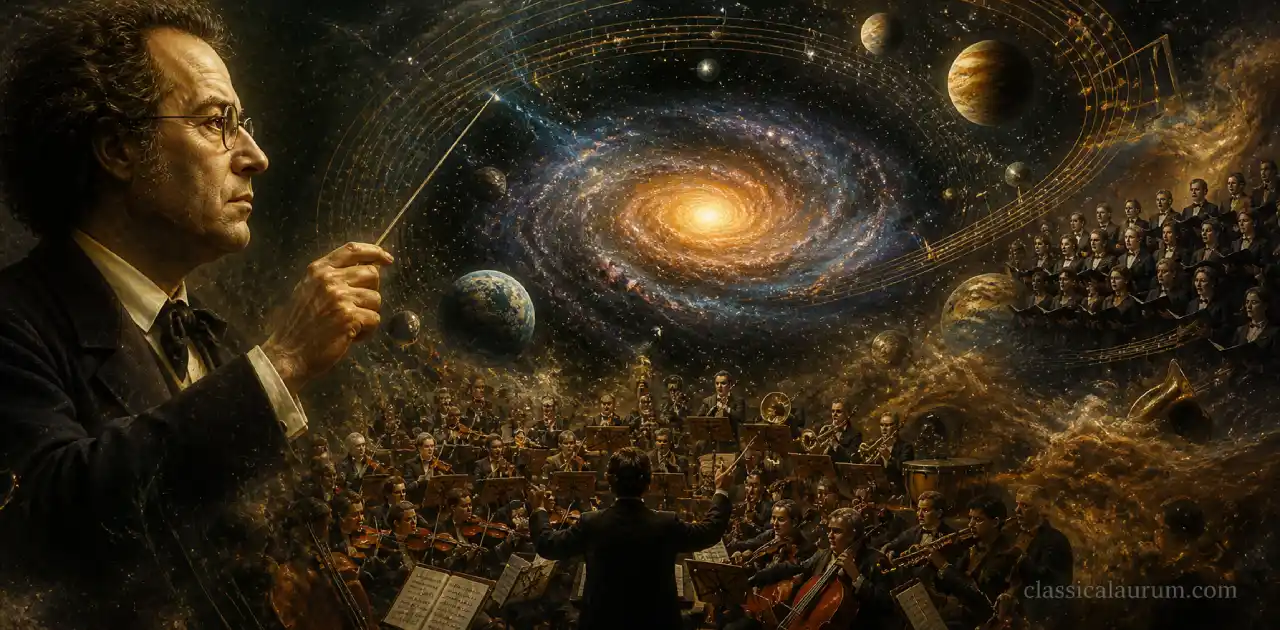
Mahler’s concept of the orchestra was fundamentally philosophical. He famously stated that a symphony must be “like the world—it must contain everything.” This idea shaped his approach to orchestration, where scale and diversity were not decorative but essential.
Unlike earlier composers who expanded the orchestra for dramatic effect, Mahler used it to explore existential depth. His symphonies integrate folk melodies, military signals, nature sounds, and metaphysical reflections into a single, cohesive structure.
This vision required an unprecedented range of instruments and textures. The orchestra became a multi-dimensional space, where contrasting elements coexist: delicate chamber-like passages alongside overwhelming climaxes.
Mahler’s orchestration is not just about volume. It is about contrast, layering, and transformation. A single melodic line might pass through multiple instruments, changing color and meaning as it evolves. This dynamic treatment of timbre redefined orchestral writing.
Expanding the Instrumentation: Beyond Traditional Limits
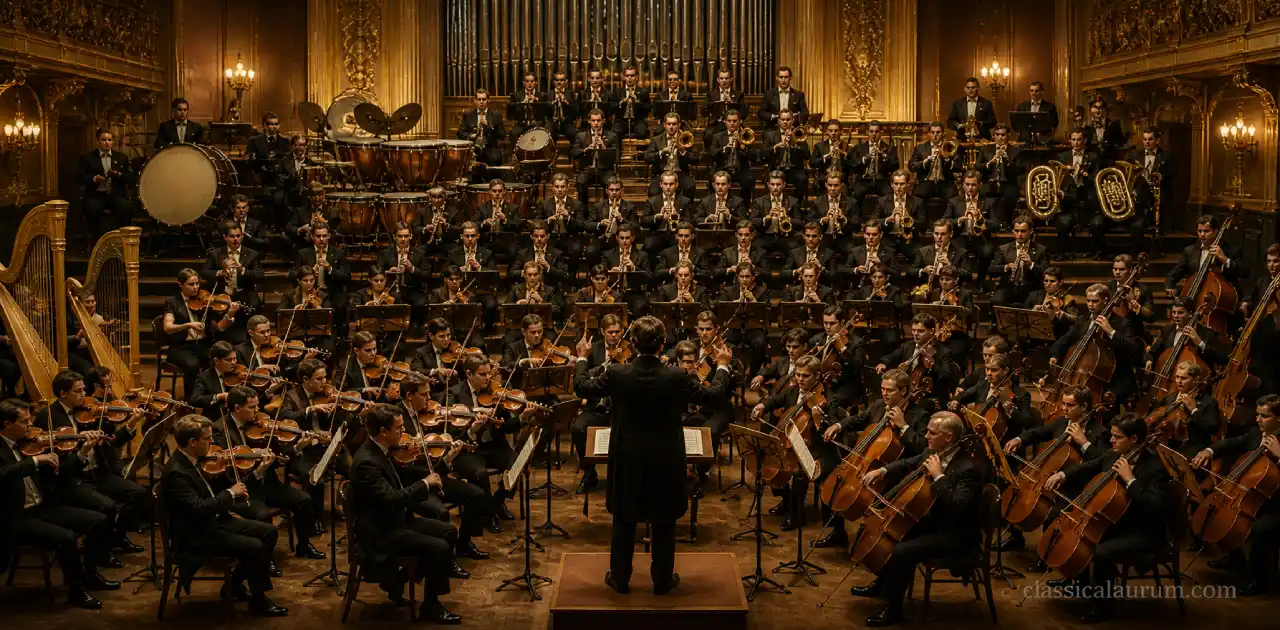
Mahler’s scores often call for massive orchestral forces. However, the expansion was not arbitrary—it was meticulously designed to serve expressive goals.
Key innovations include:
- Extended brass sections, often with additional horns and trumpets to create monumental sonorities
- Expanded woodwinds, allowing for richer harmonic textures and soloistic interplay
- Large percussion sections, incorporating unconventional instruments for new colors
- Use of offstage instruments, creating spatial effects and narrative distance
One of the most striking examples is his Symphony No. 8, often called the “Symphony of a Thousand.” It requires not only a vast orchestra but also multiple choirs and soloists, transforming the symphony into a monumental choral experience.
Yet Mahler’s genius lies in balance. Even within these massive forces, he achieves moments of extreme transparency, where a single instrument can emerge with intimate clarity.
Spatial and Acoustic Innovation
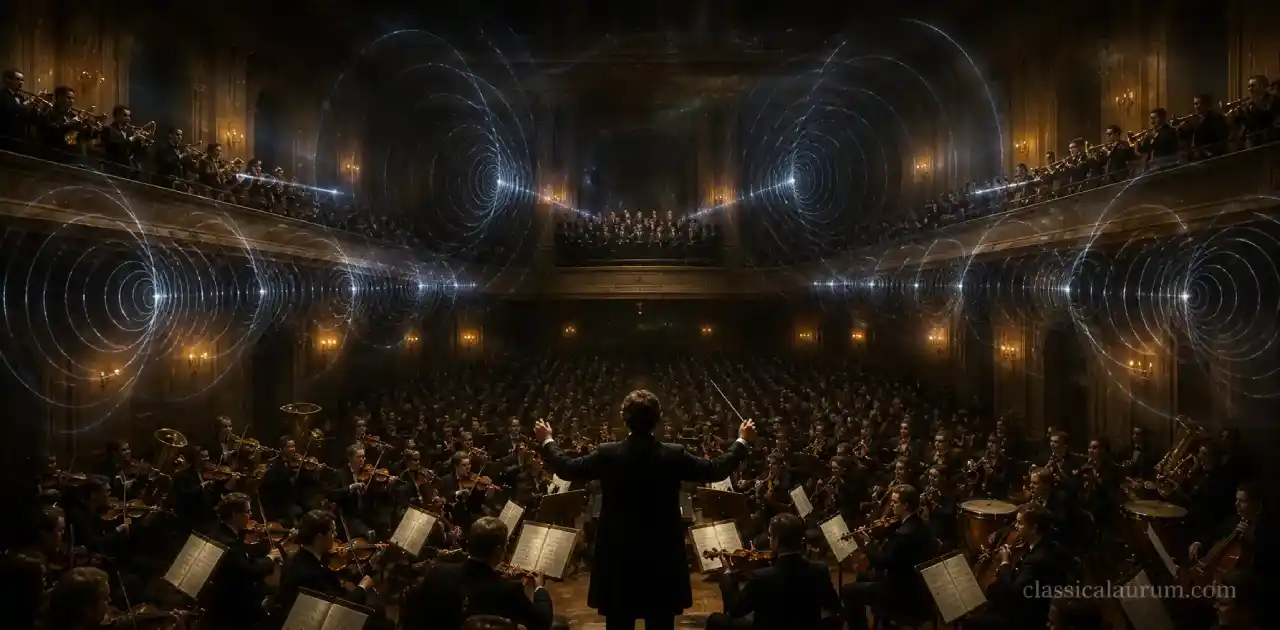
Mahler did not limit his expansion to instrumentation—he also reimagined how sound exists in space. His use of offstage ensembles creates a sense of distance and dimension rarely heard before.
This technique appears in several symphonies, where distant horns or trumpets evoke landscapes, memory, or even metaphysical realms. The listener is no longer confined to a single sonic plane; instead, they experience a three-dimensional auditory world.
Mahler also explored acoustic contrast in unprecedented ways. Sudden shifts from silence to overwhelming sound, or from dense textures to fragile solos, create a sense of unpredictability and emotional intensity.
These innovations anticipate modern concepts of sound design and spatial audio, making Mahler remarkably forward-thinking.
The Human Voice as Orchestral Element
Another defining aspect of Mahler’s expansion is the integration of the human voice into the symphonic form. While vocal symphonies existed before, Mahler elevated this practice to a central artistic principle.
In works like the Second Symphony (“Resurrection”) and the Eighth Symphony, voices are not mere additions—they are essential components of the orchestral fabric.
Mahler blends vocal and instrumental textures seamlessly, creating a unified sonic landscape. The voice becomes another instrument, capable of expressing meanings that transcend purely instrumental music.
This approach bridges the gap between symphony and opera, expanding the expressive possibilities of both genres.
Emotional Extremes and Orchestral Language
Mahler’s expanded orchestra allowed him to explore emotional extremes with unprecedented depth. His music moves rapidly between contrasting states: joy and despair, innocence and irony, serenity and chaos.
The orchestra becomes a psychological instrument, reflecting inner conflict and existential questioning. Mahler’s use of orchestration intensifies these contrasts:
- Sparse textures convey isolation and vulnerability
- Dense climaxes express overwhelming emotion
- Unexpected timbres introduce ambiguity and tension
This emotional range is not merely expressive—it is structural. Mahler’s symphonies are built on the interaction of these extremes, creating a narrative that unfolds across vast musical landscapes.
Influence on 20th-Century Orchestration
Mahler’s impact on later composers cannot be overstated. His expansion of the orchestra laid the groundwork for many developments in 20th-century music.
Composers such as Arnold Schoenberg, Dmitri Shostakovich, and Benjamin Britten drew inspiration from Mahler’s approach to orchestration and emotional expression.
Even beyond classical music, Mahler’s influence can be felt in film scores and contemporary orchestral writing. The idea of the orchestra as a cinematic and immersive medium owes much to his innovations.
Mahler also anticipated the fragmentation of tonality and the emergence of modernism. His orchestral language, while rooted in Romanticism, points toward new musical possibilities.
Mahler in Performance: Challenges and Legacy
Performing Mahler’s works remains a formidable challenge. The sheer scale of his orchestras requires logistical precision, while the emotional complexity demands exceptional interpretative depth.
Conductors must navigate intricate textures, balance massive forces, and maintain structural coherence over long durations. This makes Mahler’s symphonies both demanding and deeply rewarding.
Today, Mahler’s music occupies a central place in the orchestral repertoire. His works are performed by leading ensembles worldwide, reflecting their enduring relevance.
For audiences, Mahler offers an experience that is both intimate and monumental. His expanded orchestra invites listeners into a world where sound becomes a reflection of human existence itself.
Conclusion: The Orchestra Reimagined
Mahler did not simply expand the orchestra—he redefined its purpose. By transforming it into a universe of sound, he opened new pathways for musical expression.
His innovations in instrumentation, spatial design, and emotional depth continue to resonate in contemporary music. The orchestra, as we understand it today, owes much to Mahler’s visionary approach.
In the context of ClassicalAurum.com, Mahler represents a pivotal moment where tradition meets transformation. His work bridges the Romantic past and the modern future, offering a timeless exploration of sound, meaning, and human experience.
Mahler’s orchestra is not just larger—it is deeper, richer, and infinitely more expressive.

About the Author
Juan Daniel Cabrio
Argentine Classical Guitarist · Researcher · Educator
Juan Daniel Cabrio is an Argentine classical guitarist, researcher and educator. Founder of Classical Aurum, he shares educational and cultural content about classical music, composers, instruments, repertoire, music history and performance practice.
View full biography