

Theme and Variations Explained
Theme and Variations Explained: Structure, Beauty and Musical Evolution
Theme and variations is one of the most elegant and enduring forms in classical music. It combines repetition with transformation, familiarity with surprise.
At its core, it is simple. A musical idea is presented. Then it is reshaped again and again. Yet behind this simplicity lies one of the most powerful creative tools in the history of composition.
From Mozart to Beethoven, from Bach to modern composers, this form has been used to explore emotion, technique, and imagination in ways few other structures allow.
Understanding theme and variations does not only deepen listening. It changes how music is perceived. It reveals structure beneath beauty.

What Is Theme and Variations?
A theme is a clear musical idea. It is usually a melody with harmony that feels complete and recognizable.
A variation is a transformation of that idea. The original theme remains present, but it is altered in rhythm, harmony, tempo, texture, or character.
The process unfolds as follows:
- The theme is introduced clearly
- Each variation modifies it in a distinct way
- The listener recognizes continuity despite change
This duality is essential. The music must remain connected to the original idea, but also evolve enough to remain interesting.
This balance between identity and transformation defines the entire form.

The Structural Logic Behind the Form
Theme and variations is not random. It follows a logical architecture that composers carefully design.
A typical structure looks like this:
- Theme (statement of the main idea)
- Variation 1 (slight modification)
- Variation 2 (greater contrast)
- Variation 3 (change in mood or tempo)
- Additional variations (increasing complexity)
- Final variation or coda
Each variation explores a different musical dimension.
Some focus on rhythm. Others on harmony. Others on texture or virtuosity.
For example:
- A slow theme may become fast
- A simple melody may become ornamented
- A major key may shift to minor
- A calm idea may become dramatic
Despite these changes, the listener perceives unity. This is what makes the form intellectually satisfying and emotionally engaging.
Types of Variations in Classical Music
Not all variations are the same. Composers developed different approaches depending on their artistic goals.
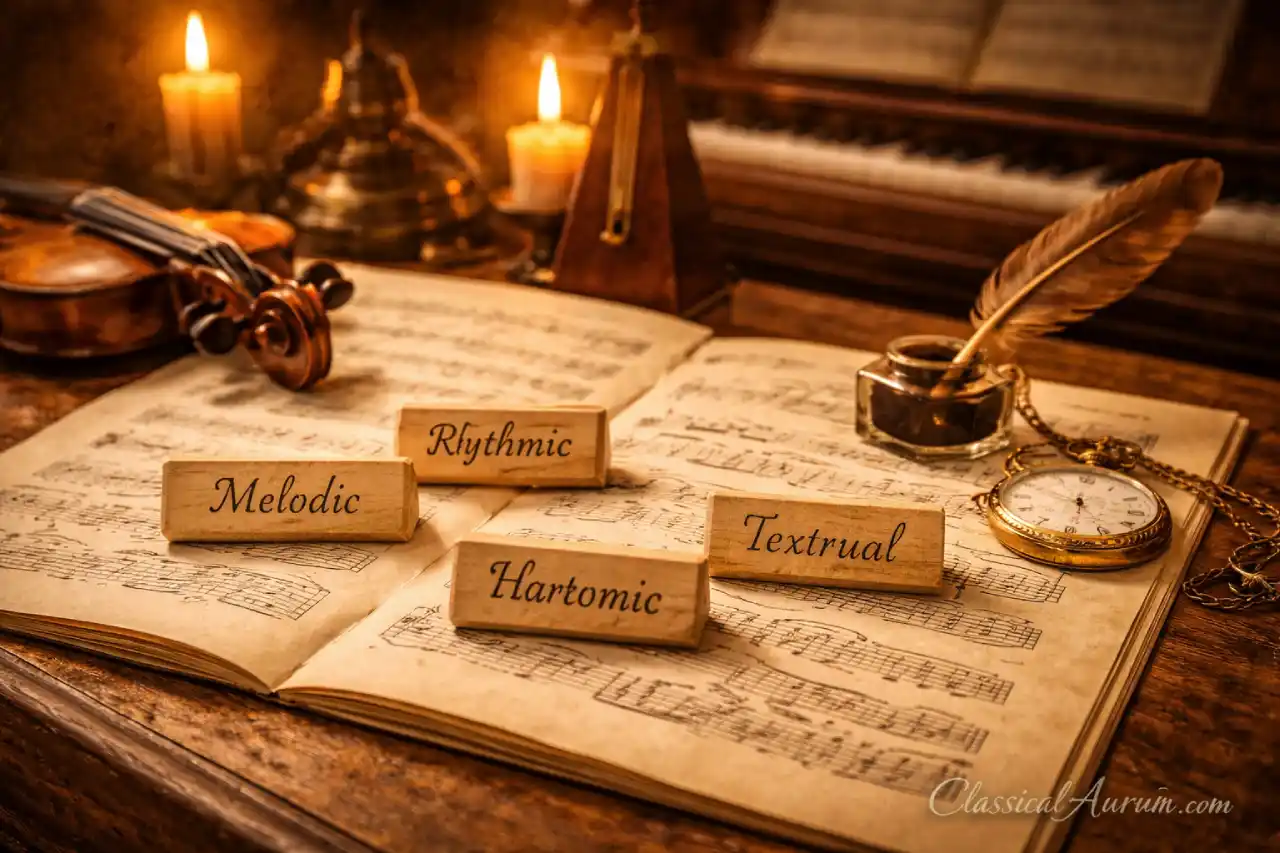
Melodic variation keeps the harmonic structure but decorates the melody.
Rhythmic variation alters the timing and pulse of the theme.
Harmonic variation changes the underlying chords while preserving the shape.
Textural variation transforms how the music is layered.
There are also more advanced types:
- Character variations, where each version expresses a different emotion
- Double variations, alternating between two themes
- Ground bass (passacaglia/chaconne), where a repeating bass line supports changing material
These approaches expand the expressive range of the form.
They allow composers to turn a single idea into an entire musical journey.
Famous Examples of Theme and Variations
Some of the greatest works in classical music are based on this form.
Johann Sebastian Bach – Goldberg Variations
A masterpiece of structural clarity and intellectual depth. Each variation explores a different technical and expressive idea while maintaining a strict harmonic foundation.
Wolfgang Amadeus Mozart – Variations on “Ah, vous dirai-je, Maman”
A brilliant example of clarity and elegance. The familiar melody evolves through playful and refined transformations.
Ludwig van Beethoven – Diabelli Variations
A monumental expansion of the form. Beethoven transforms a simple theme into a vast and complex artistic universe.
Johannes Brahms – Variations on a Theme by Haydn
A symphonic approach to variation. Each section reveals new orchestral colors and emotional layers.
These works show how flexible and powerful the form can be.
Each composer uses it differently. Yet the core idea remains unchanged.
Why Theme and Variations Matters Today
Theme and variations is not just historical. It remains relevant for modern musicians and listeners.
Teaches how music develops over time. It trains the ear to recognize patterns and transformations.
For performers, especially guitarists and pianists, it offers:
- Technical challenges
- Expressive depth
- Structural awareness
Composers, it is a laboratory of ideas.
For listeners, it transforms passive listening into active perception.
You begin to hear connections. Anticipate changes. You recognize transformation.
In a world of fast consumption, this form invites deeper attention.
It rewards patience.
Emotional Power Behind the Variations
Beyond structure, theme and variations carries strong emotional weight.
Each variation can represent a different state of mind.
The same melody can become:
- Joyful
- Melancholic
- Dramatic
- Reflective
This creates a narrative without words.
It is not a story in the traditional sense. It is a progression of emotional states.
This is why the form works so well in both sacred and concert settings.
It mirrors human experience.
We remain the same, yet constantly change.
Theme and Variations for Classical Guitar
For classical guitar, theme and variations is especially powerful.
The instrument allows subtle changes in tone, articulation, and color.
Guitarists can transform a theme through:
- Timbre variations (ponticello, sul tasto)
- Dynamic control
- Finger articulation
- Harmonic effects
Many guitar arrangements of piano works use variation techniques to adapt the music to the instrument.
This is particularly relevant for modern performers seeking originality.
Transcribing piano works into guitar variations creates a unique artistic identity.
It also aligns with the idea of reinterpretation, central to this form.
From Simplicity to Complexity
One of the most fascinating aspects of theme and variations is its growth.
It often begins with simplicity.
A clear melody. Stable harmony. A calm introduction.
Then complexity increases.
Variations become faster. More intricate. More expressive.
This gradual transformation creates tension and release.
It keeps the listener engaged from beginning to end.
Some composers even return to a simplified version at the end.
This creates a sense of closure.
A musical cycle completed.
How to Listen to Theme and Variations
To fully appreciate this form, listening must be active.
Here are a few strategies:
- Identify the theme clearly
- Notice what changes in each variation
- Pay attention to rhythm and harmony
- Observe emotional shifts
With practice, patterns become clearer.
You begin to anticipate transformation.
You understand the logic behind the music.
And most importantly, you experience it more deeply.
Conclusion: A Timeless Musical Language
Theme and variations is more than a compositional technique.
It is a philosophy of music.
Shows how a single idea can evolve endlessly without losing its identity.
It reflects both order and creativity. Structure and freedom.
For ClassicalAurum, this form represents the essence of classical music itself.
A balance between tradition and innovation.
Journey from simplicity to depth.
A continuous transformation of sound into meaning.
Related: Fugue, Canon, and Counterpoint