
Baroque Music: Structure, Style, and Legacy
The Birth of the Baroque Era in Music (1600–1750)
The birth of baroque music structure and style coincided with major shifts in philosophy, religion, and science. Protestant Reformation and Catholic Counter-Reformation reshaped sacred music. The rise of absolutist courts encouraged large-scale compositions that projected power and grandeur. Meanwhile, early scientific thinking fostered a new fascination with order and system.
Unlike Renaissance polyphony, which emphasized balanced voices, Baroque composers focused on dramatic expression and harmonic direction. Music became more emotionally direct. The concept of affect—the idea that a piece should evoke a specific emotional state—guided composition.
Opera was born in this era. Around 1600, Italian composers experimented with combining music, poetry, and theater. This innovation marked a decisive shift toward monody, where a single melodic line was supported by harmonic accompaniment. From that moment, Western music would never be the same.
For readers of ClassicalAurum.com, understanding the origins of Baroque music is essential because it forms the structural and expressive foundation of much of the classical tradition that followed.

Harmonic Innovation and the Basso Continuo
At the heart of this transformation lies the basso continuo. This technique involved a continuous bass line, typically performed by cello or bassoon, combined with a chordal instrument such as harpsichord or organ. Above the bass line, harmonies were indicated using figured bass notation, allowing performers to improvise chords.
This innovation created a clear vertical harmonic framework. Music gained direction and momentum through tension and resolution. Composers could now manipulate harmonic progressions to intensify emotional impact.
Baroque harmony introduced consistent use of:
-
Dominant–tonic relationships
-
Sequences and circle-of-fifths progressions
-
Modulation between related keys
-
Suspensions and expressive dissonances
These harmonic techniques allowed composers to construct large-scale works with coherence and drama. The result was music that felt architectural, yet alive with movement.
For modern classical musicians, mastering basso continuo practice offers insight into improvisation and stylistic authenticity. It reveals that Baroque performance was never rigid—it was guided by structure but animated by creativity.

Forms and Genres: Architecture of Baroque Music
Baroque composers established many of the forms that became pillars of Western music. The era’s genius lies in its ability to combine mathematical structure with emotional clarity.
Concerto
The concerto flourished in Italy, particularly through the work of Antonio Vivaldi. The ritornello form became standard, alternating orchestral refrains with solo passages. Contrast between soloist and ensemble defined the genre.
The Fugue
The fugue represents the intellectual peak of baroque music structure and style. Perfected by Johann Sebastian Bach, it is based on a single subject introduced and imitated across voices. The fugue embodies counterpoint at its highest level.
Opera and Oratorio
Opera combined drama and music into a unified art form. Meanwhile, the oratorio—especially in the hands of George Frideric Handel—offered large-scale sacred narratives without staging.
Dance Suites
Instrumental suites assembled stylized dances such as the allemande, courante, sarabande, and gigue. These works reveal how courtly dance rhythms shaped instrumental composition.
These genres provided structural clarity while allowing emotional expression. Their influence extends into Classical and Romantic eras, demonstrating the enduring architectural power of Baroque forms.

Ornamentation, Expression, and Performance Practice
Baroque aesthetics valued rhetoric in music. Just as a speaker persuades through emphasis and inflection, musicians shaped phrases through articulation and dynamic contrast.
Performance practice included:
-
Terraced dynamics rather than gradual crescendos
-
Light articulation in fast passages
-
Vibrato used sparingly as ornament
-
Improvised cadenzas in vocal works
Informed performance movements of the 20th and 21st centuries revived historical instruments such as the harpsichord and natural trumpet. These efforts revealed that Baroque music sounds radically different when performed according to period conventions.
For Classical Aurum readers—especially instrumentalists—understanding ornamentation is transformative. It shifts interpretation from mechanical accuracy to expressive storytelling rooted in historical awareness.

The Legacy of Baroque Music in Western Tradition
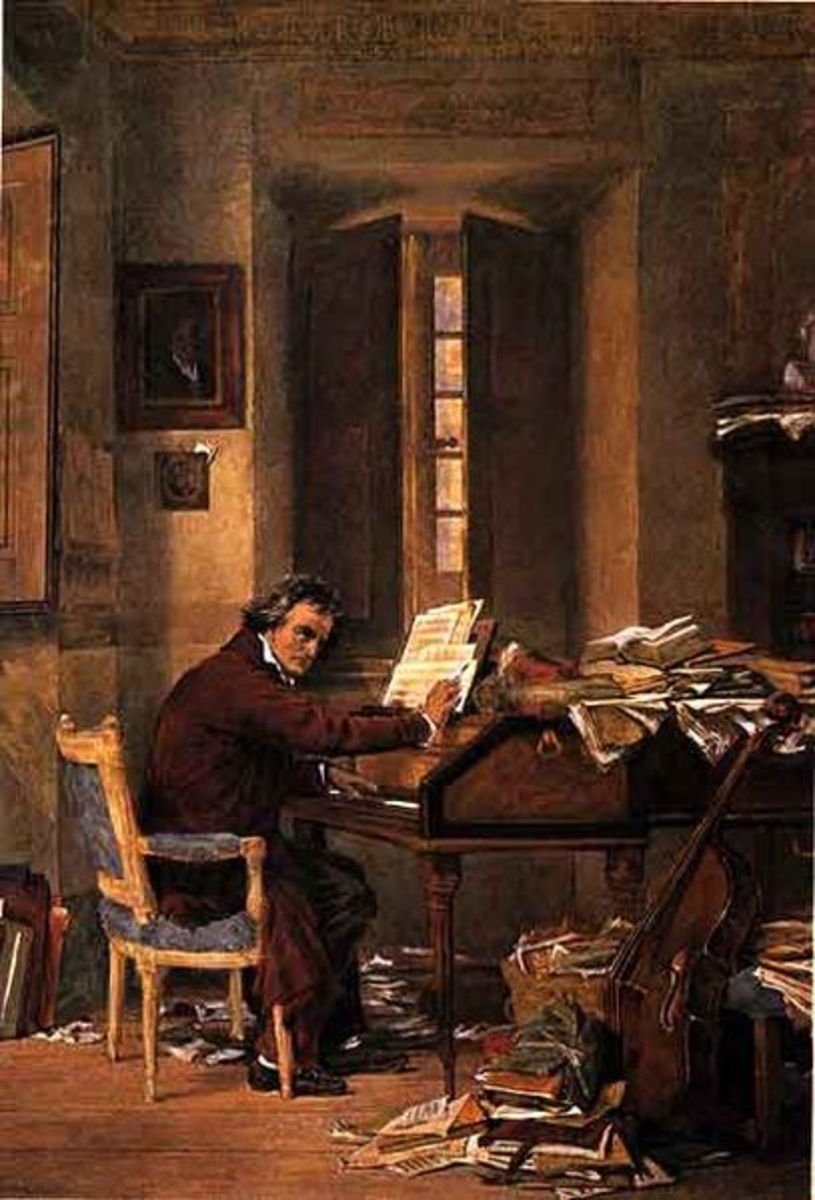
The sonata form of the Classical period evolved from Baroque structural thinking. Beethoven’s counterpoint owes much to Bach’s fugues. Even modern film scores rely on tonal progressions codified during the Baroque.
Educationally, Baroque works remain central in conservatories. Students study inventions and preludes to build technical control and contrapuntal awareness. Organists continue to perform Baroque repertoire in liturgical contexts.
Moreover, the Baroque revival of the 20th century reshaped musicology and performance standards. Historically informed ensembles demonstrated that authenticity enhances expressive depth.
Baroque music also bridges sacred and secular worlds. Its sacred cantatas coexist with theatrical operas. Its intellectual fugues coexist with passionate arias. This duality ensures its perpetual relevance.
For ClassicalAurum.com, Baroque music is not merely historical content—it represents a living tradition. It embodies the union of structure and emotion, reason and passion, discipline and creativity.
Conclusion: Why Baroque Music Still Matters
Baroque music structure and style established the tonal language, formal architecture, and expressive vocabulary that underpin Western art music. Without the innovations of the 17th and early 18th centuries, later masterpieces would lack their structural backbone.
The era teaches us that order does not suppress emotion—it intensifies it. Through harmonic clarity, contrapuntal mastery, and refined ornamentation, Baroque composers created music that remains intellectually rigorous and spiritually moving.
In a contemporary world that often values speed over depth, Baroque music invites attentive listening. It rewards analysis and interpretation. It challenges performers to balance discipline with imagination.
From the grandeur of sacred oratorios to the intimacy of chamber sonatas, the Baroque period shaped the course of music history. Its legacy endures not only in concert halls but in the very grammar of Western harmony.
For musicians, scholars, and listeners alike, exploring Baroque music is exploring the structural DNA of classical tradition. And at Classical Aurum, that exploration continues—rooted in history, inspired by artistry, and sustained by the timeless resonance of sound.
About the Author
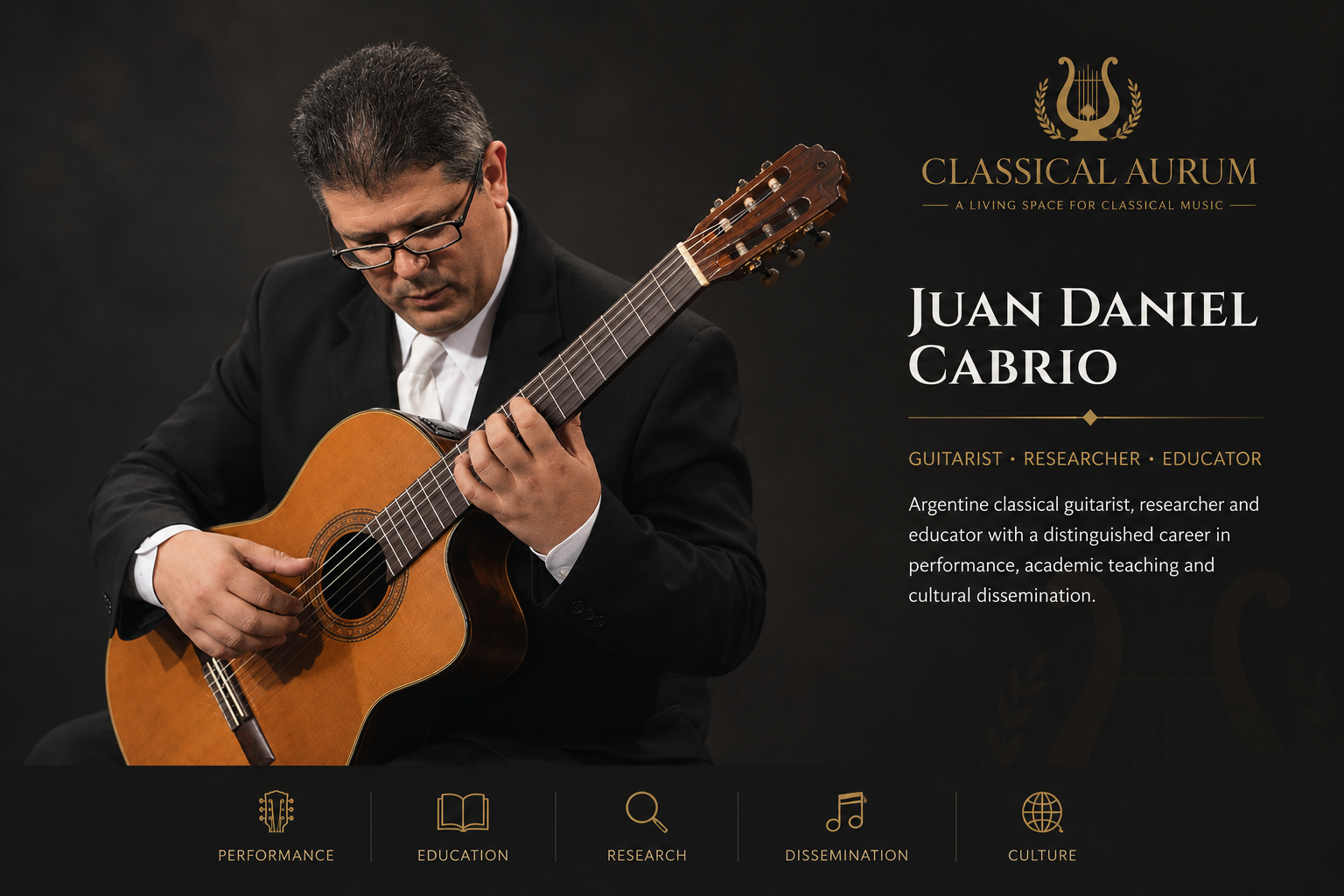
Juan Daniel Cabrio
Argentine Classical Guitarist · Researcher · Educator
Juan Daniel Cabrio is an Argentine classical guitarist, researcher and educator. Founder of Classical Aurum, he shares educational and cultural content about classical music, composers, instruments, repertoire, music history and performance practice.
View full biography