
From Sacred Chant to Secular Sound
The Spiritual Foundations of Western Music
Western classical music began not in concert halls but in sacred spaces. Long before symphonies and sonatas, music existed primarily as a spiritual vehicle. In medieval Europe, chant was not entertainment. It was devotion. It was prayer sung aloud.
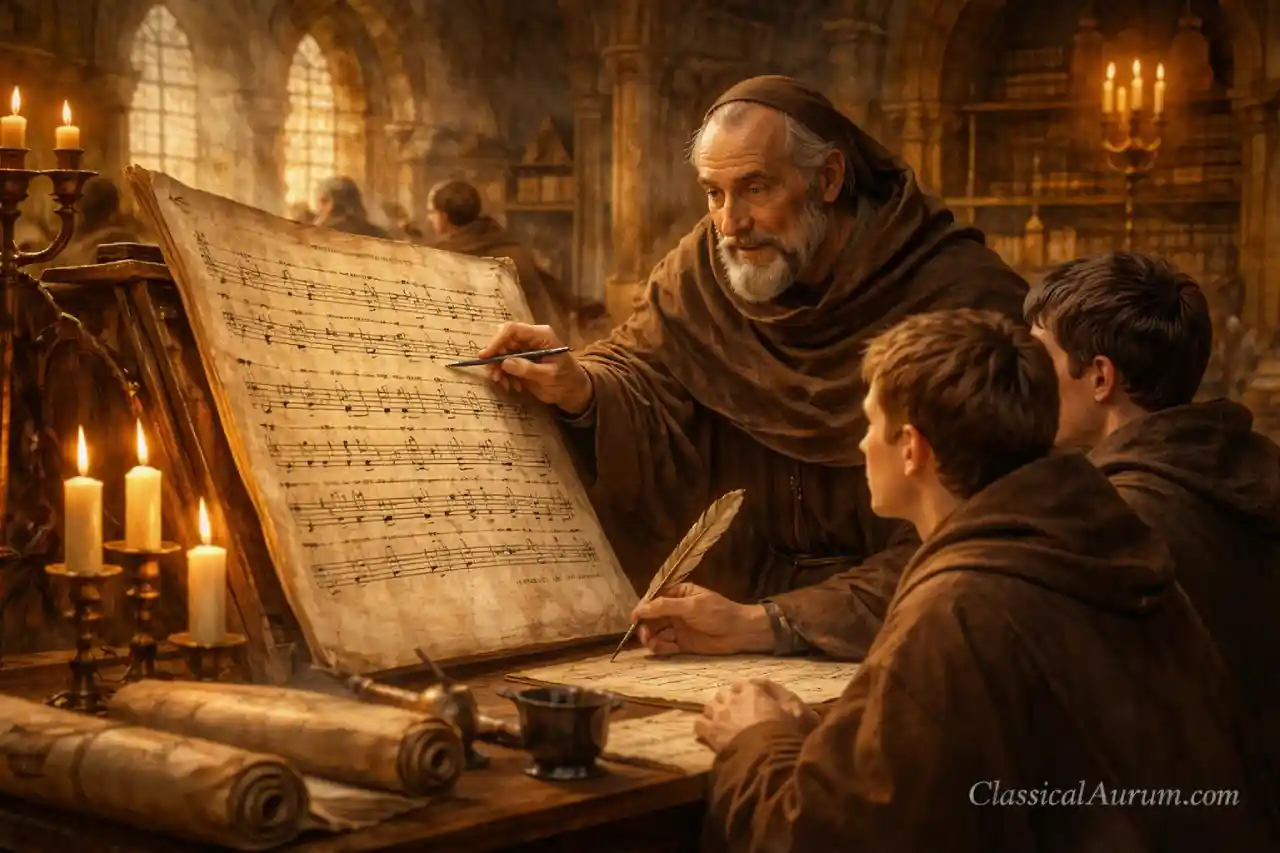
The early Christian Church shaped the musical language of Europe through liturgical chant. The most influential tradition, commonly known as Gregorian chant, developed between the 8th and 9th centuries. These monophonic melodies were sung in Latin and followed free rhythm aligned with sacred texts. There was no harmony. There was no accompaniment. The human voice alone carried divine meaning.
This sacred tradition created the foundation of Western notation. Early neumes—primitive notational symbols—allowed melodies to be remembered and transmitted. Over time, this evolved into the staff notation system that still defines classical music today.
For Classical Aurum readers, this origin matters deeply. Every fugue by Bach and every symphony by Beethoven ultimately traces its lineage to the spiritual resonance of chant. The sacred sound shaped musical structure, tonal organization, and aesthetic philosophy.
Related: Gregorian Chant Explained
Music, in its earliest Western form, was inseparable from faith. But history would gradually shift its purpose.
Related: Medieval Music and the Birth of Western Notation
From Monophony to Polyphony: The Expansion of Sacred Expression
By the 12th century, sacred music began to grow more complex. The development of polyphony—multiple independent melodic lines sounding simultaneously—transformed church music. Composers at Notre Dame Cathedral in Paris experimented with adding voices above chant melodies.
This innovation was revolutionary. Music was no longer a single line of devotion. It became architectural. ecame layered. It became intellectually expressive.
Composers such as Léonin and Pérotin expanded sacred music into grand sonic structures. Mass and the Motet emerged as central forms. The human voice remained central, but harmony slowly entered the spiritual realm.
The Renaissance period intensified this development. Masters like Josquin des Prez and Palestrina refined polyphony into a balanced and luminous art. Sacred music reached extraordinary expressive depth while maintaining devotional clarity.
However, something subtle was changing. Music was becoming art in its own right. While still sacred in purpose, composers began exploring beauty, proportion, and emotional color beyond purely liturgical needs.
The seeds of secular transformation were already present.
The Rise of Secular Song in Medieval Europe
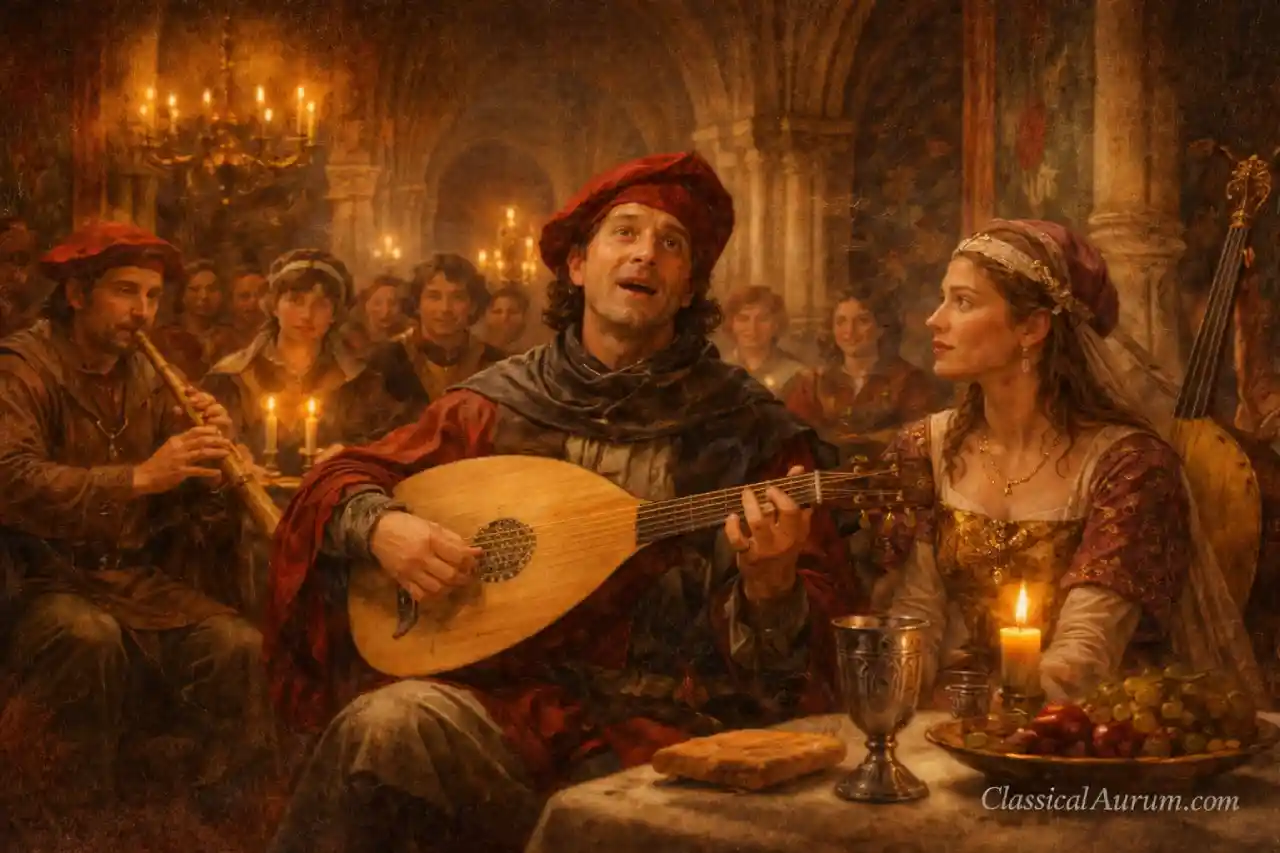
Parallel to sacred developments, secular music quietly flourished outside the Church. Traveling troubadours and trouvères composed songs about love, chivalry, and courtly life. Unlike chant, these pieces were often accompanied by instruments.
This marked a cultural shift. Music was no longer confined to monasteries and cathedrals. It entered courts and marketplaces. It reflected human emotion rather than divine mystery.
Secular themes introduced narrative storytelling. Lyrics explored longing, nature, heroism, and earthly beauty. Rhythm became more structured. Dance forms began to emerge.
The Ars Nova movement in the 14th century further expanded rhythmic freedom. Composers such as Guillaume de Machaut integrated both sacred and secular styles, blending complexity with poetic sensitivity.
For the first time in Western history, music openly celebrated the human experience. This did not replace sacred music, but it diversified musical purpose.
Western music was learning to speak both to heaven and to humanity.
Humanism and the Renaissance Transformation
The Renaissance brought a profound philosophical shift. Humanism placed human experience at the center of intellectual life. Music reflected this transformation.
Sacred music continued to thrive, but secular genres gained prestige. The madrigal became one of the most expressive forms of the 16th century. Composers used word painting to illustrate emotional nuance in text.
Music began to serve social and artistic functions beyond worship. It became entertainment in noble courts. It became an expression of personal identity.
Instrumental music also gained independence. Previously subordinate to vocal traditions, instruments such as the lute, viola da gamba, and early keyboard instruments developed their own repertoire.
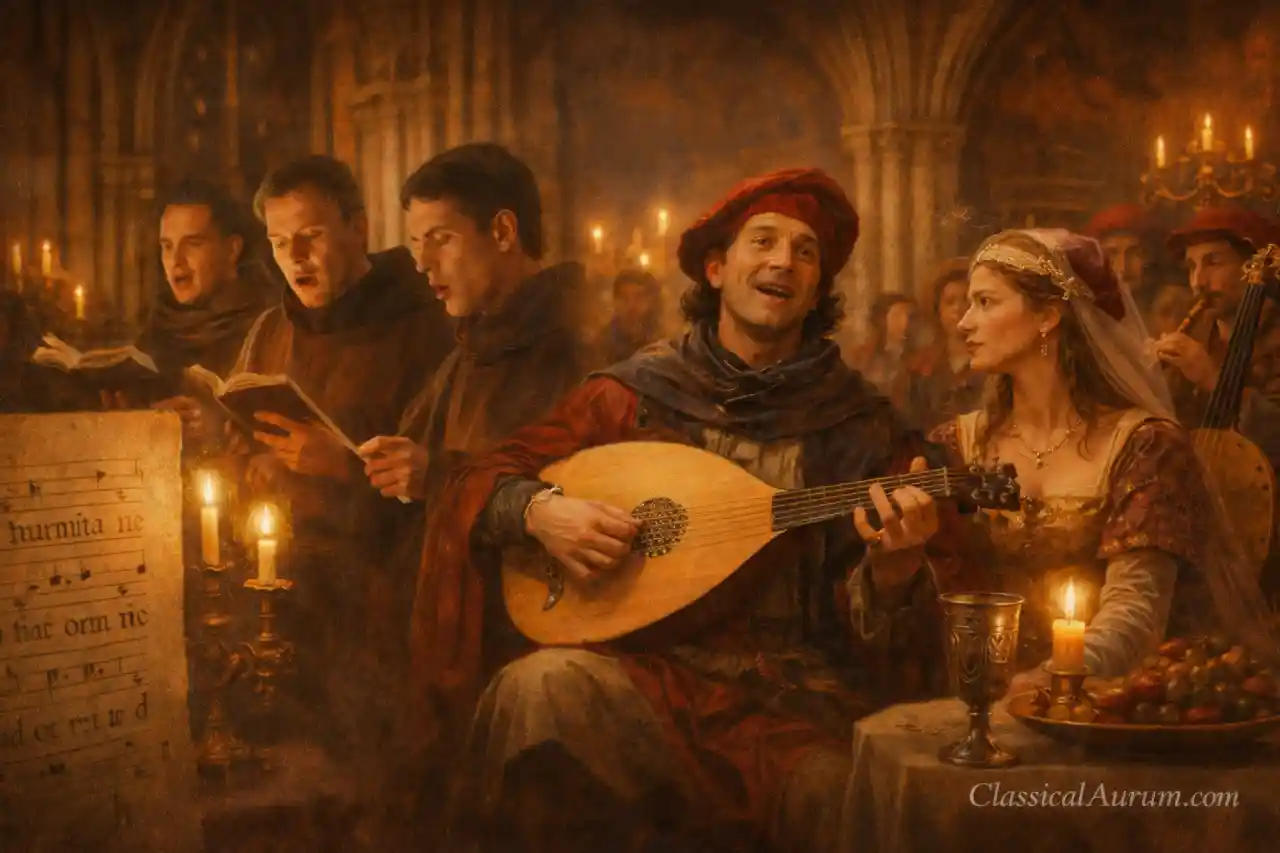
This era blurred boundaries. Sacred composers wrote secular works. Secular composers contributed to sacred music. Stylistic techniques crossed categories freely.
At Classical Aurum, this period represents a pivotal turning point. The transition from sacred chant to secular sound was not abrupt. It was evolutionary. Renaissance culture allowed music to expand its emotional vocabulary while preserving structural foundations inherited from liturgical tradition.
The Birth of Opera and the Triumph of Secular Drama
In the late 16th and early 17th centuries, a radical innovation emerged: opera. Originating in Florence, opera sought to revive ancient Greek drama through music.
This was a decisive step into secular expression. Opera dramatized mythological and historical narratives. It celebrated theatrical spectacle. It elevated human emotion to operatic intensity.
Composers like Monteverdi fused sacred contrapuntal mastery with dramatic storytelling. The recitative style imitated speech, while arias allowed emotional reflection.
Opera marked the full arrival of secular sound as a dominant artistic force. Music became public performance. It required theaters, orchestras, and professional singers.
Yet sacred influence remained. Harmonic language, polyphonic techniques, and modal traditions rooted in chant still shaped composition.
The Baroque era further amplified this transformation. Instrumental forms such as the concerto and sonata flourished. Court patronage replaced ecclesiastical dominance in many regions.
Music had shifted from monastery to court, from liturgy to stage.
Sacred and Secular Coexistence in the Baroque Era
Despite the rise of secular genres, sacred music did not disappear. Instead, it evolved. Composers such as Bach demonstrated that sacred and secular styles could coexist in profound balance.
The oratorio emerged as a sacred counterpart to opera. Without staging or costumes, it presented biblical narratives in concert form. Handel’s Messiah exemplifies this synthesis of theatrical drama and sacred devotion.
Meanwhile, instrumental music flourished independently. The fugue, concerto grosso, and suite became central forms.
The Baroque era illustrates a mature dialogue between sacred origins and secular innovation. Tonality replaced modal systems. Functional harmony became standardized.
Western music had completed its transformation into an art form capable of expressing both divine transcendence and human passion.
For Classical Aurum readers, this period reveals continuity rather than rupture. The sacred chant tradition still resonated within harmonic progressions and contrapuntal structures.
Sacred foundation remained embedded in secular brilliance.
The Enlightenment and the Public Concert Culture
18th century introduced another major shift: public concert life. Music moved beyond court and church patronage. Urban audiences attended ticketed performances.
This democratization reinforced secular expansion. Symphonies, chamber music, and sonatas became central genres. Composers like Haydn and Mozart refined clarity, balance, and formal elegance.
Sacred music persisted, but it no longer defined the musical mainstream. The concert hall replaced the cathedral as the primary acoustic space of artistic innovation.
Music became a profession. Composers wrote for public demand. Emotional expression widened further in the Romantic era.
Beethoven’s symphonies elevated personal expression to monumental scale. Later composers explored nationalism, individual psychology, and dramatic storytelling.
The journey from sacred chant to secular sound had reached full maturity.
Romanticism and the Inner Sacred
Ironically, Romantic composers often reintroduced spiritual depth into secular music. Though not strictly liturgical, their works carried metaphysical intensity.
Symphonies became philosophical journeys. Operas addressed existential themes. Even instrumental works conveyed transcendence.
Composers such as Brahms and Bruckner composed both sacred and secular masterpieces, blurring distinctions once again.
By this stage, sacred and secular categories had intertwined so thoroughly that separation became symbolic rather than structural.
The sacred was no longer confined to religious context. It became an inner experience expressed through orchestral color and harmonic depth.
Western music had absorbed its spiritual heritage into artistic autonomy.
Modern Perspectives: From Sacred Roots to Contemporary Sound
In the 20th and 21st centuries, composers revisited chant traditions in new ways. Modal harmony resurfaced. Minimalism drew on repetitive spiritual resonance.
Contemporary composers incorporate ancient chant into film scores and modern choral works. The past continues to inform the present.
Sacred music still exists within liturgical settings. Secular music dominates global culture. Yet the structural DNA remains traceable to medieval chant.
For Classical Aurum, this narrative underscores continuity. The evolution from sacred chant to secular sound reflects Western civilization itself: from communal devotion to individual artistic exploration.
Music did not abandon the sacred. It transformed it.
Conclusion: The Enduring Dialogue Between Heaven and Humanity
The journey from sacred chant to secular sound is not merely historical. It is philosophical. It represents humanity’s evolving relationship with transcendence, art, and identity.
Western classical music emerged from spiritual necessity. It matured into expressive autonomy. Along the way, it developed notation, harmony, form, and emotional depth.
Sacred origins provided structure. Secular expansion provided diversity.
Today’s concert repertoire carries echoes of monastic chant within symphonic grandeur. Opera’s drama contains contrapuntal roots shaped by cathedral acoustics.
Understanding this transformation enriches listening. It deepens interpretation. It connects modern audiences to centuries of cultural evolution.
From monastery to opera house, from chant to symphony, Western music continues to balance the sacred and the secular in a timeless dialogue.
And that dialogue remains at the heart of ClassicalAurum.com.