
From Monteverdi to Wagner
Opera remains one of the most powerful artistic creations in Western civilization. It combines music, poetry, theater, visual arts, philosophy, and human emotion into a single experience capable of transcending centuries. The journey from Claudio Monteverdi to Richard Wagner represents not only the evolution of opera itself, but also the transformation of European culture, aesthetics, and artistic ambition.
Between the early seventeenth century and the late nineteenth century, opera evolved from intimate court entertainment into monumental musical drama capable of reshaping artistic history. Composers continuously redefined the relationship between orchestra, voice, drama, and stagecraft. What began as an attempt to revive ancient Greek tragedy eventually became one of the most sophisticated artistic forms ever created.
For readers of ClassicalAurum.com, this journey reveals how classical music developed its dramatic language through centuries of experimentation and innovation.
The Birth of Opera and Monteverdi’s Revolution
At the end of the Renaissance, intellectual circles in Florence became fascinated with recreating the emotional power of ancient Greek theater. These scholars believed Greek tragedies were originally sung rather than spoken. Their experiments gave birth to the earliest forms of opera around 1600.
Related: How Opera Tells Stories Through Music
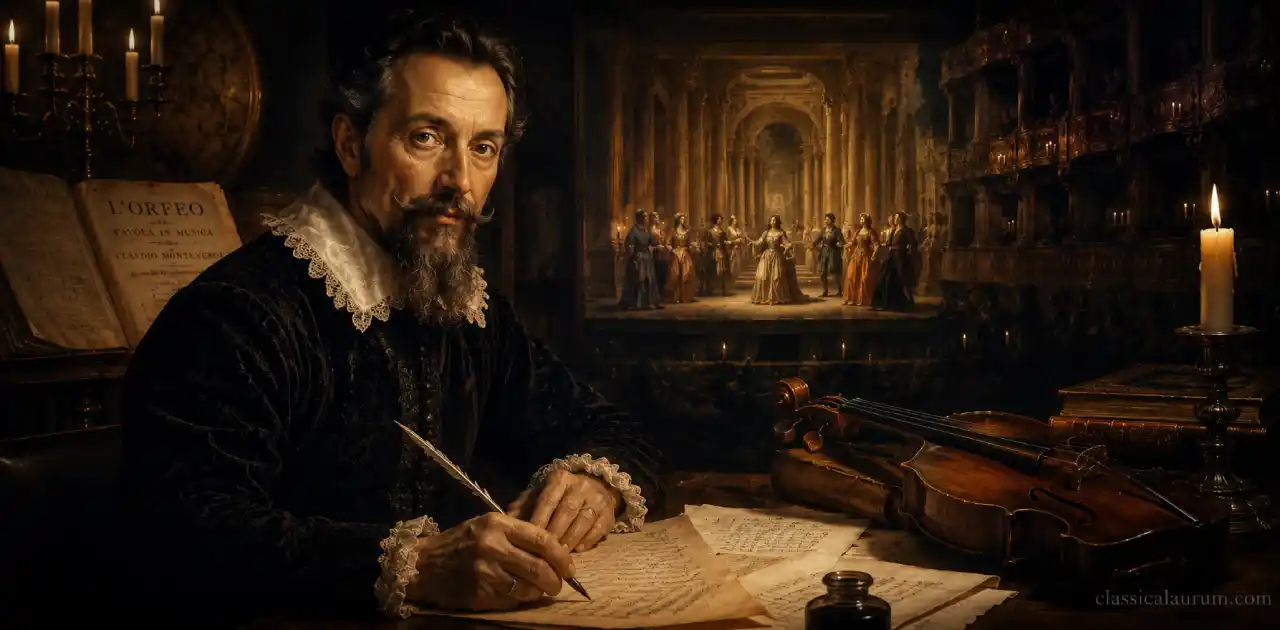
Among the first great innovators was Claudio Monteverdi, whose masterpiece L’Orfeo transformed opera into a serious artistic form. Unlike earlier attempts, Monteverdi understood how music could intensify dramatic emotion. His orchestration, harmonic language, and expressive vocal writing created psychological depth that audiences had never experienced before.
Monteverdi’s achievement was revolutionary because he treated music as a dramatic force rather than decorative entertainment. He used contrasts between instrumental colors, vocal textures, and harmonic tension to portray grief, hope, fear, and transcendence.
Related: Opera as a Total Art Form
In works such as L’incoronazione di Poppea, Monteverdi also introduced remarkable realism into opera. Characters displayed political ambition, jealousy, sensuality, and vulnerability. Human emotion became central to musical storytelling.
This early Baroque period established several essential operatic foundations:
- Recitative for narrative progression
- Arias for emotional expression
- Instrumental overtures
- Dramatic orchestral support
- Vocal characterization
Monteverdi demonstrated that opera could become a profound artistic medium rather than a courtly curiosity.
The Expansion of Baroque Opera Across Europe
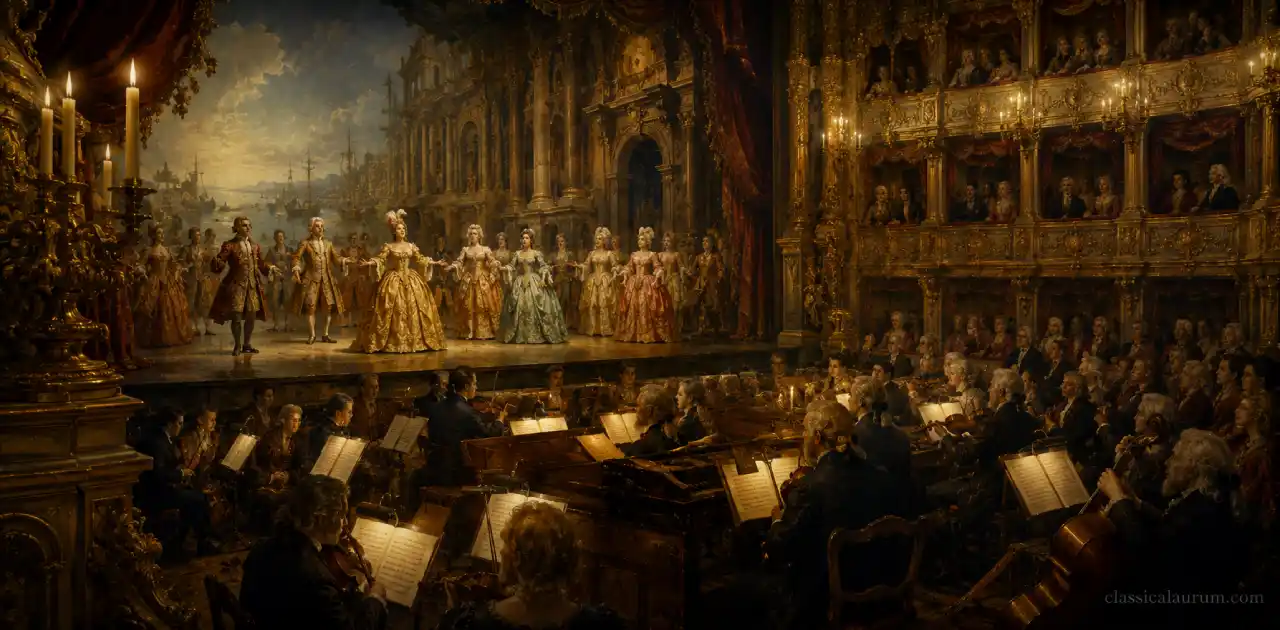
After Monteverdi, opera spread rapidly throughout Europe. Italy became the center of operatic innovation, but regional traditions soon emerged in France, Germany, and England.
The Baroque era emphasized ornamentation, vocal virtuosity, and theatrical grandeur. Opera houses began attracting public audiences rather than exclusively aristocratic patrons. This transformation helped opera evolve into a major cultural institution.
Italian composers such as Alessandro Scarlatti refined the structure of opera seria. These works focused on heroic subjects from mythology and ancient history. The da capo aria became dominant, allowing singers to display extraordinary technical skill.
At the same time, France developed its own operatic tradition through Jean-Baptiste Lully and later Jean-Philippe Rameau. French opera emphasized dance, visual spectacle, and elegant declamation. Unlike Italian opera, which prioritized vocal brilliance, French composers sought dramatic balance between music and theatrical presentation.
England produced one of its greatest operatic voices through Henry Purcell. His masterpiece Dido and Aeneas demonstrated how English language and musical expression could merge into emotionally devastating drama.
The Baroque era also saw the rise of legendary castrato singers whose astonishing vocal abilities captivated Europe. Opera became increasingly associated with spectacle, celebrity culture, and elaborate productions.
Yet beneath the ornamentation, deeper artistic developments were occurring. Composers learned how orchestras could reinforce dramatic atmosphere. Harmonic language became more expressive. Emotional complexity expanded dramatically.
Opera was no longer simply entertainment. It had become a mirror of European society and imagination.
Mozart and the Perfection of Classical Opera
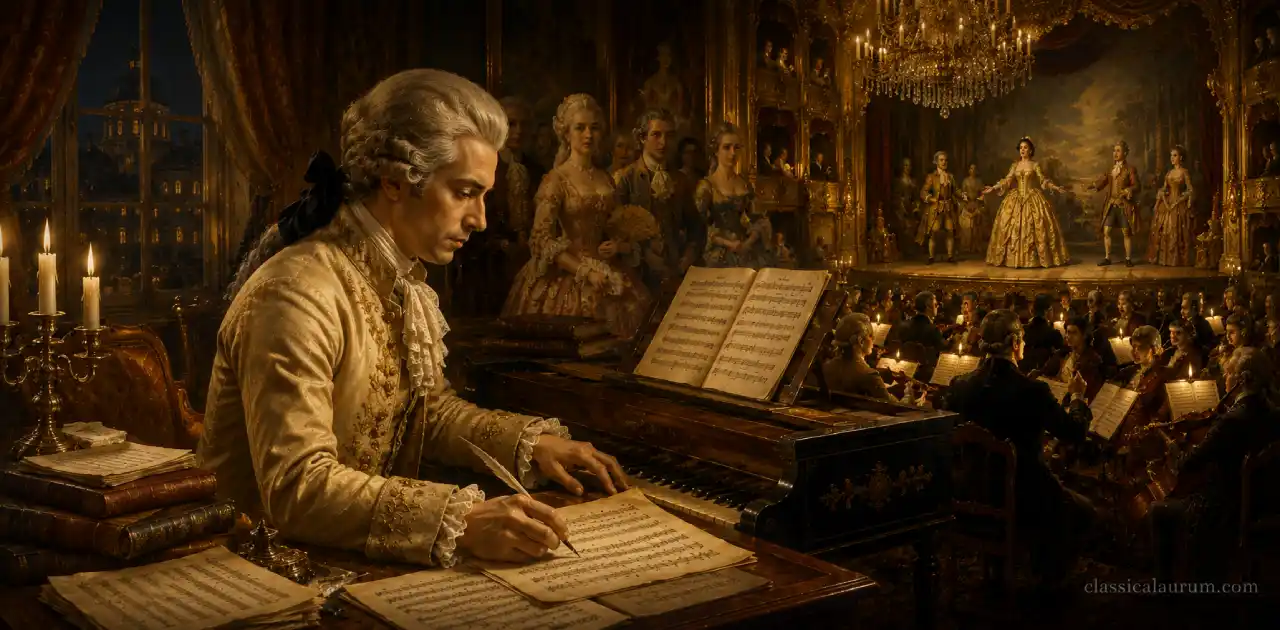
By the late eighteenth century, opera entered a new phase shaped by Enlightenment ideals. Audiences increasingly demanded realism, humanity, and dramatic coherence rather than purely decorative vocal display.
No composer transformed opera more completely during this period than Wolfgang Amadeus Mozart.
Mozart unified music and drama with unprecedented sophistication. In masterpieces such as Le Nozze di Figaro, Don Giovanni, and Die Zauberflöte, every musical element served dramatic purpose.
Unlike many earlier operas, Mozart’s characters felt psychologically authentic. Their music reflected shifting emotions, social tensions, and moral ambiguity. Comedy and tragedy often existed simultaneously.
In Don Giovanni, for example, Mozart combined supernatural terror, aristocratic elegance, and dark humor within a single dramatic structure. His orchestration deepened emotional nuance while ensembles allowed multiple characters to express conflicting emotions simultaneously.
Mozart also revolutionized operatic pacing. Instead of separating drama and music into rigid forms, he created continuous dramatic momentum. His finales became intricate emotional architectures where tension accumulated organically.
The orchestra gained greater importance as well. Rather than merely accompanying singers, instrumental writing actively shaped atmosphere and meaning.
The Enlightenment spirit strongly influenced Mozart’s operas. Themes of social equality, individual freedom, morality, and human complexity emerged repeatedly. In The Marriage of Figaro, class tensions challenged aristocratic privilege in ways that reflected broader European political changes.
Mozart elevated opera into a universal human art form. His balance between intellect and emotion remains unmatched.
Beethoven and the Bridge Toward Romanticism
Although Ludwig van Beethoven composed only one opera, Fidelio, his impact on operatic history was enormous.
Beethoven expanded the emotional and philosophical scope of music. His artistic vision emphasized heroism, individual struggle, and spiritual triumph. These ideas became central to Romantic opera.
Fidelio tells the story of political oppression, sacrifice, and liberation. Unlike many earlier operas focused on mythology or aristocratic intrigue, Beethoven’s work carried profound ethical and humanitarian themes.
Musically, Beethoven intensified orchestral power and dramatic tension. His symphonic thinking influenced future composers who sought larger emotional and structural ambitions in opera.
The orchestra increasingly became an equal dramatic participant rather than accompaniment. Harmonic development grew more daring. Emotional contrasts became more extreme.
Beethoven’s influence extended far beyond opera itself. His symphonies reshaped nineteenth-century musical aesthetics and inspired composers to pursue deeper expressive possibilities.
As Europe entered the Romantic era, opera absorbed new ideals:
- Emotional intensity
- National identity
- Historical subjects
- Individual passion
- Supernatural themes
- Expanded orchestration
Opera would soon become grander, darker, and more psychologically ambitious.
The Rise of Romantic Opera and Verdi’s Dramatic Power
The nineteenth century witnessed an extraordinary expansion of opera across Europe. Opera houses became symbols of national culture and artistic prestige.
In Italy, Giuseppe Verdi emerged as one of history’s greatest operatic dramatists. His works combined unforgettable melody with profound emotional realism.
Verdi understood the human voice instinctively. His operas gave singers opportunities for expressive power while maintaining dramatic coherence. In works such as Rigoletto, La Traviata, and Otello, music became inseparable from psychological storytelling.
Unlike earlier traditions focused primarily on vocal virtuosity, Verdi emphasized dramatic truth. Characters suffered, loved, betrayed, and sacrificed themselves with visceral emotional immediacy.
La Traviata was especially revolutionary because it portrayed contemporary society rather than distant mythological subjects. Audiences encountered realistic emotional conflict and social hypocrisy on stage.
Verdi also refined orchestral writing. Although the voice remained central, the orchestra increasingly shaped dramatic atmosphere and tension. His later operas reveal remarkable sophistication in thematic development and structural unity.
At the same time, Romantic opera expanded in other countries:
- In Germany, Carl Maria von Weber explored supernatural themes and national folklore.
- In France, grand opera emphasized monumental spectacle and historical narratives.
- In Russia, composers such as Glinka laid foundations for national operatic traditions.
Opera became an arena where nations expressed cultural identity and historical imagination.
The Romantic era transformed opera into a vast emotional and theatrical universe.
Wagner and the Reinvention of Musical Drama
No composer changed opera more radically than Richard Wagner.
Wagner rejected many traditional operatic conventions. He believed opera should become a total artwork combining poetry, music, philosophy, mythology, architecture, and visual design into unified dramatic experience.
His concept of the Gesamtkunstwerk, or “total work of art,” fundamentally reshaped operatic history.
Wagner eliminated clear separation between recitative and aria. Instead, music flowed continuously. Orchestras became immense expressive forces capable of psychological commentary and symbolic meaning.
One of Wagner’s greatest innovations was the use of leitmotifs — recurring musical ideas associated with characters, emotions, objects, or philosophical concepts. These motifs created deep structural and psychological coherence.
In monumental works such as Tristan und Isolde, Der Ring des Nibelungen, and Parsifal, Wagner expanded harmonic language to unprecedented levels. His chromaticism profoundly influenced the future of Western music.
The famous “Tristan chord” symbolized unresolved emotional longing and opened pathways toward modern musical experimentation.
Wagner also transformed stage production itself. He designed the Bayreuth Festspielhaus specifically to realize his artistic vision. The hidden orchestra pit, darkened auditorium, and immersive staging techniques changed theatrical experience permanently.
His operas explored mythology, redemption, power, love, sacrifice, and existential struggle on enormous philosophical scales.
While controversial both artistically and politically, Wagner undeniably altered the trajectory of music history. Without Wagner, later composers such as Mahler, Strauss, Debussy, and even early modernists would have sounded profoundly different.
Opera after Wagner could never return to its earlier form.
From Monteverdi to Wagner: The Transformation of Western Art
The journey from Monteverdi to Wagner spans nearly three centuries of artistic evolution. During this period, opera transformed from intimate court entertainment into monumental philosophical drama.
Several major developments shaped this transformation:
- The orchestra evolved from simple accompaniment into dramatic narrator.
- Vocal writing moved from ornamentation toward psychological realism.
- Stagecraft became increasingly immersive and technologically ambitious.
- Harmonic language expanded dramatically.
- Opera absorbed political, philosophical, and national ideas.
Monteverdi established opera’s emotional foundations. Mozart perfected its balance between humanity and musical sophistication. Verdi intensified dramatic realism. Wagner reinvented the entire concept of musical theater.
Each composer reflected broader historical currents:
- The Renaissance search for classical ideals
- Baroque fascination with spectacle
- Enlightenment humanism
- Romantic emotional intensity
- Industrial-era artistic ambition
Opera became both artistic expression and cultural mirror.
Even today, modern film music, theater, and multimedia storytelling owe enormous debts to operatic traditions developed across these centuries. Wagnerian leitmotifs appear throughout cinematic scores. Monteverdi’s emotional realism continues influencing vocal drama. Mozart’s psychological characterization remains timeless.
Opera survives because it addresses universal human experiences through music’s unique emotional power.
Why This Evolution Still Matters Today
For modern audiences, exploring the evolution from Monteverdi to Wagner offers far more than historical knowledge. It reveals how art evolves alongside civilization itself.
Opera teaches listeners how societies understood love, death, politics, spirituality, and identity across generations. Through music, audiences encounter emotional worlds that remain profoundly relevant.
The evolution of opera also demonstrates the importance of artistic innovation. Every major composer challenged conventions inherited from previous generations. Without experimentation, opera would never have developed beyond its earliest forms.
Today, opera companies continue reinterpreting classic works for contemporary audiences. Directors experiment with staging, technology, and modern symbolism while preserving musical integrity.
Streaming platforms and digital archives have also made opera more accessible globally than ever before. New listeners can experience performances once limited to elite cultural institutions.
For ClassicalAurum.com readers, studying this operatic journey provides essential understanding of Western classical music’s broader evolution. It connects vocal art, orchestral development, dramatic storytelling, philosophy, and cultural history into one extraordinary narrative.
From Monteverdi’s pioneering emotional expression to Wagner’s monumental musical universes, opera remains one of humanity’s most ambitious artistic achievements.
Its power endures because it speaks simultaneously to intellect, imagination, and emotion — a timeless fusion of sound and human experience.
About the Author
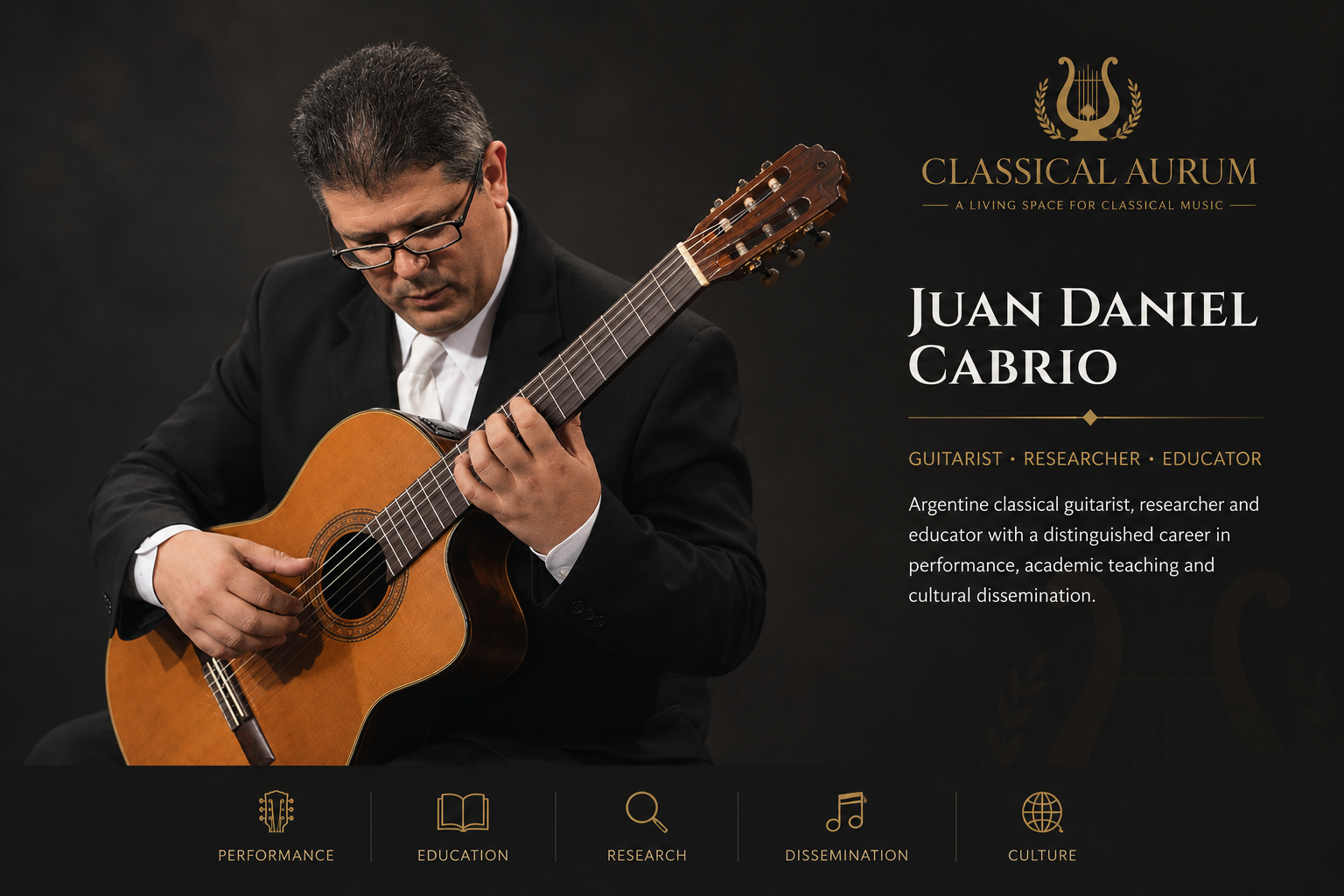
Juan Daniel Cabrio
Argentine Classical Guitarist · Researcher · Educator
Juan Daniel Cabrio is an Argentine classical guitarist, researcher and educator. Founder of Classical Aurum, he shares educational and cultural content about classical music, composers, instruments, repertoire, music history and performance practice.
View full biography