
Opera as a Total Art Form
Opera remains one of the most ambitious artistic creations in human history. Unlike many other forms of performance, opera merges music, literature, theater, architecture, dance, painting and visual symbolism into a single expressive experience. This combination transformed opera into what many scholars describe as a “total art form.”
For centuries, composers, librettists and stage designers attempted to create immersive worlds capable of moving audiences emotionally, intellectually and spiritually. Opera became more than entertainment. It evolved into a reflection of civilizations, political movements, technological innovation and philosophical ideals.
At its highest level, opera is not merely sung drama. It is the synthesis of artistic disciplines working together toward one emotional goal.
Related: How Opera Tells Stories Through Music
The Origins of Opera and the Search for Artistic Unity
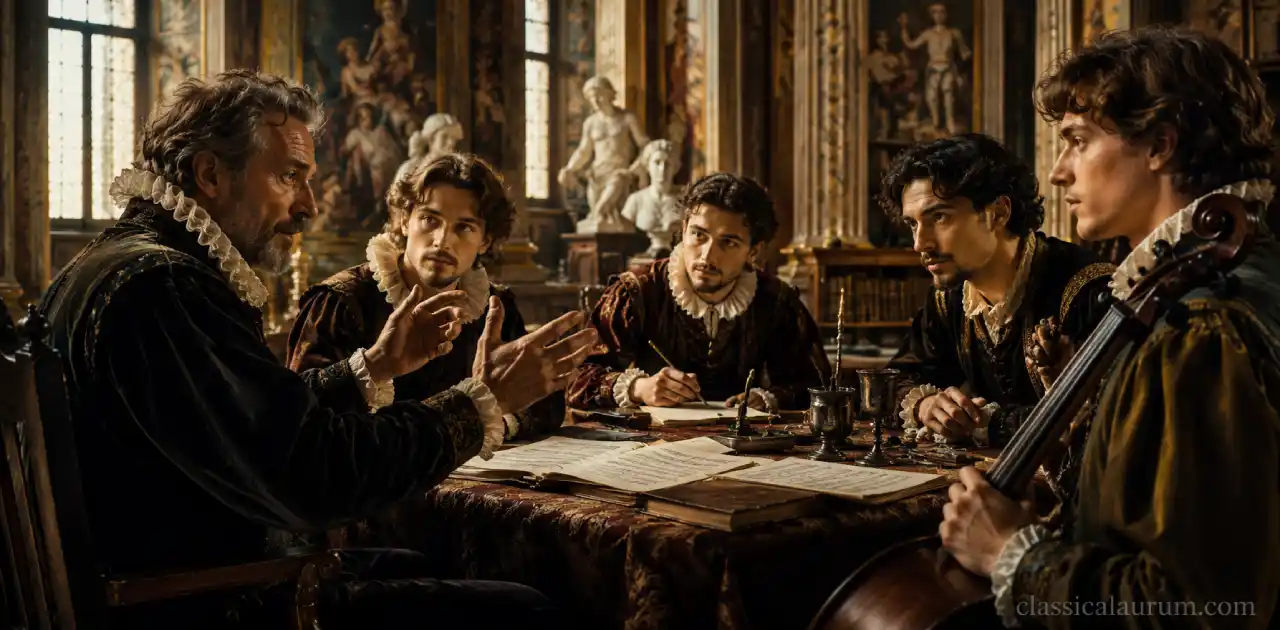
Opera emerged in late Renaissance Italy during the late sixteenth century. Intellectual circles in Florence believed ancient Greek drama had once united poetry and music into a powerful emotional medium. These thinkers wanted to revive that tradition.
The result was an experimental form that combined spoken narrative, instrumental accompaniment and theatrical staging. Early operas by composers such as Claudio Monteverdi quickly demonstrated that music could intensify dramatic storytelling in unprecedented ways.
Related: From Monteverdi to Wagner
Monteverdi’s works revealed how melody and harmony could express emotions beyond ordinary speech. Audiences experienced grief, passion, fear and triumph through musical language.
Opera rapidly expanded across Europe. Different nations adapted the form according to their cultural traditions:
- Italy emphasized vocal virtuosity.
- France focused on ballet and court spectacle.
- Germany explored philosophical depth.
- England integrated dramatic realism.
From the beginning, opera demanded collaboration between multiple artistic disciplines. Composers worked alongside poets, architects, painters, costume designers and conductors. This cooperative structure naturally pushed opera toward becoming a complete artistic universe.
Music as the Emotional Core of Opera
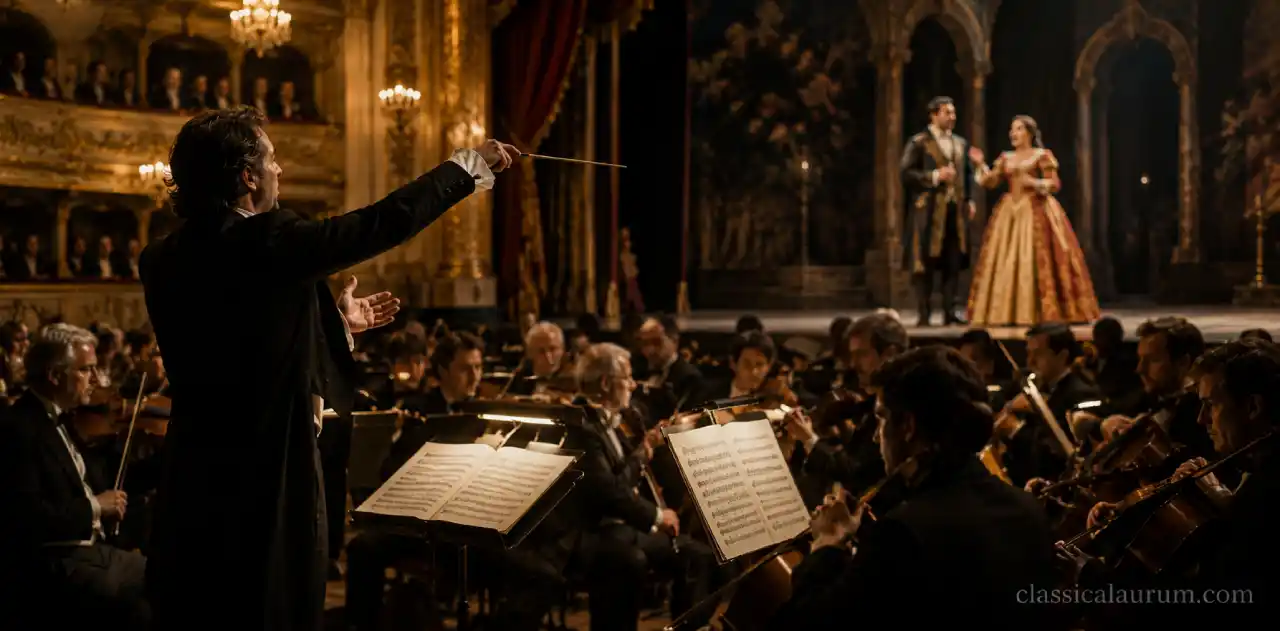
Music serves as the emotional foundation of opera. Without orchestral color and vocal expression, the dramatic experience would lose much of its psychological power.
Opera composers developed sophisticated techniques to portray inner emotional states. Through harmonic tension, orchestral texture and melodic structure, they created emotional landscapes capable of communicating complex feelings instantly.
Composers such as Wolfgang Amadeus Mozart refined the balance between musical beauty and dramatic realism. In operas like Don Giovanni and The Magic Flute, music becomes inseparable from character psychology.
Later composers expanded the emotional range even further:
- Giuseppe Verdi emphasized political intensity and human conflict.
- Giacomo Puccini focused on emotional realism and lyrical intimacy.
- Richard Strauss explored psychological complexity with massive orchestral textures.
Opera music differs fundamentally from symphonic music because every note supports dramatic action. The orchestra does not merely accompany singers. It comments on the story, predicts emotional developments and reveals hidden psychological tensions.
This relationship between sound and narrative helped opera become one of the most immersive forms of artistic storytelling ever created.
The Power of the Human Voice in Opera
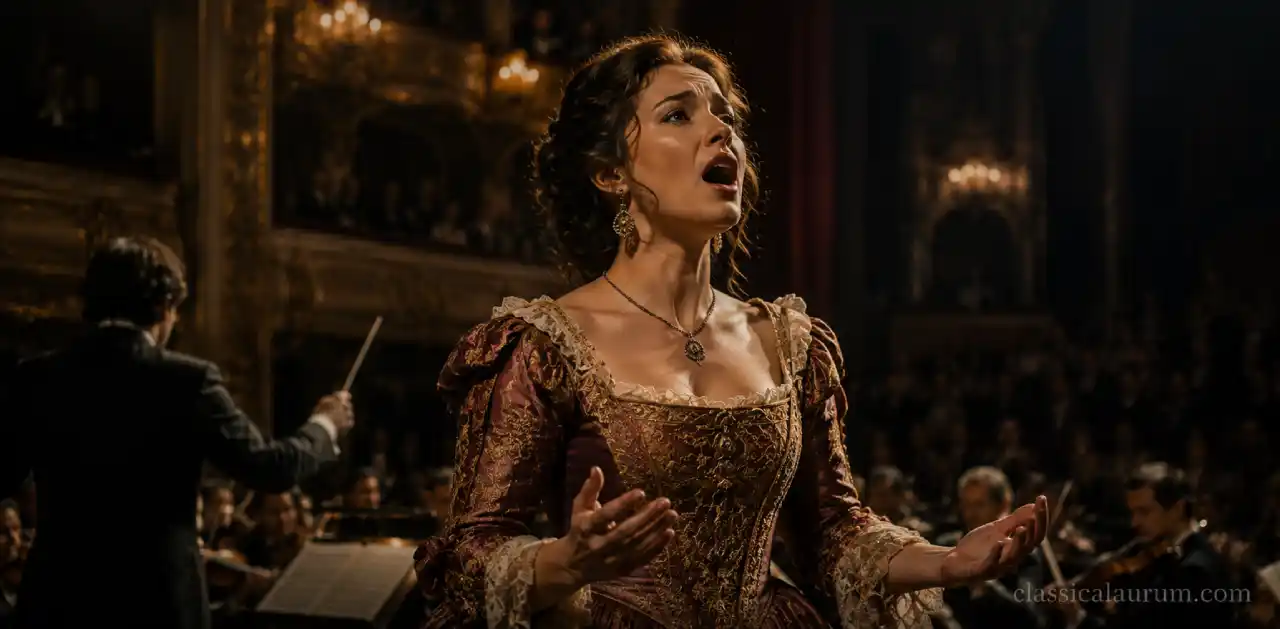
The human voice occupies a central place within opera’s artistic structure. Opera singers must combine technical mastery with dramatic interpretation.
Unlike spoken theater, opera transforms language into heightened emotional expression. A single aria can communicate emotional truths more powerfully than pages of dialogue.
Different vocal categories developed to represent distinct dramatic archetypes:
- Sopranos often portray innocence, tragedy or heroism.
- Tenors frequently embody passion and romantic struggle.
- Baritones and basses may symbolize authority, wisdom or menace.
Opera audiences historically admired not only vocal beauty but also expressive intensity. Great singers became cultural icons because they could merge technical control with emotional authenticity.
The physical demands of opera are extraordinary. Singers must project their voices over full orchestras without microphones while maintaining dramatic presence for hours.
This fusion of physical endurance, musical intelligence and theatrical emotion reinforces opera’s identity as a complete art form. Every gesture, breath and phrase contributes to the overall artistic vision.
Stage Design and Visual Spectacle in Opera
Opera has always relied heavily on visual storytelling. Stage design transforms musical narratives into living worlds.
From the grand Baroque theaters of Europe to modern minimalist productions, visual aesthetics shape the audience’s emotional perception of opera.
Historic productions often featured:
- Elaborate painted scenery.
- Mechanical stage machinery.
- Monumental costumes.
- Complex lighting systems.
Opera houses themselves became architectural masterpieces. Venues such as Teatro alla Scala, Vienna State Opera and Palais Garnier demonstrate how architecture became part of the operatic experience.
Visual symbolism also plays a major role in modern productions. Directors increasingly reinterpret classic works through contemporary political or psychological perspectives.
Advanced technologies transformed staging possibilities even further:
- Digital projections.
- Cinematic lighting systems.
- Automated scenery.
- Immersive visual effects.
Despite these innovations, the goal remains the same: to support the emotional and dramatic impact of music.
Opera succeeds when visual elements enhance rather than overshadow the musical narrative.
Richard Wagner and the Idea of Gesamtkunstwerk
No discussion of opera as a total art form is complete without Richard Wagner.
Wagner introduced the concept of Gesamtkunstwerk, often translated as “total work of art.” He believed opera should unify all artistic disciplines into a single coherent experience.
For Wagner, music, poetry, acting, stage design and mythology had to function together rather than independently. Every element needed to serve the dramatic vision.
His monumental operatic cycles, especially Der Ring des Nibelungen, transformed the history of musical theater.
Wagner revolutionized opera through several innovations:
- Continuous musical structure instead of separated numbers.
- Leitmotifs associated with characters and ideas.
- Expanded orchestral dimensions.
- Integrated visual symbolism.
- Darkened theaters to focus audience attention.
He even designed his own theater, the Bayreuth Festspielhaus, to realize his artistic ideals.
Wagner’s influence extended far beyond opera. His ideas shaped cinema, theater, visual arts and modern multimedia storytelling.
Today, many large-scale artistic productions still reflect Wagner’s vision of unified artistic immersion.
Opera and Cultural Identity
Opera often reflects the political and cultural tensions of its era. Throughout history, composers used opera to explore nationalism, revolution, religion and social transformation.
In nineteenth-century Italy, Verdi’s operas became symbols of national identity during the movement toward unification. Audiences interpreted his works as expressions of political resistance and patriotic aspiration.
In Russia, composers integrated folk traditions into grand operatic narratives. In France, opera reflected imperial grandeur and artistic sophistication.
Opera also became a mirror of changing social values:
- Gender roles evolved through character representation.
- Political censorship shaped librettos.
- Technological progress influenced staging methods.
- Modern productions challenged historical interpretations.
Because opera integrates multiple artistic languages, it possesses exceptional power to represent collective cultural emotions.
Even today, opera companies frequently reinterpret classic works to address contemporary issues such as migration, environmental crises, identity politics and technological change.
This adaptability explains why opera continues to survive despite predictions of decline.
The Relationship Between Opera and Architecture
Opera houses themselves are part of the total artistic experience. Architecture shapes audience perception before the performance even begins.
Many historic opera houses were designed as symbols of prestige and cultural power. Their interiors combined sculpture, painting, gold decoration and acoustic engineering.
The relationship between architecture and sound remains essential. Opera venues must balance:
- Vocal clarity.
- Orchestral resonance.
- Audience intimacy.
- Visual sightlines.
Acoustics can dramatically influence emotional impact. A perfectly designed opera house allows subtle vocal nuances to reach every listener naturally.
Modern opera architecture continues exploring innovative solutions. Contemporary venues combine advanced acoustic science with modern visual aesthetics.
The building itself becomes an extension of the performance.
This fusion between environment and artistic expression reinforces opera’s unique identity among performing arts.
Technology and the Evolution of Modern Opera
Opera continuously evolves through technology. While rooted in tradition, the art form has embraced innovation throughout its history.
Modern productions increasingly incorporate:
- Digital mapping.
- Artificial intelligence.
- Immersive projections.
- Advanced lighting systems.
- Cinematic stage transitions.
Streaming platforms also transformed accessibility. Prestigious institutions such as The Metropolitan Opera now broadcast productions worldwide.
This digital expansion introduced opera to younger global audiences who may never attend a live performance physically.
Artificial intelligence and virtual reality may shape future operatic experiences even further. Experimental productions already explore interactive staging and hybrid digital environments.
Yet despite technological transformation, opera’s core remains deeply human:
- The human voice.
- Emotional storytelling.
- Live orchestral performance.
- Shared audience experience.
Technology enhances opera when it supports emotional depth rather than replacing artistic authenticity.
Why Opera Still Matters in the Twenty-First Century
Some critics argue opera belongs to the past. However, opera continues attracting audiences because it offers something increasingly rare in modern culture: complete artistic immersion.
Modern entertainment often fragments attention. Opera demands concentration, emotional openness and intellectual engagement.
It rewards audiences with an experience that combines:
- Musical sophistication.
- Dramatic storytelling.
- Visual spectacle.
- Philosophical reflection.
- Human vulnerability.
Opera also preserves centuries of artistic heritage while remaining open to reinterpretation.
Contemporary directors continue discovering new meanings within classical works. Modern composers experiment with electronic sound, multicultural influences and innovative theatrical structures.
Opera survives because it addresses timeless human questions:
- Love.
- Mortality.
- Power.
- Identity.
- Sacrifice.
- Redemption.
These themes remain universal across cultures and generations.
For Classical Aurum readers, opera represents more than historical tradition. It demonstrates how artistic disciplines can unite to create experiences of extraordinary emotional and intellectual depth.
Opera as Humanity’s Ultimate Artistic Synthesis
Opera stands as one of civilization’s most ambitious artistic achievements. Few art forms attempt such a complete integration of human creativity.
Music alone can move audiences deeply. Theater alone can tell powerful stories. Architecture alone can inspire awe. Visual arts alone can shape perception.
Opera combines all these dimensions simultaneously.
Its evolution across centuries reveals humanity’s constant search for artistic unity and emotional transcendence.
From Renaissance Italy to modern digital productions, opera continues redefining what artistic collaboration can achieve. The concept of the total art form remains as relevant today as ever.
In an age dominated by fragmented media and rapid consumption, opera offers something profoundly different: a complete artistic world capable of engaging the senses, emotions and intellect at the same time.
That is why opera endures.
Not merely as entertainment, but as one of the highest expressions of human imagination and cultural memory.
About the Author
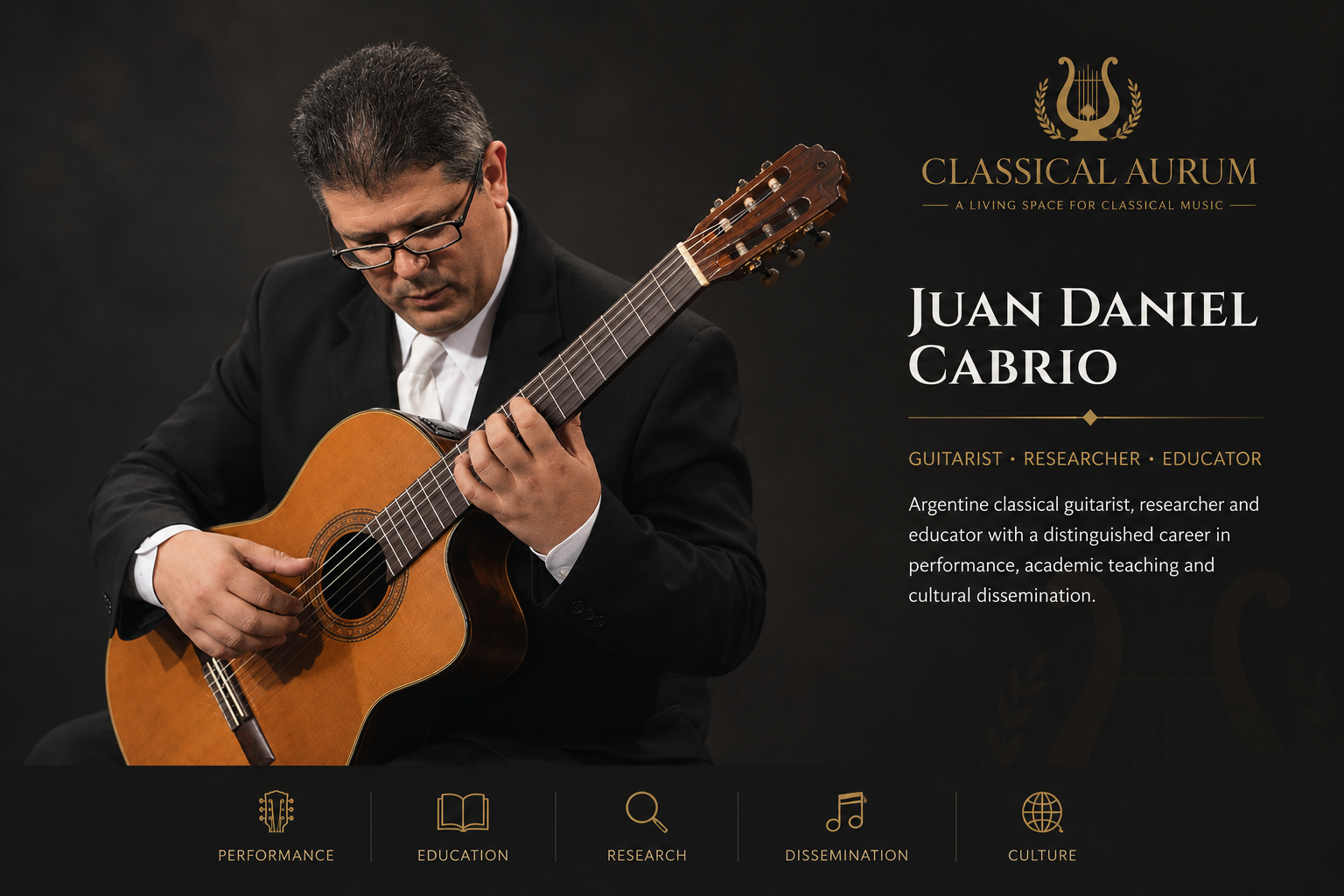
Juan Daniel Cabrio
Argentine Classical Guitarist · Researcher · Educator
Juan Daniel Cabrio is an Argentine classical guitarist, researcher and educator. Founder of Classical Aurum, he shares educational and cultural content about classical music, composers, instruments, repertoire, music history and performance practice.
View full biography