
Why Chamber Music Still Matters
Why Chamber Music Still Matters
Chamber music has survived centuries of political upheaval, technological revolutions, cultural transformations, and changing artistic tastes. In an era dominated by streaming platforms, short-form entertainment, and increasingly fragmented attention spans, some may wonder whether this deeply intimate form of classical music still holds relevance.
Yet chamber music continues to thrive in concert halls, conservatories, churches, universities, festivals, and private salons around the world. More importantly, it still offers something modern culture rarely provides: profound listening, direct human connection, and artistic dialogue without excess.
At a time when many forms of entertainment prioritize speed and spectacle, chamber music remains centered on communication, subtlety, and emotional depth. Its survival is not accidental. It persists because it fulfills a human need that technology alone cannot replace.
For audiences and musicians alike, chamber music continues to represent one of the purest forms of artistic interaction ever created.
The Origins of Chamber Music and Its Lasting Identity
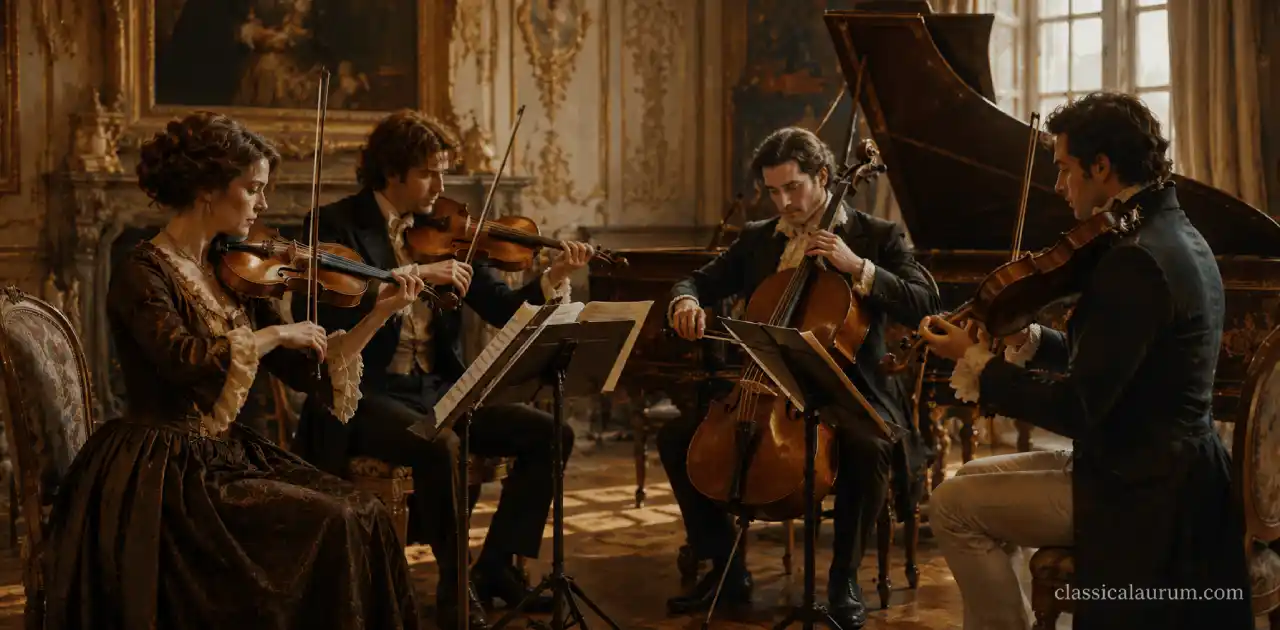
The term “chamber music” originally referred to music written for small rooms or private chambers rather than grand theaters or cathedrals. During the Baroque and Classical periods, composers created works intended for intimate gatherings among aristocrats, intellectuals, and musicians.
Unlike orchestral music, chamber music usually assigns one performer to each musical line. This creates an environment where every voice matters equally. A string quartet, piano trio, or wind quintet functions almost like a conversation among individuals rather than a hierarchy directed by a conductor.
This structure became one of the defining artistic achievements of Western classical music.
Composers such as Joseph Haydn, Wolfgang Amadeus Mozart, Ludwig van Beethoven, and Franz Schubert elevated chamber music into a sophisticated art form capable of expressing philosophical depth, emotional tension, and structural innovation.
Even today, these works remain central to the classical repertoire because they reveal the essence of musical thought with remarkable clarity.
Why Chamber Music Feels More Human
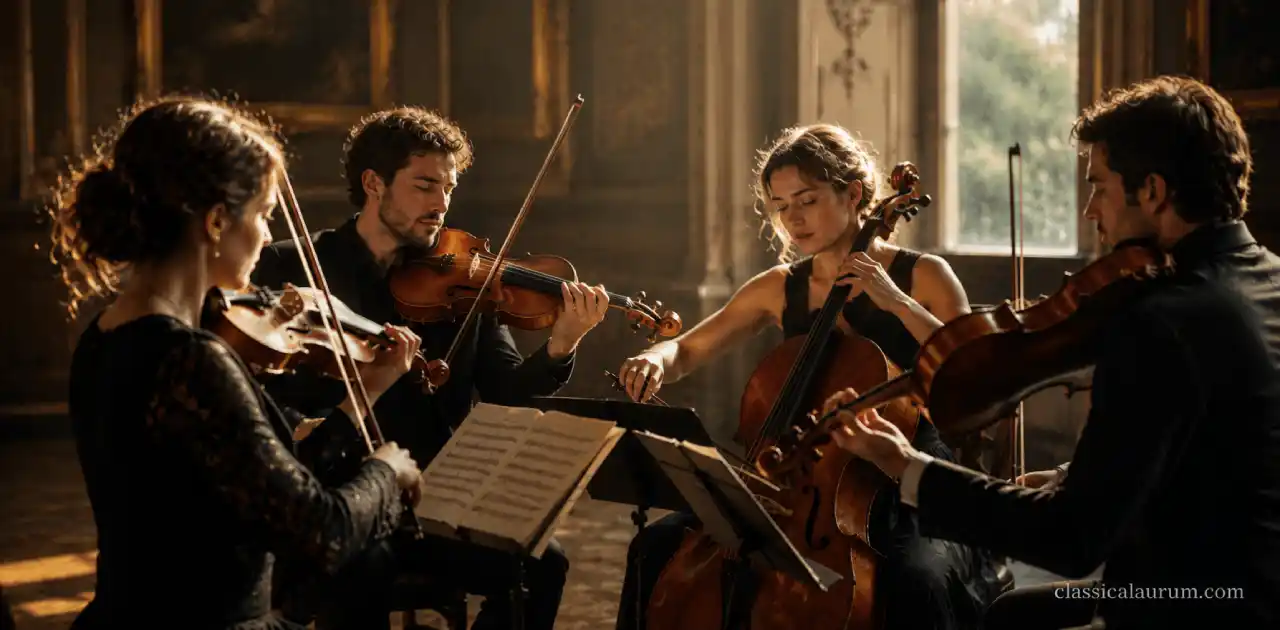
One of the main reasons chamber music still matters is its extraordinary sense of humanity. In a chamber ensemble, musicians cannot hide behind massive orchestral textures or theatrical production.
Every phrase becomes personal.
data-end=”3571″>Every entrance matters.</p>
data-end=”3603″>Every silence carries meaning.
ata-end=”3795″>The audience witnesses musicians listening and responding to each other in real time. This visible communication creates a unique emotional atmosphere that larger productions sometimes lose.
A string quartet performance can feel almost psychological. Listeners become aware of breathing, eye contact, phrasing decisions, and subtle emotional reactions between performers.
This intimacy transforms concerts into shared experiences rather than distant spectacles.
For modern audiences overwhelmed by digital noise and algorithm-driven media, chamber music offers a rare opportunity for concentrated listening and emotional presence.
That experience has become increasingly valuable in contemporary culture.
The Educational Importance of Chamber Music
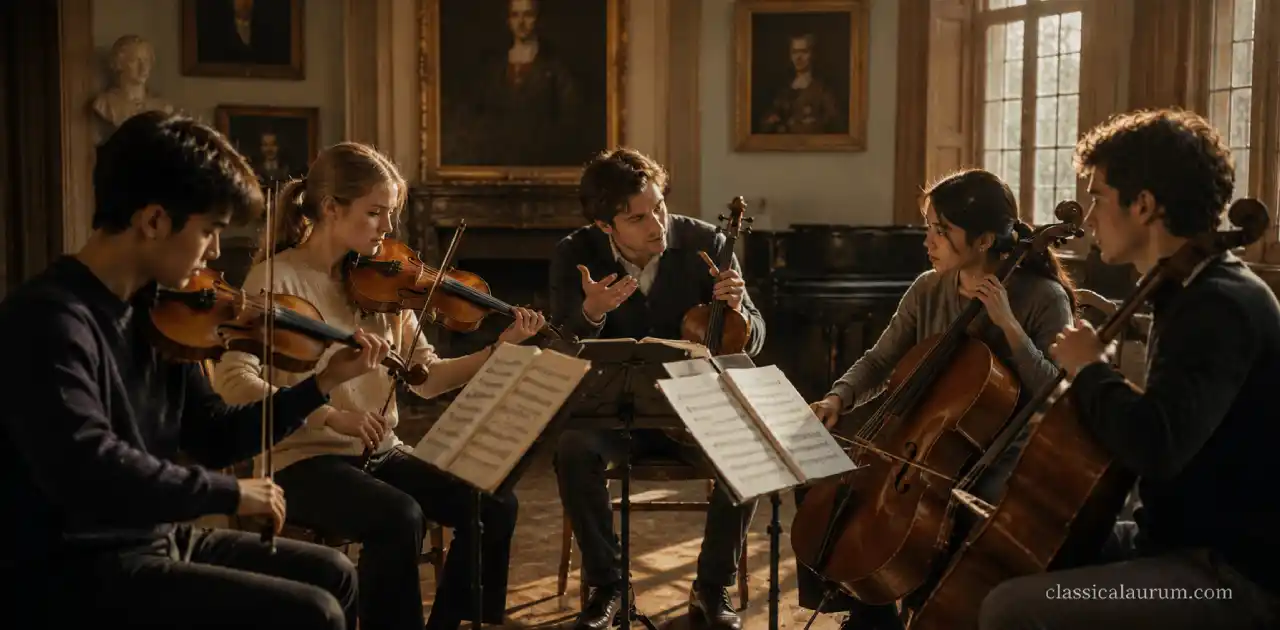
Chamber music remains one of the most important educational tools in classical training. Conservatories and music academies across the world consider chamber ensemble work essential for developing mature musicianship.
Unlike solo performance, chamber music teaches collaboration.
Unlike orchestral playing, it demands individual responsibility.
Young musicians learn how to balance sound, shape phrases collectively, adjust intonation, communicate nonverbally, and interpret music as a group.
These skills extend beyond performance itself.
Chamber music teaches patience, discipline, leadership, adaptability, and mutual respect. In many ways, it functions as a model for artistic cooperation.
This educational value explains why chamber programs remain central in institutions such as Juilliard School, Royal Academy of Music, and Curtis Institute of Music.
Even musicians who later pursue solo careers often describe chamber music as the foundation of their musical understanding.
The Emotional Depth of Small Ensembles
Chamber music possesses a special emotional intensity that differs from both solo and orchestral repertoire.
In orchestral works, emotional impact often emerges through scale and sonic power.
In solo music, expression can become deeply personal and individual.
Chamber music exists somewhere in between.
Its emotional force comes from interaction.
A piano trio by Johannes Brahms or a late quartet by Beethoven creates emotional tension through dialogue, contrast, and collective storytelling.
Listeners hear personalities interacting through sound.
This dynamic resembles human relationships themselves. There are moments of agreement, interruption, conflict, reconciliation, and reflection.
Because of this, chamber music often feels psychologically honest.
Its intimacy allows audiences to connect with emotions in a more direct and nuanced way than many large-scale performances.
Chamber Music in the Digital Age
At first glance, chamber music may appear disconnected from modern technology. However, digital platforms have actually helped expand its global reach.
Streaming services, online masterclasses, social media, and high-quality video production have introduced chamber repertoire to younger audiences worldwide.
Performances once limited to elite concert halls can now be viewed instantly across continents.
Groups such as Kronos Quartet and Emerson String Quartet gained international recognition partly through recordings and digital distribution.
Meanwhile, younger ensembles increasingly build audiences through YouTube, Instagram, and streaming platforms.
This transformation matters because chamber music depends heavily on accessibility and visibility.
Digital media has allowed audiences to discover repertoire that traditional broadcasting often ignored.
At the same time, the rise of digital culture has also reinforced the importance of live performance.
Ironically, the more virtual daily life becomes, the more audiences value authentic acoustic experiences.
Chamber music benefits directly from this shift.
Why Live Chamber Music Experiences Remain Unique
No recording can fully replicate the physical experience of hearing chamber music in a real acoustic space.
The subtle vibrations of string instruments, the resonance of wood, the natural blending of timbres, and the spatial interaction between performers all contribute to a live experience that technology still cannot duplicate completely.
Small venues intensify this effect.
Unlike massive arenas, chamber music concerts often place audiences close to performers. This proximity creates emotional immediacy.
Listeners become part of the atmosphere rather than passive observers.
In historic churches, salons, or recital halls, chamber music can produce moments of extraordinary concentration and silence.
These moments feel increasingly rare in contemporary society.
For many audiences, chamber concerts provide not only entertainment but also a form of reflection and mental stillness.
That cultural role has become more significant in recent years.
The Role of Chamber Music in Cultural Preservation
Chamber music also serves as a bridge between generations.
The repertoire preserves centuries of artistic thought, historical memory, and cultural identity. Works by composers from different eras continue to communicate across time because they address universal human experiences.
Love.
Grief.
Friendship.
Conflict.
Hope.
These themes remain timeless.
At the same time, chamber music is not merely historical preservation. Contemporary composers continue to expand the genre with new sounds, techniques, and influences.
Modern chamber works frequently incorporate jazz, folk traditions, electronic elements, and experimental textures.
This adaptability helps chamber music remain culturally relevant.
Festivals and organizations around the world increasingly program both historical masterpieces and contemporary premieres side by side.
This balance between tradition and innovation is one of chamber music’s greatest strengths.
Why Chamber Music Encourages Deep Listening
Modern culture rewards speed.
Social media platforms prioritize short attention spans.
Entertainment algorithms favor constant stimulation.
Chamber music operates differently.
It requires attention, patience, and emotional openness.
Listeners must engage actively with evolving musical ideas rather than passively consuming rapid visual information.
This process encourages what many educators and psychologists describe as “deep listening.”
Deep listening improves concentration, emotional awareness, and interpretive thinking. It allows audiences to experience art as a sustained intellectual and emotional journey.
This is especially important in younger generations increasingly surrounded by fragmented digital content.
Chamber music reminds listeners that complexity can be rewarding.
Its value lies not in immediate gratification but in gradual emotional discovery.
That lesson remains profoundly relevant today.
The Social Power of Chamber Music Communities
Chamber music has always created communities.
Historically, people gathered in homes and salons to perform together socially. That tradition continues today through festivals, university programs, amateur ensembles, and community music organizations.
Unlike some art forms that separate professionals from audiences, chamber music often encourages participation.
Amateur quartets, local ensembles, and educational workshops allow musicians of different ages and skill levels to engage directly with the repertoire.
This accessibility strengthens cultural continuity.
It also helps preserve classical music beyond major institutions.
Many lifelong friendships and artistic collaborations begin through chamber ensemble work because the format depends so heavily on trust and communication.
In this sense, chamber music remains not only an artistic tradition but also a social practice.
Its collaborative nature reflects values that modern societies increasingly seek to recover: listening, cooperation, empathy, and shared experience.
Why Chamber Music Still Inspires Modern Composers
Contemporary composers continue writing chamber music because it offers exceptional creative freedom.
Smaller ensembles allow experimentation without the enormous logistical demands of full orchestras.
Composers can explore texture, rhythm, silence, and timbral color with remarkable precision.
Many modern masterpieces emerged from chamber settings before influencing larger musical movements.
Chamber music also allows closer collaboration between composers and performers. This relationship often leads to innovative interpretations and new performance techniques.
In the 21st century, composers increasingly use chamber ensembles to address modern themes including environmental anxiety, technological transformation, migration, and social fragmentation.
As a result, chamber music remains artistically alive rather than historically frozen.
Its flexibility ensures continued relevance in contemporary artistic discourse.
The Future of Chamber Music
The future of chamber music will likely depend on adaptability without sacrificing artistic integrity.
Younger audiences increasingly seek authentic cultural experiences rather than purely commercial entertainment. Chamber music is uniquely positioned to fulfill that desire because it offers emotional sincerity and human connection.
Educational outreach, digital accessibility, interdisciplinary collaboration, and innovative programming will continue shaping the genre’s evolution.
Many modern ensembles already combine classical repertoire with visual arts, literature, architecture, and multimedia performance.
Others focus on historically informed performance practices or contemporary experimental works.
This diversity demonstrates that chamber music is not a static tradition.
It is a living artistic language.
As long as audiences continue searching for meaning, reflection, and genuine communication, chamber music will remain relevant.
Its survival across centuries suggests that it fulfills something deeply human.
Not simply a musical preference.
But a cultural necessity.
Conclusion
Chamber music still matters because it represents one of the most profound forms of artistic communication ever developed.
Far from being an outdated tradition, chamber music remains a vital artistic force capable of speaking directly to modern audiences.
Its relevance does not depend on trends or commercial visibility.
It depends on the timeless human need for meaningful expression.
And that need has never disappeared.
Related: String Quartets Explained
Related: Chamber Music Through History

About the Author
Juan Daniel Cabrio
Argentine Classical Guitarist · Researcher · Educator
Juan Daniel Cabrio is an Argentine classical guitarist, researcher and educator. Founder of Classical Aurum, he shares educational and cultural content about classical music, composers, instruments, repertoire, music history and performance practice.
View full biography