



String Quartets Explained
String Quartets Explained: The Intimate Universe of Chamber Music
The string quartet is often described as the purest form of chamber music.
With only four instruments, composers have created some of the most profound works in the history of classical music.
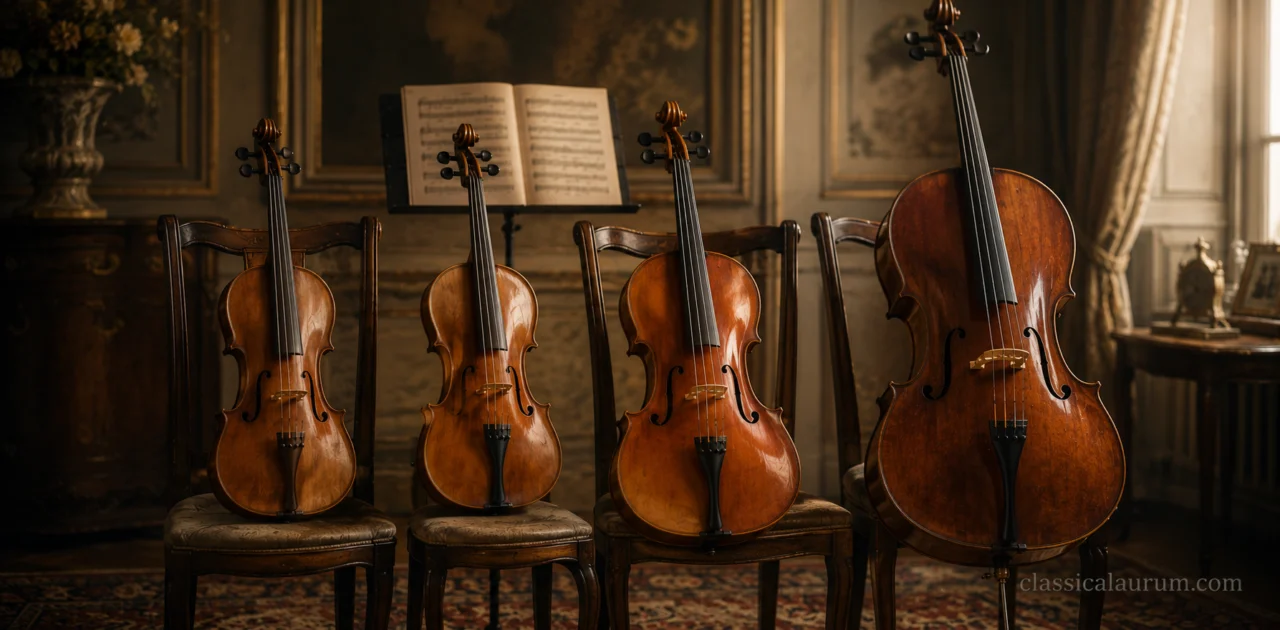
A string quartet usually consists of two violins, one viola, and one cello.
At first glance, the ensemble may appear simple.
Yet within this compact format lies an extraordinary world of balance, dialogue, tension, emotion, and intellectual depth.
For more than two centuries, the string quartet has remained a central pillar of classical music.
From the elegant structures of the Classical era to the daring experiments of the modern age, quartets reveal how composers think, feel, and communicate at the highest artistic level.
For listeners, string quartets offer a unique experience.
There is nowhere for the music to hide.
Every phrase, harmony, and silence becomes exposed with remarkable clarity.
Related: Why Chamber Music Still Matters
For performers, the quartet represents one of the greatest artistic challenges in music.
Unlike orchestral playing, each musician becomes both a soloist and collaborator at the same time.
At ClassicalAurum.com, the exploration of classical music goes beyond famous melodies.
>The goal is to uncover the deeper structures, historical ideas, and emotional worlds behind the repertoire that shaped Western music traditions.
Related: Chamber Music Through History
The Origins of the String Quartet
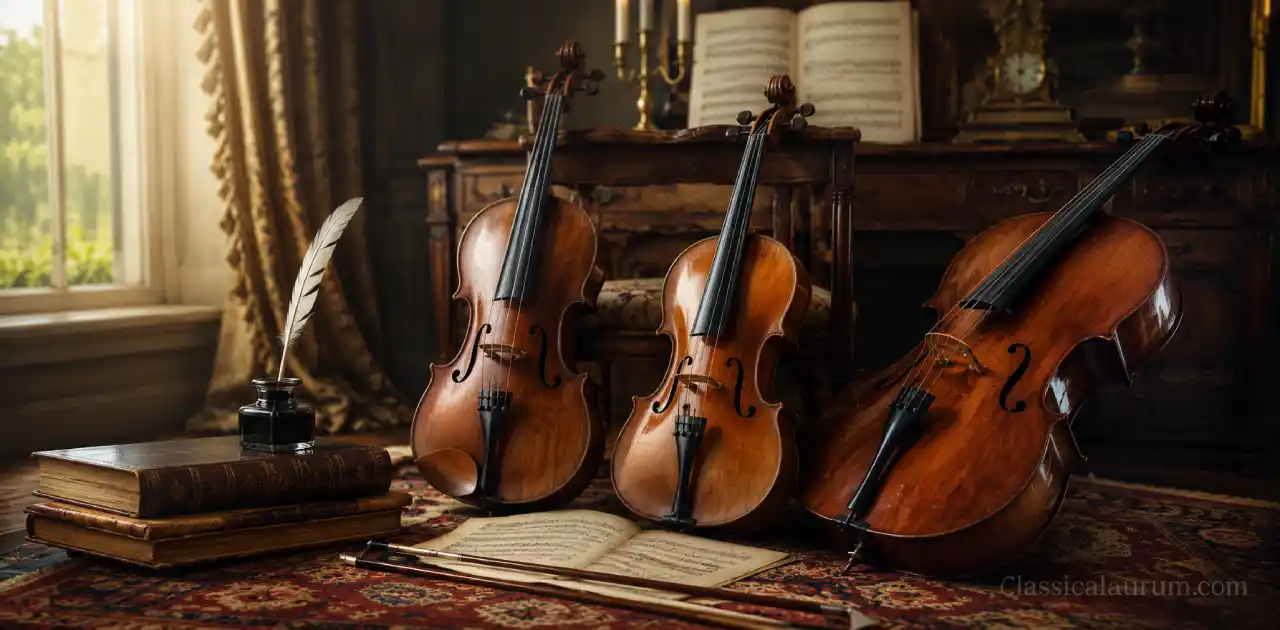
The modern string quartet emerged during the eighteenth century.
Although earlier chamber ensembles existed, the quartet format became standardized during the Classical period.
Many historians credit Joseph Haydn as the “father of the string quartet.”
Haydn transformed small chamber pieces into sophisticated musical conversations.
His quartets introduced balanced structures, thematic development, and interaction between instruments.
Instead of treating the first violin as the dominant voice, Haydn gradually gave equal importance to every performer.
This innovation changed chamber music forever.
The rise of aristocratic salons and private musical gatherings also helped the quartet flourish.
Unlike large symphonies designed for concert halls, quartets could be performed in intimate settings.
This intimacy shaped the genre itself.
String quartets became associated with reflection, subtlety, and artistic sophistication.
Soon, composers across Europe embraced the form.
The quartet evolved into a musical laboratory where new ideas could be tested with precision and clarity.
Why the String Quartet Became So Important
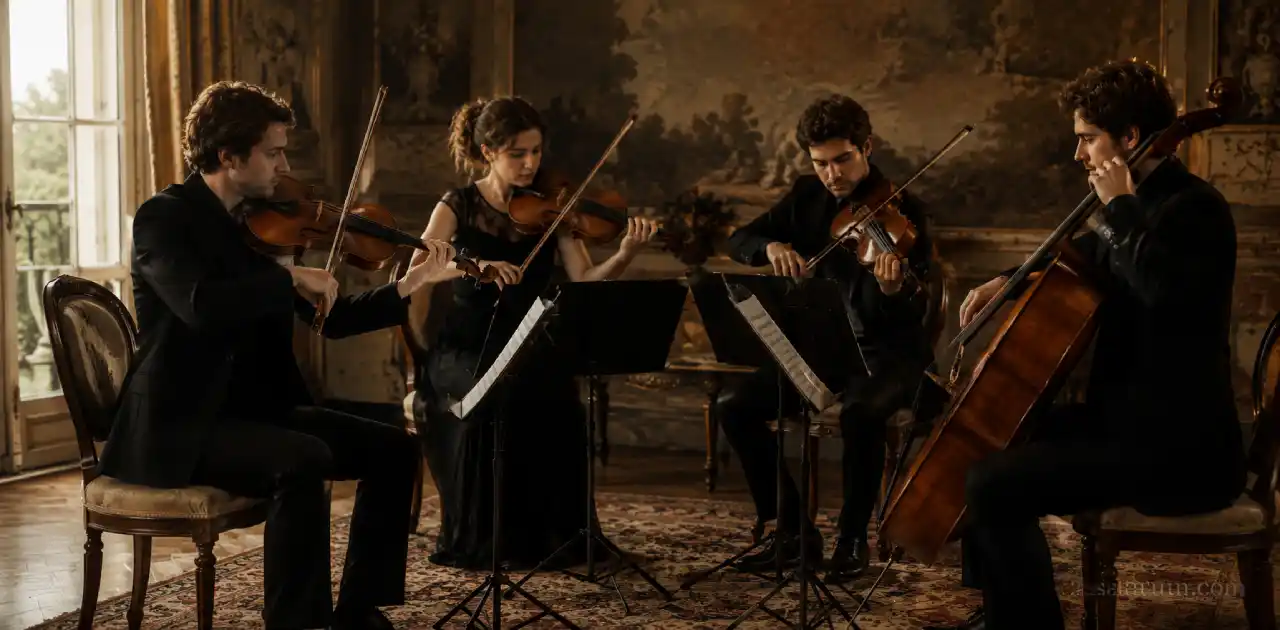
The string quartet occupies a special place in classical music because of its balance.
The ensemble contains four voices capable of producing harmony, rhythm, melody, and counterpoint simultaneously.
At the same time, the instrumentation remains transparent enough for listeners to hear every detail.
This creates a perfect environment for compositional experimentation.
Many composers considered their quartets their most personal works.
Without massive orchestration or theatrical effects, they had to rely purely on musical ideas.
For this reason, quartet writing often reveals a composer’s deepest artistic thinking.
The genre also became a benchmark of mastery.
A successful symphony could impress audiences with power and scale.
A successful quartet required structural intelligence and emotional control.
Because of this, audiences and critics often judge composers by the quality of their quartets.
The tradition continues today.
Modern composers still use the string quartet to explore new textures, harmonies, and forms.
The Four Instruments of the Ensemble
Each instrument within the quartet has a distinct role.
Together, they create a remarkably balanced sonic architecture.
First Violin
The first violin often carries the principal melody.
Its bright register allows it to project lyrical themes and virtuosic passages.
However, in great quartets, the first violin does not dominate permanently.
The role frequently shifts throughout the music.
Second Violin
The second violin provides harmonic support, rhythmic stability, and counter-melodies.
Although less flashy, this position is essential for ensemble cohesion.
Great second violinists possess exceptional listening skills and precision.
Viola
The viola occupies the middle register of the quartet.
Its warm and darker tone creates depth within the ensemble.
Many listeners underestimate the viola until hearing a great quartet performance.
The instrument often connects harmonic movement between upper and lower voices.
Cello
The cello provides the bass foundation.
At the same time, it contributes lyrical melodies and emotional resonance.
In many quartets, the cello acts almost like the emotional anchor of the ensemble.
When all four instruments interact successfully, the result resembles a sophisticated conversation rather than a solo performance with accompaniment.
The Classical Era and the Golden Foundations
The Classical era established the essential language of the string quartet.
Wolfgang Amadeus Mozart elevated the genre with remarkable elegance and emotional sensitivity.
His quartets dedicated to Haydn remain among the masterpieces of chamber music.
Mozart expanded harmonic complexity while preserving clarity and balance.
He transformed the quartet into a medium capable of both refinement and dramatic intensity.
Then came Ludwig van Beethoven.
Beethoven revolutionized the quartet completely.
His early quartets respected Classical traditions.
But his middle and late quartets pushed the form into entirely new territory.
The late quartets especially became legendary for their emotional depth and structural innovation.
Some audiences initially found them difficult to understand.
Today, they are considered among the greatest achievements in Western music.
Beethoven showed that the quartet could express philosophical ideas, spiritual struggle, and profound introspection.
His influence shaped every composer who followed.
Romantic Era Quartets and Emotional Expansion
During the Romantic era, composers expanded the emotional and harmonic possibilities of quartet writing.
Franz Schubert composed quartets filled with lyrical beauty and dramatic contrast.
Works such as Death and the Maiden remain central to the repertoire.
Johannes Brahms brought density and structural richness to the form.
His quartets combine intellectual rigor with deep emotional warmth.
Pyotr Ilyich Tchaikovsky introduced expressive melodies and Russian character into quartet music.
Meanwhile, composers like Antonín Dvořák incorporated folk influences and national identity.
Dvořák’s American Quartet became one of the most beloved chamber works ever written.
The Romantic era demonstrated that quartets could communicate intimacy while also conveying dramatic passion and cultural identity.
Twentieth-Century Innovation and Modernism
The twentieth century transformed the string quartet again.
Composers experimented with dissonance, rhythm, unconventional structures, and extended instrumental techniques.
Béla Bartók created six quartets that redefined modern chamber music.
These works combined folk influences with rhythmic complexity and bold harmonies.
Dmitri Shostakovich used the quartet as a deeply personal medium.
His fifteen quartets reflect political tension, fear, irony, grief, and survival.
In many ways, these quartets became private diaries expressed through sound.
Twentieth-century quartets also explored abstraction.
Some composers abandoned traditional tonality entirely.
Others experimented with silence, texture, or minimalist repetition.
Despite these changes, the quartet remained relevant because its intimate format allowed composers to communicate ideas with extraordinary precision.
How String Quartets Communicate Emotion
One of the most fascinating aspects of quartet music is its conversational quality.
Unlike orchestral works, where large sections move together, quartets often resemble debates, dialogues, or shared reflections.
A melody introduced by one instrument may be answered by another.
Rhythmic figures pass between voices.
Tension emerges through contrast and resolution.
Listeners often describe quartet performances as emotionally direct.
The absence of massive orchestral sound creates vulnerability.
This vulnerability makes the music feel deeply human.
Quartets can express joy, grief, serenity, anxiety, nostalgia, or spiritual transcendence with remarkable intimacy.
The emotional power comes not from volume, but from interaction.
Every note matters.
The Challenge of Performing a String Quartet
Performing quartet music requires extraordinary discipline.
Unlike orchestras with conductors, most quartets perform without external direction.
The musicians must coordinate through breathing, eye contact, and subtle physical communication.
Ensemble balance is critical.
No instrument can overpower the others for long periods.
Intonation also becomes extremely exposed.
Even small inaccuracies are noticeable in chamber music.
Professional quartets often spend years developing a unified sound.
Some ensembles remain together for decades.
This long-term collaboration creates interpretive depth and instinctive communication.
The rehearsal process can be intense.
Quartet musicians debate phrasing, tempo, articulation, and emotional interpretation in great detail.
Because of this, many performers consider quartet playing one of the most rewarding experiences in classical music.
Famous String Quartets Through History
Several ensembles became legendary for their interpretations and artistic influence.
The Juilliard String Quartet helped popularize modern quartet repertoire in the twentieth century.
Amadeus Quartet became known for elegant performances of Classical and Romantic works.
The Kronos Quartet expanded the genre into contemporary and cross-cultural directions.
Meanwhile, ensembles such as the Emerson String Quartet and the Takács Quartet gained international acclaim for technical brilliance and interpretive depth.
These groups helped preserve the quartet tradition while also introducing new audiences to chamber music.
Why String Quartets Still Matter Today
In an era dominated by digital entertainment and fast media consumption, the string quartet remains surprisingly relevant.
Its intimacy offers a radically different listening experience.
Quartets demand attention, patience, and emotional engagement.
They encourage listeners to hear detail rather than spectacle.
This depth explains why the genre continues to attract performers and audiences worldwide.
Modern composers still write quartets because the format remains artistically flexible.
The quartet can accommodate tradition, experimentation, and innovation simultaneously.
Educational institutions also continue to prioritize chamber music training.
Young musicians develop listening skills, discipline, and collaborative sensitivity through quartet playing.
For audiences discovering classical music, quartets provide an excellent entry point into deeper musical understanding.
How to Begin Listening to String Quartets
For newcomers, exploring quartets may initially feel intimidating.
However, starting with accessible works can transform the experience.
A few recommended entry points include:
- Haydn’s Op. 76 quartets.
- Mozart’s “Haydn Quartets.”
- Beethoven’s early quartets.
- Dvořák’s American Quartet.
- Schubert’s Death and the Maiden.
- Debussy’s String Quartet in G minor.
Listening actively helps reveal the conversational structure of the music.
Try focusing on how themes move between instruments.
Notice how harmony changes emotional atmosphere.
Repeated listening often uncovers details that were initially hidden.
Quartet music rewards patience.
The Timeless Legacy of Chamber Music
The string quartet remains one of the greatest achievements in classical music history.
With only four instruments, composers created works capable of expressing immense emotional and intellectual complexity.
The genre survived changing artistic movements, political upheavals, and technological revolutions.
It continues to evolve while preserving centuries of tradition.
At its core, the quartet represents balance.
Individual voices maintain their identities while contributing to a larger whole.
Perhaps this is why quartet music feels so timeless.
It reflects not only musical structure, but also human interaction itself.
For listeners seeking depth, nuance, and artistic intimacy, few musical experiences compare to a great string quartet performance.
The world of chamber music may appear quiet from the outside.
Yet within that quietness lies an extraordinary universe of expression.