
Great Classical Guitar Composers
The classical guitar is one of the most expressive and intimate instruments in the history of Western music. Its repertoire, rich in nuance and emotional depth, owes much to a lineage of composers who not only wrote for the instrument but redefined its possibilities. From the salons of 19th-century Europe to the concert halls of the modern era, these composers transformed the guitar into a vehicle for both virtuosity and introspection.
Understanding the great classical guitar composers is not just a journey through music history—it is an exploration of how sound, technique, and cultural identity converge into a unique artistic language.
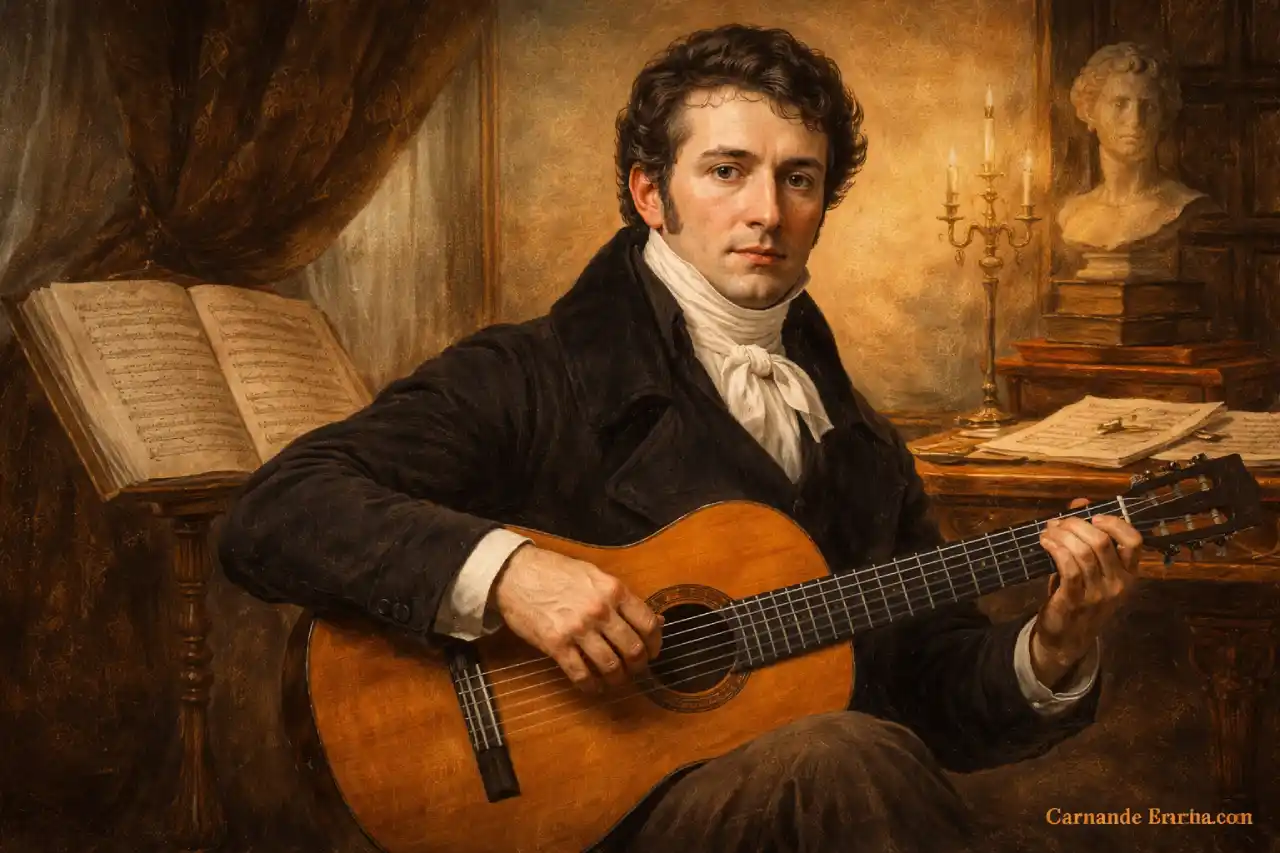
Fernando Sor: The Beethoven of the Guitar
Fernando Sor stands as one of the foundational figures in the classical guitar canon. Often referred to as the “Beethoven of the guitar,” Sor elevated the instrument beyond accompaniment and into the realm of serious concert music.
His compositions are marked by clarity, balance, and structural sophistication. Works such as Variations on a Theme by Mozart demonstrate his ability to merge classical forms with idiomatic guitar writing. Sor’s music avoids excessive ornamentation, focusing instead on musical architecture and expressive phrasing.
For performers, Sor represents discipline. His études are not merely technical exercises but musical statements, shaping generations of guitarists. His legacy remains essential for anyone seeking to understand the classical guitar’s transition into a concert instrument.
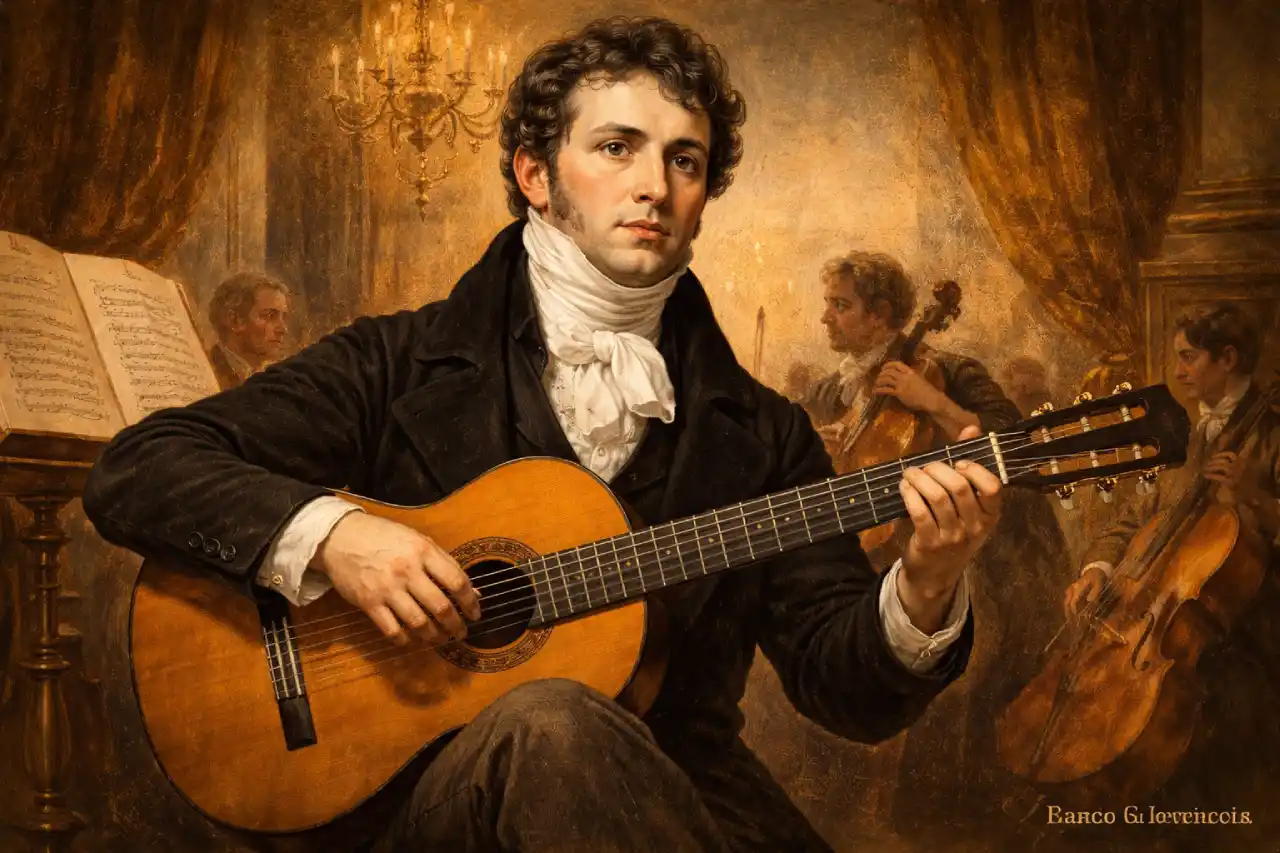
Mauro Giuliani: Virtuosity and Classical Elegance
If Sor represents structure, Mauro Giuliani embodies brilliance. A contemporary of Beethoven, Giuliani brought a pianistic sense of virtuosity to the guitar, expanding its technical possibilities.
His concertos, particularly the Guitar Concerto No. 1 in A Major, showcase the guitar as a solo instrument capable of standing alongside orchestras. Giuliani’s writing is characterized by rapid scales, arpeggios, and lyrical melodies, blending Italian operatic style with instrumental mastery.
Giuliani’s influence lies in his ability to balance technical display with musical elegance, making his works both challenging and deeply rewarding. His contributions helped establish the guitar as a legitimate instrument in classical performance circles.
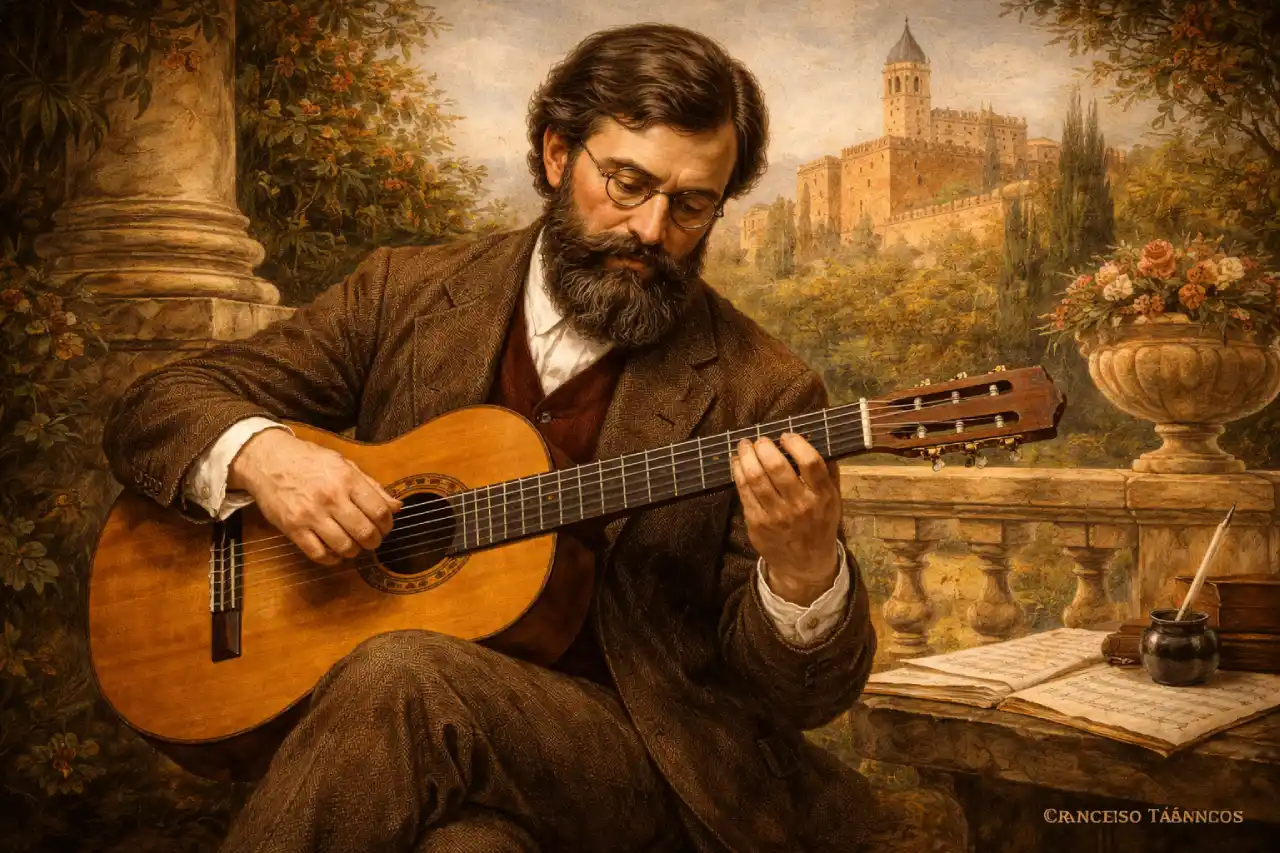
Francisco Tárrega: The Poet of the Guitar
Francisco Tárrega is often considered the father of modern classical guitar technique. His contributions go beyond composition—he fundamentally reshaped how the instrument is played.
Pieces like Recuerdos de la Alhambra and Lágrima are iconic for their emotional depth and technical innovation, particularly the use of tremolo to sustain melodic lines. Tárrega’s music is intimate, almost confessional, drawing listeners into a deeply personal sound world.
He also pioneered techniques such as rest stroke and refined finger positioning, laying the groundwork for modern pedagogy. Through his students, including Emilio Pujol and Miguel Llobet, Tárrega’s influence extended well into the 20th century.
Heitor Villa-Lobos: Bridging Tradition and Modernity
Heitor Villa-Lobos represents a turning point in the guitar’s evolution. His works integrate Brazilian musical identity with European classical traditions, creating a unique and powerful voice.
The 12 Études and 5 Preludes are cornerstones of the modern guitar repertoire. These works combine technical demands with rich harmonic language, requiring both precision and emotional interpretation.
Villa-Lobos expanded the expressive range of the guitar by incorporating rhythmic complexity, extended harmonies, and bold textures. His music reflects a broader cultural synthesis, making him one of the most influential composers for the instrument.
Andrés Segovia: The Architect of the Modern Repertoire
While primarily known as a performer, Andrés Segovia played a crucial role as a curator and promoter of guitar music. Without him, many compositions might never have reached global audiences.
Segovia commissioned works from composers such as Manuel Ponce and Federico Moreno Torroba, effectively creating a new repertoire for the 20th century. His transcriptions of works by Bach and others also expanded the instrument’s scope.
His vision was clear: the guitar deserved a place on the world’s concert stages. Through relentless advocacy, Segovia transformed the instrument’s status and inspired countless composers to write for it.
Leo Brouwer: Contemporary Innovation and Expression
Leo Brouwer represents the modern evolution of classical guitar composition. His works explore avant-garde techniques, minimalism, and Afro-Cuban influences, pushing the instrument into new territories.
Pieces like Elogio de la Danza and Decameron Negro showcase his ability to combine narrative depth with technical innovation. Brouwer’s music often challenges traditional tonality, inviting performers to rethink their approach to sound and interpretation.
His contribution lies in redefining what guitar music can be, ensuring the instrument remains relevant in contemporary classical music.
The Evolution of Style and Technique
The progression from Sor to Brouwer illustrates a broader evolution in musical language. Early composers focused on clarity and form, while later figures embraced color, rhythm, and experimentation.
This evolution reflects changes in both instrument design and performance practice. The modern classical guitar, with its increased projection and tonal range, allows for greater expressive possibilities.
Understanding this progression is key for performers and listeners alike. It reveals how each composer builds upon the past while introducing new ideas, creating a continuous dialogue across centuries.
Why These Composers Still Matter Today
The works of these composers are not relics of the past—they are living pieces of art that continue to inspire. In a world increasingly dominated by digital sound, the classical guitar offers something rare: intimacy, nuance, and human connection.
For modern audiences, these composers provide a gateway into a deeper musical experience. For performers, they represent both a challenge and an opportunity to explore the instrument’s full expressive range.
Their legacy is not just in the notes they wrote, but in the musical traditions they shaped and the emotions they continue to evoke.
Conclusion: A Living Legacy of Sound
The history of classical guitar composition is a testament to the power of artistic vision. From the structured elegance of Sor to the innovative voice of Brouwer, each composer has contributed to a rich and evolving tradition.
Exploring these masters is more than an academic exercise—it is an invitation to experience music in its most authentic and expressive form. As the classical guitar continues to evolve, these composers remain at its core, guiding both performers and listeners into new realms of musical discovery.