










Why the Classical Guitar Sounds Different
The Unique Voice of the Classical Guitar
The classical guitar possesses a sound that is instantly recognizable—warm, intimate, and deeply expressive. Unlike its steel-string or electric counterparts, it produces a tone that feels closer to the human voice. This distinctive quality is not accidental. It is the result of centuries of evolution, craftsmanship, and refined technique.
To understand why the classical guitar sounds different, we must look beyond surface-level characteristics. Its sound is shaped by a combination of materials, construction, playing technique, and musical tradition. Each of these elements contributes to a sonic identity that has remained remarkably consistent, even as other instruments have undergone radical transformation.
The classical guitar is not simply a variation of the guitar family. It is, in many ways, a completely different instrument with its own philosophy of sound. This philosophy prioritizes nuance, color, and dynamic control over sheer volume or brightness.

Nylon Strings: The Core of the Sound
One of the most important factors behind the classical guitar’s sound is its use of nylon strings instead of steel. This single difference dramatically alters the instrument’s tonal character.
Nylon strings produce a softer, rounder tone. They vibrate differently than steel strings, generating fewer high-frequency overtones. As a result, the sound is perceived as warmer and less metallic. This makes the classical guitar ideal for expressive phrasing and subtle dynamic variation.
Additionally, nylon strings have lower tension, which affects both the feel and the sound. The reduced tension allows for greater control over articulation, enabling techniques such as vibrato and subtle tonal shading. At the same time, it limits projection compared to steel-string guitars, reinforcing the instrument’s intimate character.
Historically, classical guitars used gut strings, which were even softer and more delicate. Nylon emerged in the 20th century as a more stable alternative, but it preserved much of the original tonal aesthetic. This continuity ensures that the classical guitar remains deeply connected to its historical roots.
Body Design and Resonance
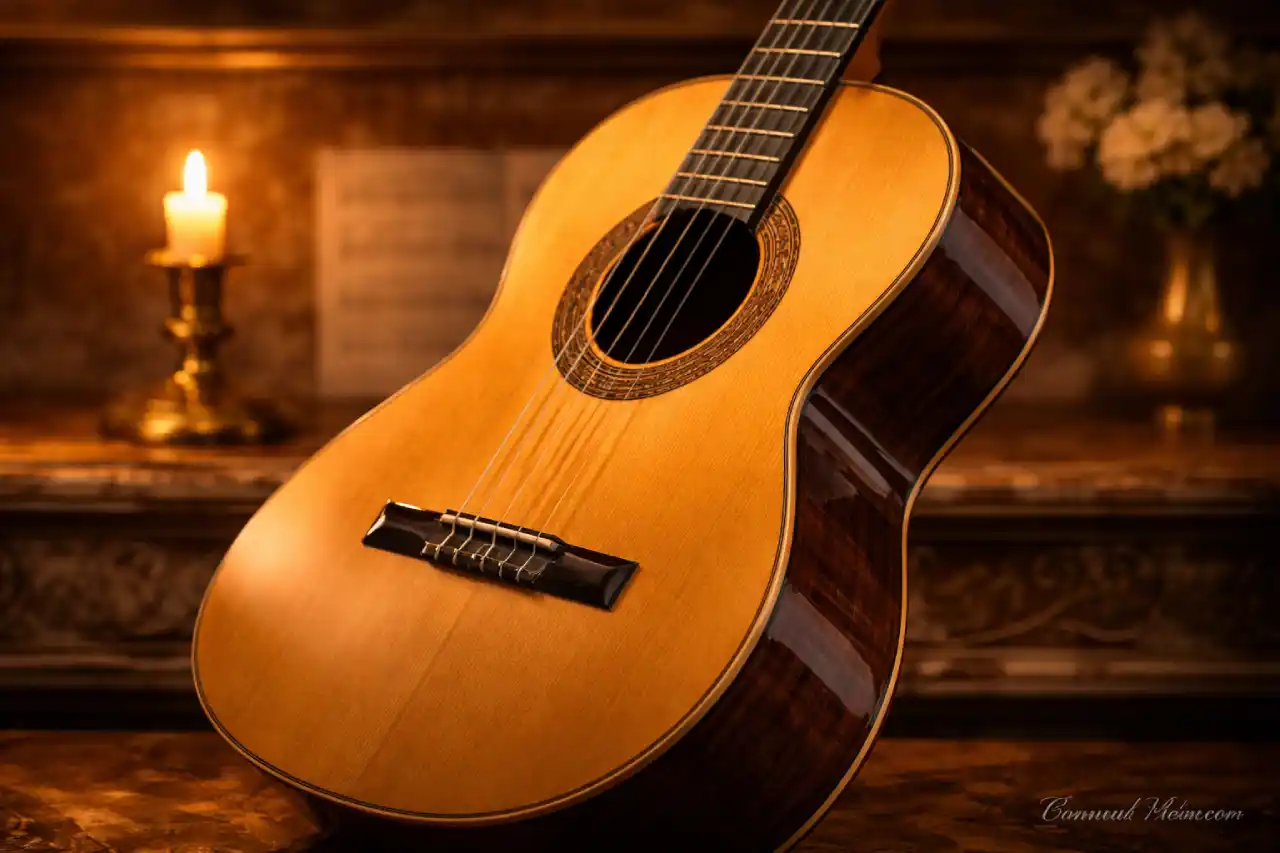
The physical construction of the classical guitar plays a crucial role in shaping its sound. Compared to steel-string guitars, classical guitars have a lighter build and a different internal structure.
The soundboard, typically made of spruce or cedar, is thinner and more responsive. This allows it to vibrate more freely, producing a rich and resonant tone even with the lower energy of nylon strings. The internal bracing pattern—often fan bracing—supports this flexibility while maintaining structural integrity.
The body of a classical guitar is also designed to emphasize midrange frequencies, which contribute to its warm and balanced sound. Unlike steel-string guitars that often highlight brightness and projection, classical guitars focus on clarity and tonal depth.
Another important factor is the absence of a truss rod in many traditional classical guitars. This contributes to a lighter overall structure, enhancing resonance. The result is an instrument that responds immediately to the player’s touch, translating even the smallest gestures into sound.

Fingerstyle Technique and Tone Production
The way a classical guitar is played is just as important as how it is built. Classical guitarists use a fingerstyle technique, plucking the strings directly with their fingers rather than using a pick.
This approach allows for greater control over tone color. By changing the angle of the fingers, the position of the hand, or the combination of flesh and nail, the player can produce a wide range of sounds. This level of control is one of the defining features of classical guitar performance.
The use of nails, in particular, adds clarity and projection to the sound. The combination of flesh warmth and nail brightness creates a complex tonal palette that cannot be replicated with a pick. This is why classical guitarists spend years refining their right-hand technique.
Furthermore, fingerstyle playing enables polyphony, allowing multiple voices to be played simultaneously. This gives the classical guitar a unique ability to function as both a melodic and harmonic instrument, similar to a piano.
Tonal Aesthetics and Musical Tradition
The classical guitar’s sound is deeply influenced by its role in Western art music. Unlike many modern instruments, it developed within a tradition that values balance, clarity, and expressive nuance.
Composers writing for the classical guitar often exploit its ability to produce subtle dynamic contrasts and tonal variations. This has shaped both the instrument’s design and the techniques used to play it. Over time, a distinct aesthetic has emerged—one that prioritizes emotional depth over volume.
This tradition also emphasizes acoustic purity. Classical guitar music is typically performed without amplification, allowing the natural sound of the instrument to take center stage. This reinforces the importance of tone production and reinforces the instrument’s intimate character.
Even today, classical guitarists strive to maintain this tradition while exploring new possibilities. The balance between innovation and tradition is part of what makes the instrument so compelling.
Comparison with Steel-String and Electric Guitars
To fully appreciate why the classical guitar sounds different, it is helpful to compare it with other types of guitars.
Steel-string guitars are designed for projection and brightness. Their higher string tension and heavier construction produce a louder and more cutting sound. This makes them well-suited for genres like folk, rock, and country.
Electric guitars, on the other hand, rely on amplification and electronic processing. Their sound is shaped as much by technology as by physical construction. This allows for a wide range of tonal possibilities, but it also distances the sound from the instrument’s natural acoustic properties.
In contrast, the classical guitar remains purely acoustic and highly responsive. Its sound is shaped directly by the interaction between the player and the instrument. This creates a level of intimacy and immediacy that is difficult to achieve with other types of guitars.
The Role of the Player in Shaping Sound
One of the most fascinating aspects of the classical guitar is the extent to which the player influences the sound. Unlike many instruments, where much of the tone is determined by the instrument itself, the classical guitar is highly sensitive to the performer’s technique.
Small changes in hand position, finger pressure, and timing can produce noticeable differences in tone. This makes the instrument incredibly expressive, but also challenging to master.
Advanced players develop a deep understanding of how to control these variables. They learn to shape phrases, highlight inner voices, and create a sense of musical direction through subtle changes in tone and dynamics.
This level of control is one of the reasons why the classical guitar is often described as a “singing instrument.” It allows performers to convey emotion in a direct and personal way.
Modern Innovations and Evolving Sound
While the classical guitar is rooted in tradition, it continues to evolve. Modern luthiers experiment with new materials, such as carbon fiber and lattice bracing, to enhance projection and sustain.
These innovations aim to address some of the instrument’s limitations, particularly in larger performance spaces. At the same time, they strive to preserve the essential qualities that define the classical guitar’s sound.
Contemporary composers and performers are also expanding the instrument’s repertoire. They explore new techniques, incorporate influences from other genres, and push the boundaries of what the classical guitar can do.
Despite these changes, the core identity of the instrument remains intact. The classical guitar continues to be defined by its warmth, nuance, and expressive potential.
Conclusion: A Sound Rooted in Identity
The reason why the classical guitar sounds different is not due to a single factor, but rather a combination of elements working together. Its nylon strings, lightweight construction, fingerstyle technique, and musical tradition all contribute to a unique sonic identity.
This identity has been shaped over centuries, guided by a consistent vision of what the instrument should be. It is a vision that values expression over power, nuance over volume, and intimacy over spectacle.
For listeners and performers alike, the classical guitar offers a deeply personal musical experience. Its sound invites us to listen closely, to appreciate subtle details, and to connect with music on a more intimate level.
In a world where many instruments strive to be louder and more powerful, the classical guitar stands apart. It reminds us that sometimes, the most profound impact comes from quiet, carefully shaped sound.