


Interpretation vs Fidelity to the Score
The Core Tension in Classical Performance
The debate between interpretation and fidelity to the score sits at the heart of classical music. Every performer faces a fundamental question: should they strictly follow the composer’s written intentions, or bring a personal artistic voice to the music?
A musical score is often treated as an authoritative document. It contains notes, rhythms, dynamics, articulations, and sometimes expressive markings. Yet, it is never complete. Composers cannot fully encode emotion, timing flexibility, tone color, or phrasing nuance into notation.
This gap between what is written and what is heard is where interpretation begins.
From the perspective of ClassicalAurum.com, this tension is not a problem to solve, but a creative space where tradition and innovation meet. It is precisely this ambiguity that allows classical music to remain alive across centuries.
What Does Fidelity to the Score Really Mean?
At first glance, fidelity seems straightforward. It implies respecting the composer’s intentions and executing the music exactly as written. However, the concept quickly becomes complex.
Scores are not perfect blueprints. They are shaped by historical conventions, evolving notation systems, and the limitations of the time. A crescendo marking in the 18th century may not carry the same meaning as one in the 19th century.
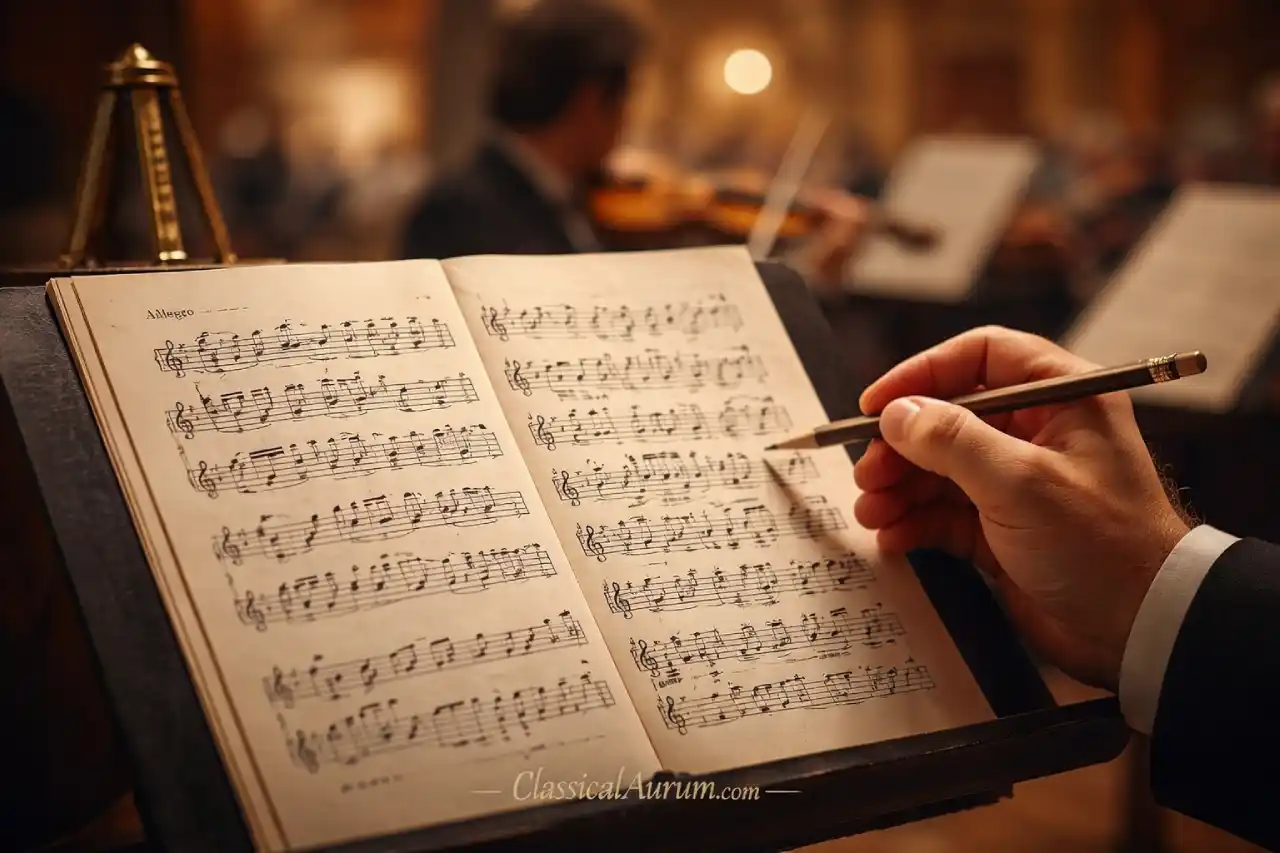
Even tempo markings can be misleading. When a composer writes Allegro, does it mean fast in a mechanical sense, or lively in character?
True fidelity requires more than literal reading. It demands historical awareness, stylistic knowledge, and informed judgment. A performer faithful to the score must also be faithful to the context in which it was written.
This is why fidelity, paradoxically, often leads to interpretation.
The Role of Interpretation in Musical Expression
Interpretation transforms notation into living sound. Without it, music would be mechanical and devoid of meaning.
Every performer shapes the music through decisions about:
- Phrasing and breathing
- Rubato and timing flexibility
- Dynamics and tonal color
- Articulation and emphasis
Even in highly structured works, such as those by Johann Sebastian Bach, performers must decide how to shape lines, highlight voices, and create flow. Bach’s scores often lack detailed dynamic markings, leaving expressive decisions open.
In contrast, composers like Frédéric Chopin provide more expressive indications. Yet even here, performers differ widely in their approach to rubato and emotional intensity.
Interpretation is not deviation. It is translation. It allows the performer to communicate the music’s meaning to a contemporary audience.
Historical Perspectives: From Freedom to Precision
The balance between interpretation and fidelity has shifted throughout history.
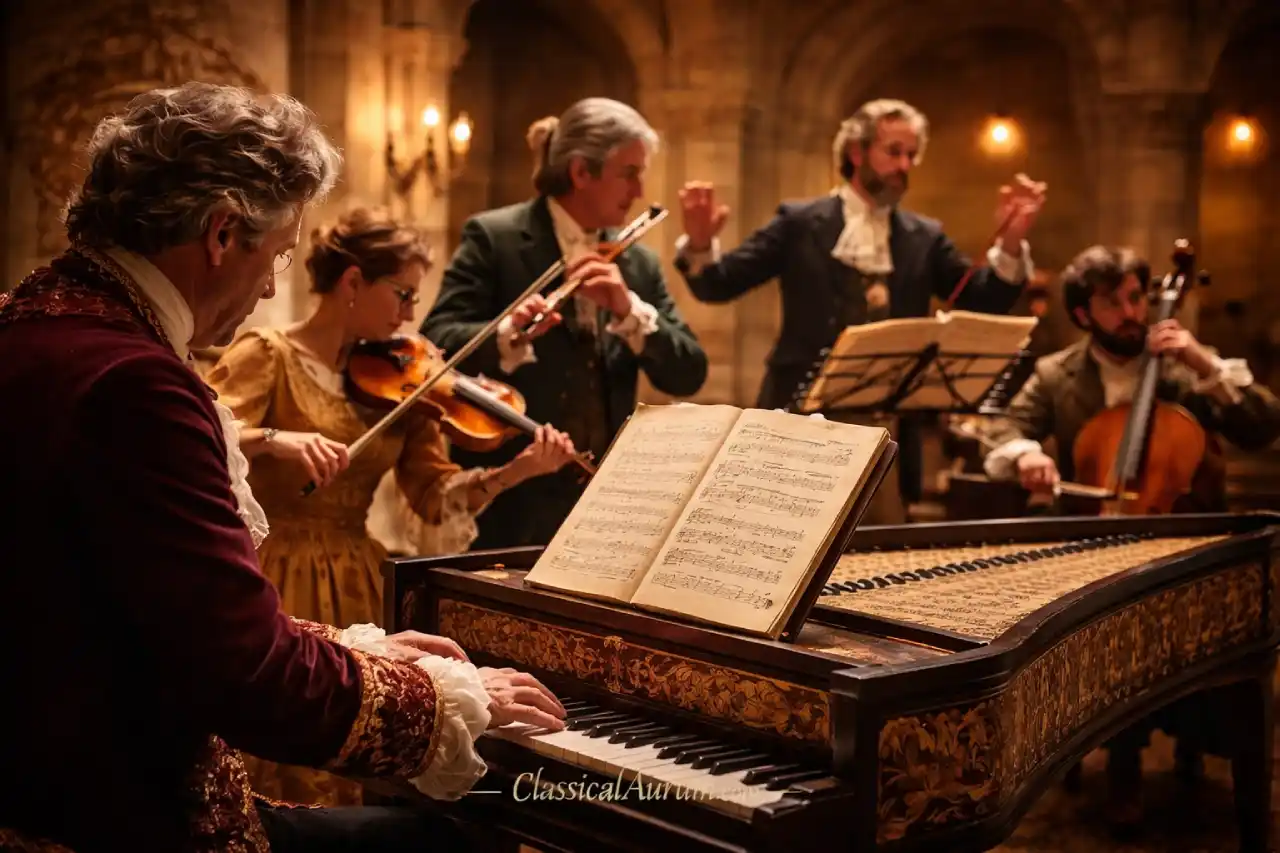
In the Baroque era, performers were expected to improvise ornaments and shape music freely. Fidelity meant understanding the style, not reproducing exact details.
During the Classical period, composers like Wolfgang Amadeus Mozart began to specify more elements, but performers still retained significant freedom.
The Romantic era expanded interpretation dramatically. Composers such as Franz Liszt embraced personal expression, virtuosity, and emotional intensity. Performers became co-creators.
In the 20th century, a reaction emerged. The rise of Urtext editions and historically informed performance sought to restore fidelity to original sources.
Today, performers navigate all these traditions simultaneously. Modern musician must balance historical accuracy with expressive authenticity.
The Influence of Historically Informed Performance
The movement known as Historically Informed Performance (HIP) has reshaped the debate.
HIP aims to reconstruct how music might have sounded in its original context. This includes:
- Using period instruments
- Following historical tuning systems
- Applying authentic articulation and phrasing
Ensembles inspired by HIP often reinterpret works by composers like Antonio Vivaldi or George Frideric Handel in ways that differ significantly from modern traditions.
However, HIP is not pure fidelity. It involves interpretation based on research, not certainty. Historical evidence is incomplete, and performers must fill gaps with informed choices.
Thus, even the pursuit of authenticity becomes an act of interpretation.
The Performer as Co-Creator
A central idea in modern performance philosophy is that the performer is a co-creator of the musical experience.
The composer provides the framework. The performer brings it to life.
This relationship can be compared to theater. A script remains the same, but each actor delivers a unique performance. Similarly, a sonata by Ludwig van Beethoven can sound radically different depending on the interpreter.
Some performances emphasize structural clarity and discipline. Others prioritize emotional depth and spontaneity.
Neither approach is inherently correct. What matters is coherence and conviction.
A compelling interpretation must feel inevitable, even if it is unconventional.
Technology, Recordings, and the Standardization of Performance
The rise of recording technology has influenced how we perceive fidelity and interpretation.
In the past, performances were ephemeral. Each concert was unique. Today, recordings create reference versions that shape expectations.
Listeners may compare interpretations against iconic recordings by legendary performers. This can lead to standardization, where deviations are perceived as mistakes.
At the same time, recordings allow for greater diversity of interpretations to reach global audiences.
Digital platforms and streaming have expanded access to multiple versions of the same work, reinforcing the idea that there is no single correct interpretation.
Technology has not resolved the debate. It has amplified it.
Balancing Discipline and Freedom in Modern Performance
For today’s musicians, the challenge is not choosing between fidelity and interpretation, but integrating both.
A strong performance requires:
- Technical precision and respect for the score
- Stylistic awareness grounded in historical context
- Personal expression that communicates meaning
Too much rigidity can result in lifeless execution. Too much freedom can distort the composer’s intent.
The most compelling performances achieve a balance where structure and expression reinforce each other.
This balance is not fixed. It evolves with each performer, each audience, and each moment.
Conclusion: A Living Dialogue Across Time
The tension between interpretation and fidelity to the score is not a problem to solve, but a dynamic dialogue.
It connects composers, performers, and listeners across centuries. It allows classical music to remain both rooted in tradition and open to renewal.
At ClassicalAurum.com, this debate is seen as the essence of musical artistry. The score is not a cage. It is a starting point for exploration.
Every performance is an act of rediscovery.
And in that rediscovery, music continues to live.