
Johann Sebastian Bach and the Baroque Ideal
Johann Sebastian Bach and the Baroque Ideal is more than a historical topic. It represents a summit in Western music where structure, faith, science, and emotion converge into a unified artistic vision. For ClassicalAurum.com, understanding Bach is not only an academic exercise but a return to the foundations of musical architecture.
In Bach, the Baroque ideal reaches its highest expression. His works embody order without rigidity, devotion without sentimentality, and complexity without chaos. He did not invent the Baroque language, but he perfected it.
To understand Bach is to understand the Baroque worldview itself.

The Baroque Ideal: Order, Faith and Musical Architecture
The Baroque period valued structure, contrast, ornamentation, and emotional rhetoric. Music was designed to move the soul while reflecting cosmic order. This was not accidental. The seventeenth and early eighteenth centuries were shaped by scientific discovery, theological debate, and architectural grandeur.
Baroque art mirrors this spirit of symmetry and controlled intensity. In music, this translated into basso continuo foundations, elaborate counterpoint, and clearly defined tonal centers. Harmony became directional. Form became architectural.
For composers of the time, music was not merely entertainment. It was a reflection of divine mathematics. Proportion mattered. Balance mattered. The relationship between tension and resolution mattered.
Bach absorbed this entire intellectual environment. But unlike many of his contemporaries, he fused intellectual rigor with spiritual depth at an unprecedented level. In him, structure becomes devotion.

Johann Sebastian Bach: Life in Service of Music
Johann Sebastian Bach was born in 1685 in Eisenach, into a family of musicians. From an early age, music was not a profession but a lineage. The Bach family produced generations of organists and composers.
His career took him through Arnstadt, Weimar, Köthen, and finally Leipzig, where he served as Thomaskantor. In Leipzig, he composed weekly cantatas, Passions, and pedagogical masterpieces.
Bach was not celebrated as a revolutionary during his lifetime. He was respected as an organist and teacher. His reputation rested more on technical mastery than innovation.
Yet this technical mastery concealed something extraordinary. His music synthesizes Italian concerto energy, French dance elegance, and German contrapuntal depth. He did not merely adopt styles. He integrated them into a unified language.
His life was disciplined, structured, and grounded in Lutheran faith. That spiritual framework is inseparable from his musical architecture.
Counterpoint and the Perfection of Structure
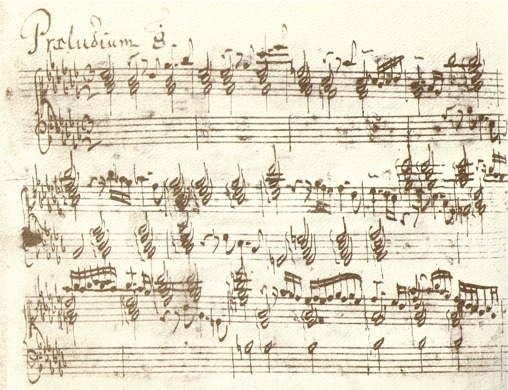
If one concept defines Johann Sebastian Bach and the Baroque Ideal, it is counterpoint. Counterpoint is the art of combining independent melodic lines into a coherent whole. In Bach’s hands, it becomes both science and poetry.
Works such as The Art of Fugue and The Well-Tempered Clavier demonstrate astonishing control. Every voice has autonomy. Every line has direction. Yet all converge into harmonic unity.
A fugue subject enters. It is answered. It is inverted, augmented, diminished. The material is explored from every conceivable angle. But nothing feels mechanical.
This is the Baroque ideal realized: complexity governed by order.
For students and performers at ClassicalAurum.com, studying Bach’s counterpoint is studying musical architecture itself. It teaches discipline. teaches listening. It teaches structural awareness beyond surface beauty.
Bach’s music proves that emotion does not require chaos. It requires design.

The Well-Tempered Clavier and the Universal Tonal Vision
At the time, tuning systems limited modulation possibilities. Bach demonstrated that a well-tempered system allowed music to move freely across tonal centers. This was not merely practical. It was philosophical.
By composing in every key, Bach affirmed tonal unity. Diversity within order.
Each prelude introduces character. Each fugue introduces discipline. Together, they balance expression and structure.
For keyboard players and guitar transcribers alike, this collection remains foundational. It demands clarity of voicing, precision of rhythm, and intellectual engagement.
The Well-Tempered Clavier is not a technical manual. It is a declaration of tonal universality.

Sacred Music and the Theology of Sound
Music becomes sermon.
Chorales anchor congregational identity. Recitatives narrate scripture. Arias meditate on faith and suffering. The structure mirrors Lutheran liturgy, yet transcends it.
In these works, counterpoint serves devotion. Harmony serves meaning. Silence serves reflection.
The Baroque ideal here is not decorative excess. It is emotional clarity framed by order. Sorrow is expressed through descending lines. Hope is expressed through radiant harmonic resolution.
For Classical Aurum’s editorial vision, Bach’s sacred music reminds us that classical tradition is not detached from life. It is rooted in human struggle, mortality, and transcendence.

Instrumental Mastery: Concertos and Dance Forms
Italian influence is evident in ritornello form. French elegance appears in dance rhythms. Yet the synthesis is uniquely Bach.
His violin partitas and cello suites reveal another dimension. Here, a single instrument implies multiple voices. Polyphony emerges from linear writing.
This capacity to suggest architecture through minimal forces is one of Bach’s greatest achievements.
Dance suites further demonstrate Baroque ideals. Allemande, Courante, Sarabande, Gigue—each form carries national character. Bach transforms these into abstract art without losing rhythmic identity.
The result is music that feels both grounded and transcendent.

The Emotional Rhetoric of the Baroque
Baroque composers believed music could evoke specific affections. Joy, sorrow, triumph, lamentation—each had musical vocabulary.
Bach mastered this rhetorical system. Minor keys with suspensions convey grief. Dotted rhythms suggest majesty. Sequential patterns build intensity.
But he never reduces emotion to formula. Instead, he deepens it through structure.
Consider the opening chorus of the St. Matthew Passion. Two choirs and two orchestras create spatial dialogue. The architecture itself amplifies emotional weight.
This is emotional rhetoric elevated to symphonic scale.
For modern audiences, Bach’s music may initially seem intellectual. Yet beneath the counterpoint lies profound humanity. The Baroque ideal is not cold symmetry. It is expressive order.

Legacy and the Timeless Baroque Ideal
This revival reshaped musical history.
Composers from Beethoven to Brahms studied Bach’s counterpoint. Twentieth-century composers found structural inspiration in his fugues. Even jazz musicians admired his harmonic logic.
Bach became a pillar.
Johann Sebastian Bach and the Baroque Ideal continue to define standards of craft. His works are studied not because they are old, but because they reveal permanent principles: proportion, coherence, and expressive depth.
For ClassicalAurum.com, Bach is not merely a historical figure. He is a compass.
In an age of fragmentation and speed, his music reminds us that mastery requires patience. Beauty requires structure. Freedom requires discipline.
The Baroque ideal lives wherever architecture and emotion meet.
And in that meeting point, Bach still stands.
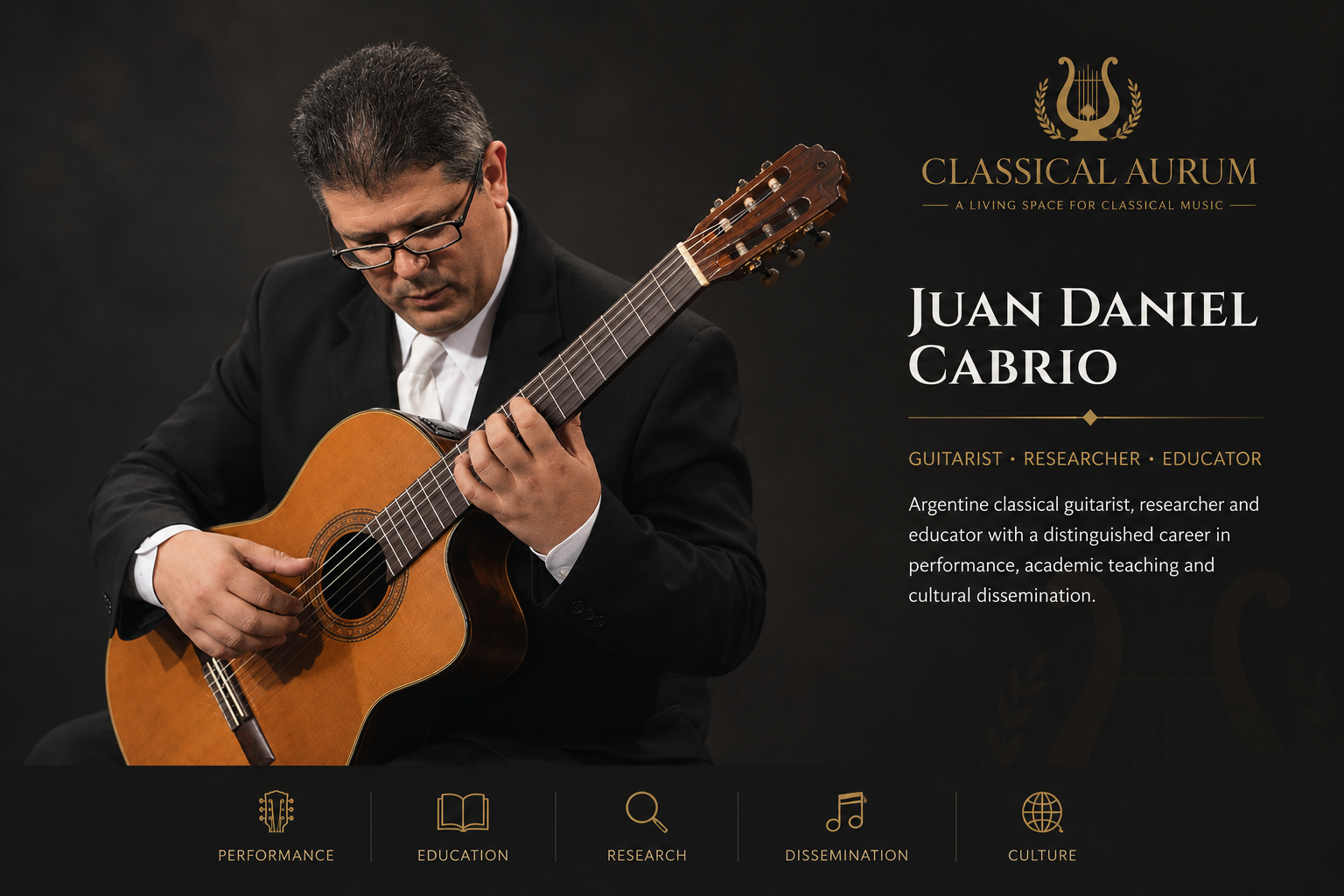
About the Author
Juan Daniel Cabrio
Argentine Classical Guitarist · Researcher · Educator
Juan Daniel Cabrio is an Argentine classical guitarist, researcher and educator. Founder of Classical Aurum, he shares educational and cultural content about classical music, composers, instruments, repertoire, music history and performance practice.
View full biography