



The Role of the Conductor
The Invisible Architect of Sound
The role of the conductor in classical music is often misunderstood. To an untrained eye, the conductor may appear to simply wave a baton in front of an orchestra. Yet behind these gestures lies a complex system of communication, leadership, and artistic vision.
A conductor is the central interpreter of a musical work. While composers like Ludwig van Beethoven or Gustav Mahler provide the written score, it is the conductor who transforms notes into a living, breathing performance.
Every tempo change, dynamic contrast, and expressive nuance is filtered through the conductor’s understanding. This makes each performance unique, even when the same piece is played repeatedly across the world.
In essence, the conductor acts as an invisible architect, shaping sound in real time while guiding dozens—or even hundreds—of musicians toward a unified artistic goal.
A Language Without Words: Gesture and Communication
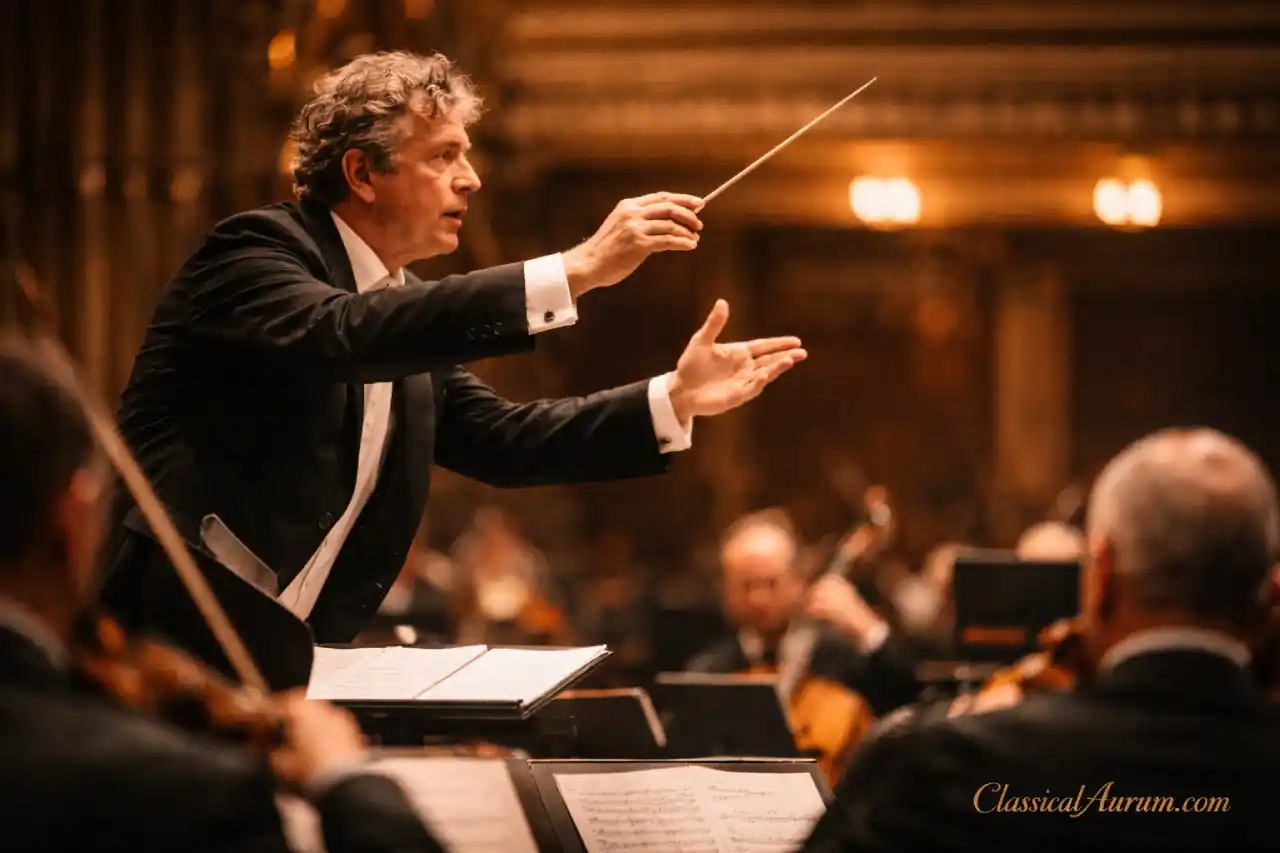
Conductors communicate primarily through physical gestures rather than spoken language. The baton, hand movements, posture, and facial expressions form a silent yet precise vocabulary.
This visual language conveys critical elements such as:
- Tempo (speed of the music)
- Dynamics (loudness and softness)
- Articulation (how notes are played)
- Entries and cues for different sections
A slight lift of the wrist can signal a delicate entrance. A sharp downward motion can demand power and intensity. Over time, orchestras learn to interpret these gestures almost instinctively.
Renowned conductors like Herbert von Karajan were famous for their minimal yet highly controlled movements, while others like Leonard Bernstein used expansive, expressive gestures to shape the music.
This diversity highlights a crucial truth: there is no single way to conduct, only different approaches to achieving musical clarity and emotional depth.
From Score to Sound: Interpretation as an Art
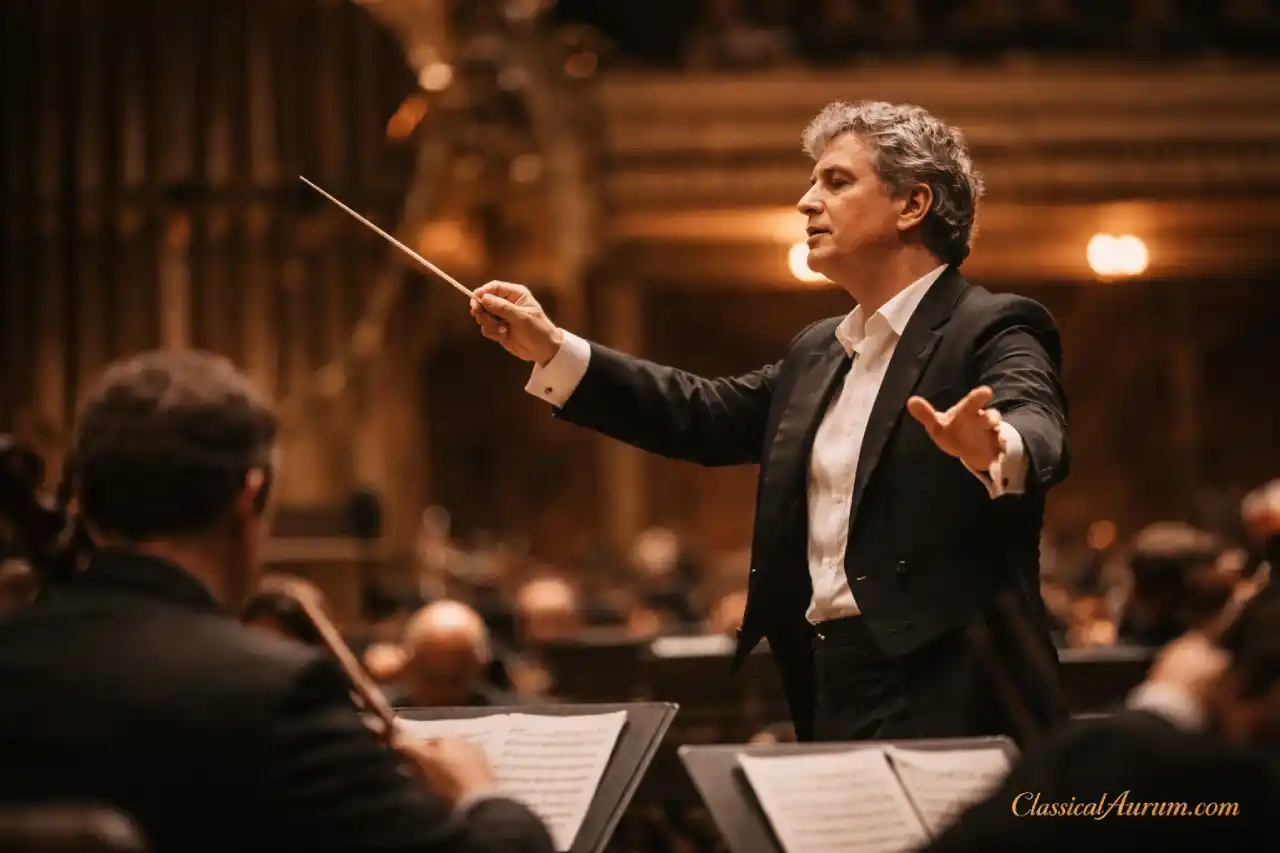
At the heart of conducting lies interpretation. A musical score is not a fixed result but a blueprint filled with possibilities.
A conductor must decide:
- How fast should a movement be played?
- Where should phrases breathe?
- How should tension build and release?
These decisions transform a written composition into a distinct artistic statement.
For example, performances of Symphony No. 5 (Beethoven) can vary dramatically depending on the conductor’s vision. Some emphasize urgency and drama, while others highlight structure and clarity.
This interpretative role makes the conductor comparable to a film director. The script remains the same, but the final experience changes depending on the creative choices behind it.
Importantly, great conductors balance respect for the composer’s intentions with their own artistic identity. Too much rigidity leads to lifeless performances; too much freedom risks distortion.
The Rehearsal Process: Building a Cohesive Ensemble
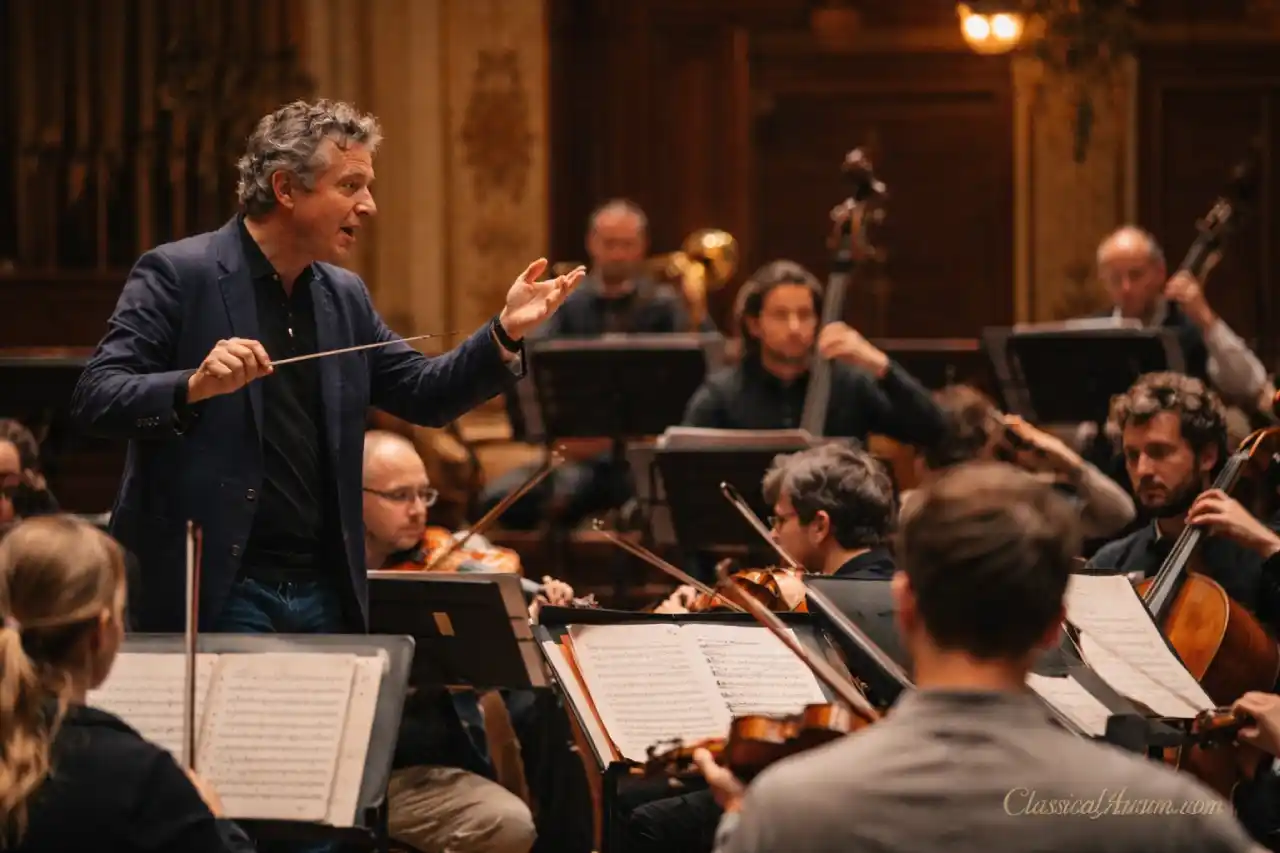
Much of the conductor’s work happens before the concert begins. Rehearsals are where the musical vision takes shape.
During rehearsals, conductors:
- Correct timing and balance issues
- Refine phrasing and articulation
- Align the orchestra’s interpretation
- Address technical challenges
This process requires deep knowledge of every instrument in the orchestra. A conductor must understand how strings, woodwinds, brass, and percussion interact and how to balance them effectively.
Conductors like Claudio Abbado were known for fostering collaboration and trust during rehearsals, while others maintained strict authority to achieve precision.
The goal is always the same: to transform a group of individual musicians into a single, unified musical organism.
Leadership and Psychology on the Podium
Beyond technical skills, conducting demands exceptional leadership and psychological insight.
An orchestra is made up of highly trained professionals, each with their own artistic opinions. The conductor must:
- Inspire confidence
- Resolve conflicts
- Maintain discipline
- Encourage creativity
This balance between authority and collaboration is delicate. A conductor who is too authoritarian may suppress expression, while one who is too passive risks losing control.
Great conductors develop a strong personal presence that commands respect without diminishing the individuality of the musicians.
Carlos Kleiber is often cited as an example of a conductor who combined charisma, precision, and emotional intensity to achieve extraordinary performances.
Ultimately, conducting is as much about human connection as it is about music.
The Evolution of the Conductor’s Role
The role of the conductor has evolved significantly over time. In earlier periods, ensembles were often led by a concertmaster or keyboard player rather than a dedicated conductor.
The modern conductor emerged in the 19th century, as orchestras grew larger and compositions became more complex. Figures like Felix Mendelssohn helped establish conducting as a distinct profession.
Today, conductors are not only musical leaders but also cultural ambassadors. They shape programming, engage with audiences, and influence the direction of orchestras worldwide.
Contemporary conductors often work across genres, collaborate with modern composers, and explore new formats to keep classical music relevant in the 21st century.
Emotion, Energy, and the Live Experience
One of the most compelling aspects of conducting is its role in shaping the emotional experience of a live performance.
A conductor controls the flow of energy between the orchestra and the audience. Through subtle adjustments in tempo and dynamics, they can heighten tension, create intimacy, or unleash overwhelming power.
This real-time interaction makes each concert unique. Even with the same orchestra and repertoire, no two performances are identical.
The conductor becomes a mediator of emotion, translating the composer’s intentions into an experience that resonates with listeners on a deep level.
This is where technique meets artistry, and where the conductor’s presence becomes truly indispensable.
Conclusion: The Conductor as a Bridge Between Worlds
The role of the conductor in classical music extends far beyond keeping time. It encompasses interpretation, leadership, communication, and emotional storytelling.
A conductor stands at the intersection of three worlds:
- The composer, whose vision is encoded in the score
- The musicians, who bring technical skill and expression
- The audience, who receive the final experience
By bridging these worlds, the conductor transforms written music into a living art form.
In the evolving landscape of classical music, the conductor remains a vital figure—one who not only preserves tradition but also shapes the future of orchestral performance.

About the Author
Juan Daniel Cabrio is a classical guitarist, graduate of the National Conservatory of Music in Argentina, performer, arranger, and researcher dedicated to the study and dissemination of classical music and its history.
Throughout his career, he has presented numerous concerts featuring his own transcriptions and interpretations, with a special focus on the classical guitar repertoire and the musical traditions of different periods.
Through Classical Aurum, he shares educational and cultural content about composers, instruments, music history, theory, repertoire, and performance practice, with the aim of bringing classical music closer to a wider audience.
Classical Aurum is an independent editorial project devoted to preserving and promoting the heritage of classical music through articles, research, and educational resources for musicians, students, and music lovers around the world.
Explore more Classical Aurum articles related to this topic.