Modernism in Classical Music
El modernismo en la música clásica: una revolución sonora. La música clásica ha evolucionado continuamente a lo largo de la historia. Cada época trajo consigo nuevos estilos, ideas y prioridades … Read More
Discover the Timeless Beauty of Classical Music
Juan Daniel Cabrio
Argentine Classical Guitarist
Juan Daniel Cabrio is an Argentine classical guitarist, born in Buenos Aires in 1963.
He studied at the National Conservatory of Music "Carlos López Buchardo", where he was a student of the distinguished guitarist Jorge Martínez Zárate. He graduated with the degree of Professor of Music (Higher Education), specializing in Guitar.
He furthered his musical studies with the renowned guitarist and lutenist Monina Távora, a disciple of Andrés Segovia.
He organized the First and Second International Guitar Symposiums in Argentina, together with parallel exhibitions that brought together leading guitarists and luthiers from Argentina and abroad.
He was the founder and editor of the magazine "El Mundo de la Guitarra" (The World of the Guitar).
As a soloist, he performed extensively in major concert halls and cultural institutions in Buenos Aires and throughout Argentina.
He was the founder of the Domine Guitar Trio, with which he presented hundreds of concerts in Argentina, Uruguay, Italy, and the United States.
He taught guitar at the National Conservatory of Music "Carlos López Buchardo", the Astor Piazzolla Conservatory of the City of Buenos Aires, the Alberto Ginastera Provincial Conservatory of Morón, the Leopoldo Marechal School of Arts of La Matanza, and School of Music No. 6, School District 13.
El modernismo en la música clásica: una revolución sonora. La música clásica ha evolucionado continuamente a lo largo de la historia. Cada época trajo consigo nuevos estilos, ideas y prioridades … Read More
Dvořák and Cultural Identity Among the great composers of the nineteenth century, Antonín Dvořák occupies a unique position. While many Romantic composers pursued personal expression, Dvořák successfully combined artistic originality … Read More
Folk Roots in Art Music Throughout history, art music and folk traditions have existed in constant dialogue. While classical music is often associated with courts, churches, and concert halls, many … Read More
Nationalism in Classical Music Nationalism in classical music became one of the most influential artistic movements of the nineteenth century. As political borders changed and cultural identities strengthened across Europe, … Read More
Order, Beauty, and Meaning in Sound Music has accompanied human civilization for thousands of years. Across cultures and historical periods, people have searched for patterns that transform simple sounds into … Read More
Understanding Music Beyond Sound Music has accompanied humanity since the earliest civilizations. Long before written language became widespread, communities used rhythm, melody, and song to communicate emotions, preserve traditions, and … Read More
The Enduring Relationship Between Classical Music and Philosophy Classical music and philosophy have been connected for thousands of years. Throughout history, philosophers and composers have explored similar questions concerning beauty, … Read More
The Heart of the Orchestra When audiences think of a symphony orchestra, they often imagine a large group of string players seated at the front of the stage. This image … Read More
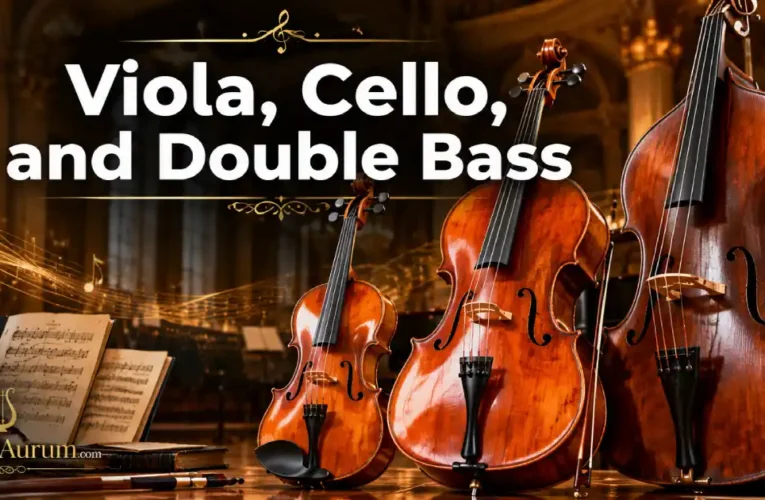
The string family forms the heart of the classical orchestra, providing warmth, depth, and expressive power. While the violin often receives much of the spotlight, the viola, cello, and double … Read More
The String Family Explained The string family represents one of the most important and expressive groups of instruments in Western classical music. From the brilliant sound of the violin to … Read More